
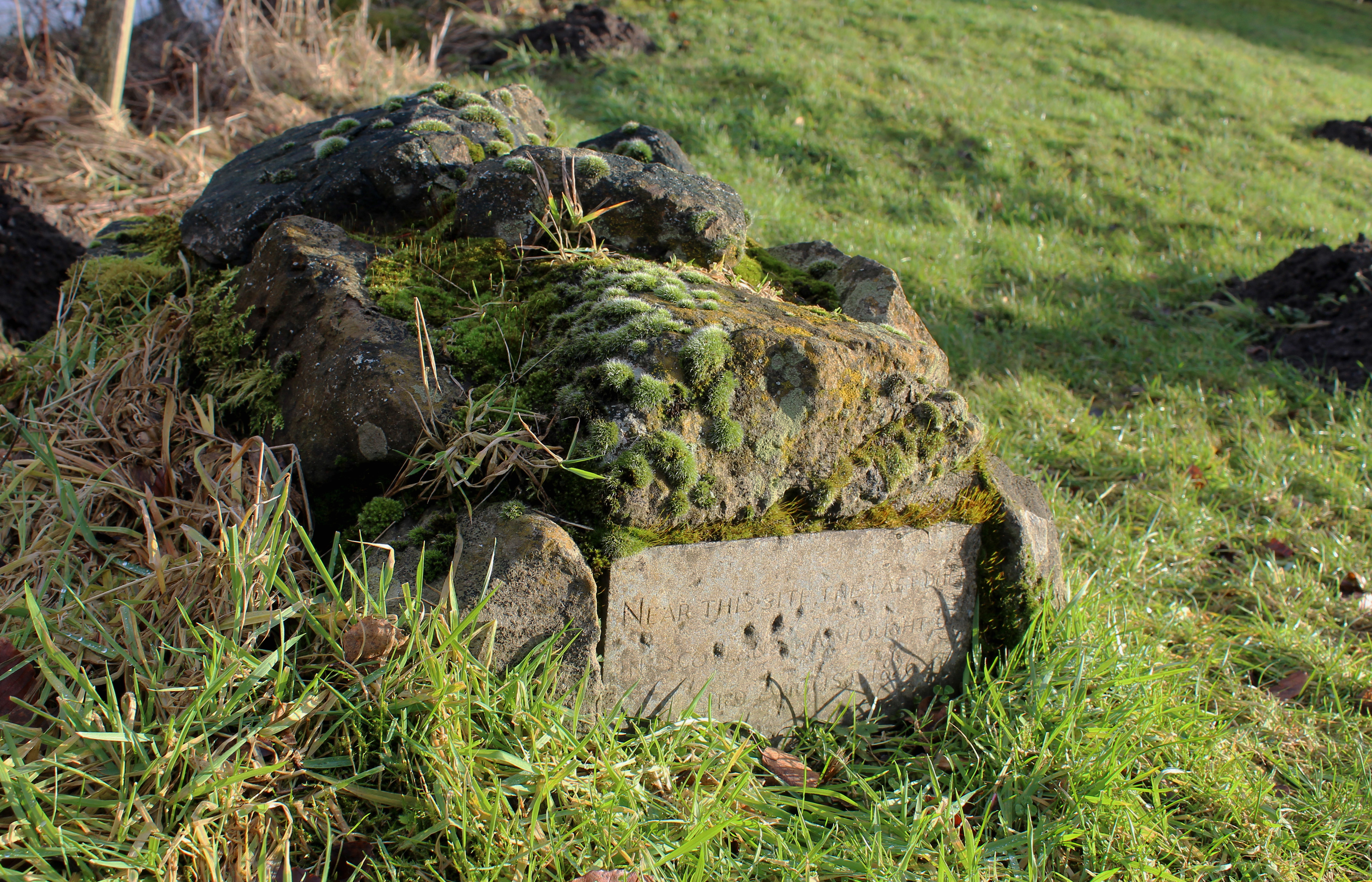
Two centuries ago, on August 23, 1826, in the cold light of dawn, two men faced each other across a bleak field in Fife, pistols drawn. On the given signal, at 7am, respected Kirkcaldy linen merchant David Landale fired a single fatal shot, killing banker and retired soldier George Morgan and, in the process, preserving his financial reputation, business integrity and, most importantly of all, his personal honour.
It was Scotland’s last recorded fatal pistol duel and the setting, above Carden Den, is marked with a simple stone cairn. It is just one of several unexpected treats that make a walk through the secluded and perhaps overlooked valley such a pleasure.
The duel marked the culmination of a quarrel between the two men over a bank loan. Landale believed that Morgan, a Bank of Scotland manager who had turned down his loan application, had been spreading malicious rumours about his financial affairs, and matters came to a head when he was assaulted by Morgan with an umbrella in Kirkcaldy’s High Street. The incident left Landale with no choice but to challenge Morgan to a duel. It was a matter of honour.
Morgan accepted, and the pair met in woodland on the morning of August 23. The location, at the time, was a secluded clearing surrounded by trees, far enough from Kirkcaldy to avoid the attention of the police or any witnesses. The two men stood 12 paces apart and, on command, fired simultaneously. Despite being a novice shot who had never held a gun before, Landale hit Morgan, and the banker slumped to the ground, fatally injured. Uninjured, Landale fled the scene to Carlisle. Although a long-established means of settling disputes, duelling was illegal at this point in history.
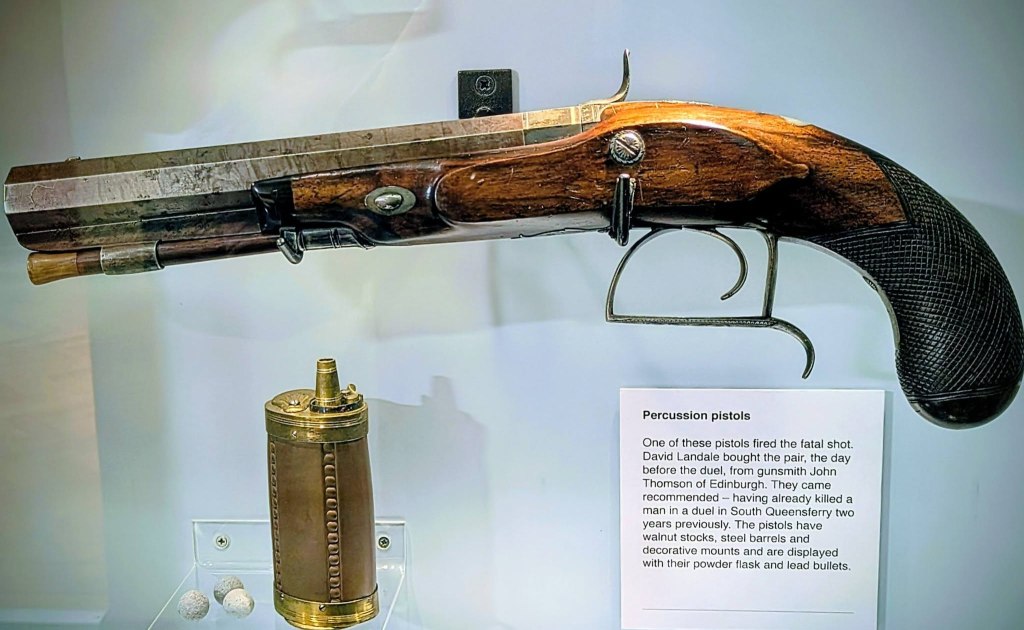
A month later, Landale was tried and acquitted of Morgan’s murder at Perth, and, in 1835, he served as Provost of Kirkcaldy. The duelling pistols, with their gleaming steel barrels and walnut butts, are displayed within the town museum. Curiously, Landale and Morgan are buried 12 paces apart in Kirkcaldy’s Old Kirk graveyard.
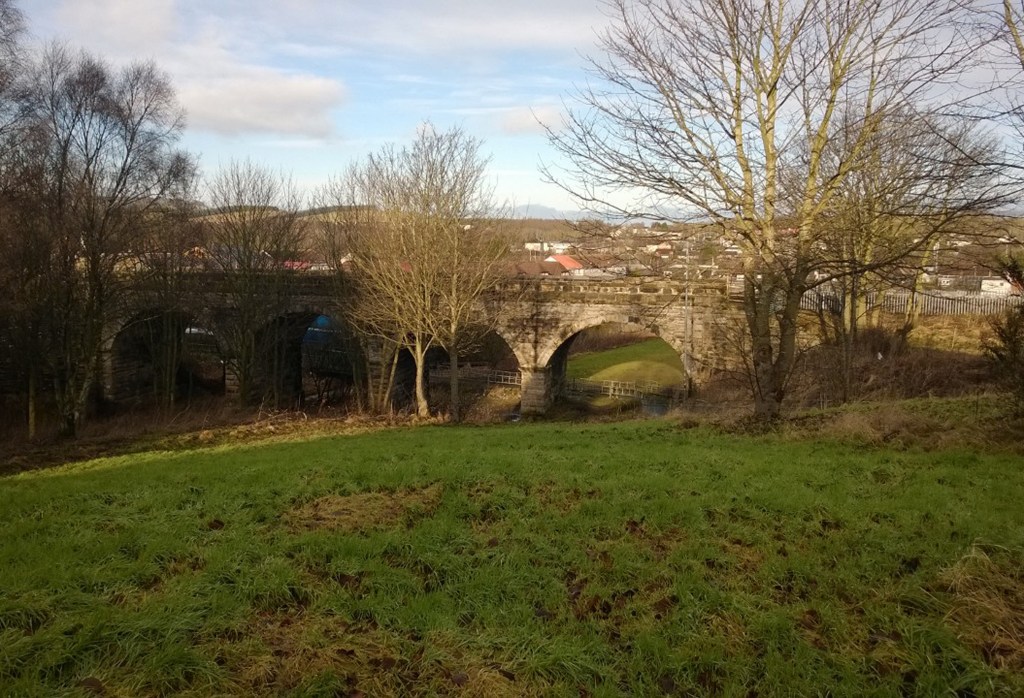
Packing gaiters rather than guns and setting off some hours after dawn, I entered the wooded gorge below Cardenden railway station, the trail passing under a sturdy stone viaduct carrying the tracks of the Fife Circle line before rising past village houses into the trees.
Sheltered by mature beeches, the way stays close to Den Burn, following the lively flow upstream. While nature and human recreation dominate the scene today, this area was once a thriving if grimy industrial site.
From the early years of the 16th century, coal was mined here; the earliest of the Dundonald Colliery pits was established in the den. There were at least eight workings and other ancillary buildings, although little trace now remains of these early endeavours.
Paths and steps radiate right and left but stay on the main track and the leafy deciduous canopy soon gives way to tall, slender Scots Pine as the valley narrows and the slopes either side steepen. This is a working plantation, managed by the Forestry Commission.
Ignoring a path branching right over the burn, I continued up the glen, the growing rumble of traffic noise heralding the arrival of the busy A92, vehicles passing overhead on a high span of steel and concrete.
Untroubled by their elevated passage, a more robust stretch of gravel track led me on to the next junction where I left Den Burn and, a little further on, climbed out of the valley to the spot where Landale and Morgan met and settled their score two centuries ago.
A small cairn of moss-covered stones, almost lost in the grass, records the event while, nearby, there is a more recent pillar and commemorative plaque erected by the people of Cardenden. There is a bench too, a peaceful place to sit by pines and ponder the past.
At this point a short detour to the ruins of Carden Tower, abandoned prior to 1700, is recommended. On the opposite side of the track from the cairn, a sign points the way around the edge of a paddock, fine views over the gorge as a bonus.
Below an informative plinth, the lower courses of the small 16th-century tower house, complete with a grated well, have been preserved.
Fast forward to the present day and the route back to Cardenden negotiates the A92 once again, this time passing over the highway, before branching east to Sunnyside Plantation, the slender strip of woodland offering both a pleasant deviation and vistas north to Bishop Hill and the Lomonds before I descended into the village.
If you have enjoyed this article, you might like to PayPal.me or buy me a coffee, which helps support the site and funds new content.


