
Gorton was, without a doubt, the most isolated of the halts on the West Highland Railway, the result of its remote moorland location and the fact that, for much of its life, passengers were not allowed to alight or disembark here. It was a lonely outpost for the signalman assigned to control the trains here, forbidden from allowing people onto the platform.
A carriage school injected some life into the place during the week, and, in the shooting seasons, when the Marquis of Breadalbane allowed trains to disgorge his guests onto the platform, there was some brief hustle and bustle. For the rest of the time, however, trains quietly slid through what appeared to be a station, their doors remaining firmly shut.
Originally named Gortan, the halt opened for business on August 7, 1894, along with the rest of the new West Highland Railway. It was built as a passing loop on the long stretch of single line between Bridge of Orchy and Rannoch Station and was equipped with an island platform, signal box, housing for the signalman and his family and a siding.
While the station sat at an important meeting point on the ancient drove road crossing Rannoch Moor and was frequently visited by shepherds driving cattle and sheep over the moor, neighbours were few and far between. There was only a shepherd’s cottage (Gorton) a mile or so west across the glen and surfacemen’s cottages at milepost 52½, to the south, and milepost 58, to the north.
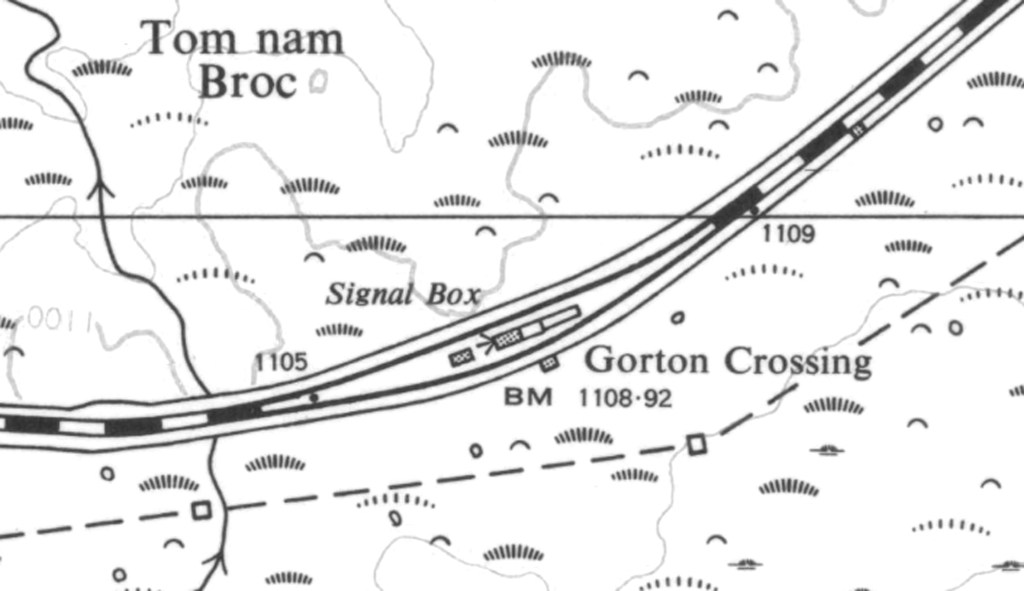
Travelling north from Glasgow, nine miles down the line from Bridge of Orchy, trains climbed steadily to Gortan, located on the southern fringes of the moor at an elevation of around 1100 feet. The halt was originally called Gortan to avoid confusion with Gorton Station in Manchester, but was renamed Gorton on May 1, 1926 by the London & North Eastern Railway Company (LNER). It was also known as Gorton Crossing and Gorton Siding, but the name, in any form, rarely appeared on timetables.
From Gorton, the train puffed north – never exceeding 25mph – across the moor for seven lonely miles, climbing steadily through a largely featureless landscape of exposed grey granite and dark peat bog peppered with dead tree roots and inky black pools, before dipping to cross the five-girder Gaur Viaduct beyond which Rannoch Station proffered a beacon in this otherwise desolate landscape.
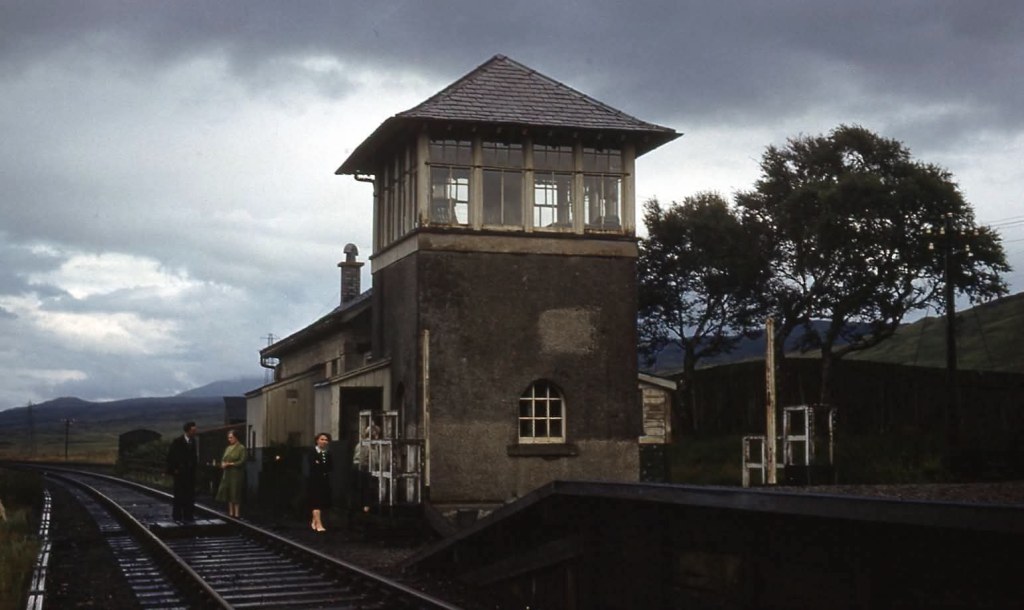
The architecture differed at Gorton from the normal West Highland Railway stations. Instead of the traditional platform-mounted chalet-style building, it had a tall signal box – often referred to as the ‘watchtower’ – attached to which there was a rectangular single-storey building in which the signalman lived. It was constructed of rendered brick with banded dressings and a grey slate roof with terracotta ridge tiles and was located at the western end of the platform. There were only two other such buildings on the line, one at Corrour and one at Glen Douglas.
From the outset, the Marquis of Breadalbane, on whose land the halt stood, was adamant that Gorton would not serve the general public. In September 1896, he petitioned the Court of Session in Edinburgh, demanding that the West Highland Railway Company not maintain any station for passengers or goods either at Gorton or elsewhere on the line where it crossed his land north of Bridge of Orchy, without his written consent.
The Marquis noted that following the opening of the line two years earlier, the company had not only constructed a platform at Gorton and erected nameboards but had also been in the habit of stopping trains there to set down passengers and parcels, violating the agreement that allowed the line to proceed across his estate. In the original Act, the Marquis had only agreed to allow stations to be built on his land at Tyndrum and Bridge of Orchy.
He won his argument and Gorton was relegated to the status of private halt, the signalman – or indeed any railway worker – threatened with instant dismissal if they allowed members of the public to alight there.
There was no paved road to the station, only the unsurfaced drove route, and all supplies arrived by train. Fresh milk was delivered in churns on the first down train of the day, while drinking water also had to be delivered as the brackish moorland water was deemed unfit for human consumption. Latterly, this arrived in containers, although in the early days it was dispensed directly from the locomotive tender, 12 buckets at a time. The signalman’s wife was issued a pass to travel once a week to and from Fort William by freight train to buy provisions. Families supplemented their store cupboard purchases with vegetables grown in the garden, eggs from their own hens and milk from goats. They also fished, caught rabbits and, from time to time, chanced upon game. There was no electricity or running water at Gorton. Coal heated the signalman’s cottage and box, and paraffin powered his lamps. Mail was bagged at Bridge of Orchy and sent down the line.
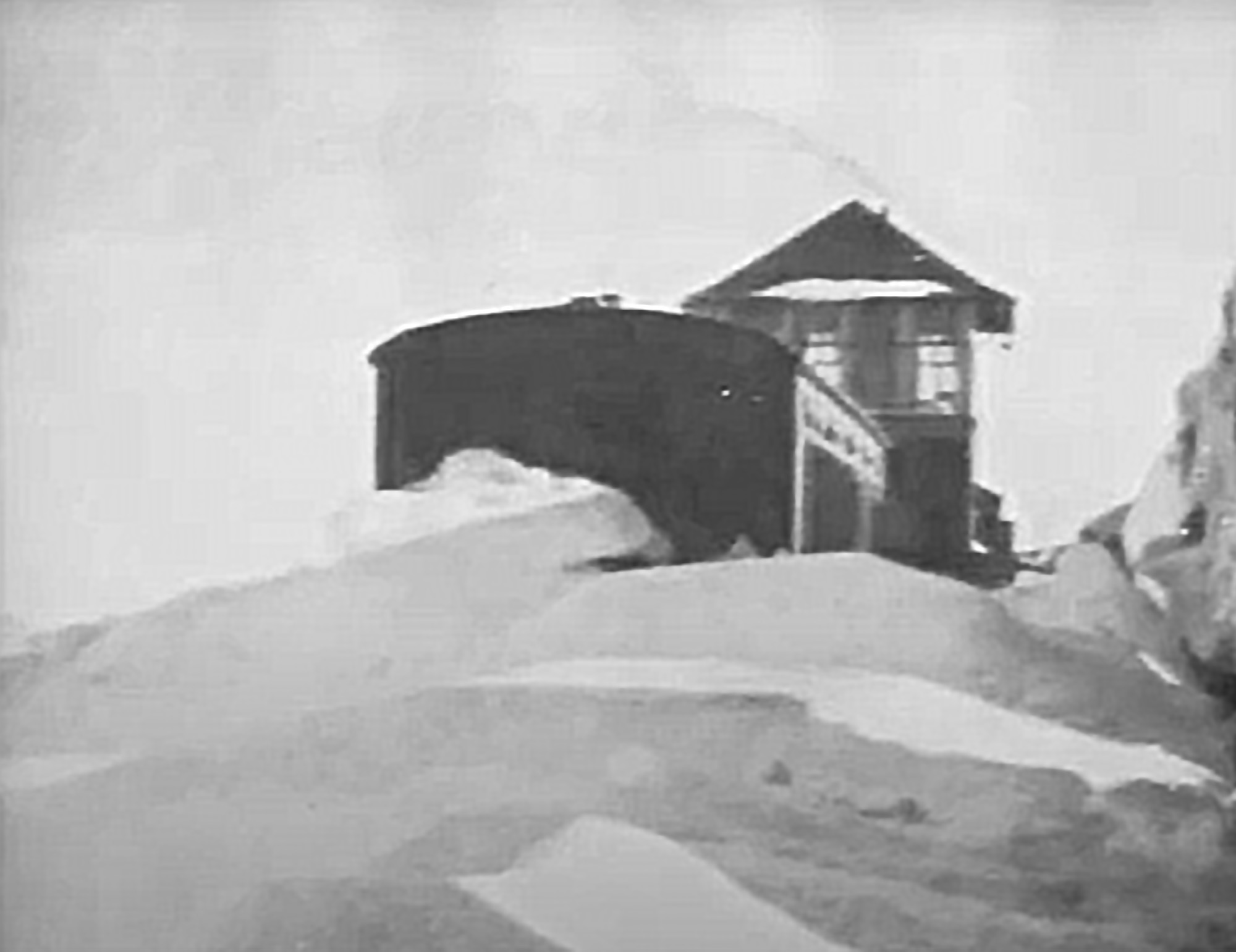
The signalman and his family also had to contend with the often horrendous winter weather, with snowstorms frequently blanketing the moor and cutting Gorton off completely from the outside world, sometimes for days at a time.
Both the North British and its successor, the LNER, struggled at times to staff the box at Gorton. In 1915, the signalman was Donald Grieve, and through the 1920s, Thomas Grieve held the position. Harold Hasty was signalman throughout the 1930s, and in 1940 the role was taken by Lachlan McLeod.
During the early years of operation, the North British staff at Gorton were by no means inundated with trains. The day started with the passing of the daily early morning freight train from Glasgow, a service known as ‘the Ghost’. It dictated the time at which the signalman had to be up and out of bed and at his post, ready to exchange tokens. Often this was as early as 4am. Thereafter, there were three passenger services in each direction during the summer and two in the winter, along with the return of the Ghost to Glasgow. There were no timetabled passenger services on a Sunday, although during the summer months, there were Sunday Specials and regular excursions to deal with.
When the signalman was not attending to passing trains, or dealing with the other business of the day, he was kept busy cleaning and maintaining the station, digging out weeds, raking the platform gravel and undertaking minor repairs. There were regular, unannounced inspections, so he had to stay on his toes.
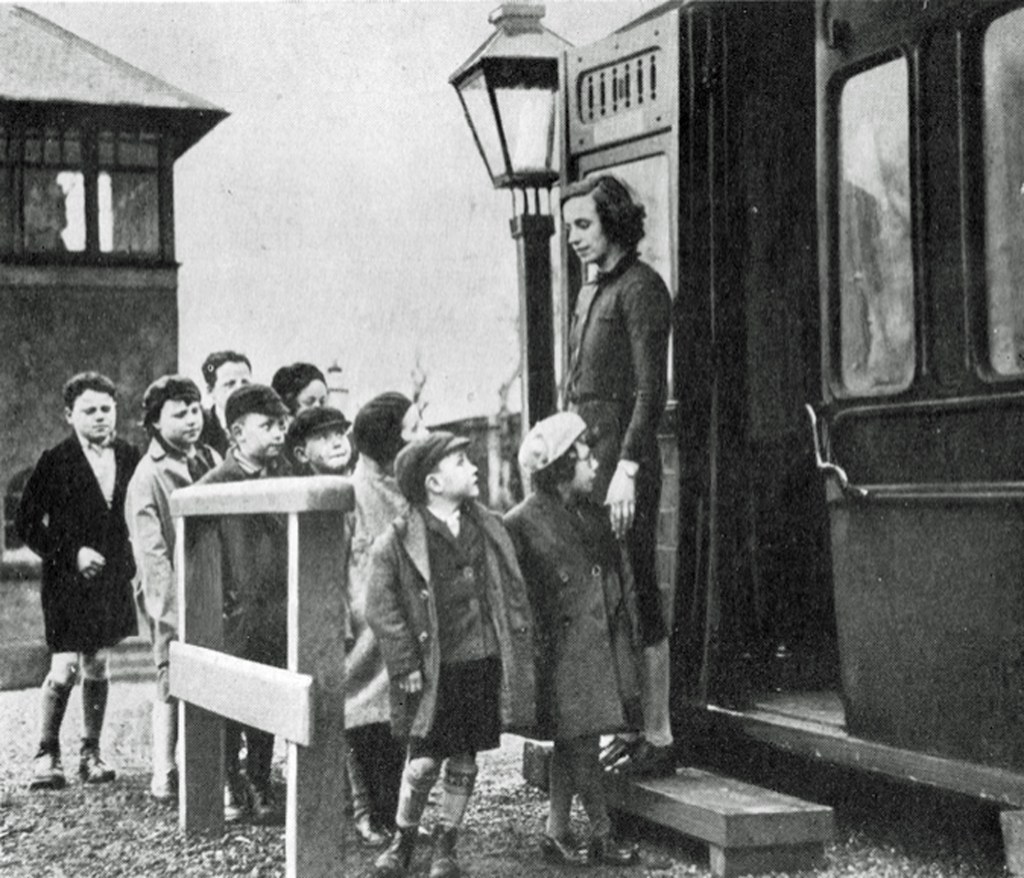
Originally, children from the Gorton area were educated at a small school close to Rannoch Station. However, in the 1930s, the school was running over-capacity. As Gorton was located in Argyllshire, the Perthshire Education Authority handed responsibility for the children back to their neighbouring county and the education committee of Argyll was forced to come up with an alternative.
They contacted the LNER, asking if they could erect a temporary school either in the siding at Gorton or on the platform, using one of the company’s carriages. An old Great North of Scotland Railway coach body was duly sourced, fitted with desks and chairs, and positioned on the platform. A safety barrier was also installed by the door to prevent excited youngsters running straight out and falling onto the track. In March 1938, with an intake of eight young scholars, the new school opened, its teacher travelling daily by train from lodgings in Bridge of Orchy. The school appears to have remained in operation until the late 1950s or early 1960s.
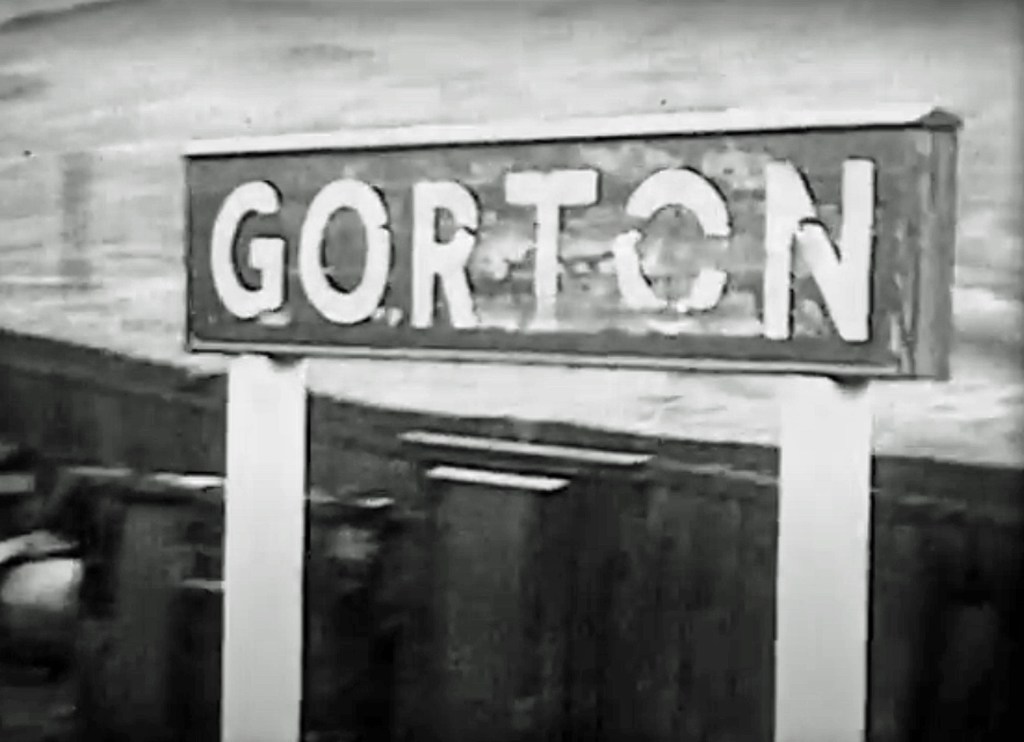
Gorton remained out of bounds to travellers, a mysterious halt that, to all intents and purposes, appeared to be a station, complete with platforms and signs, although no one could stop there. Over the years, journalists, their curiosity piqued by this strange anomaly, did attempt to visit, but while the trains came to a halt, they were routinely rebuffed by railway staff.
The last incumbents of the Gorton signalbox were Charlie Murray and his stepdaughter Alma Fraser, who, between them, operated a shift system. Charlie opened the box at 3.15am in time for The Ghost goods train from Glasgow while Alma took over later in the day, closing the box at 8.15pm if all the trains had come through on time. When the box closed for good, the pair left the employ of the railway and opened a Post Office and shop in the Perthshire village of Glencarse.
Even though Gorton was never officially a station, it closed as such in 1964. The signal box, platform and former carriage school were demolished four years later, and the passing loop was lifted. Gorton’s time was, however, not yet up. In 1987, the loop was relaid as a siding for permanent way trains, controlled by ground levers, and it remains so to this day.
If you have enjoyed this article, you might like to help with a future research project or PayPal.me or buy me a coffee, which helps support the site and funds new content.


