
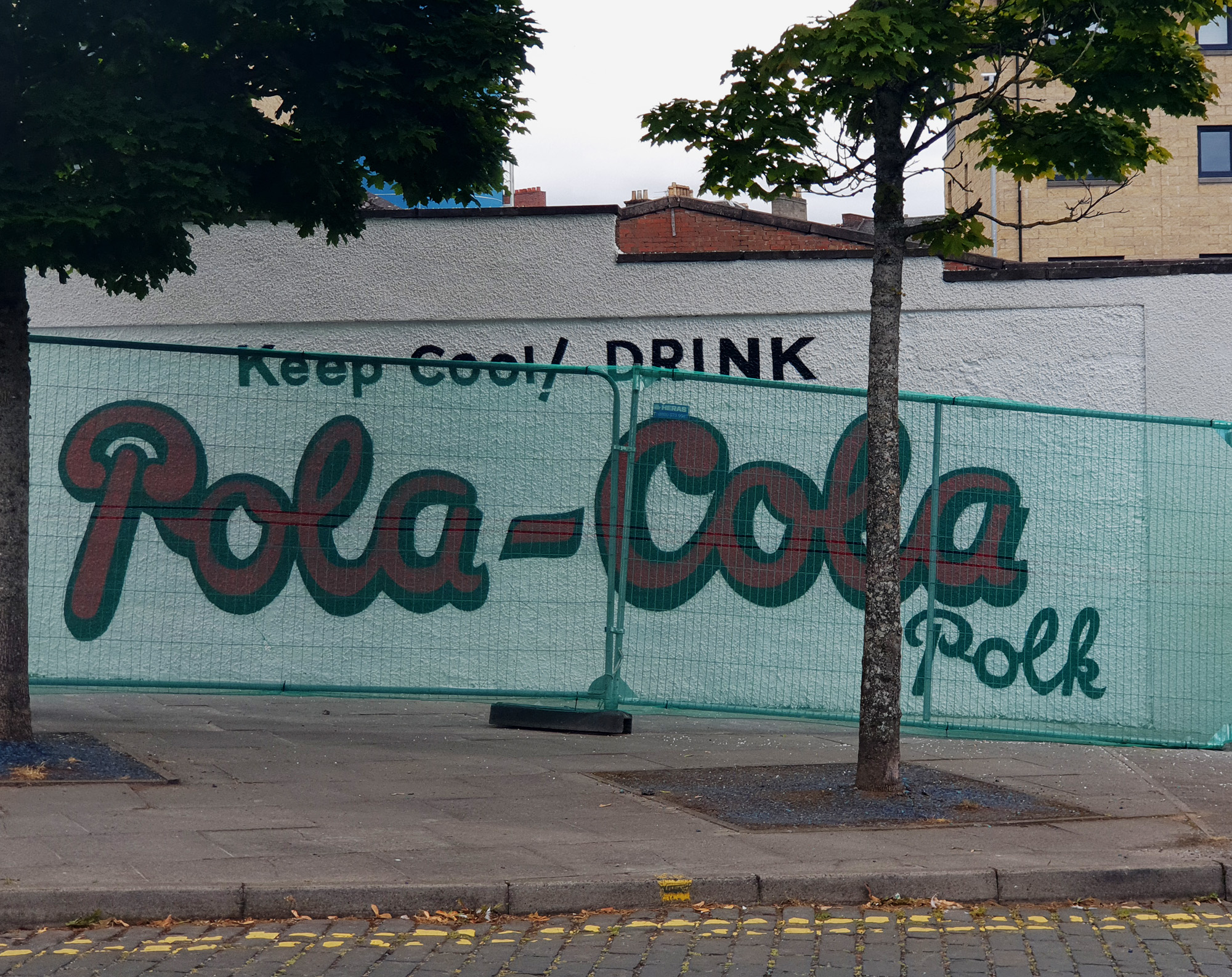
An historic hand-painted advertisement for a local Cola brand has been revealed during work in Dundee’s Stobswell neighbourhood. The striking sign for Pola Cola, covered for decades under a coat of render, offers a fascinating glimpse into the city’s social history, and there are hopes it may now be preserved.
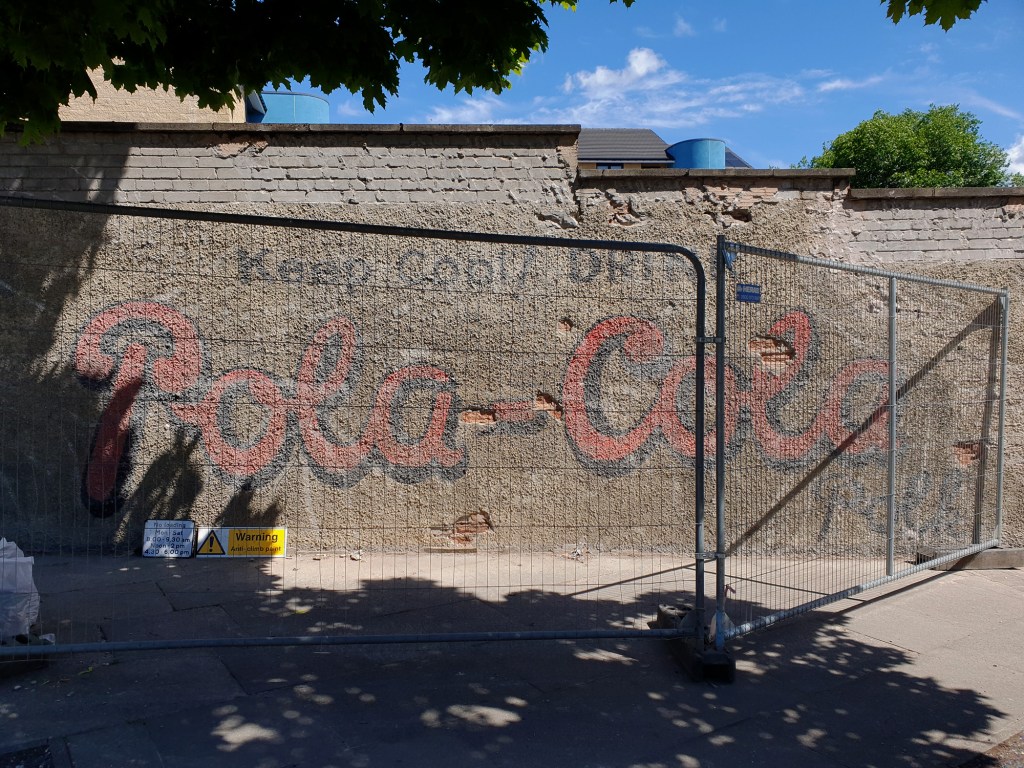
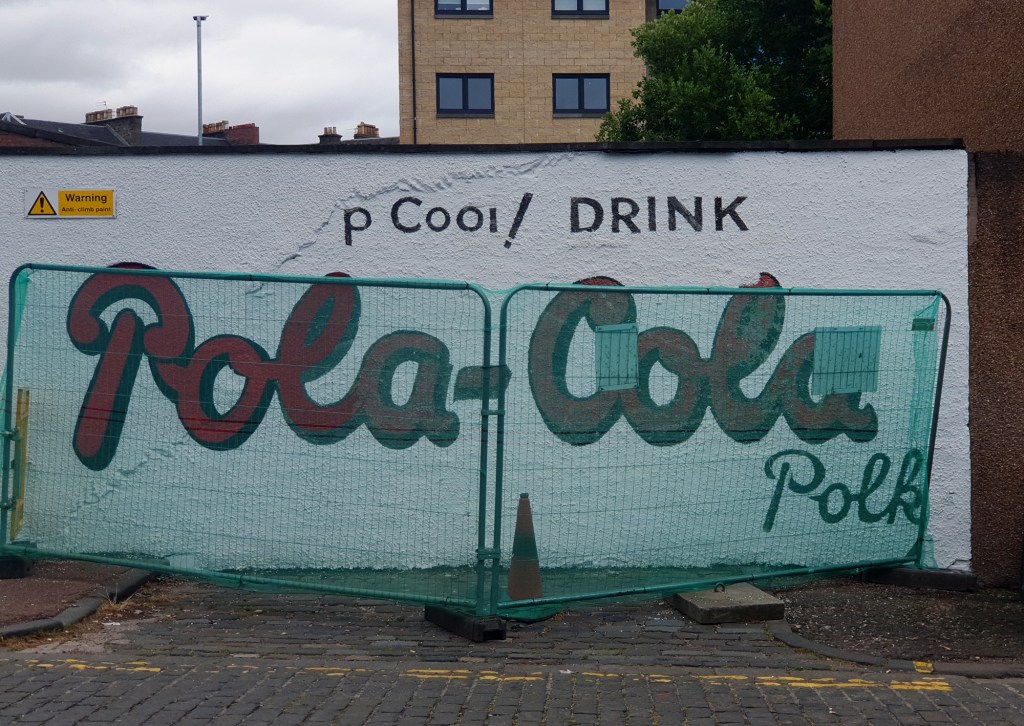
The vintage ‘Keep Cool, Drink Pola Cola’ mural was revealed in June 2026 by workers chipping the old harling off the wall in Maitland Street. The wall was due to be re-rendered before Dundee City Council’s restoration officer and a local councillor stepped in, and the work was suspended while ways to conserve rather than cover it were investigated. Following the discovery of the first mural, a second similar one was found on the next section of wall along from it.
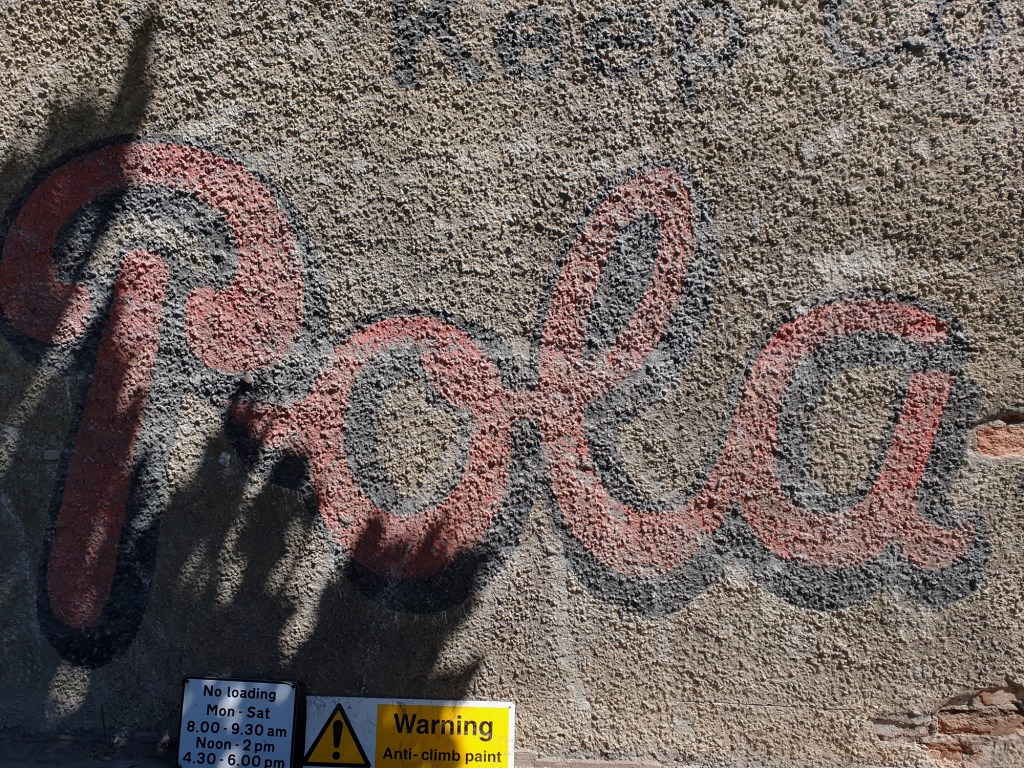
The ghost sign is of particular local significance as Pola Cola was manufactured in the city and distributed through a depot just a short distance away from it, in Maitland Street. Popular in the 1950s and peaking in sales during the 1960s, Pola Cola was made and bottled by Robertson’s Fruit Products Ltd. The company produced a wide range of aerated and still drinks, sold primarily through corner shops and delivered directly to customers by lemonade lorries.
Pola Cola, one of their most popular products, was promoted with a friendly polar bear mascot called Pola, and Robertson’s coined the term ‘Polk’ in response to Coca-Cola’s ‘Coke’. The recipe was created by Polish businessman and trained chemist Val Kosto, who owned a newsagent’s in Lochee and manufactured the essence at a plant in City Road. Pola Cola was sweeter than Coca-Cola and a fair bit cheaper.
Sales dipped after the 1960s, Robertson’s was taken over by Strathmore Springs of Forfar in the 1970s, and, faced with increasing competition from big brands like Coca Cola and Pepsi, production of Pola Cola ended in 1979, although the brand was briefly revived in 1992.
Robertson’s Fruit Products Ltd was established in 1899 by John Robertson as a bottler of mineral waters operating from a plant in Dundee’s North Tay Street. The firm rapidly expanded both before and after the First World War, moving to new premises in Tait’s Lane, in the west end of the city, in 1925. The company also opened factories in Aberdeen and Glasgow and, in 1925, invented Stillade, claimed to be Britain’s first low-carbonated fruit drink. Slightly less gassy soft drinks were selling well in America at the time, and, following this trend, Stillade proved equally popular in Scotland, robust sales enabling the firm to invest in the latest production and bottling equipment.
Pola Cola was just one brand in an ever-expanding range that included Dextora, a glucose drink promoted as a health tonic endorsed by doctors, and Snippys, sachet-packed drinks that could be frozen and enjoyed as an iced lolly at a pocket money-friendly 3d each. The firm also sold squashes and cordials and, in the 1970s, it was the main supplier of all squashes, cordials and soft drinks to Dundee’s Ninewells Hospital. The Dundee factory established by Robertson’s at 44-46 Tait’s Lane was closed by Strathmore Springs in March 1983. It was later demolished and replaced with new housing.
Towards the end of July, the two vintage Pola Cola signs were carefully repainted using sympathetic colour matching, creating a vibrant visual landmark on the corner of Maitland Street and Dura Street, a striking reminder of the city’s social history and industrial heritage.
If you have enjoyed this article, you might like to PayPal.me or buy me a coffee, which helps support the site and funds new content.


