
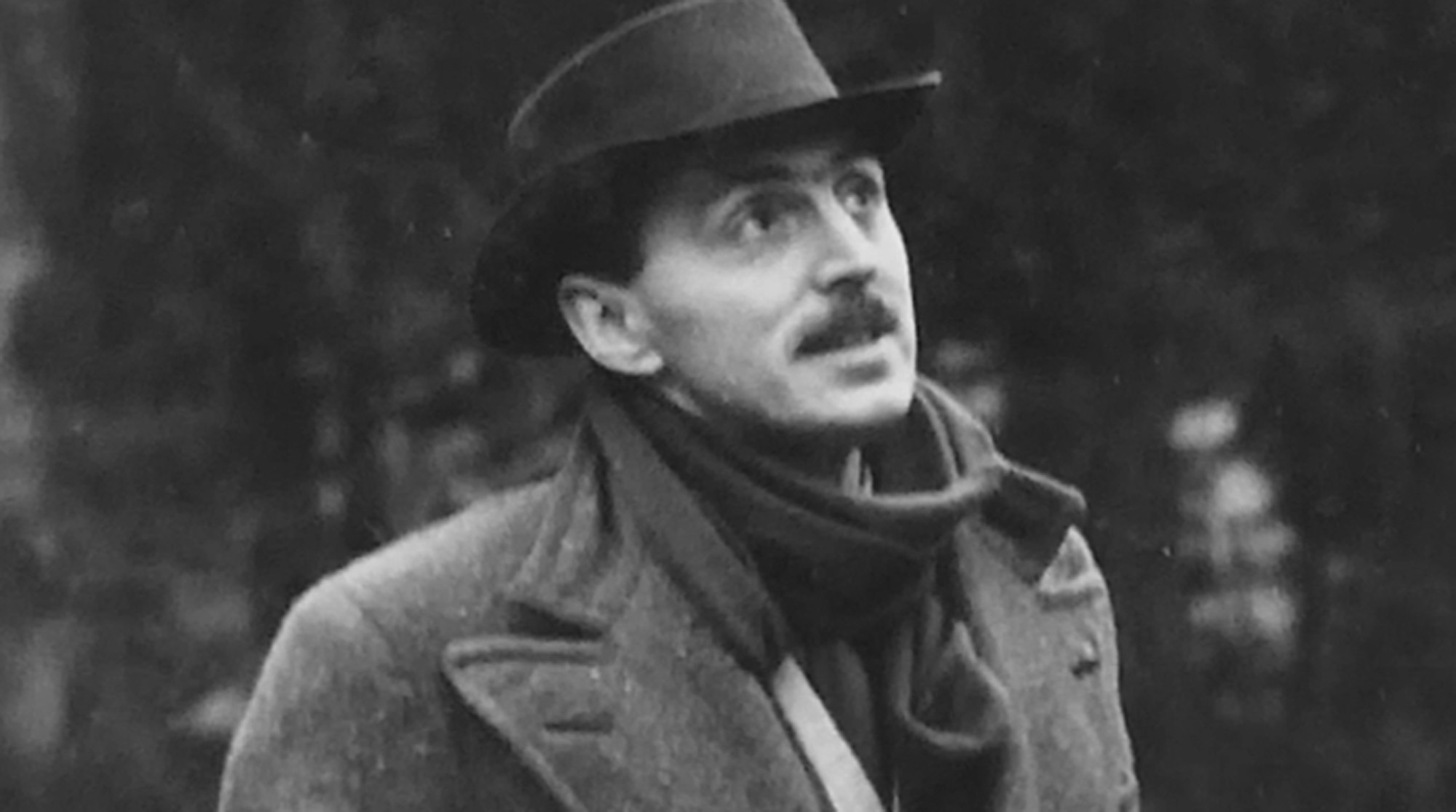
Charles Brand was a prominent Dundee-based demolition contractor active in the mid-20th century. His firm – Charles Brand (Dundee) Limited – specialised in demolishing country houses, castles, and industrial buildings between the 1940s and 1960s. He famously either gutted or completely obliterated over 50 fine Scottish mansions, recording the work in a collection of photographs, pencil drawings and newspaper cuttings that survive to this day. Brand demonstrated that in post-war Britain, stately homes and grand mansions were often worth more as raw materials than as houses.
Little is known about the man himself, but he is credited with the demolition, partial demolition or stripping of some 56 stately homes and castles in eastern and southern Scotland, with occasional forays into the north of England. They included, among others, Courthill House, Kishorn, Wester Ross (1945), Blackhall Castle, Deeside (1945/46), Mountblairy House, Alvah, Aberdeenshire (1946), Balgowan House, Methven, Perthshire (1947), Lindertis House, Kirrimuir, Angus (1947/48), Glengonnar Shooting Lodge, Abington, South Lanarkshire (1947/48), Ravenstone House, Coalville, Northumberland (1948), Balminnoch Shooting Lodge, Glenluce, Wigtownshire (1948), Glenbuck House, Ayrshire (1948), New Murthly Castle, Murthly, Perthshire (1948/49), Hillfast House, Dollar, Clackmannanshire, (1949), Dalpowie House, Murthly, Perthshire (1949), Glasserton House, Whithorn, Wigtownshire (1949), Logan House, Port Logan, Dumfries & Galloway (1950), Fotheringham House, Forfar, Angus (1950), Largo House, Upper Largo, Fife (1950), Duncrub House, Dunning, Perthshire (1950), Wells House, Hawick, Scottish Borders (1951), Kinloch House, Amulree, Perthshire (1952), Brucklay Castle, Maud, Aberdeenshire (1952), St Fort, Newport, Fife (1953), Buchanan Castle, Drymen, Stirling (1954), Cavers House, Hawick, Scottish Borders (1954), Bellaty Lodge, Glen Isla, Angus (1954), Carmichael House, Biggar, Lanarkshire (1955), Panmure House, Carnoustie, Angus (1955), Dunglass House, Cockburnspath, East Lothian (1958), Milkbank House, Lockerbie, Dumfries & Galloway (1960), Auchmore House, Killin, Stirling (1962), Maulesden House, Brechin, Angus (1963), Thirlestane House, Ettrick Valley, Selkirkshire (1963). Newton Hall, Haddington, East Lothian (1966), and Almondell House, Broxburn, West Lothian (1969).
Particularly notable contracts included the demolition of New Murthly Castle, commissioned in 1827 by Sir John Archibald Drummond Stewart, 6th Baronet (1794-1838), Laird of Murthly. He employed one of the country’s most expensive architects of the time, John Gillespie Graham, to design the extravagant four-storey edifice. It was intended to replace the existing Murthly Castle, but Sir John died in 1838 before his extravagant vision was fully realised. While the structure was complete, the house was not fitted out and was never occupied, hosting only occasional events and serving as a storage site for munitions during the Second World War. Sir John’s descendants preferred to stay in the old family seat, Murthly Castle.
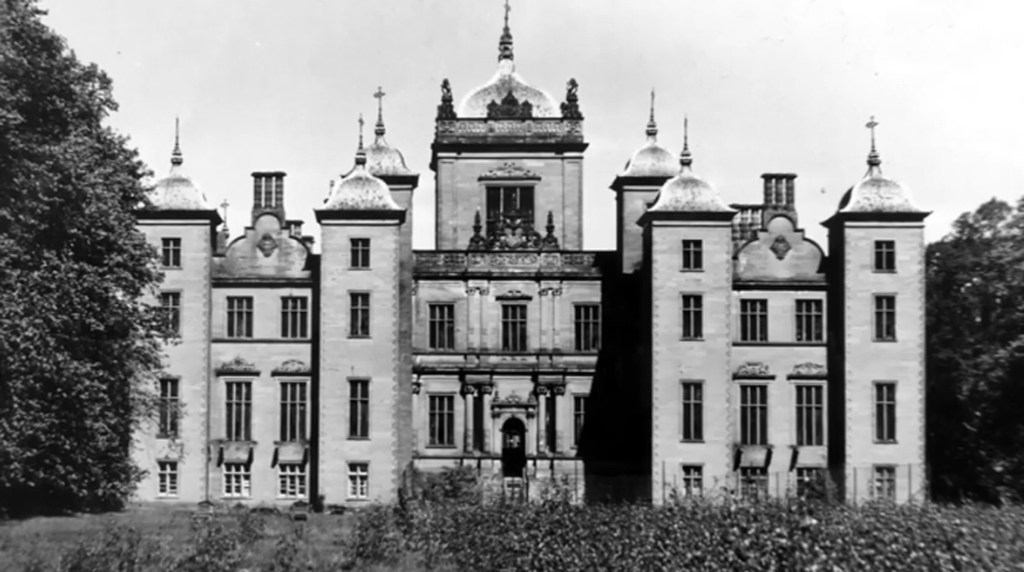
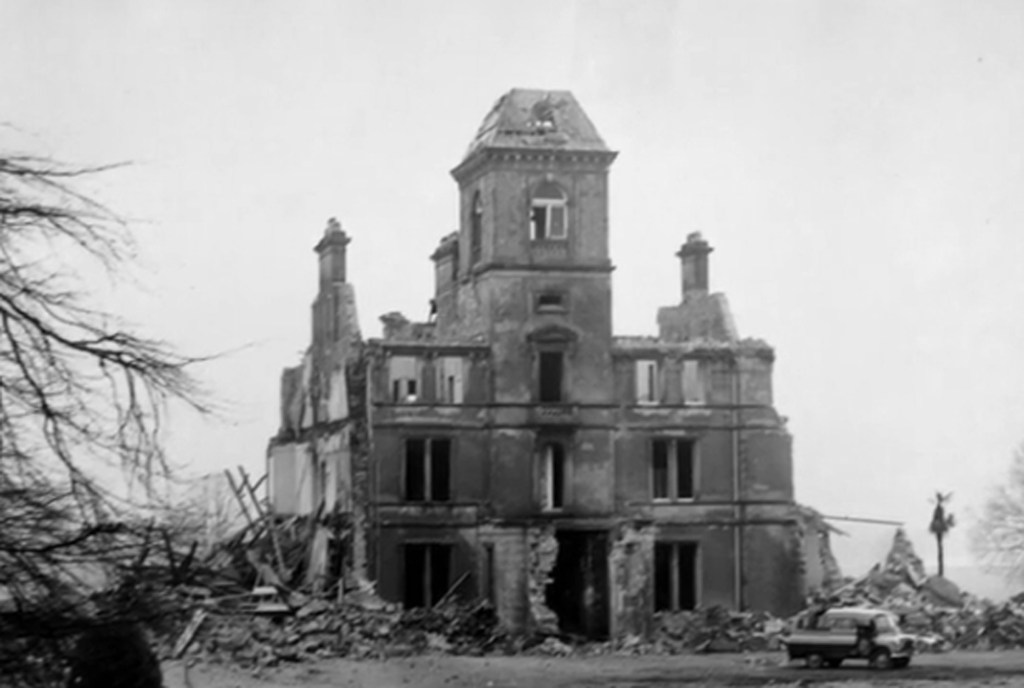
Sir John’s younger brother William inherited the house and its debts, but he had no interest in it, and it sat empty. Finally, in October 1948, laird Donald Stewart Fotheringham decided the time had come to remove what had become an expensive burden. The house was sold to the North of Scotland Hydro-Electric Board as a source of stone for its Loch Sloy and Tummel-Garry schemes. Charles Brand was contracted to pull the it down. After recovering the pitch pine roof beams, he employed tractors and chains to pull down the flanking towers in January 1949 before the central core of the building was rigged with explosive charges sourced from ICI’s explosives factory at Ardeer. Under the watchful eye of explosive expert David Faulds, the press and a crowd of onlookers, four tons of gelignite laid waste to what remained of the building. The 200,000 tons of stone recovered were used to build hydro workers’ houses in Pitochry, while rubble formed the town’s new dam. Dalpowie House, on the western fringes of the Murthly Estate, met a similar fate in the same year.
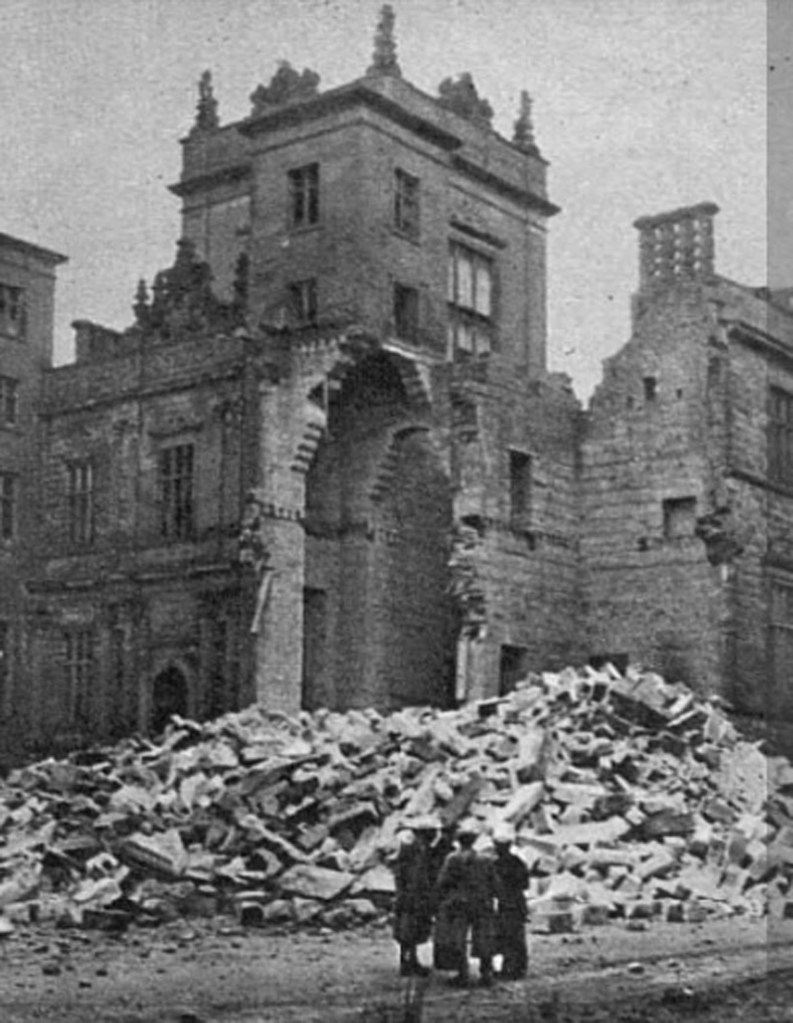
Another major contract for Brand – and another job that called for explosives – was the demolition of Panmure House, an impressive Scots Renaissance building and seat of the Earls of Panmure, located in rural lands four miles inland from Carnoustie, in Angus. Widely recognised as one of the finest country houses in Scotland, but also one of the coldest, it was commissioned in 1666 by the 2nd Earl of Panmure and designed by John Mylne.
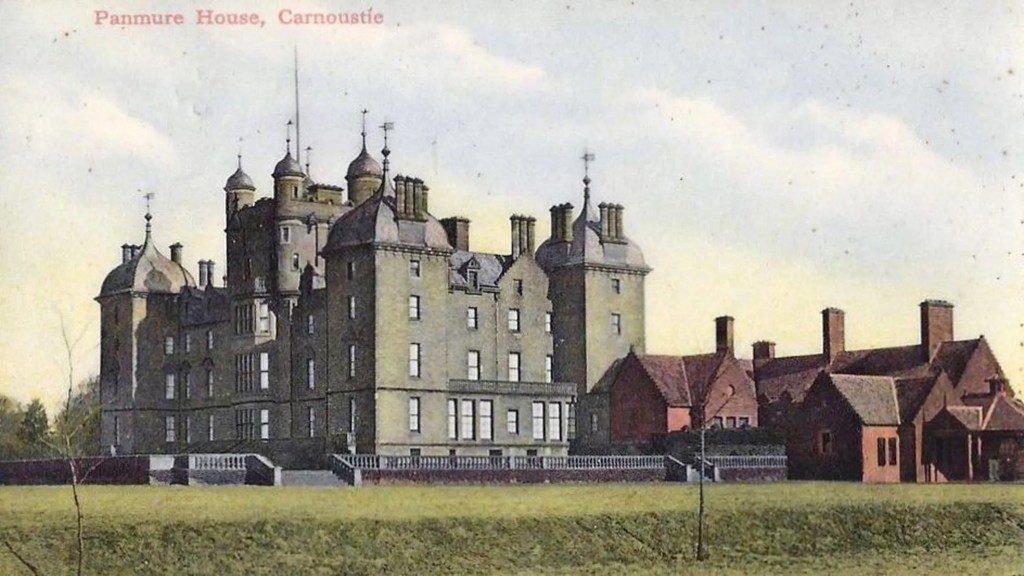
The property was extensively remodelled and enlarged in the 1850s by architect David Bryce, who added a lofty central tower. But it fell into disuse less than a decade later when Fox Maule Ramsay inherited the estate and made Brechin Castle his home. Aside from occasional shooting parties, few stayed there.
During the Second World War, Panmure House, which had 130 rooms, was requisitioned by the army and, in 1950, the estate was sold following the sudden death of Lord Dalhousie to pay death duties. Four years were then spent trying to secure a new use for the property, but with its condition rapidly deteriorating and no new occupier found, the owners, the Miss J A Harrison 1924 Settlement Trust, decided in March 1955 that it was beyond repair and plans were drawn up to demolish it. Reportedly, the house had no electricity or central heating and only two bathrooms.
The task of demolishing Panmure House fell to Charles Brand and his men. In April 1955, work began on stripping out fixtures and fittings, including some 300 doors, hand-carved oak panelling, and large quantities of wooden flooring, ahead of the building being brought down using gelignite. By the end of the year, following a series of successful explosions, the site was cleared, leaving only a chapel and garage. The 25,000 tons of rubble from the old house were spread by bulldozers over the surrounding land and buried under topsoil, returning the land to agricultural use.
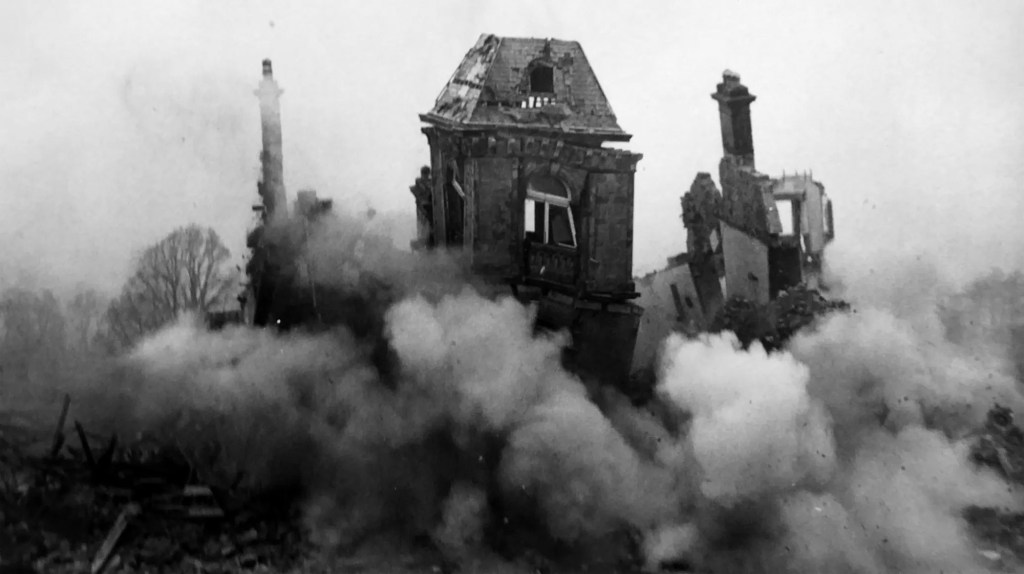
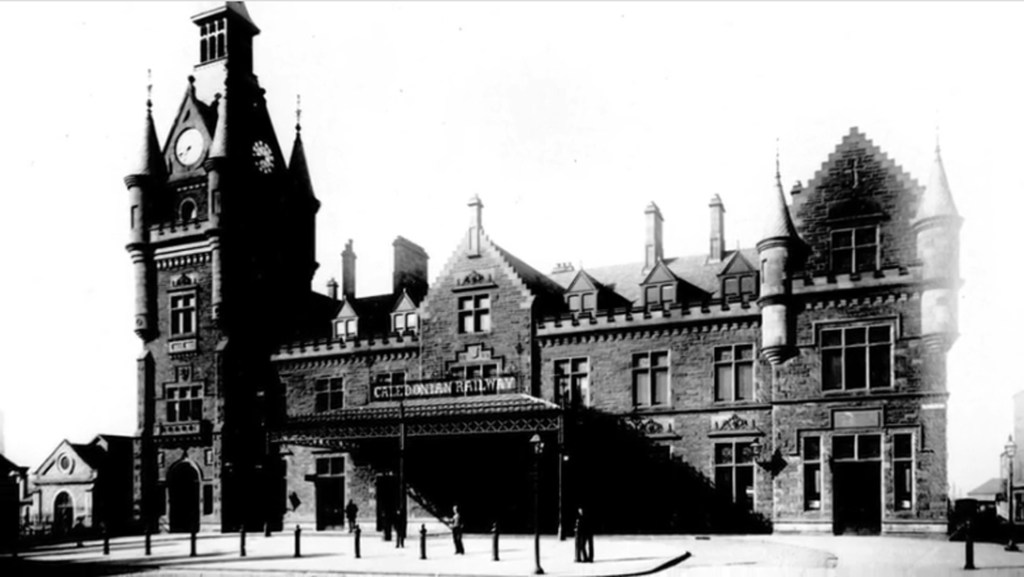
Brand is also credited with the swift demolition of Dundee West railway station in 1966 to clear land for the construction of the northern landfall of the Tay Road Bridge. His men took just 10 weeks to destroy what was described as a ‘Gothic masterpiece’.
House-breaker Brand made his money buying old stately homes from once-wealthy owners who, post-war, could no longer afford to tax, staff, maintain or run them. Some were unable to remedy damage caused during the Second World War when their properties were requisitioned and occupied by the military. The world had moved on, and big houses were no longer the employers they were before the war. If owners failed to find a buyer on the open market, Brand was there to relieve them of their burden.
Brand stripped the houses of valuable materials such as lead (which usually contained small quantities of silver), roof slates, wooden carvings and panelling, architectural features and ornate stonework, fireplaces, metal and other timber, which he promptly sold on. And thanks to some shrewd publicity and marketing, and a contacts’ book full of the names of collectors, he was never short of potential buyers. Often, the gutted shell of the house was simply left to decay, although in some cases Brand’s men, working alongside experts from the chemical company ICI, deployed explosives to bring down what was left, clearing the site. The stone was then sold as aggregate for major new infrastructure projects, such as the building of the M74.
While many of Brand’s demolitions attracted both local and national newspaper coverage, very little appears to have been written about the man himself. However, in February 1949, a reporter from the Dundee Courier found himself in Brand’s offices, then located at 2 Union Street, in the centre of Dundee. He also operated a yard on South Road and had showrooms and warehouses in North Lindsay Street.
In an article entitled ‘Mr Brand’s Queer Gallery’, the writer was instantly struck by a gallery of 11 black-and-white sketches mounted in neat ebony frames hanging side by side on his office wall.
‘In every case the subject is similar – a pencil study of a castle, a mansion or a shooting lodge,’ he wrote. ‘It’s the sort of picture gallery a student of architecture would spend quite a bit of time going over. Its owner, Mr Charles Brand, demolition specialist, is proud of it. But to him, they are not really pictures at all – they are tombstones.’
The article revealed a little something of the man and his methods.
‘Even a demolition specialist can be a man of sentiment,’ the writer continued. ‘He is not a heartless destroyer of the old and beautiful. It is no fault of his that these stately homes of Scotland have had to be sacrificed. The burden of taxation and soaring costs of repairs and renovations have been too much for families which have owned them for generations. So they harden their hearts and say “down with them”. Then Mr Brand, one of the best-known demolition experts in the country, steps in.’
The article revealed that before he set his men to work on site, Brand commissioned an artist to sketch the doomed house, and photographs were taken, the pictures added to his growing collection. Most of the pencil sketches were done by Arbroath-born artist and journalist Colin Gibson, perhaps best known for his illustrated nature diaries published in the Dundee Courier over many years. He was also highly regarded for his nature and landscape painting.
Most of Brand’s demolitions took around nine months to complete. ‘It’s a job which can’t be hurried,’ the Courier writer noted. ‘Salvageable material must be recovered with as little damage as possible.’
After acquiring a property, Brand deployed his highly mobile squad of skilled workers, sending them by lorry with furniture, tools and baggage. Wardrobes, beds, tables, chairs, cooking utensils, and cutlery, all belonging to the firm, plus stoves and water heaters, were dispatched to each job. The normal procedure was to set aside two or three rooms in the house for workers’ accommodation. A kitchen was established, and one of the workers’ wives would go along to do the cooking and cleaning.
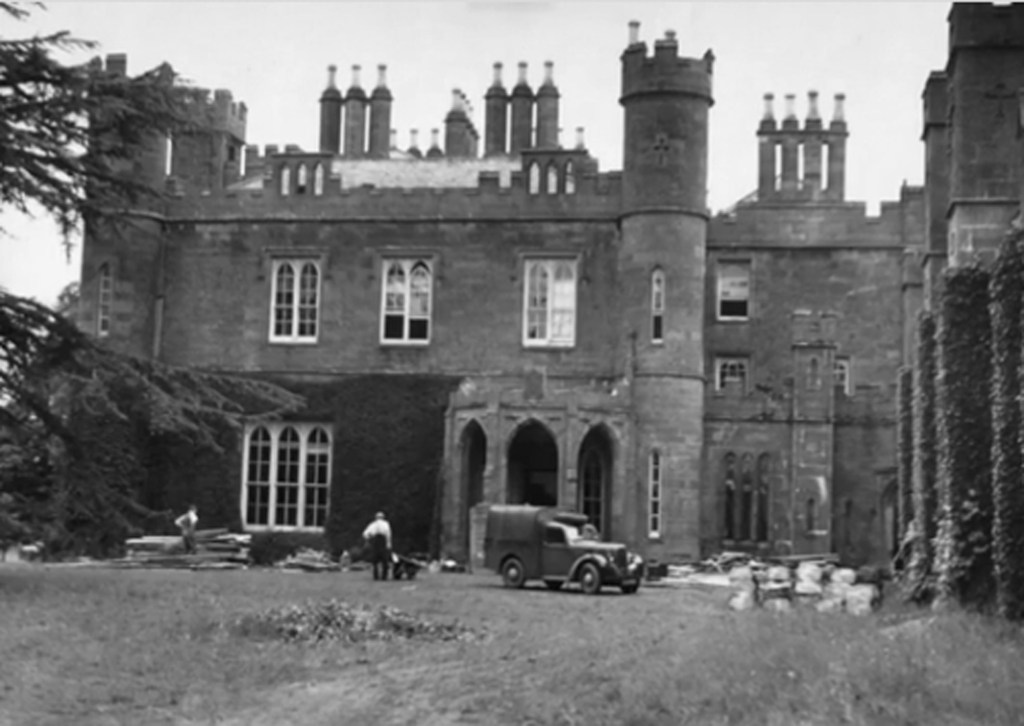
Once established in the property, the workmen set about the task of stripping it out. Doors, windows, staircases, cupboards, floorboards and fireplaces were carefully removed and sold. Fireplace removal was a popular job with the men, as they frequently found silver coins that had slipped down between the mantelpiece and wall. Brand’s workers often extracted complete rooms from old houses, which were packaged up, sold on and rebuilt in more modest homes of the time.
Brand himself used his network of contacts to find new owners for salvaged items, and he also advertised extensively, the foreman on the job the main point of contact for buyers who could turn up at properties and cart off their purchases. Other items were transported to the company yards in Dundee or sent to London for auction.
Once the house had been stripped out, slates, lead and timber beams were removed from the roof. Slates were usually of much higher quality than modern products of the time, and the majority went to slaters engaged in building new houses. Much of the timber also went to new housing, although pitch pine often found its way to shipyards for use as keel blocks.
Lead was a particularly valuable commodity. Often silver was mixed with lead to strengthen it and, once stripped, the lead was sent to smelters, where the silver was extracted. The proportion of silver to lead was small, but the effort was worthwhile in the case of large houses, where perhaps 20 tons of lead was salvaged from long flat roofs, copings and pipework.
Quite often the buildings contained old stone or wood carvings which were carefully removed. Brand had a list of collectors of such work, and they were given the first opportunity to buy. If they were not interested, the carvings were sent to London for sale, where they frequently fetched a high price.
Often, pieces of ornamental stone were requested by the previous owners or people on the estate seeking to decorate a garden or a pathway. But the stones which made up the building itself were generally worthless. So when only the bare walls remained, the demolition stopped. Brand’s men packed away their tools, loaded the lorry, and moved on to the next job, leaving an empty shell. In time, ivy and other creepers softened the starkness of the now soulless ruin.
Brand’s run of country house and castle demolitions ended in the late-1960s, when a greater appreciation for historic buildings, coupled with the Town and Country Planning (Scotland) Act 1969, made demolition of buildings of architectural or historic significance much more difficult. The growth of conservation bodies like the National Trust for Scotland offered landowners other options to offload their stately piles. Brand’s demolition firm, which had branches in Aberdeen and Glasgow, remained busy and in business until 2025, although he passed away in his 90s.
His archive of photographs, drawings and press cuttings was presented to Dundee Museums and Art Galleries and loaned to Historic Environment Scotland.
If you have enjoyed this article, you might like to help with a future research project or PayPal.me.


