
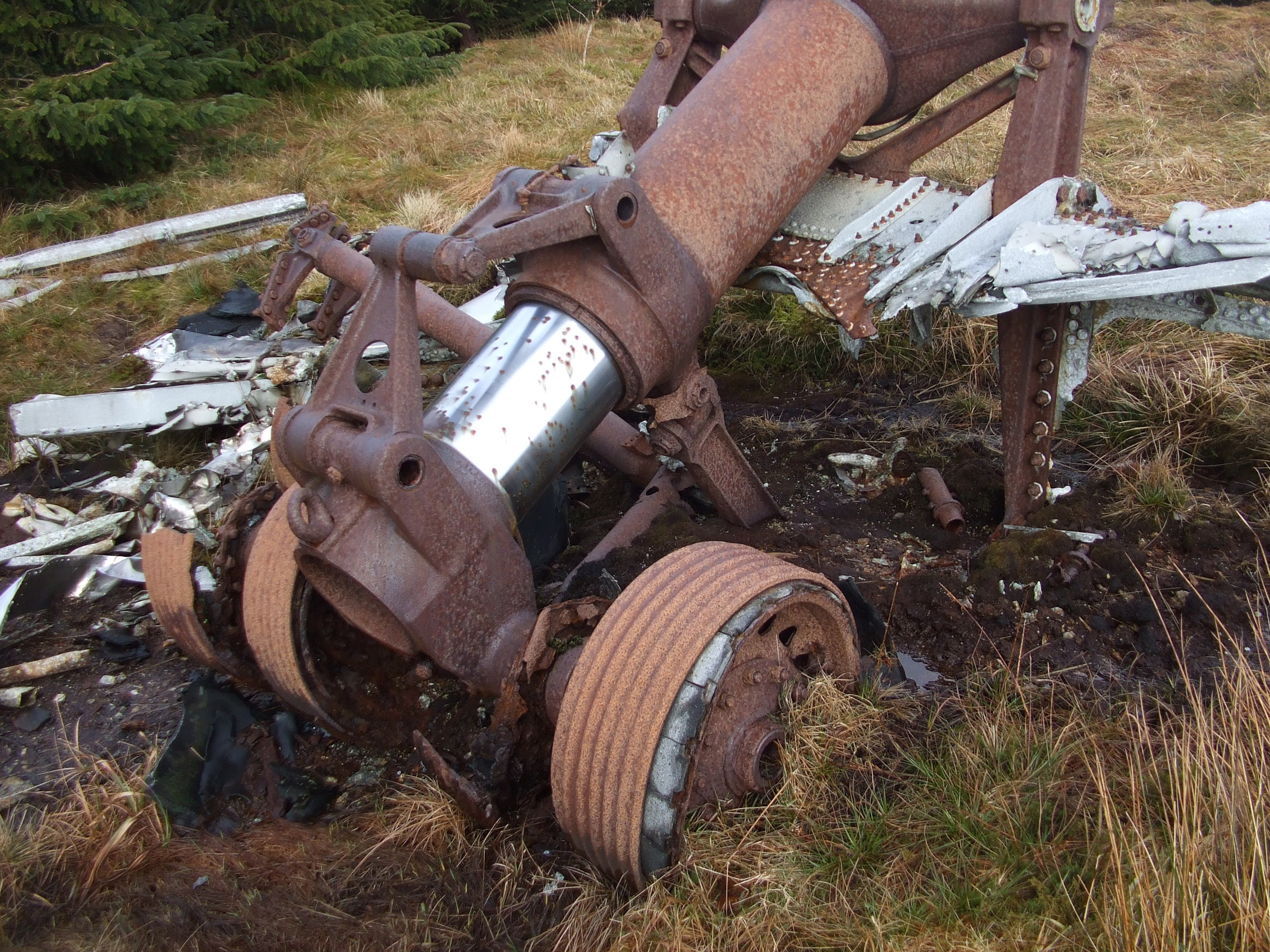
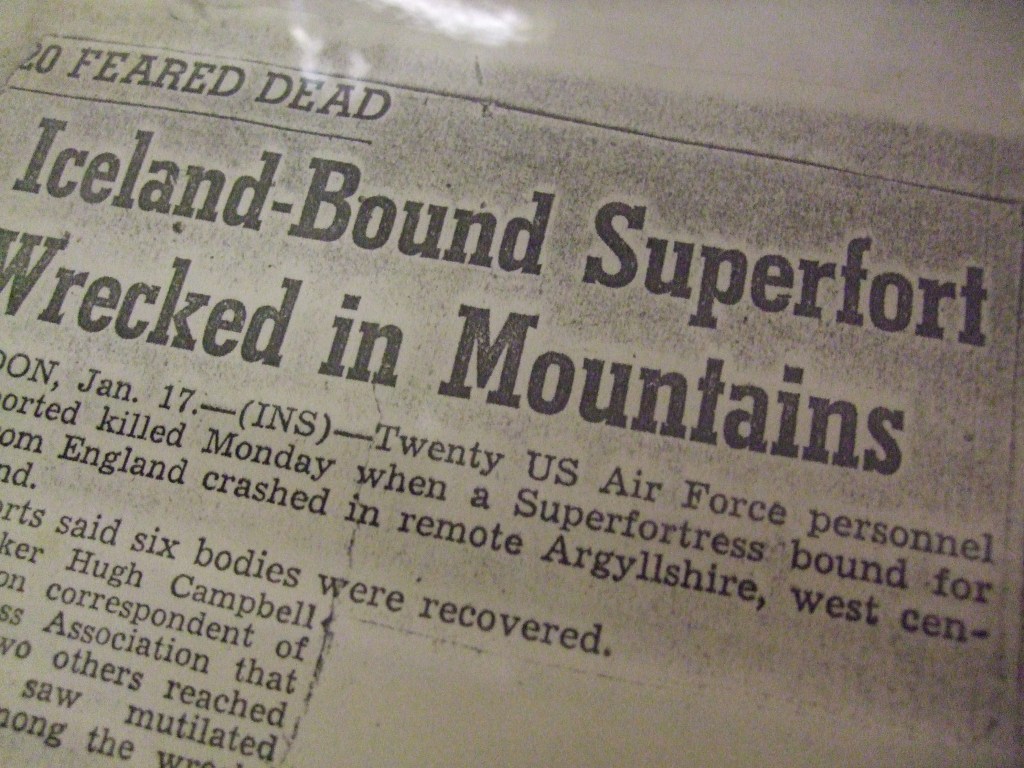
On a remote Scottish hillside lie the remains of a USAF aircraft which crashed to earth, killing all passengers and crew. But the declared ranks of those on board and the cargo they were carrying remains shrouded in mystery. James Carron examines the fate of this Cold War aircraft.
Deep in the highlands of Argyll, Succoth Glen is a desolate place to die. But that probably mattered little to the airmen aboard Boeing B-29A Superfortress 44-62276 as their aircraft plunged headlong into the hillside and exploded.
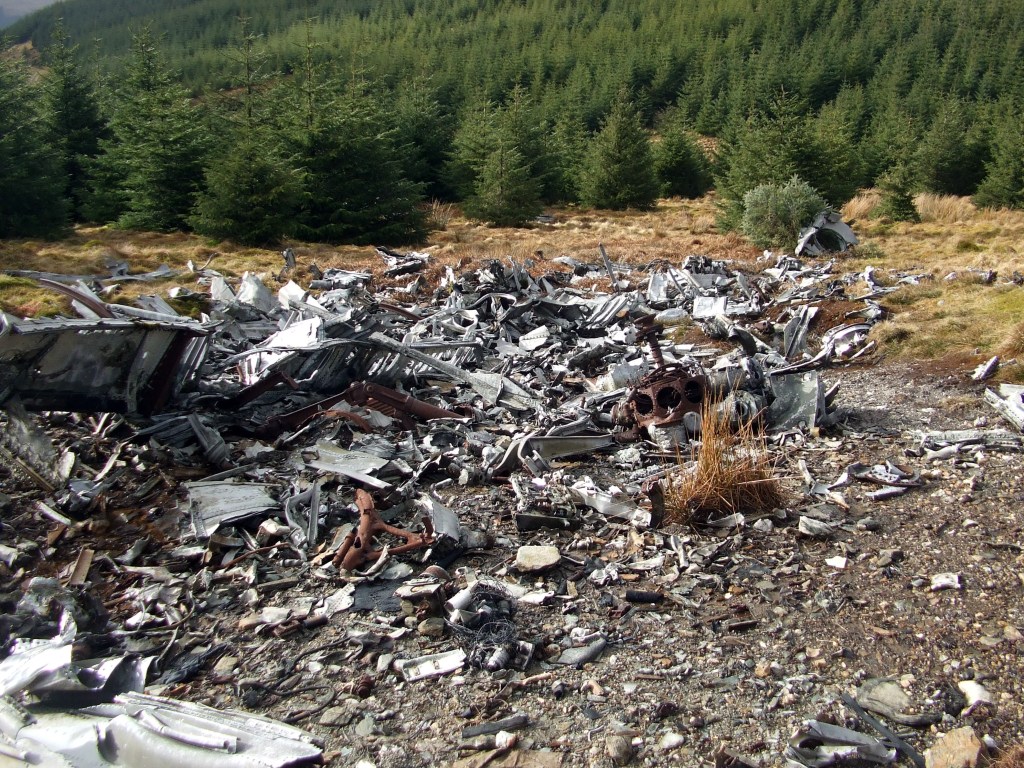
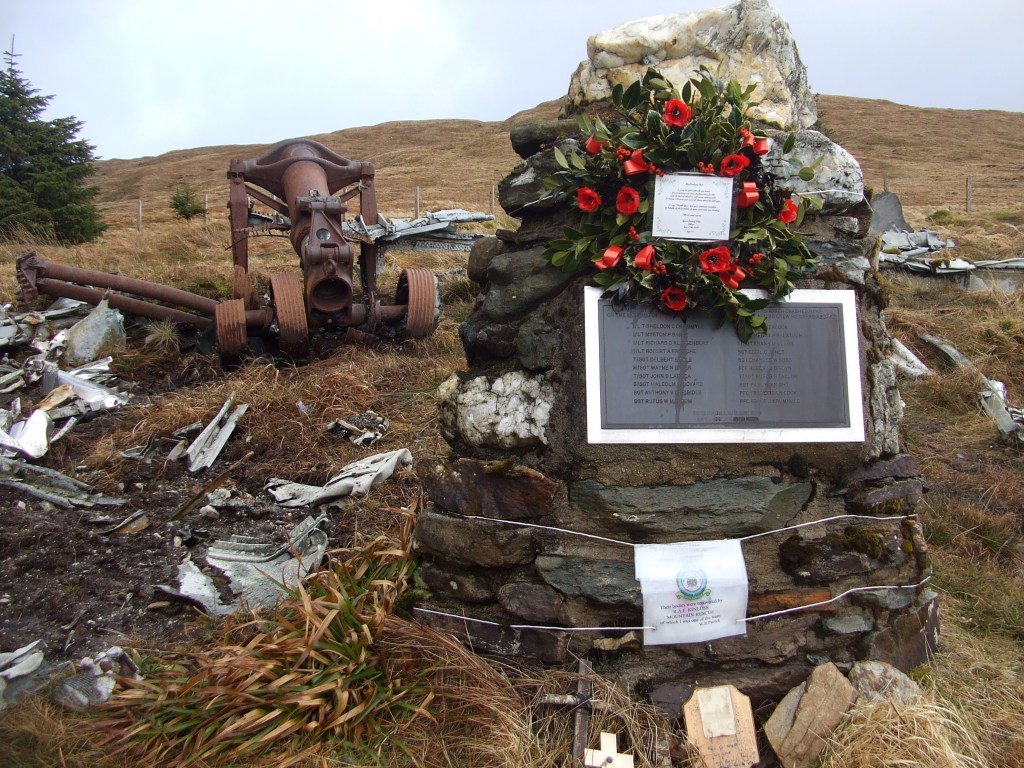
All 20 men on board died in the inferno. Twisted shards of metal flew across the moor and the blaze that raged for almost 24 hours blackened a vast swathe of land. Over 75 years on, much of the wreckage remains, and there is a well-tended memorial to those who died. But mystery still shrouds the final moments of the ill-fated flight, and the intriguing secrets some believe the plane held.
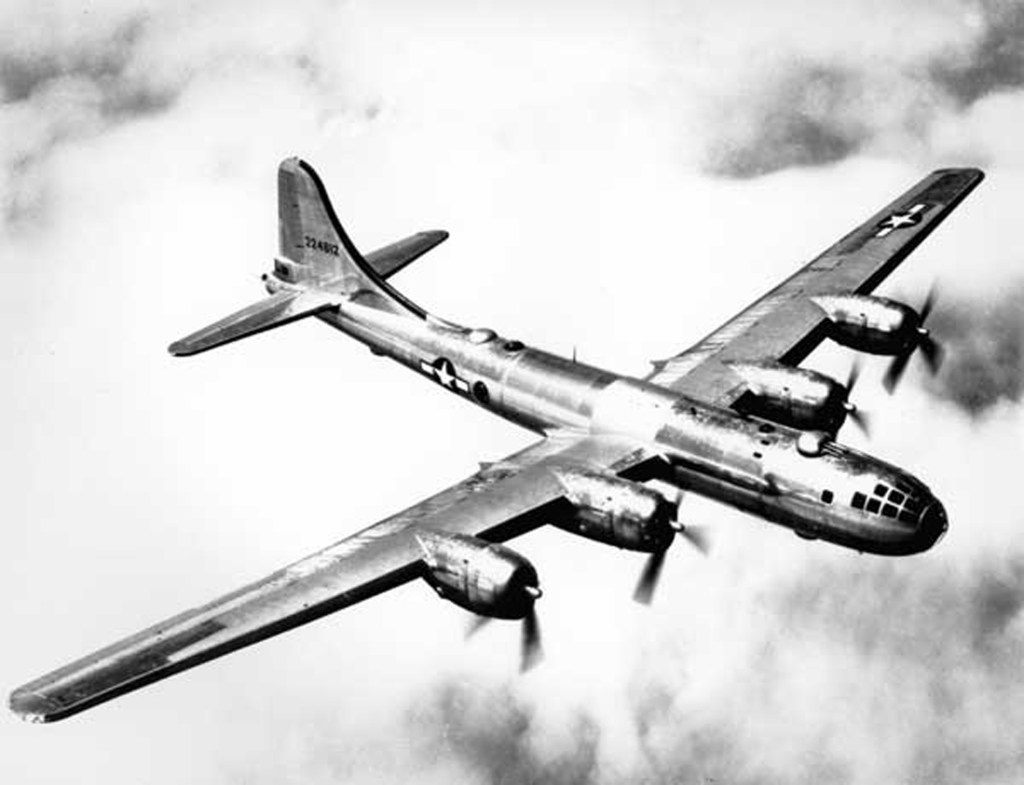
The B-29 and its crew were heading back to the United States after a three-month tour of duty in post-war Europe. Although not directly involved in the supply flights undertaken during the Berlin airlift, it was one of a fleet of B-29s sent by the United States Air Force to Britain and Germany in 1948 in a show of force designed to protect air corridors and discourage the Soviets from attempting to cut the vital lifeline.
In January 1949, after successfully patrolling the Berlin airlift corridors, 44-62276, of the 32nd Bomb Squadron, 301st Bomb Group, and a second Superfortress, 034, were preparing to leave their adopted base at RAF Scampton for the return home. From the Lincolnshire airfield, they were scheduled to fly north to Keflavik, in Iceland, for refuelling before crossing the Atlantic to Smoky Hill Air Force Base, Salina, Kansas. The airmen were all looking forward to seeing their families and friends.
On the morning of 17 January 1949, the pilots were briefed on the conditions they faced. The weather, it was noted, would be particularly challenging, with freezing temperatures and poor visibility forecast. The crew’s route would take them through a cold front and an area of low pressure off the west coast of Scotland, and there was a likelihood of heavy icing in all clouds that might be encountered.
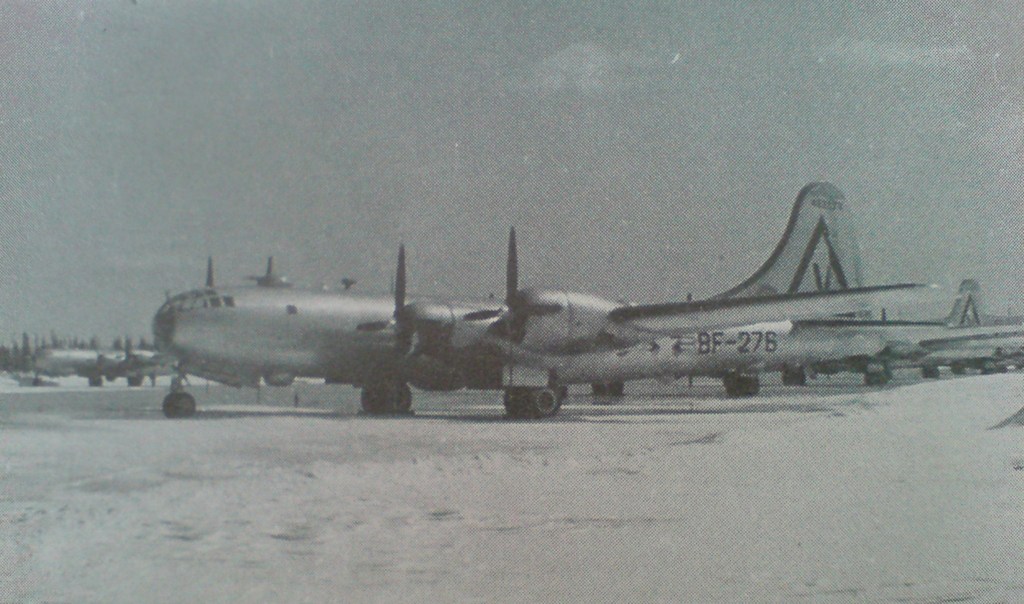
At 08.00 hours, the B-29, piloted by Captain Donald E. Higgs, took off, followed five minutes later by 44-62276, flown by First Lieutenant Sheldon C. Craigmyle. He was accompanied in the cockpit by co-pilot First Lieutenant Myrton P. Barry and navigator First Lieutenant Richard D. Klingenberg. Bombardier First Lieutenant Robert A. Fritsche completed the four-man flight crew. The other sixteen men on board were passengers.
Craigmyle was an experienced and decorated B-29 pilot, having flown missions over both occupied Europe and the Pacific during the Second World War. Barry, his co-pilot, had also been decorated for his bravery, flying B-17s over occupied Europe during the conflict. Although he returned to civilian life after the war, he re-enlisted in 1948.
From Scampton, the two Superfortresses thundered north over England, and soon crossed into southern Scotland. As predicted, both pilots ran into the cold front. Captain Higgs flew through it at an altitude of 5,500 feet and experienced no problems with icing. However, Craigmyle, who was travelling at a higher altitude, was less fortunate.
Higgs later recalled that at “approximately one hour and fifteen to thirty minutes after take-off, I was in contact with 2276 and he gave me his position as approximately twenty-five miles south-west of Prestwick, cruising at an altitude of 8,500 feet.
“At that time he told me he was picking up heavy ice and was going to call Prestwick and obtain a new altitude, which I heard him do over his radio. He asked for a new altitude of 14,000 feet and was given 14,000 feet by the Prestwick radio.”
With conditions rapidly deteriorating, Higgs was instructed to set a new course for the coastal airbase at Prestwick. Craigmyle continued north, having reported no difficulties when he was in contact with Prestwick. There is no evidence to indicate that he received the same instructions as Higgs who tried at intervals to contact the other B-29 but, on each occasion, he was unsuccessful.
Higgs headed for Prestwick but the airport was closed due to low visibility and he was told to return to Scampton, where he landed successfully. Craigmyle remained on course for Iceland, flying north over the west coast of Scotland after requesting the change of altitude. Whether or not he managed to lift the B-29 to 14,000 feet has never been established. With heavy icing on the wings, it is possible the aircraft was becoming increasingly unstable and more difficult to control.
The B-29A he was flying was an upgraded version of the original B-29. Built at Boeing’s Renton plant in Washington State, it featured an improved wing design with greater strength and a longer span – 142ft 2ins. This presented a substantial surface for ice to form on. The plane was, however, equipped for winter and weather flying and, prior to its departure from Scampton, had undergone a complete 100-hour inspection and a satisfactory test flight.
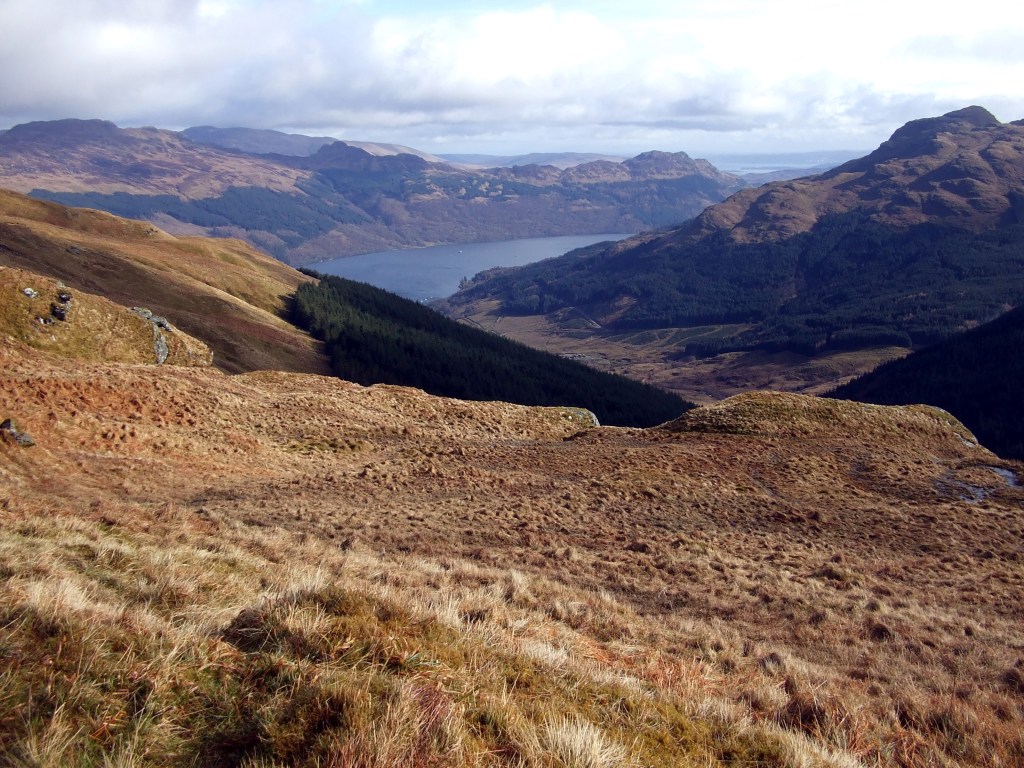
There are no records of any radio transmissions after Higg’s final contact with Craigmyle. To understand a little of what happened next we only have the statements of witnesses on the ground to go on. The B-29 made it as far as Loch Goil, about forty miles north-northwest of Prestwick. Plumber Hugh Sleeth, who lived in Lochgoilhead, a small community at the top of the loch, reported that at around 09.50 hours he heard the roar of an aircraft overhead.
“It appeared to come from Beach, a hill on the east side of Loch Goil, and was going in the direction of Beinn Lochain, west of Lochgoilhead. We thought from the roar of the engines that the plane was too low for the hills. We could not see the plane for the low mist,” he stated.
“When the plane seemed to be over Beinn Lochain way, the engines suddenly stopped, and there was a sound which I described as a plop.”
Another Lochgoilhead resident, David MacLachlan, a carpenter by trade, also heard the sound of an aircraft coming from the direction of Beach, but again he could not see it because of the mist. Within two or three minutes of first hearing the plane, I heard a crash which was preceded by what appeared to be a sudden acceleration of the engines. I thought the crash was either on Beinn Lochain or Beinn Tharsuinn,” he remarked later in his statement to USAF Accident Officer William R. Harmon.
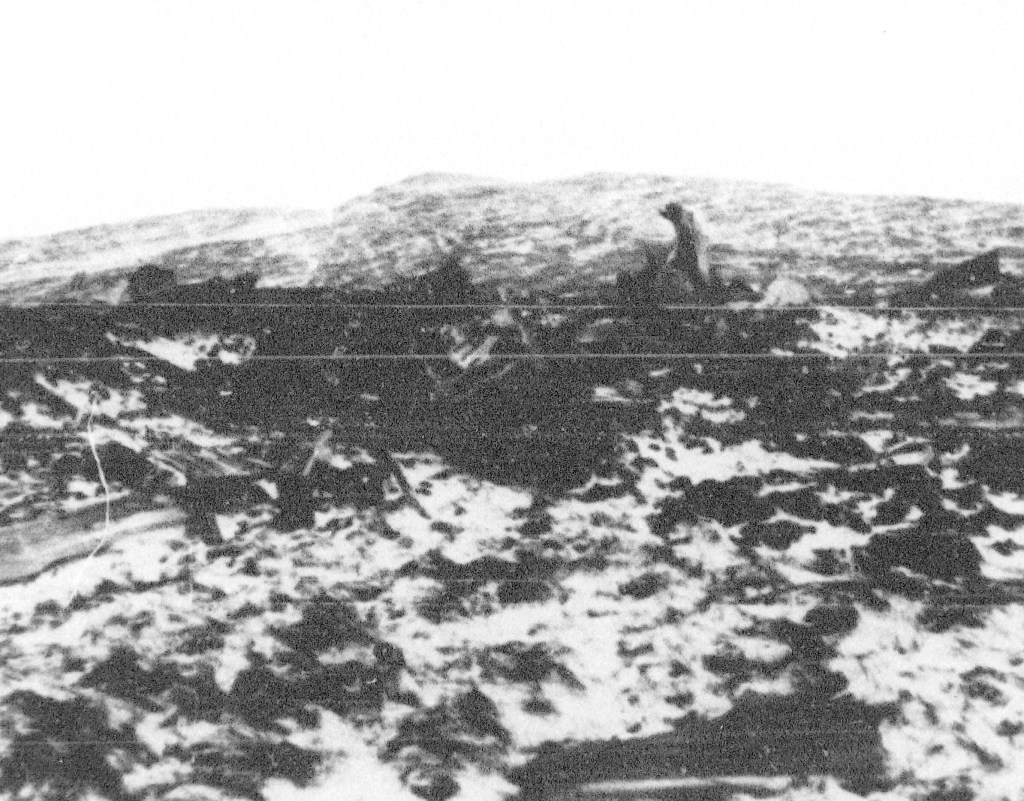
The witnesses estimated that the mist was down to about 500 feet. Sleeth, MacLachlan and another local man, Duncan Campbell, met up minutes later and discussed what they had just heard. While Sleeth went to the village police station to report the matter, the other two men set off into the hills to investigate further. Others quickly joined the search. At around midday, attracted by the smell of burning, MacLachlan and another man, Alexander Douglas, found the crashed B-29 on open hillside to the north west of Beinn Tharsuinn.
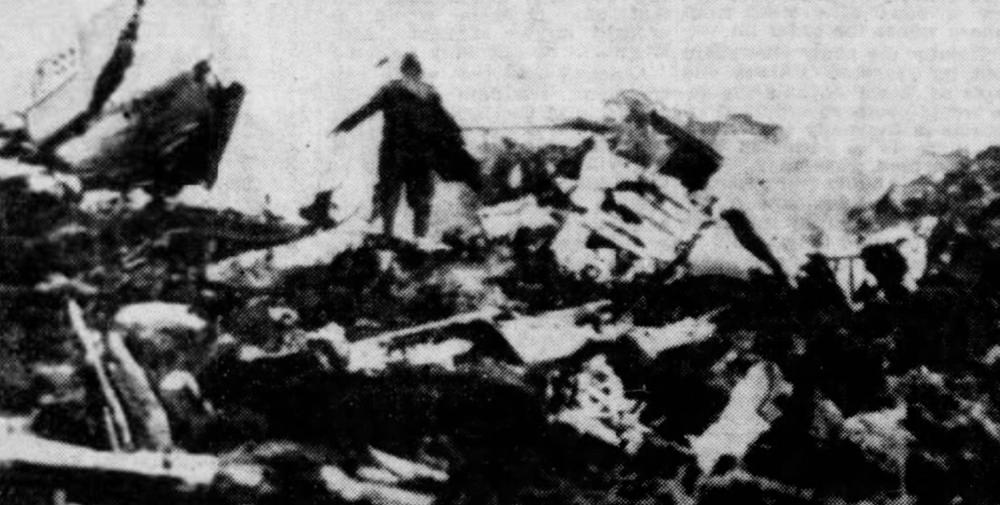
“We could not approach close to the main part of the plane for flames and heat,” MacLachlan said. “Wreckage was strewn over a considerable area. We made a hurried round of the area. There were no signs of life. I counted at least six trunks of the dead.”
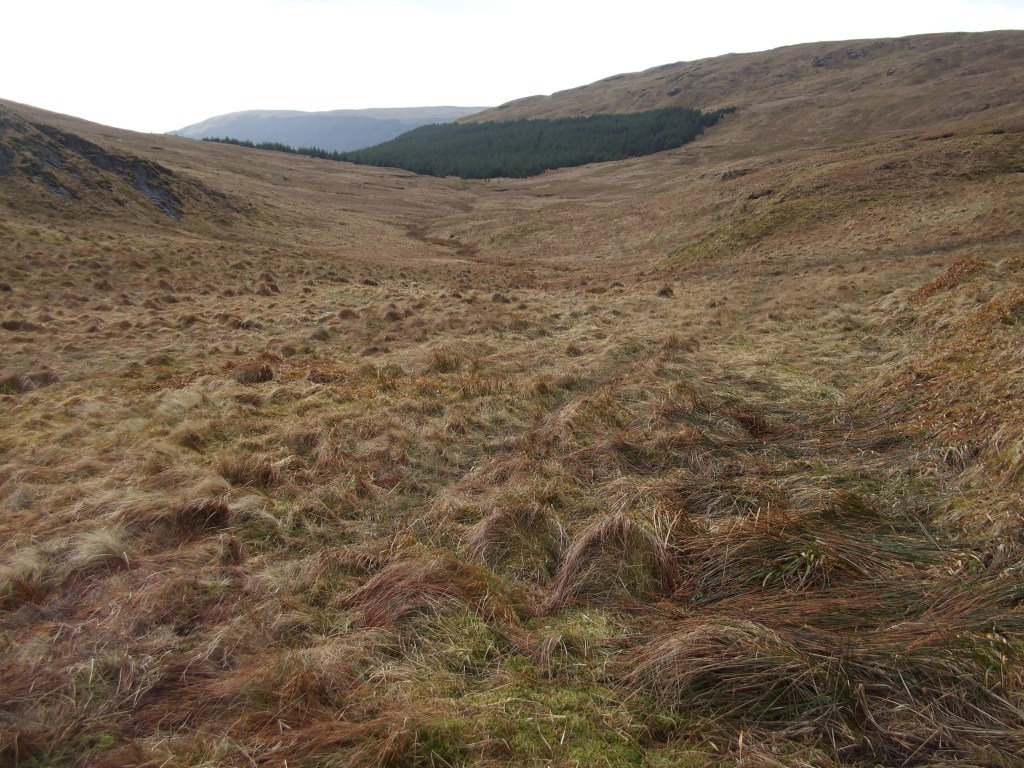
A horseshoe of low hills encircles the upper reaches of Succoth Glen, the valley where the ill-fated Superfortress ended its journey. The ground rises gently from the west. On the east side, however, the slopes are steeper and flecked with rocky buttresses and dark crags. They should have presented no obstacle for a veteran pilot like Craigmyle, who had 3,500 hours of flying time under his belt, 1,500 hours of these in B-29s.
Craigmyle was one of the most experienced weather instrument pilots in the 301st Bomb Group, having flown in Alaska with the 97th Bomb Group during the winter of 1947/48. This may explain why he decided to push on when Higgs turned around and headed for home.
Having reached the crash site, witnesses reported seeing bodies lying at various distances from the wreckage. Meanwhile, David McCallum, one of the men who joined the search, spotted a fresh mark on the hillside. “On the back of Corrow Hill I saw a fresh mark as if a wing tip of the plane had struck it,” he said. “It was not a large mark and not noticeable from any distance.”
Despite Craigmyle requesting an altitude of 14,000 feet, when the B-29 crossed Loch Goil the aircraft was clearly flying at around 2,000 feet, the height of the hills where it came to grief. One possible explanation for this low altitude is that Craigmyle had descended in a bid to clear some of the ice from his wings. But, if this was the case, it proved to be a fatal error.
With little prospect of finding any survivors, a recovery rather than a rescue mission was mounted. But it posed more questions than it answered and brought new ambiguity to the incident. In his book, Whensoever – 50 Years of the RAF Mountain Rescue Service, author Frank Card records that the RAF Kinloss Mountain Rescue Team was initially requested to attend. Members of the team were given an approximate location of the crash site and arrangements were made for them to fly to Glasgow. From there, the Royal Navy would take them on to Succoth Glen. However, just before the team left its base in north-east Scotland, it was unexpectedly stood down.
Members were told the Americans had contacted the RAF, saying they would deal with the matter themselves. However, according to Card, no one visited the crash site in an official capacity for three days. Then, RAF Kinloss received another call requesting their assistance. On 22 January 1949, accompanied by 200 US naval personnel and a fleet of vehicles, the RAF men set off up Succoth Glen from the village of Strachur, on Loch Fyne, approaching from the west.
Former team leader William Patrick, attending his first call-out, described the scene: “It was a dreadful sight when we first reached the ’plane,” he remembers. “The American Air Force had provided body bags and we went round gathering body parts. We had to account for 20 to match the number of people on board, and we did. We were assured there were only 20 bodies to be accounted for, which we delivered. It was pretty horrific. There were limbs all over the place, but without a shadow of a doubt, we picked up 20 torsos and wrapped them in blankets.”
Personal belongings were also gathered up. Intriguingly, so were many thousands of dollars worth of high-denomination banknotes, including $500 and $1,000 bills, along with gold insignia that would normally have been issued only to ranks far higher than those of the men on board. According to US records, the highest rank among the people travelling in 44-62276 was First Lieutenant.
“We couldn’t help noticing that there appeared to be a number of very high-ranking officers on board,” Patrick continued. “I myself handled three pairs of solid gold pilot wings and pinned them securely onto their uniforms. That sort of insignia was for ranks way beyond what they were supposed to wear.”
The mountain rescue team was also surprised to witness an American padre burning belongings and papers found in the wreckage. Why he was doing this, no one knows, but it has prompted speculation that there may have been top-secret files on the aircraft. When confronted by members of the mountain rescue team, he simply pulled rank and told them it was none of their business.
“We were amazed when he started a small fire and began burning the documentation,” continued William Patrick. “We could not see the logic in this and quickly came to the conclusion that he was no padre.”
The recovery mission and crash scene examination were hampered not only by the remote location but also by freezing rain and snow. But, eventually 20 bodies were gathered from the wreckage and the surrounding hillside and transported to a mortuary in Frankfurt, Germany, where the task of confirming the identities of the dead began.
Based on the available evidence and an investigation of the crash site, the Accident Board concluded that the heavily-iced aircraft scraped a wing on top of the hill, became inverted and crashed into the hillside some 700 feet below. From the position of the wreckage, most of which was found in a trench 70 feet long and 20 feet wide, it was determined that the aircraft struck the ground at a very high angle of dive and was almost completely buried in the soft spongy ground. The Board also noted that the wreckage burned for “almost twenty-four hours” after the initial impact.
“Since there were no survivors, it is impossible to determine the exact cause of the accident,” the report’s authors added. “However, from the facts it is the opinion of the Board that the primary cause factor was heavy icing.”
The Bureau of Aircraft Accidents Archives report on the crash concludes: ‘The exact cause of the accident was not determined with certainty. However, the assumption that the loss of control was caused by heavy icing conditions was not ruled out.’
The Accident Board recommended no further action be taken, but the matter did not end there. Three months after the recovery operation, to the astonishment of everyone involved, a visitor to the crash site found the remains of another body. No one has been able to establish who this person was and why he might have been on the plane. All official records confirm there were 20 men aboard 44-62276 when it took off from RAF Scampton.
Another RAF officer informed William Patrick of the unexpected find. He said: “I was stunned when he told me he and his team had buried a twenty-first body three months later. He was emphatic about it. He said the burial was carried out very discreetly close to the impact site.”
In April 2004 the story of the ill-fated flight took yet another twist when the Daily Mail reported that the B-29 may have gone down with thousands of dollars ‘ worth of diamonds on board. At the time of the crash, the smuggling of contraband on flights between Europe and America was not uncommon and, according to Texan Erwin Eckhert, a veteran of the 301st Bomb Group quoted by the newspaper, Craigmyle was carrying the treasure home in a bottle to fund a new life. This was to be the last flight of his military career. He planned to return to his hometown of Madison, Indiana, where, with his wife of six years, Allene, he would set up a jewelry business.
“I knew Craigmyle well,” Eckhert told the newspaper’s reporter. “He was a jeweller by trade and was getting out of the Air Force to start his own business. He had been buying good diamonds in the Netherlands and in Germany and he stuffed them into a long, slender Alka Seltzer bottle. There was at least $50,000 worth of diamonds. They’ve never been found.”
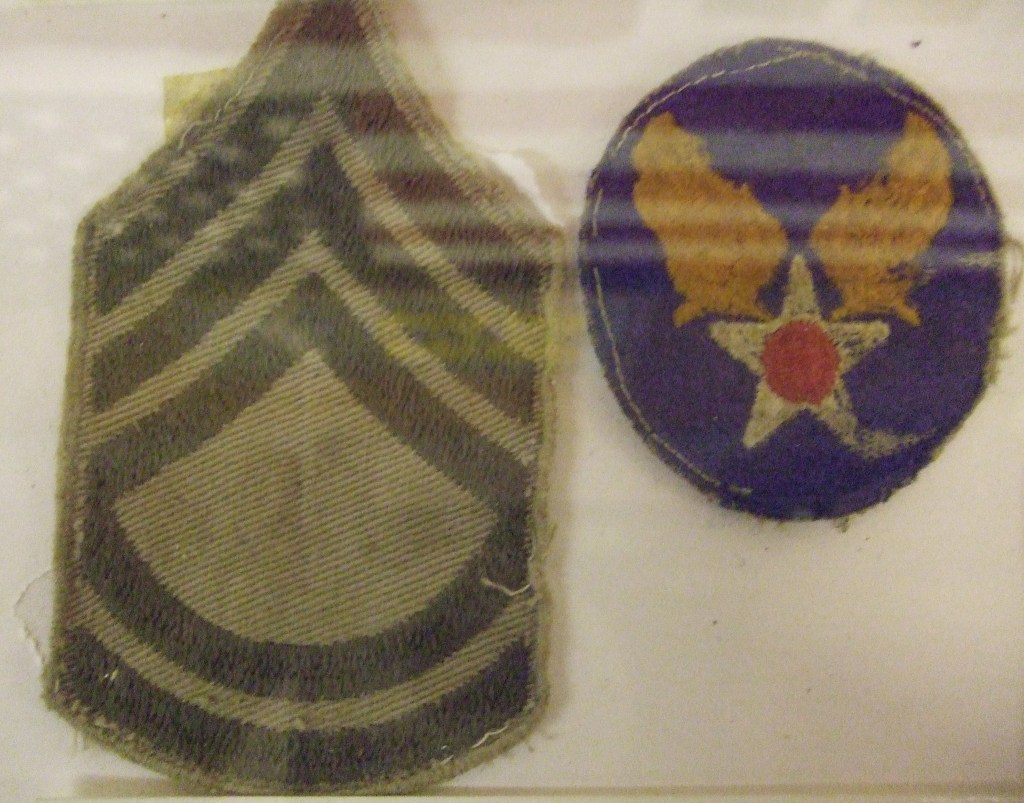
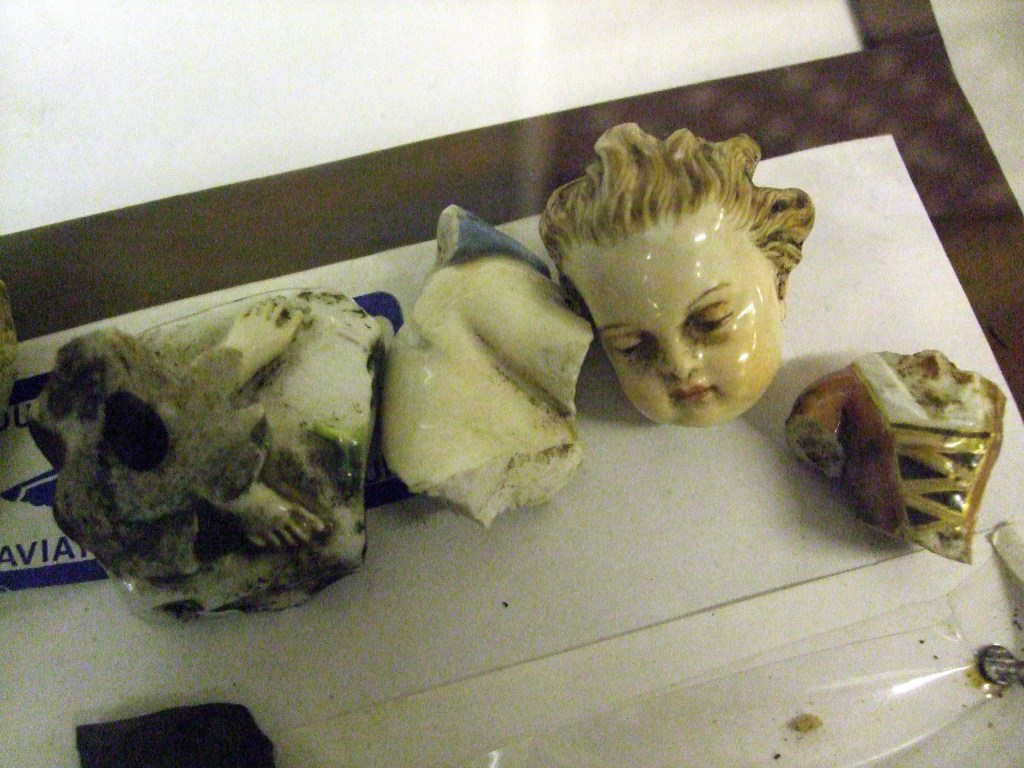
Aside from the diamonds, over the years a number of valuable artifacts, including three gold rings, have surfaced and personal effects have also been uncovered at the crash site. In 1981 a tin box belonging to one of the crew, Sergeant John Lapicca, was unearthed beneath a section of wreckage. It contained love letters from his wife, family photographs, flight documents and other papers and personal items. Some of these, along with other recovered objects and personal effects, are displayed at the Dumfries and Galloway Aviation Museum, in Dumfries, Scotland.
Whether or not Craigmyle was carrying the diamonds, Eckhert’s claims only adds to the mystery surrounding the final flight of 44-62276. For many years rumours were rife that the Superfortress was carrying top-secret papers. One account has even suggested there was a cargo of nuclear material on board. Eckhert dismisses such theories, believing there was nothing more clandestine on the plane than black market goods.
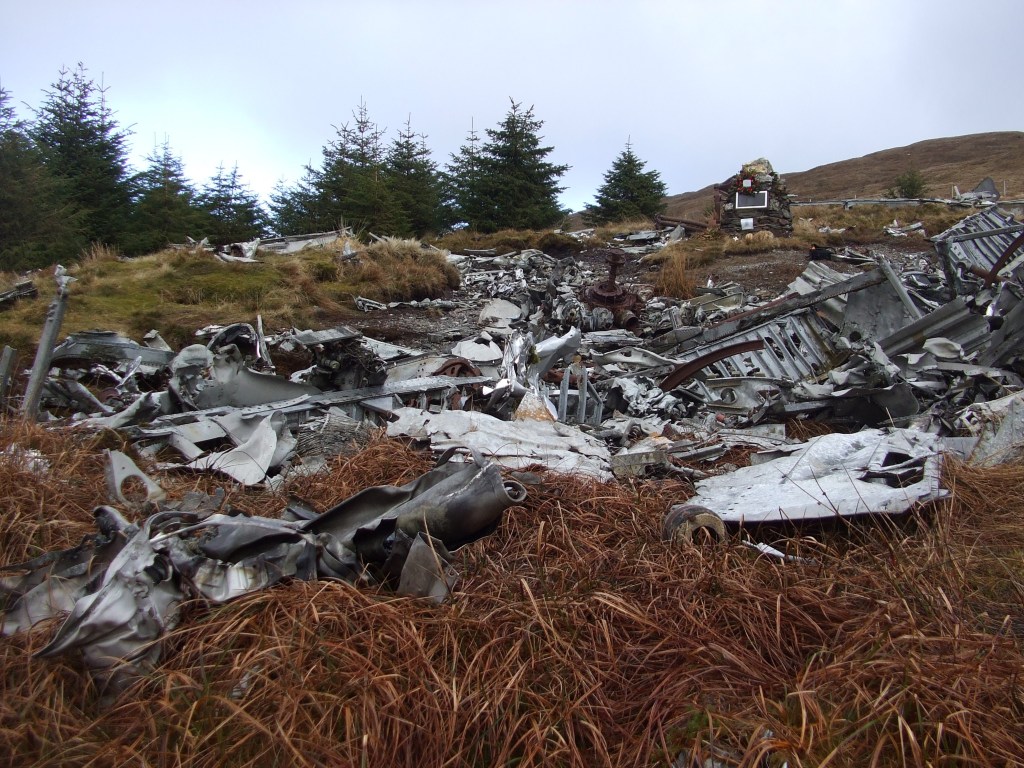
In Succoth Glen itself, a substantial amount of wreckage remains, although it has suffered at the hands of time. Rusting landing gear and the remains of the Wright engines give some idea of the scale of the B-29. There are smaller items too, like a rusty buckle that sits by the memorial cairn. Whilst tiny in comparison to the engines, landing gear and torn sheets of aluminum, it is, nevertheless, a poignant reminder of the human cost of the crash.
Although open hillside at the time of the disaster, the crash site now lies within a forest plantation. Trees are slowly enveloping the wreckage of the Superfortress, shrouding still further the mysteries of the final, fatal, flight of 44-62276 and its crew.
If you have enjoyed this article, you might like to help with a future research project or PayPal.me.


