
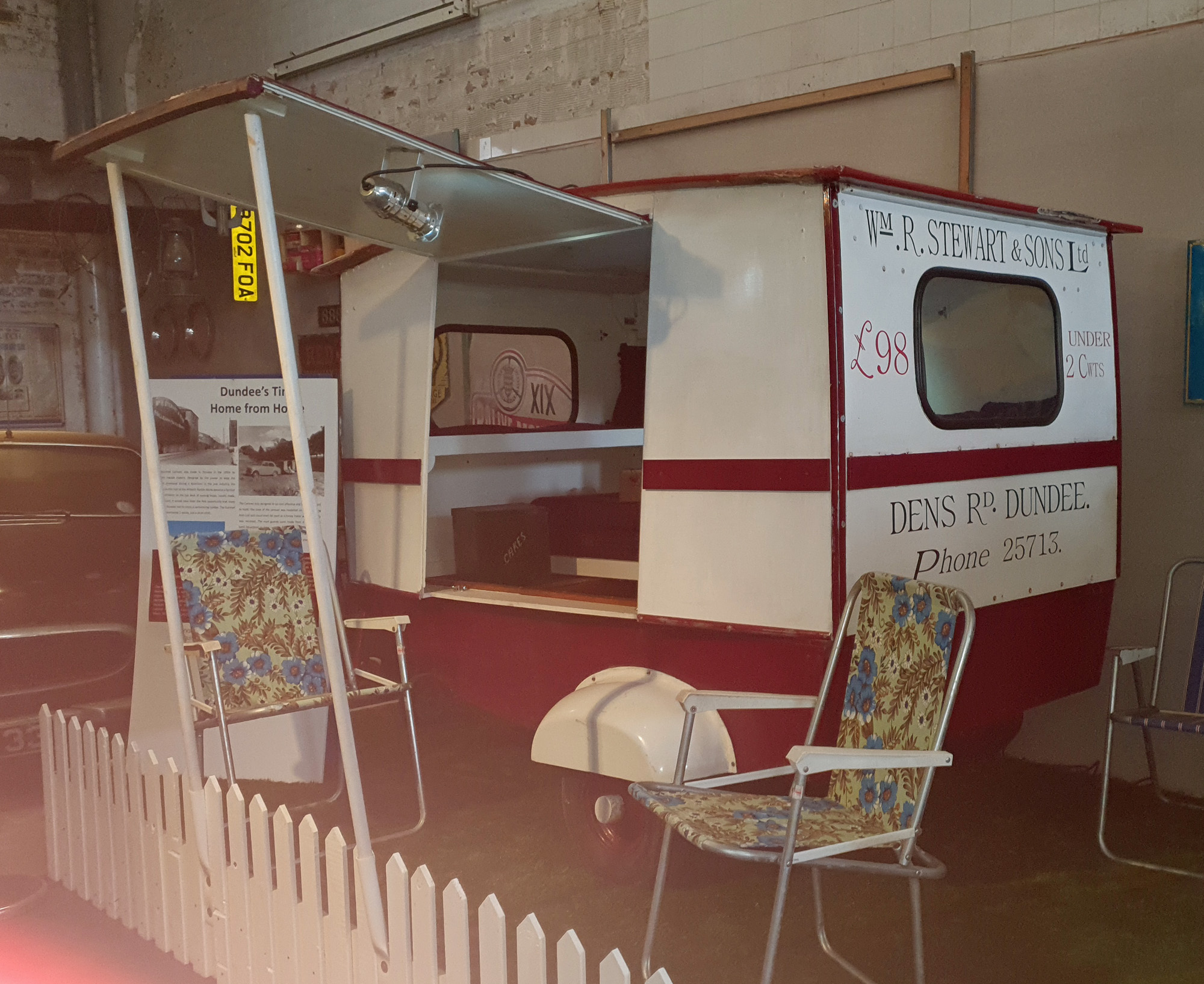
Henry Alexander’s Ford Model T was not the only vehicle to scale Britain’s highest mountain, Ben Nevis. Almost 50 years later, a caravan built in Dundee was hauled to the summit in a similar publicity stunt.
Invented by London man Arthur Cooksey, the tiny Nutshell caravan was manufactured by Wm R Stewart & Sons at the company’s Hillbank Hackle Works in Dens Road. Built from 1959 into the early 1960s, the little home from home kept Stewart’s factory workers busy during a downturn in the city’s traditional jute industry.
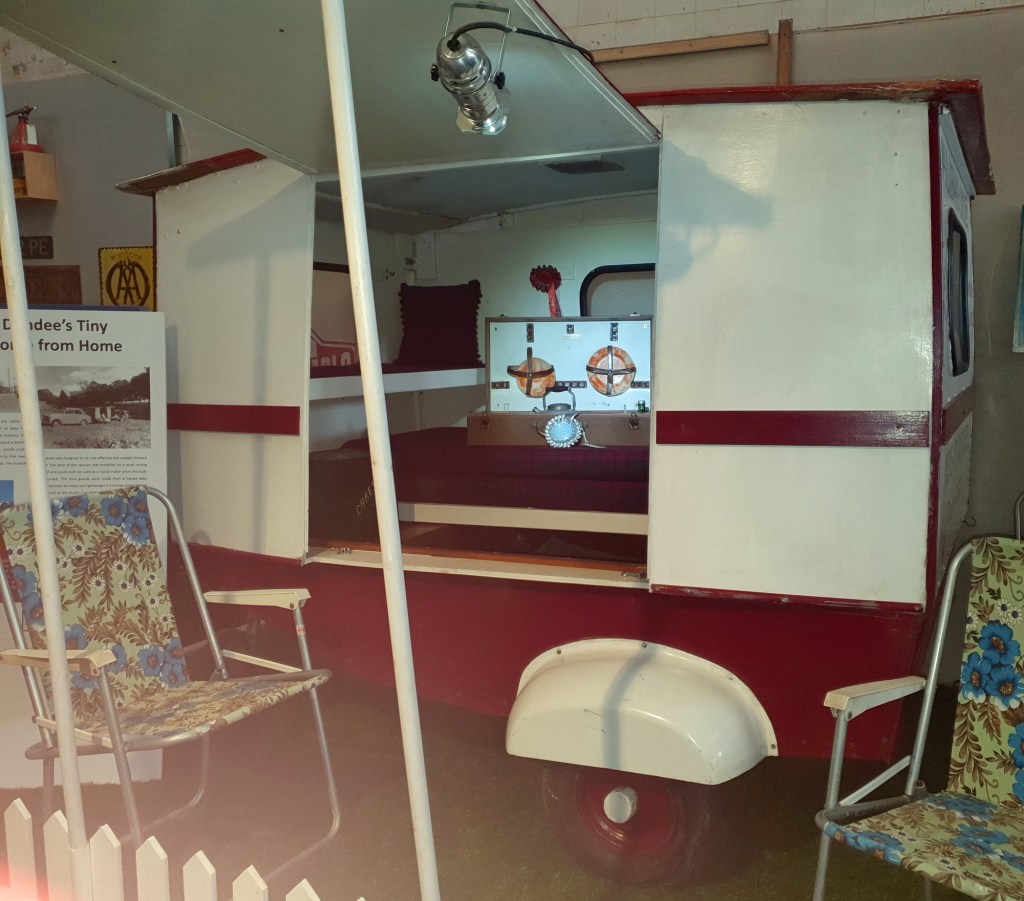
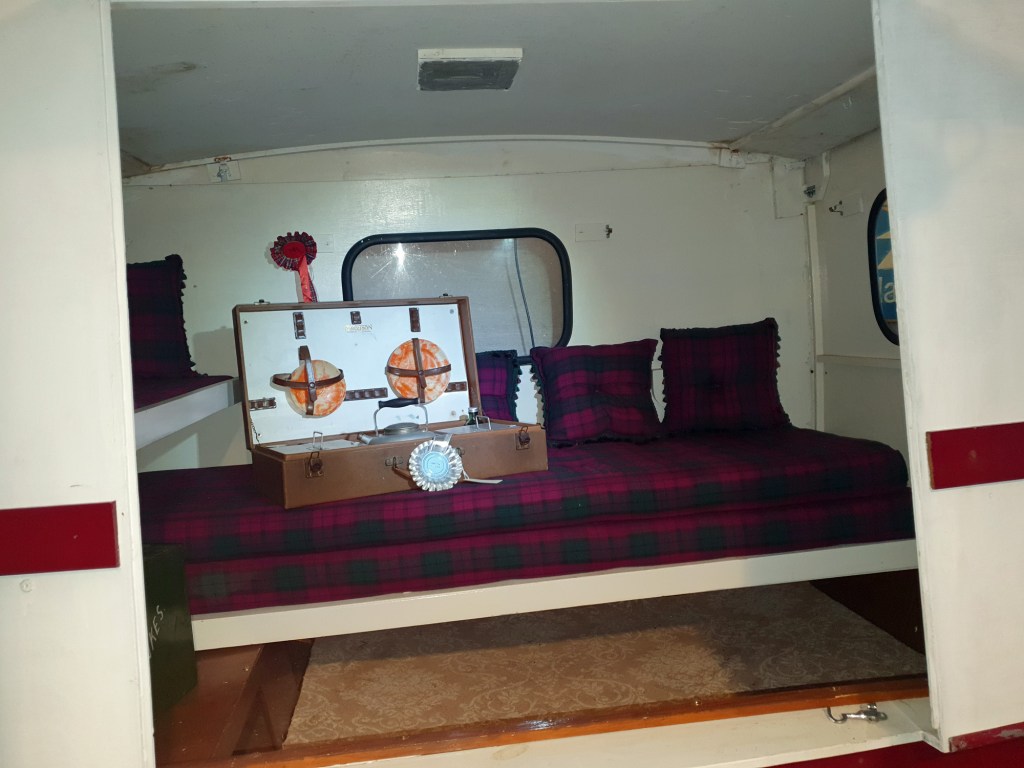
Made of plywood with perspex windows and based on a dinghy-style chassis with two wheels, the tiny caravan could accommodate two adults and a child. Inside, there were two adult bunks with horsehair matting and a shelf at one end for the child to sleep on. The door was a section of one side of the caravan that opened outward and, propped up with a couple of poles, provided a basic awning.
Cheap and lightweight, the caravan could be legally towed behind a small car, like the Austin 7, a microcar, or even a motorcycle and sidecar combination. The structure folded down to make for easier towing. Promoted across the country and costing just £98, the Nutshell was the first opportunity many people had to enjoy a caravanning holiday, and it soon became a familiar sight on the country’s roads.
In the summer of 1960, a group of Royal Marines and hillwalkers led by former RM Commando Fleming Baird hauled one of the caravans up to the summit of Ben Nevis. The publicity stunt took 14 hours to complete and involved manhandling the Nutshell up the tourist path, dismantling it on occasion to cross rougher, steeper terrain. However, they made it and at the top, members of the party changed into evening dress and summer frocks, and celebrated the achievement with champagne. The stunt highlighted the lightweight and maneuverable nature of the product.
The Nutshell sold well and, in 1960, plans were announced to scale up production at the factory from 10 units a week to 10 units per day. However, increased affluence and the availability of cheap package holidays in the 1970s led to its demise, and very few now survive. There is, however, one on display at the Dundee Museum of Transport.


