
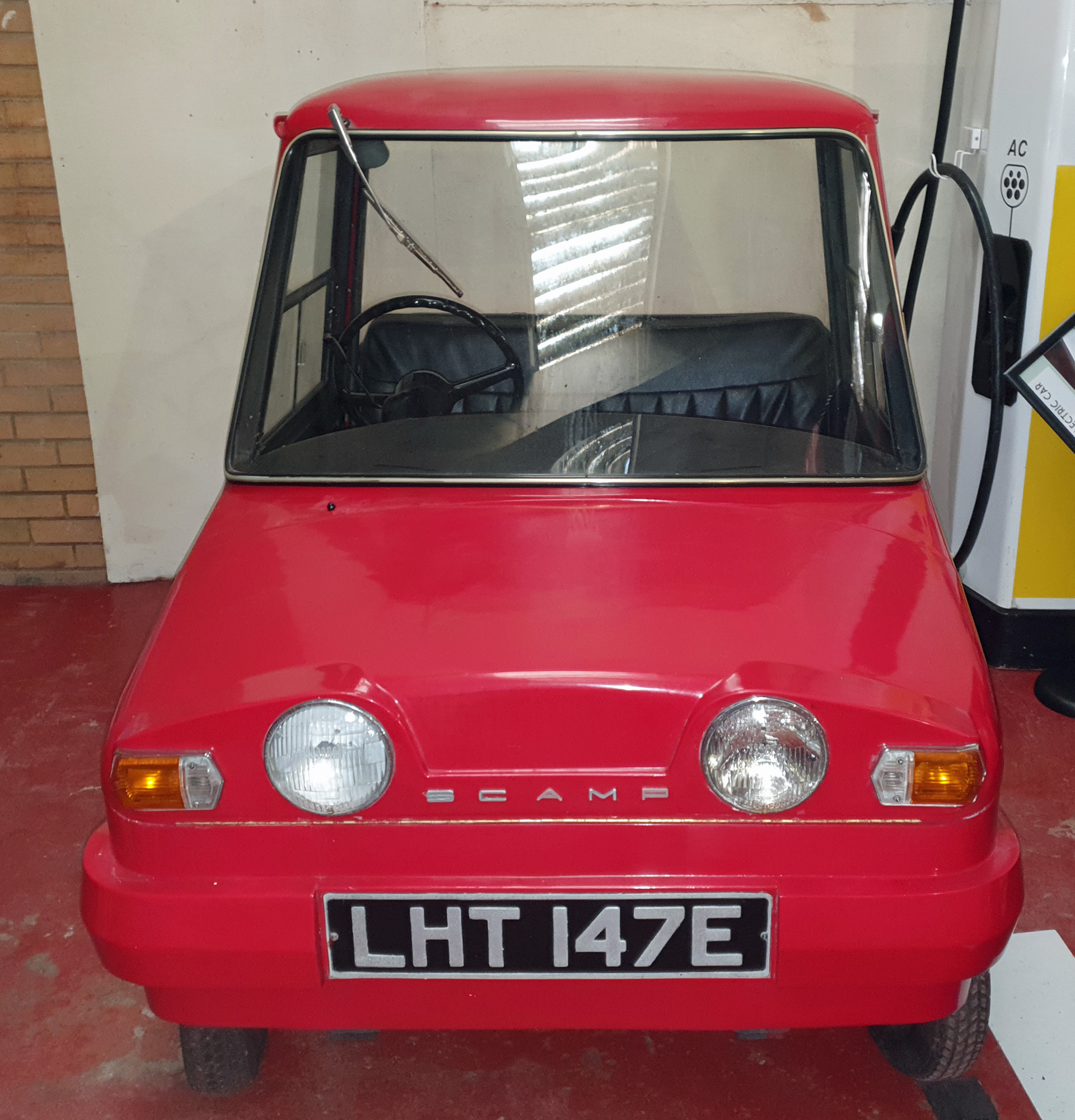
While the Rootes Group was busy developing the Hillman Imp as a small car to rival the Mini and put the fun back into motoring, a much smaller Scottish concern was working on its own little car that it hoped might be the future of urban motoring. Rather than follow the well-trod path of petrol power, Scottish Aviation opted for an electric car. As it turned out, however, while small, it was anything but fun to drive.
Initially inspired by the baggage trucks used to haul luggage out to planes at Prestwick Airport, where the company was based, Scottish Aviation designed a two-seater, rear-wheel drive, battery powered microcar christened the Scamp (a contraction of ‘Sc’ from Scottish Aviation and ‘amp’ from the unit of electric current).
Founded in 1935, Scottish Aviation’s core business was the construction and maintenance of aircraft and it thrived during the Second World War thanks to military contracts. However, post-war the firm struggled to secure work, laying off hundreds of staff in the 1950s, and, in the 1960s, amid a general downturn in the aviation industry, it began looking for other ways to earn a crust. Cars presented one opportunity and, in 1964, its Project Department, led by engineer Gordon Watson, began work on a new city car. During his commute by train, Watson noticed wives waiting in their cars in the station car park to pick up their husbands and take them the short distance home. He believed that there would be a ready market for a small second car that people could use to make this short commute.
Watson and his team drew up specifications for a very small, manoeuvrable car that could be easily parked and could be fully recharged from a domestic electricity supply in eight hours, utilising existing battery technology. It would seat two adults and be capable of carrying some luggage, such as a briefcase or shopping. It should be capable of keeping up with urban traffic, specifying a top speed of 35mph. Watson was less concerned with a long range, deciding that 25 miles between charges would be enough to cover urban commutes, even in large cities like Glasgow. He felt they should concentrate on making the car cheaply, rather than increasing its performance.
The design study was followed in 1965 with the construction of a working prototype, little more than a seat on a chassis with two 24-volt electric motors that was dubbed the ‘farm cart’ in the factory. It performed as anticipated, achieving a top speed of 36mph and a range of 18 miles during stop/start motoring and 26 miles when driven constantly.
Happy with the progress made, Scottish Aviation took the concept to the Central Electricity Generating Board (CEGB), with a view to distributing the car through its network of showrooms. They liked the idea, which was presented to the government’s Electricity Council and other electricity boards. The Scamp fitted well with government policy of the time designed to address the issues of traffic congestion and pollution. Scottish Aviation also believed that they could undercut the Mini by £150.
The farm cart prototype was further developed with a wooden chassis and aluminium body and it was registered for use on the road. Scottish Aviation hand-built 12 pre-production cars, with fibreglass bodies, for the Electricity Council in its Prestwick workshops, more demonstrations followed and the car was exhibited at the 1967 Ideal Home Exhibition in London.
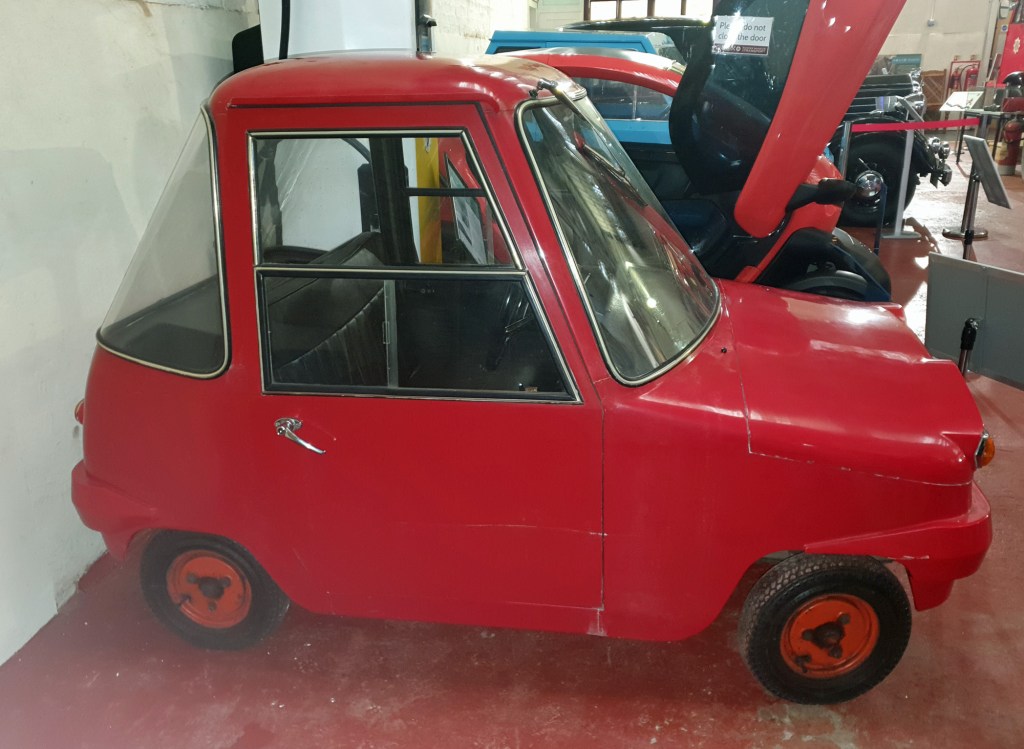
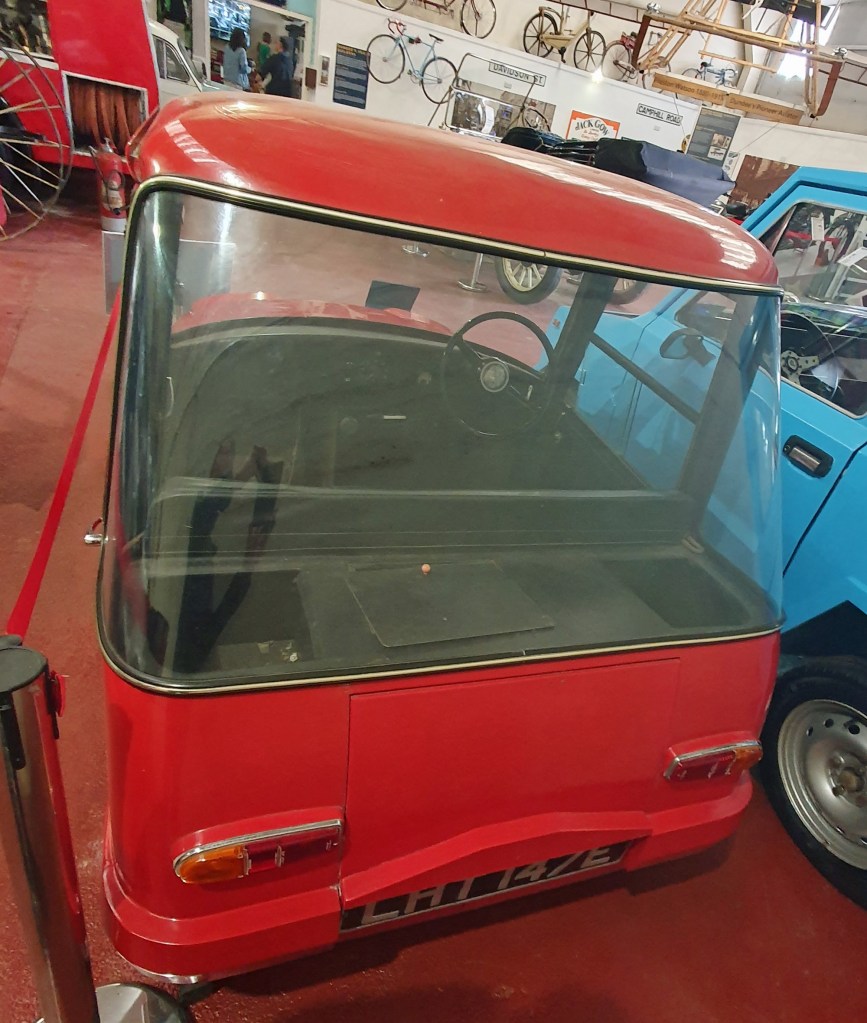
The car, which appeared on the BBC’s Tomorrow’s World programme in 1966, was just two metres long and one metre wide. The two motors each drove one of the rear wheels via a chain. There were no gears as such, only forward and reverse controls, and the Scamp could drive backwards as fast as it could go forwards.
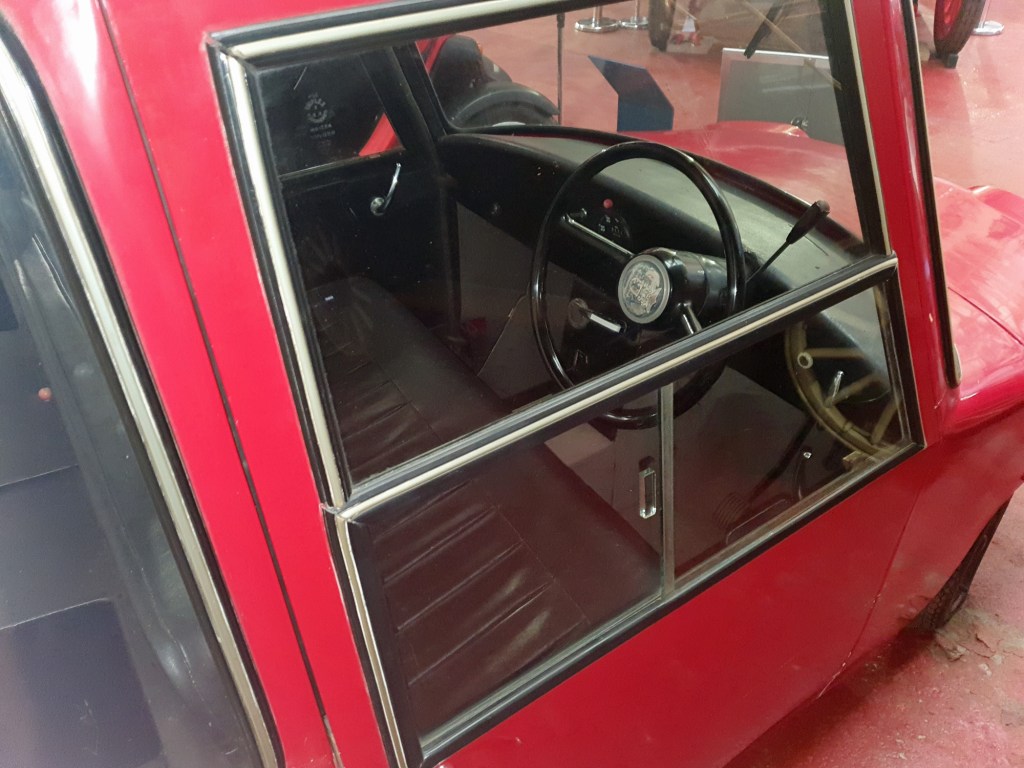
Motoring journalists who drove the pre-production models were impressed by its easy handling, good acceleration, all-round visibility, and interior space.
Thanks to a spate of largely positive publicity, the future looked rosy for the wee Scamp and Scottish Aviation made plans to begin production in 1967. However, before paying customers could take delivery, the car must first be evaluated against conventional standards and that meant sending it to the Motor Industry Research Association (MIRA) for testing. Two cars were dispatched to MIRA where they were put through their paces. Unfortunately, the Scamp did not fare well at all, MIRA returning broken cars along with a long list of faults.
During the tests, electric motors failed under acceleration, a door fell off, the bodywork cracked, tyres wore out, the wheel rims buckled, the suspension collapsed and, in wet conditions, the foot-well filled with water. The Scamp turned out to be a devil to drive; ride and road-holding deteriorated sharply even in normal road conditions. When the car encountered pot-holes, raised or sunken drain covers, or level crossings, thanks to its tiny wheels, its course veered and its occupants were unseated as it bounced around. It also had a worrying tendency to continue straight ahead when negotiating bends with adverse cambers. After the 1000-mile endurance test, which the car just completed after some running repairs, so many problems arose that MIRA promptly issued a fail.
After reading the MIRA test report, the Electricity Council declared the car unfit for purpose and ripped up its contract with Scottish Aviation, which was also encountering problems sourcing batteries that would last longer than a year. The company, which was not allowed to make any modifications in response to the MIRA failure and had now lost its chance of national distribution, ended its work on the project in 1968 but did seek interest from other companies, including the Reliant Motor Company and Rootes Group, although this failed to resurrect the project.
Unable to break into the car industry, Scottish Aviation concentrated on aviation and was taken over by British Aerospace in 1977.
Of the 13 Scamps built, only five survive. The original prototype is in a private collection, as is one other. One is in the National Museum of Scotland’s collection, stored in Granton, Edinburgh, one belongs to the Scottish Motor Museum Trust and has spent many years on display at Lomond Galleries, the former Argyll Motor Works in Alexandria, while one (the red one pictured above) is on public display at the Dundee Museum of Transport.
Extract from Cars Made in Scotland by James Carron, available as paperback or ebook from Amazon.


