
This article is an extract from the book Abandoned Angus by James Carron, available as a paperback or ebook from Amazon.
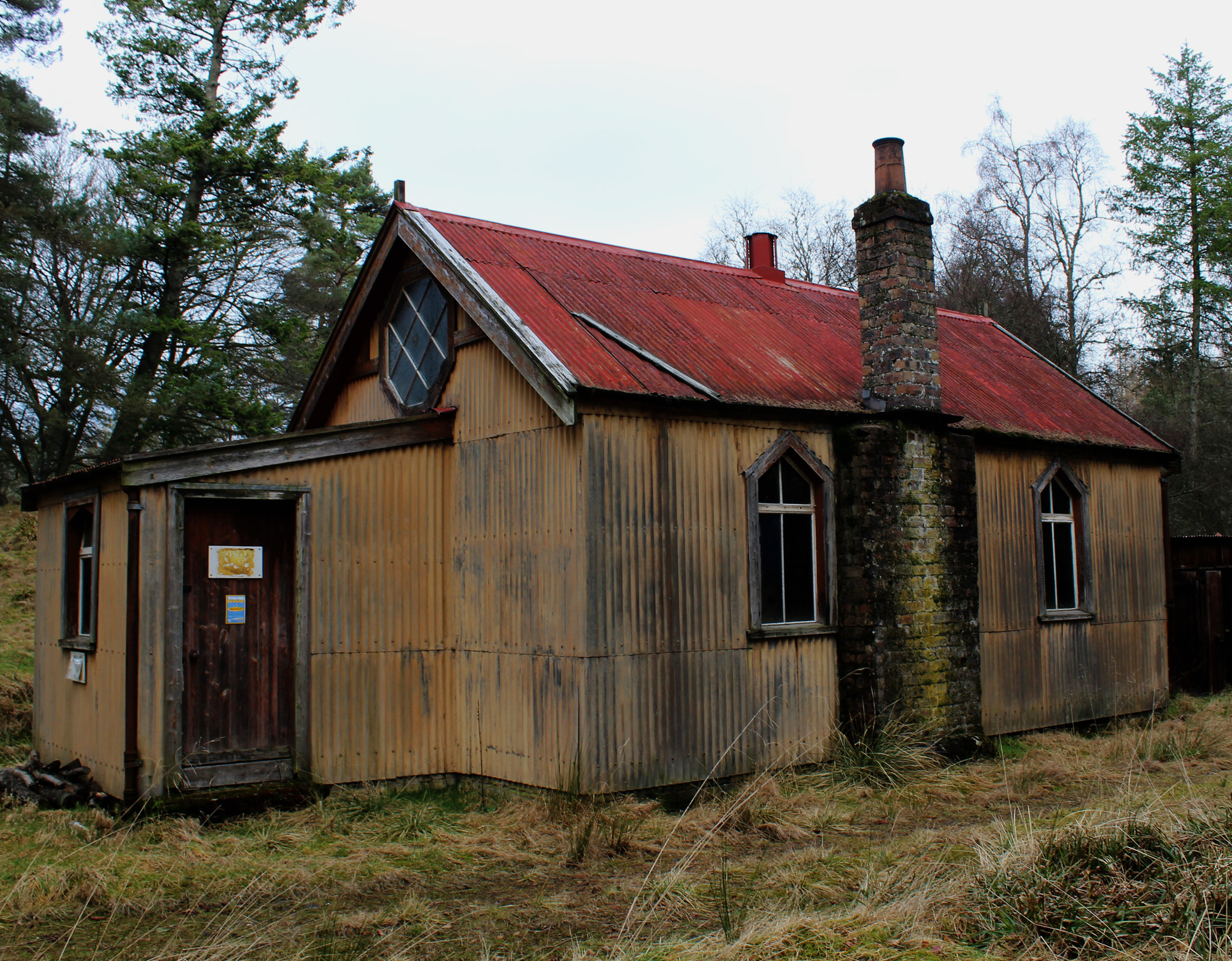
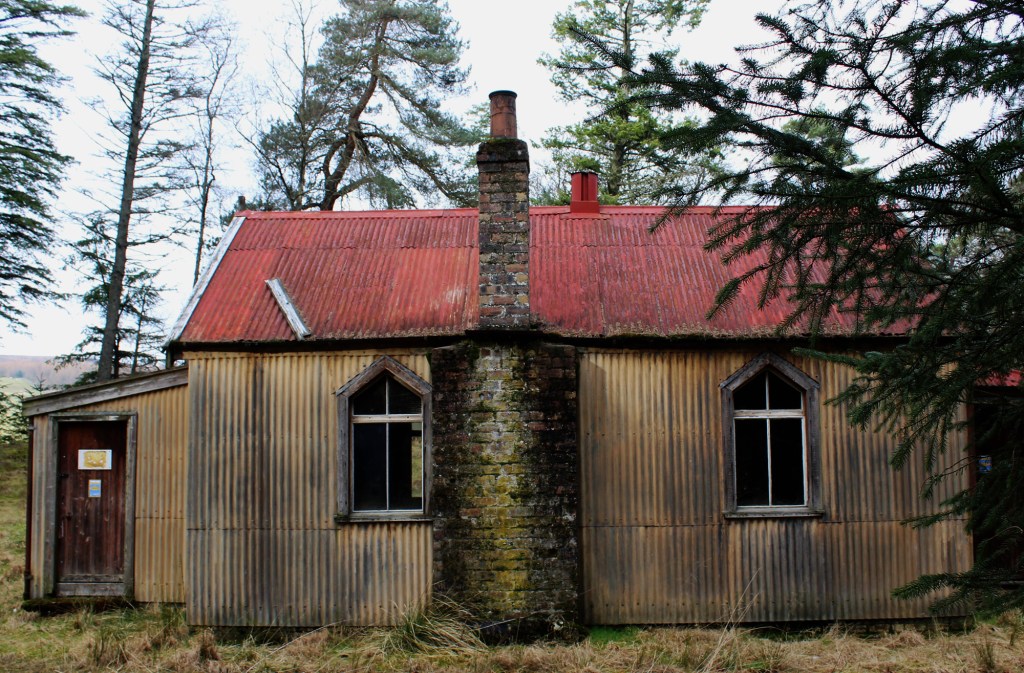
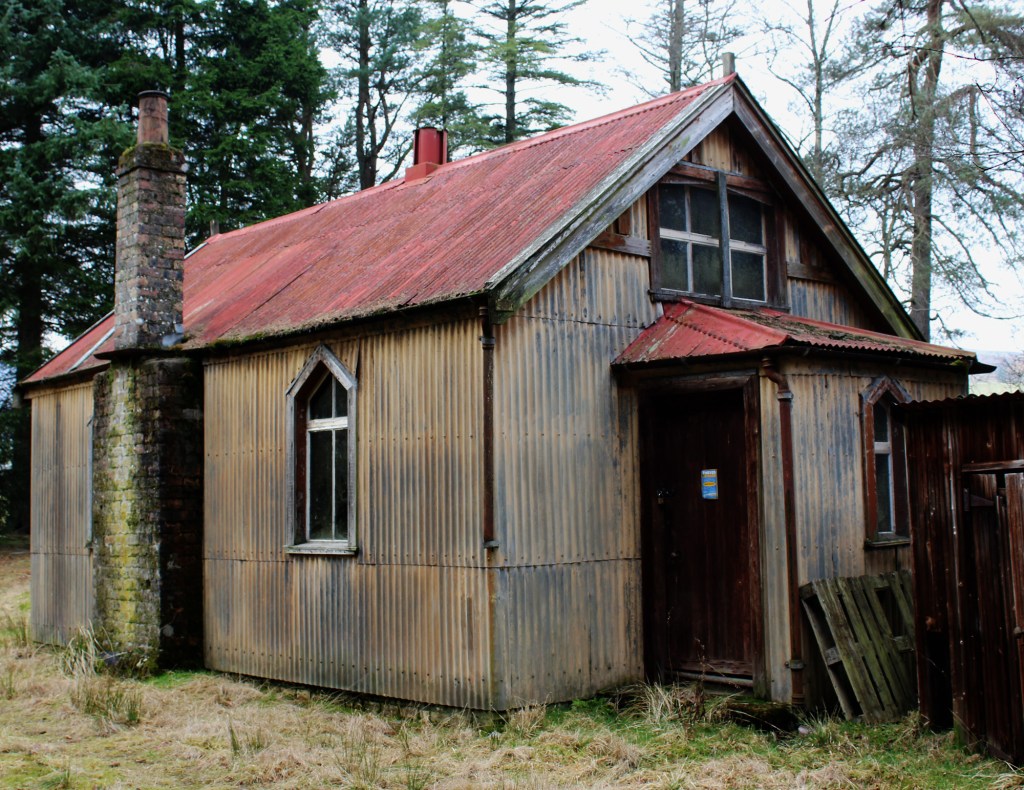
Pearsie Tin Kirk, near the Angus town of Kirriemuir, is a rare surviving example of a tin tabernacle, albeit no longer in use for worship. It dates from 1920 when it was erected, most likely from a kit of parts, to serve the Free Church congregation of Glen Prosen. It first appeared on Ordnance Survey mapping surveyed in 1922. The plot of land was donated by George Wedderburn, of Corriehead, an uncle of the laird of Pearsie.
Wedderburn, a well-known figure in Edinburgh legal circles, built and endowed the church to provide a place of worship for the people of this sparsely populated and comparatively remote rural area. It is thought that the site was chosen to ensure servants from both Wedderburn’s lodge and Pearsie Estate did not have to travel far to worship and were not absent from their posts for any longer than necessary.
Wedderburn commissioned a corrugated iron lodge a mile to the north of Pearsie Kirk using a kit of parts supplied by Glasgow-based corrugated iron building specialists Speirs & Company, suggesting the wee church may have come from the same source. There is no conclusive evidence to support this theory, but they were a leading supplier of tin tabernacles at this time.
Originally, it was intended that the church should serve as an out-post for the minister of Kingoldrum parish, and the Rev Mr Jack, during his pastorate at Kingoldrum, held regular and well-attended services there.
An article published in the Scots Magazine in 1933 reveals that parishioners were provided with rows of basket chairs that flanked a carpeted aisle. There was a platform for the preacher at one end of the hall and an organ. Unusually, Wedderburn imposed the condition that no collections should be taken at the services, and he funded the maintenance and upkeep of the building.
When Rev Jack retired, his successors were less inclined to minister to the religious needs of Pearsie, and, by 1933, services were only conducted for two months of the year, during the summer when the shooting lodges and mansions of the parish were fully occupied. Even then, services were limited to one a fortnight.
The tin kirk appears to have fallen out of use during the Second World War, and by the 1940s, the building was rented by two ladies from Edinburgh, who furnished it and used it as a holiday home for several years. It was later purchased by a family from Knowehead of Auldallan, near Balintore Castle—a mother and her five daughters—who made it their home. They made no alterations to the building in the hope that one day it would return to being a church. The family had previously worshipped there, making an eight-mile round trip through the glen.
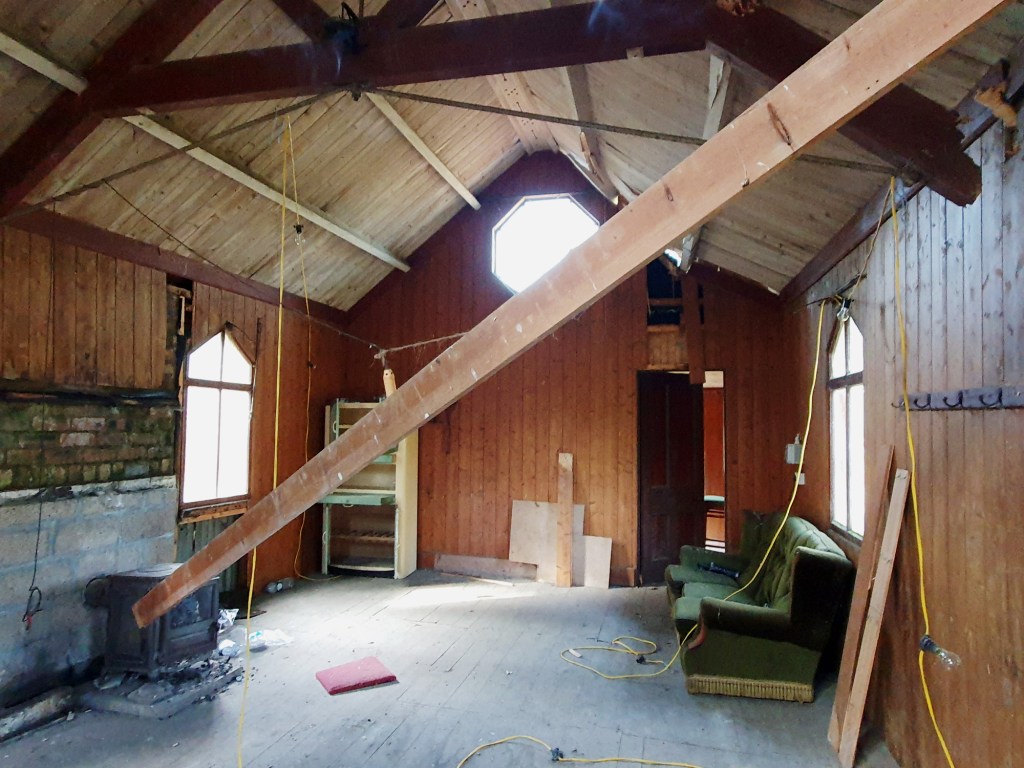
Their hopes were never realised, and, years later, the building returned to estate ownership and served as a shooting hut and beaters’ bothy; a lunch hut for shooters and a welcome retreat from the elements for grouse beaters.
It now sits empty, partly damaged by a fallen tree which came down on the roof, knocking out one of the main beams. Otherwise, it remains remarkably well-preserved and unmolested given its age and remote location.
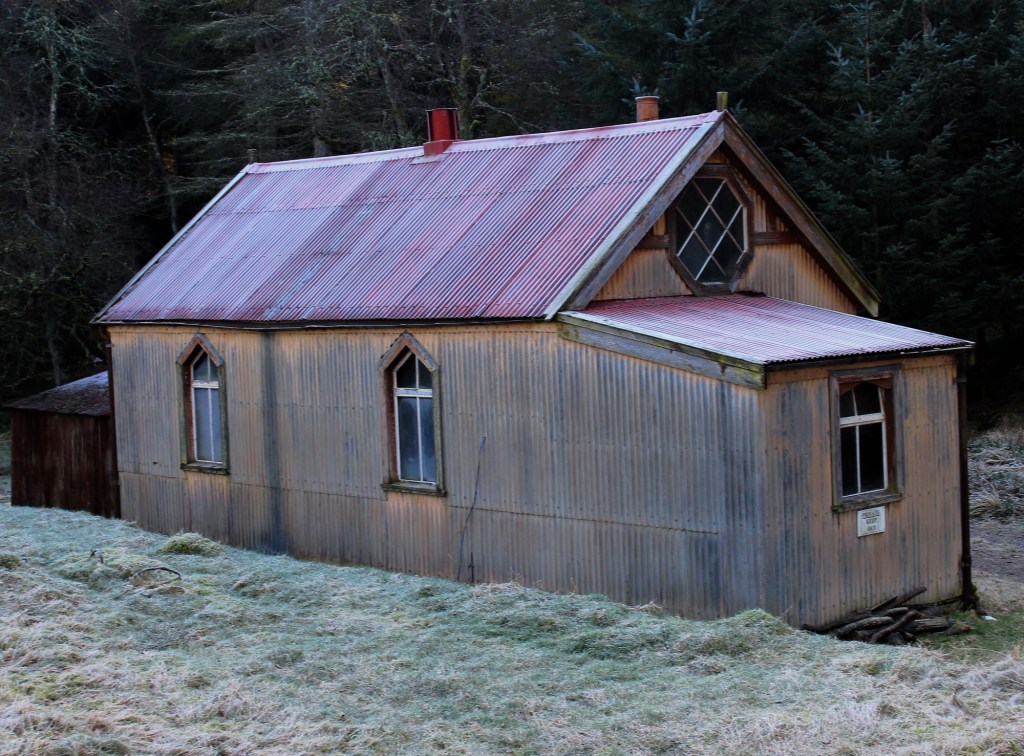
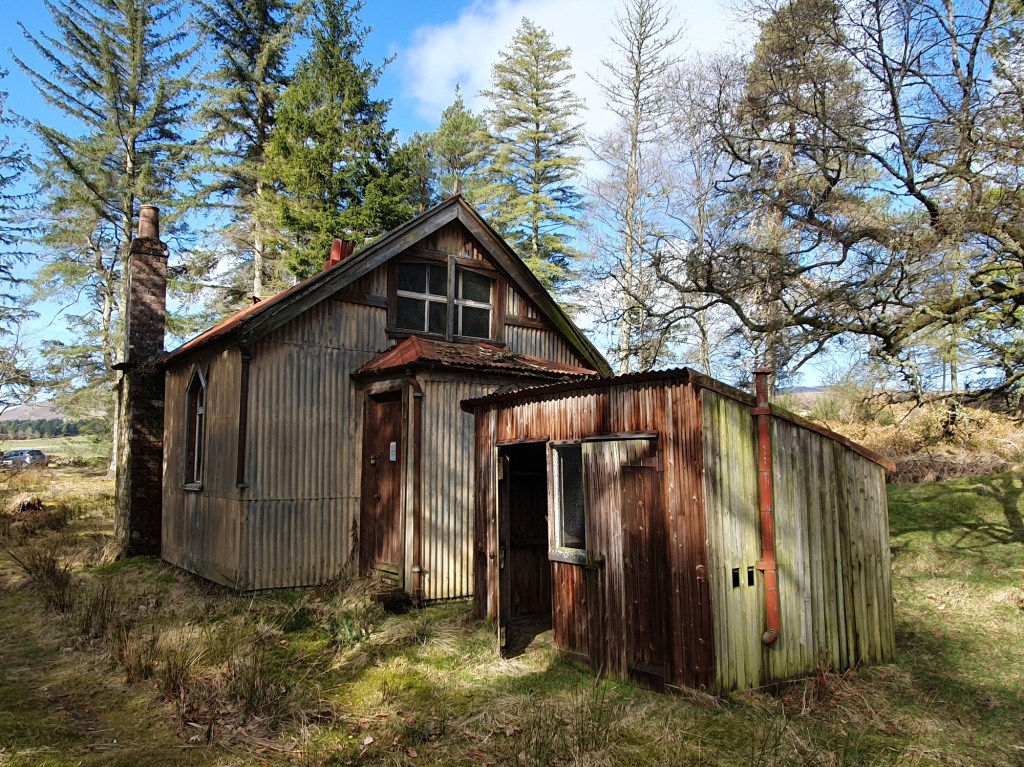
Internally, there is a single main room with a stove and a small kitchen housed in the lean-to below the octagonal window in the western gable. A separate wooden hut at the eastern end of the building houses a toilet.
If you have enjoyed this post, and others on the site, you might like to buy me a coffee, which helps support the site and funds new content.


