
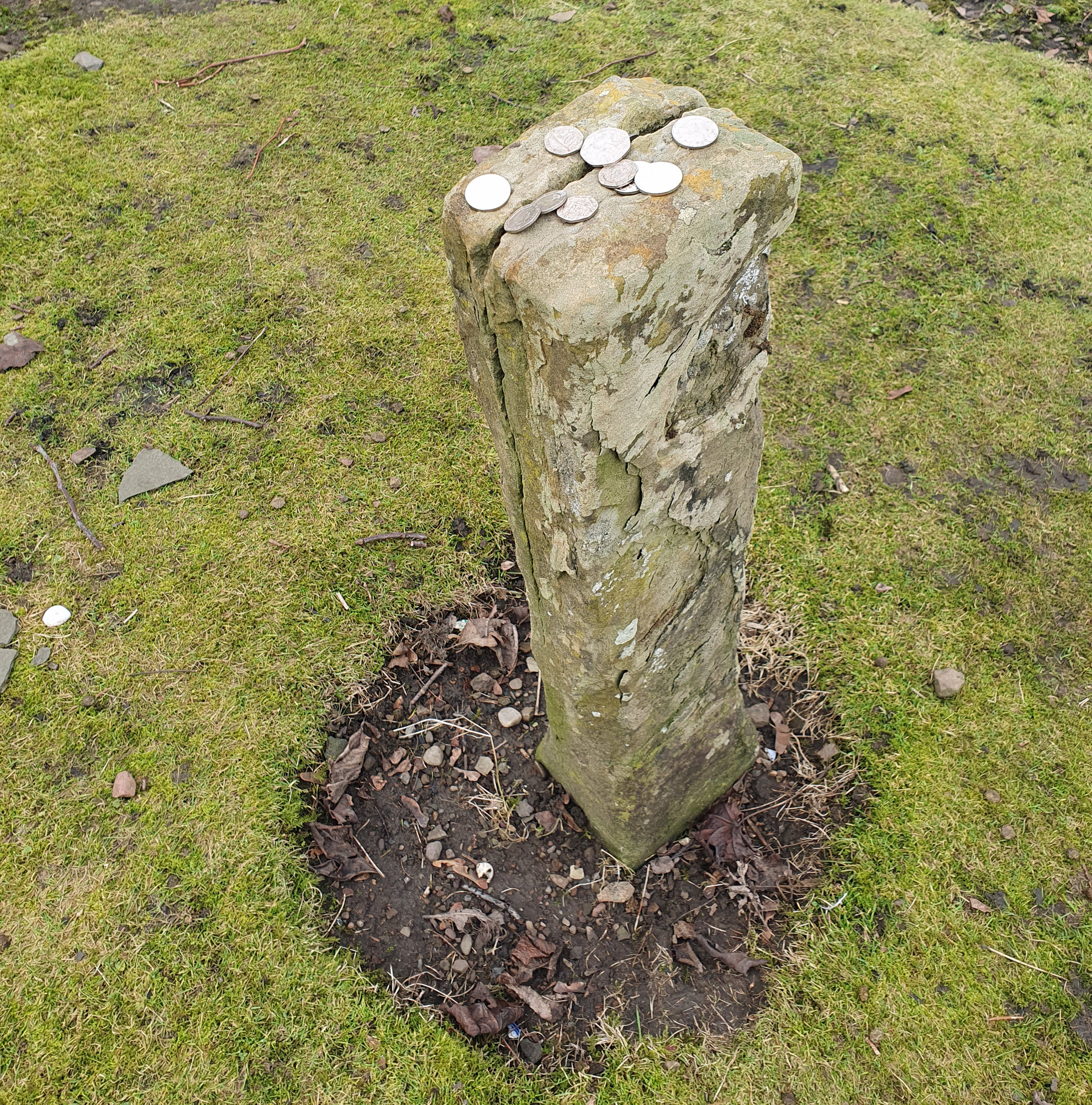
Explorers of Dundee’s famous Howff will discover that not every stone within the cemetery marks a tomb. One, tucked away among the memorials in the north-west section of graveyard, is a relic of days when local traders met here to talk business.
The Convener’s Stone (numbered 355 in the cemetery records) is an unassuming and heavily weathered stone post with a long tradition of visitors placing coins or small trinkets on top of it, or tying ribbons around it, which continues to this day.
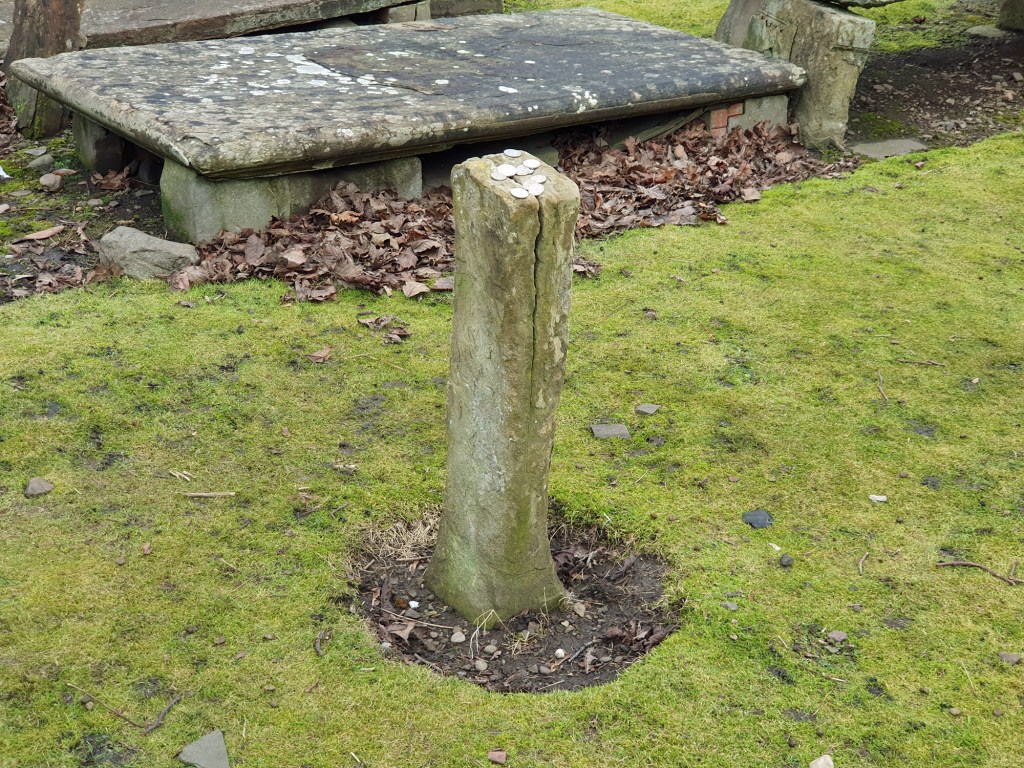
Historically, the Howff (an old Scots word meaning ‘meeting place’) was where the city’s various craftsmen gathered, weavers, bonnetmakers, tailors, dyers, bakers, and shoemakers, among them. The practice was first recorded in 1576. Each trade had its own spot in the cemetery. In time, the various crafts merged into the Incorporation of the Nine Trades of Dundee, which also met in the Howff, paying the town council £5 and 12 shillings a year for the privilege. The Convener’s Stone is believed to be the spot where they met, their convener sitting perched upon the stone as he presided. The tradition continued until 1778 when a new Trades Hall opened (the former Clydesdale Bank building at the meeting point of High Street and Murraygate).
The Howff served as a cemetery for around 300 years, from the middle of the 16th century to the middle of the 19th. The oldest stones are in the western half of the ground, which was the land of the much older Greyfriars’ Monastery. With the city’s two earlier graveyards full to capacity and less than salubrious, Mary Queen of Scots granted a charter for burials on the former monastery grounds on April 15, 1567.
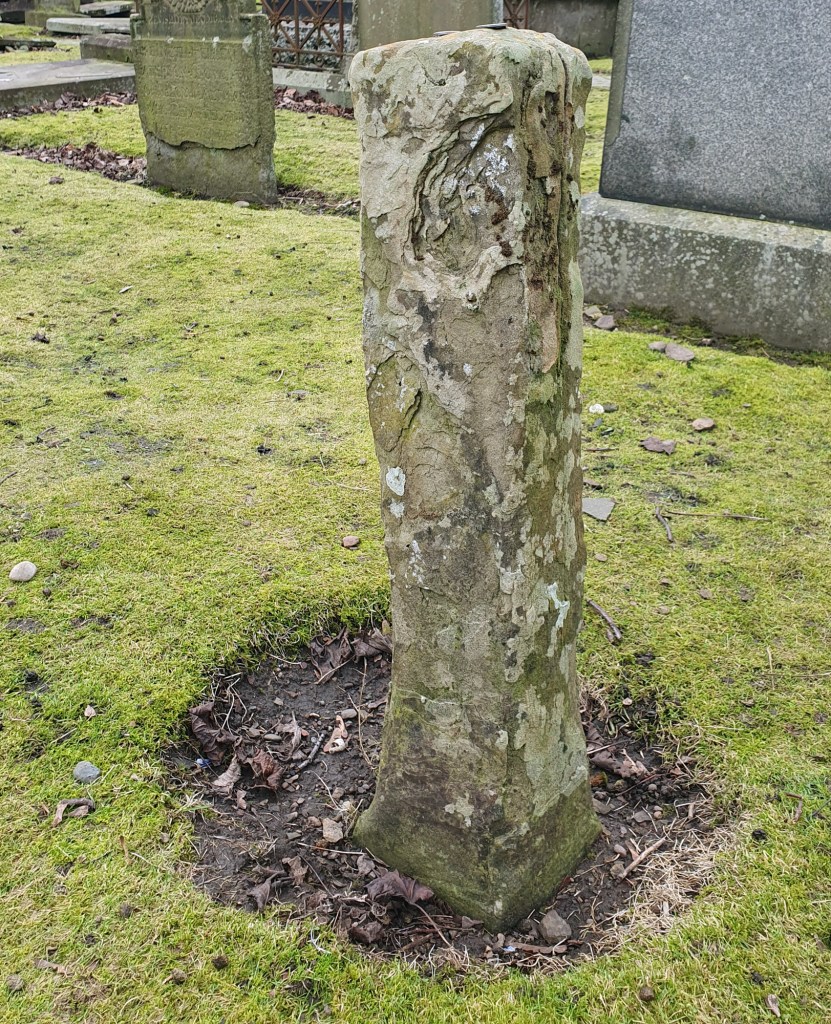
Another story associated with the Convener’s Stone is that it was part of an elaborate hoax carried out by Alexander Christie in 1807. It is said that he removed a stone, either from the monastery or one of the other city burial grounds, and had it inscribed with four names – one on each side – and the date 1042, before erecting it in the Howff. Why he did this is anyone’s guess. The passage of time and natural erosion has removed any hint of names or a date from the heavily weathered post which might have corroborated this tale.
The third story connected to the stone is that it marks the last resting place of Aberdeen-born Grissel Jaffray. She was accused of being a witch and, in 1669, was the last person burned at the stake for witchcraft in Dundee. It is highly unlikely that an alleged witch would be buried on consecrated ground. In this context, it is known as the ‘witches stone’, and the placing of coins or other simple offerings on it is thought to bring luck. Jaffray is remembered by a plaque on the Dundee Women’s Trail, located in Peter Street, and a mosaic, at the other end of Peter Street, where it meets Murraygate. An interesting 3D rendering of the stone can be found here.
Politician George Duncan (1791–1878) was the last person to be interred in the Howff, which was by this point already very overcrowded. Over the years around 80,000 people were laid to rest in the cemetery. An outbreak of cholera in 1832 prompted the town council to find land for a new cemetery. This was located a little way to the north, at the foot of The Law, and was accessed from the bottom of Constitution Road. It opened at the beginning of April 1836.
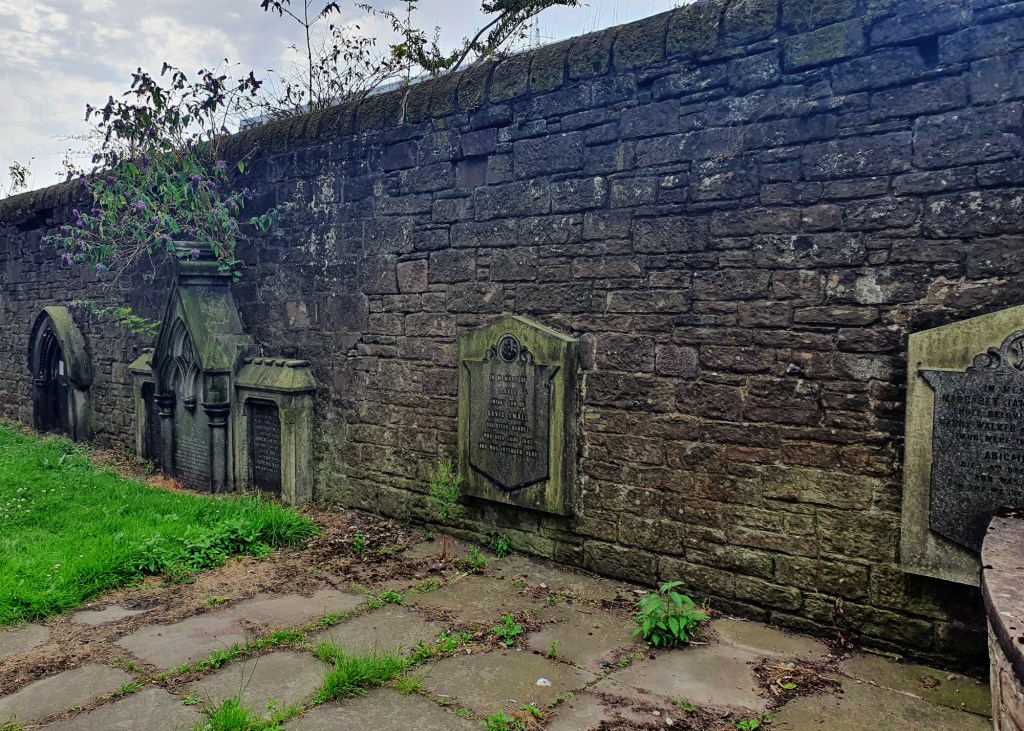
The New Howff officially closed in 1871 and, in the early 1960s, the graveyard was erased from the cityscape, lost beneath the North Marketgait inner ring road and Bell Street multi-storey car park. Prior to the redevelopment, there were plans to re-inter the 10,000 or so bodies in the graveyard but these were dropped due to cost and difficulties in securing an alternative site. Headstones removed, the car park was simply built atop the human remains. Some of the original tombstones survive, built into a wall to the rear of the car park.
If you have enjoyed this post, and others on the site, you might like to buy me a coffee which helps support the site and funds new content.


