
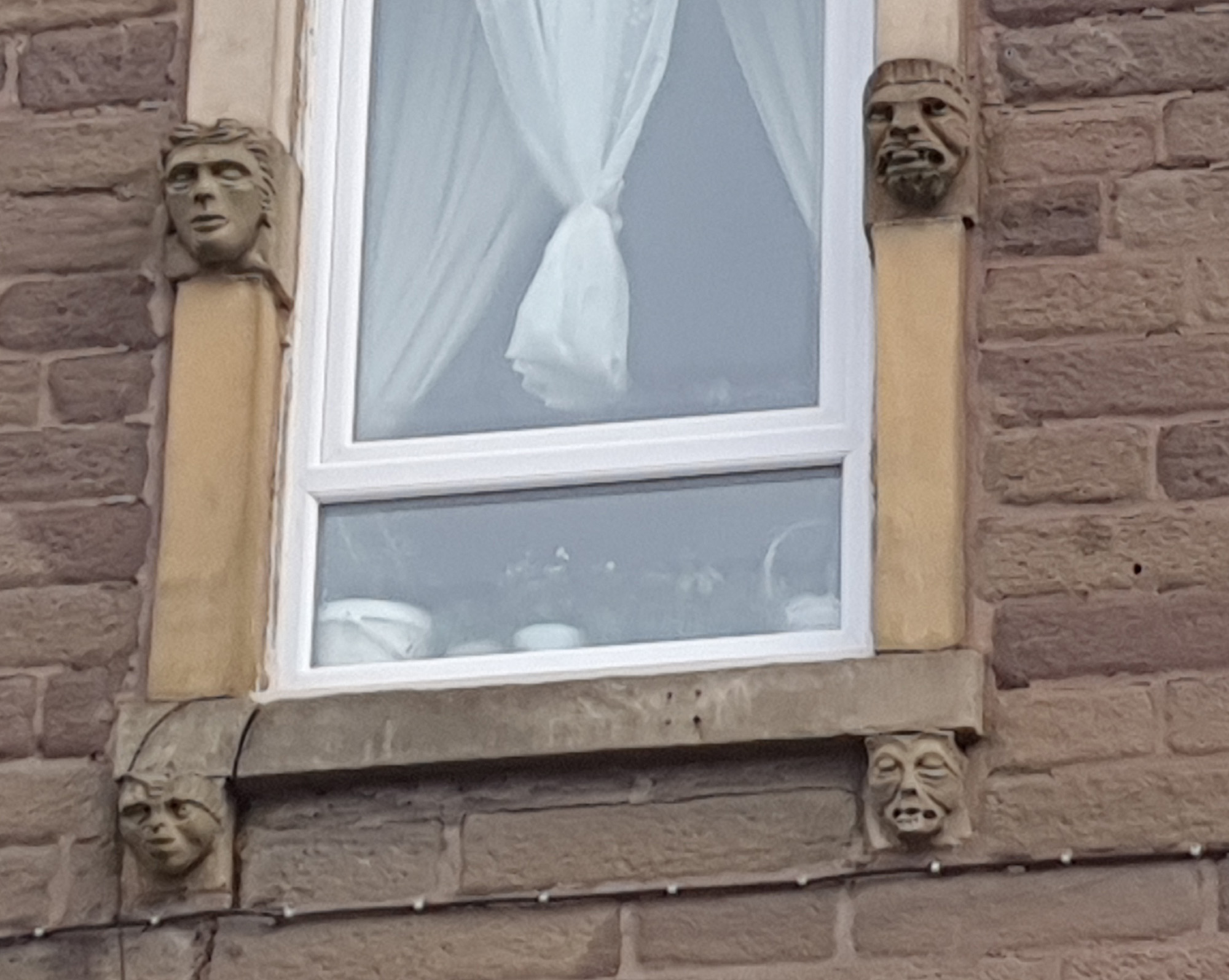
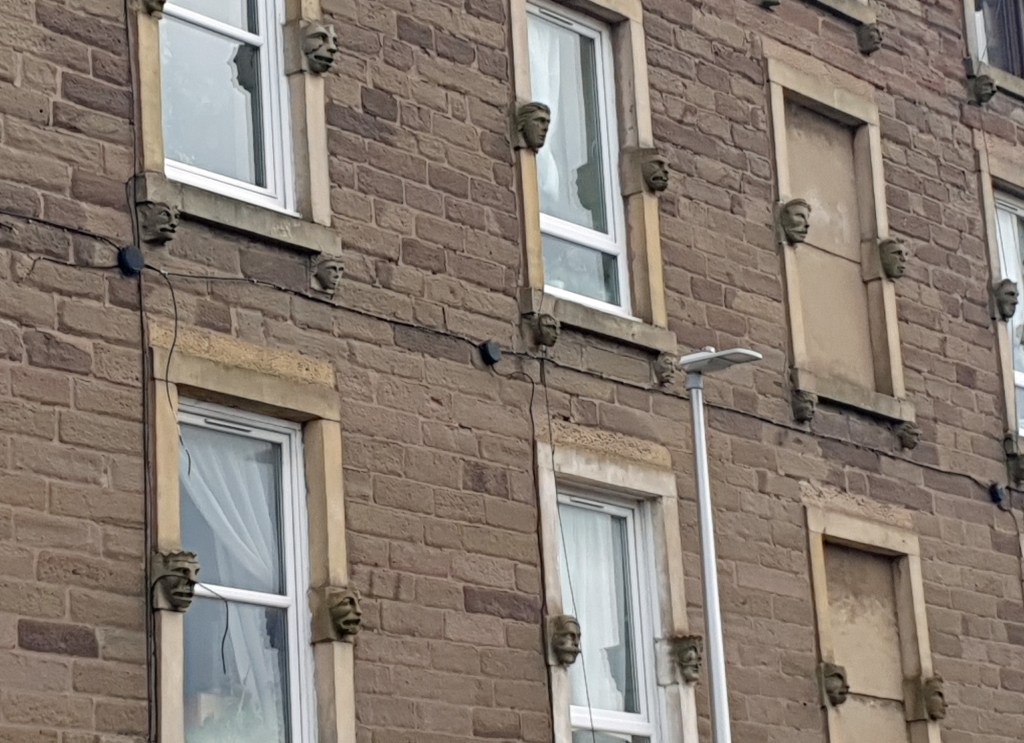
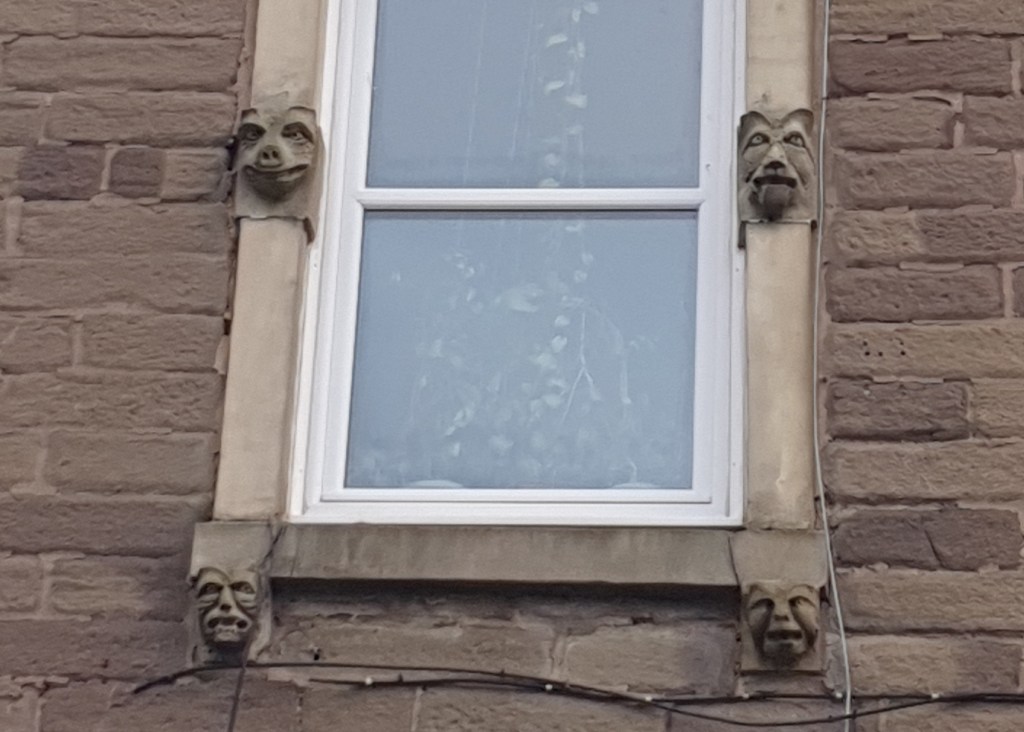
Numbers 11-19 North Ellen Street, Dundee, are fairly unique in terms of tenement architecture in Scotland. For the sturdy sandstone block is adorned with carved stone gargoyle-style masks, depicting both animal and human faces. Gargoyles are normally associated with grander structures, such as churches and chapels, and usually project from gutters, acting as spouts to carry rain water clear of the wall.
Known as The Faces Land, this unique curiosity goes unnoticed by most passers by on this otherwise normal but out of the way residential street. The block forms the northern end of a row of tenements on the east side of the street, between The Ellenbank Bar, on the corner of Alexander Street, and Walkers Mill, in the Hilltown area of the city.
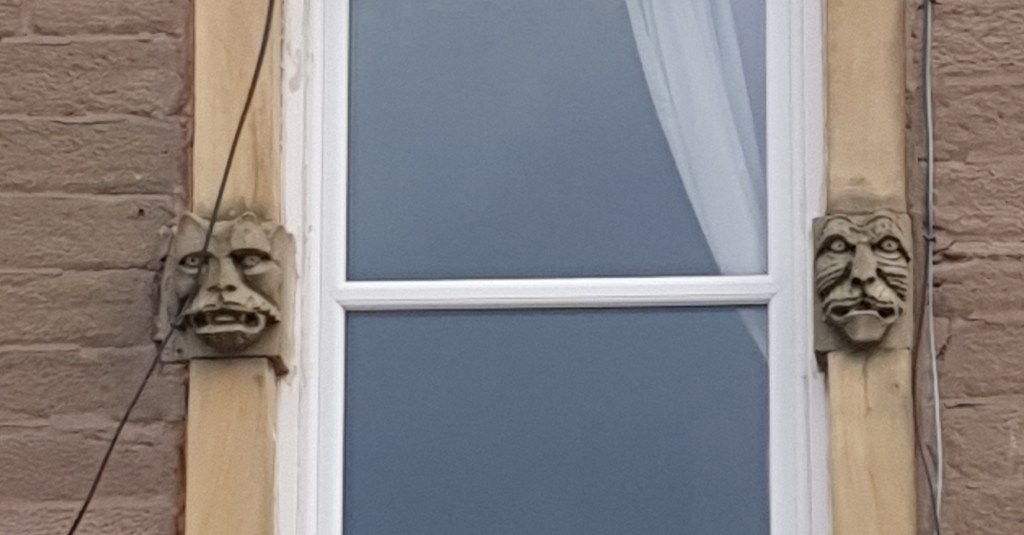
The four-storey blocks were built in 1871 for William Webster and were designed by architect John Bruce. They are of a fairly standard tenement design. However, 11-19 differs in that all of the windows on the upper three floors are decorated with four masks each, two in the lower sill and two halfway up the window frame. In total, there are 60 different faces. Some say they were caricatures of local people while others believe they were placed there in the belief that they would ward off evil.
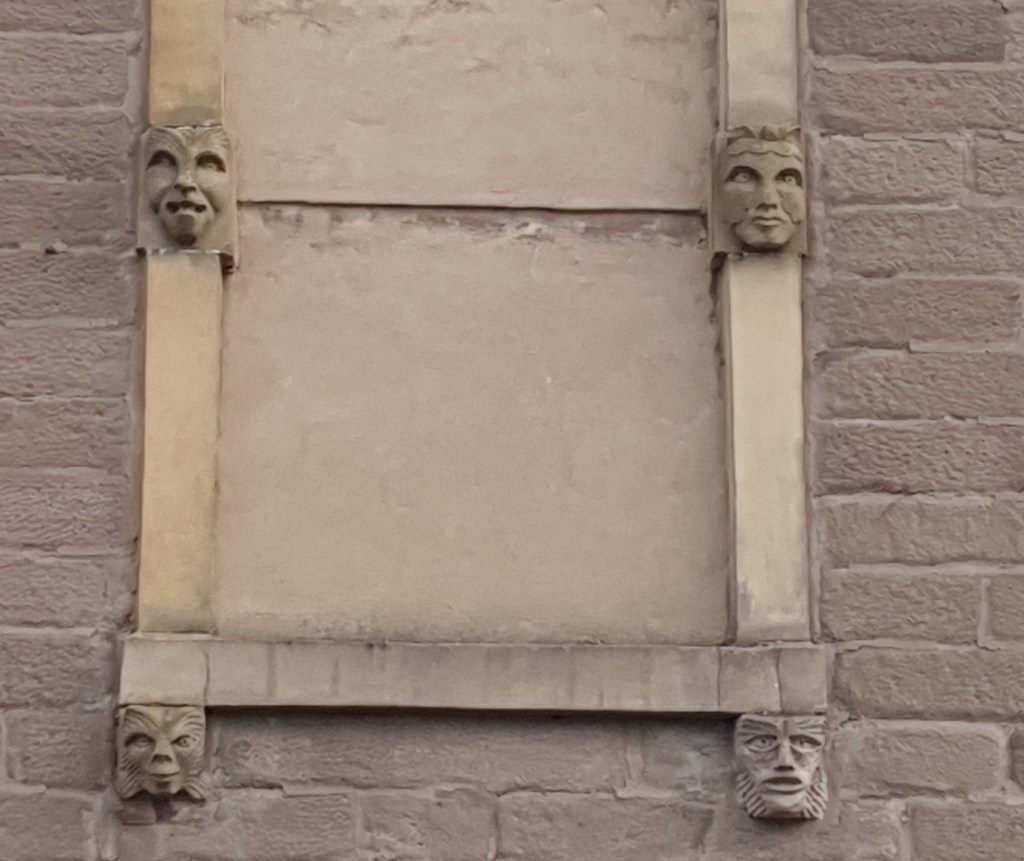
The masks serve no practical purpose and are simply decorative. As a result of their presence, the tenement is a Category B listed building and it can be found on Canmore where there are some nice images. It was not, however, completely unique, as Bruce also designed a rather more ornate tenement for Webster located at 3-9 Ann Street which was similarly adorned with faces.
The four-storey block on Ann Street and an adjacent lower block were located at the western end of the road, close to its junction with the Hilltown, and sat behind the Windmill Bar, a famous Dundee hostelry. There were six arched windows on the facade of the main block and five on the front of the smaller neighbouring block. All were decorated with stone masks, two below the sill and one mounted on the keystone at the top of the frame.
The block escaped the bulldozers in the late 1960s and early 1970s when many of Ann Street’s traditional tenements were pulled down to clear land for the Alexander Street multi-storeys and associated housing developments. However, it did not survive for long after that, burning down in November 1988. It was vacant at the time of the fire and due to be granted listed building status. It was later demolished.
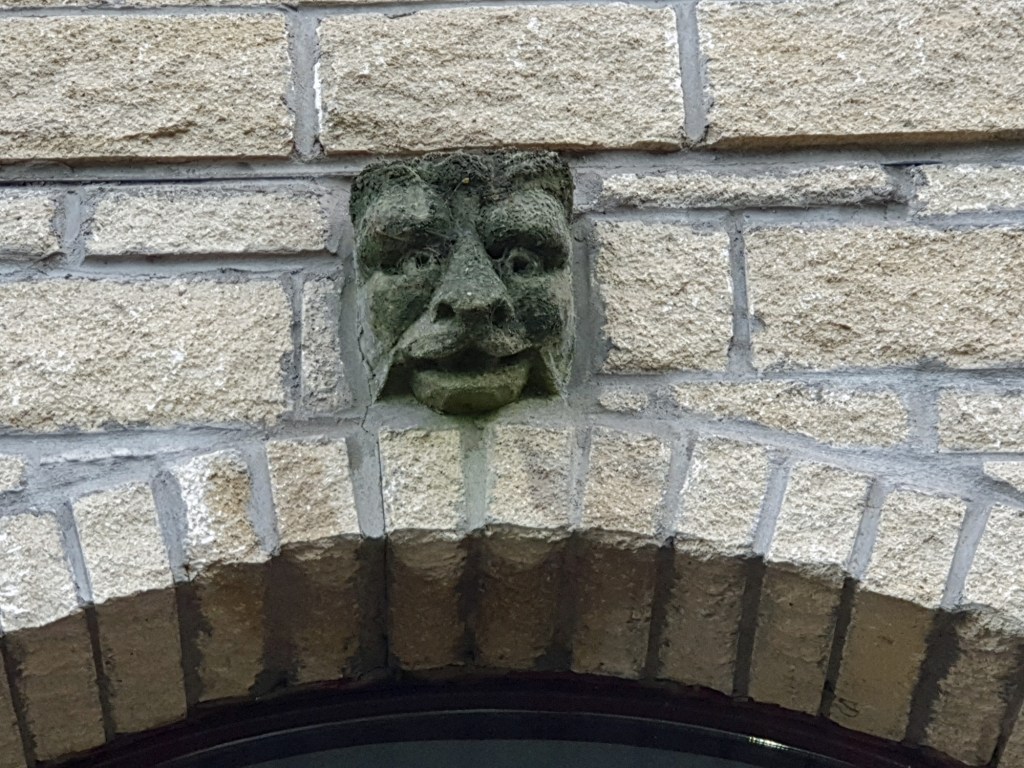
The adjacent block, which also had carvings on its window frames, remained and it, along with the Windmill Bar, a category B listed building, were demolished in 1999. It is said that the carved faces were salvaged, perhaps by the demolition contractor, perhaps by the council, but where they ended up is not known. Only the fate of one is certain – it is set into the top of the brickwork frame of the entrance door of the apartment block that now occupies the site.
Building tenements was the cheapest and easiest way to house the growing working population of Dundee during the Victorian jute boom. Property investors like William Webster could make good money constructing tenement blocks and renting the apartments out. At the time, it was not uncommon to have four flats in a row on the same floor where nowadays there might be just two. Apartments tended to have only two rooms and were often accessed by a common stairwell attached to the rear of the building. Toilets were usually outside with all families in the blocking sharing just the one.
If you have enjoyed this post, and others on the site, you might like to buy me a coffee which helps support the site and funds new content.


