
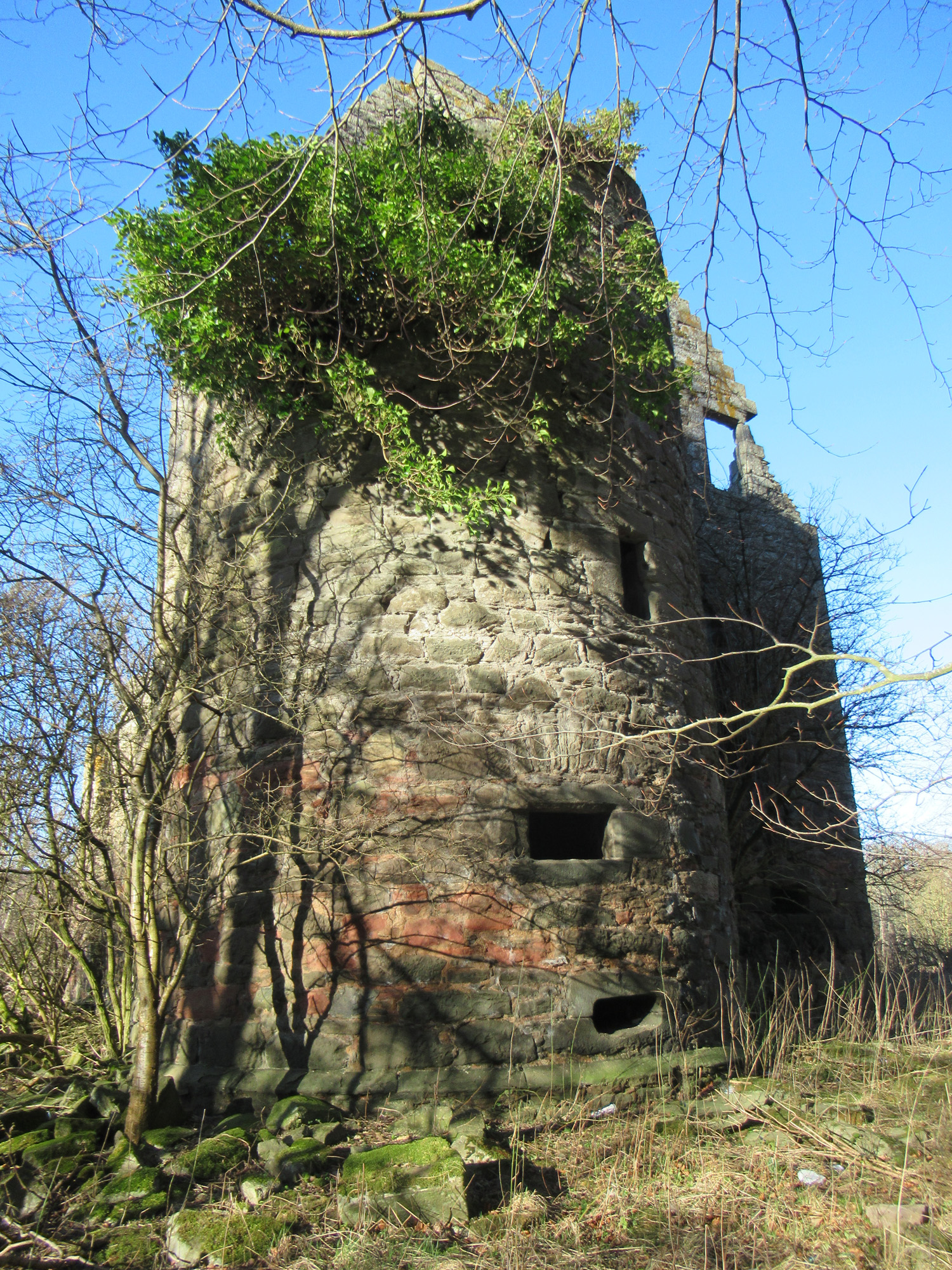
Hidden away in the Carse of Gowrie, Moncur Castle, near Inchture, is an ancient site in danger of disappearing from the radar completely. It may lie just metres from the busy A90 but, concealed by woodland and hemmed in by farmland, it has been completely bypassed by the tourist trail and is in danger of being completely forgotten. Which is a shame as this historic three-storey tower house, occupied only briefly, is a fascinating place to explore, well off the beaten track.
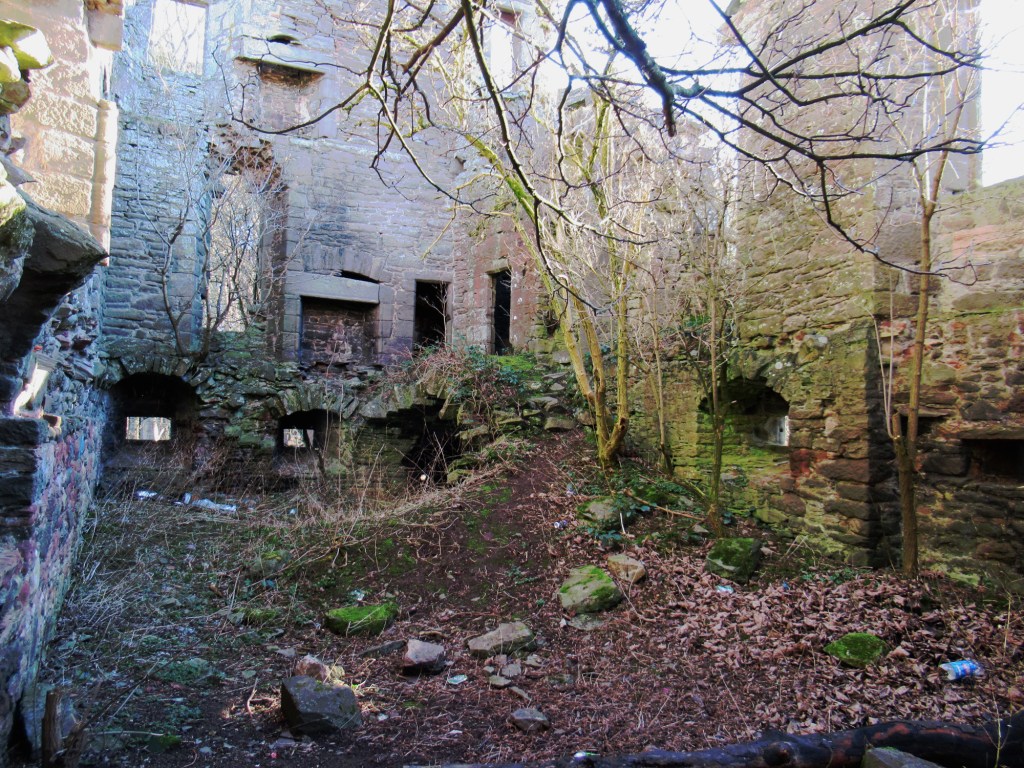
Scattered energy drink cans and the remnants of firepits in the surrounding woodland suggest those who visit this quiet spot most frequently are local teens, but when I found my way to Moncur Castle I was alone to explore this late 16th century ruin. It is not an easy place to reach. Although close to the A90, there is no access from this highway and I found my way in by following a well-walked trail from the hamlet of Baledgarno, half a mile north of Inchture on the Abernyte Road, down to Rossie Lake. The track curves left beyond the lake to enter a field. The castle can be seen poking up above the trees directly opposite. But with crops, ahead I skirted right, following the fenceline around the grassy southern boundary of the arable land, straddling a fence to enter the woodland close to the castle.
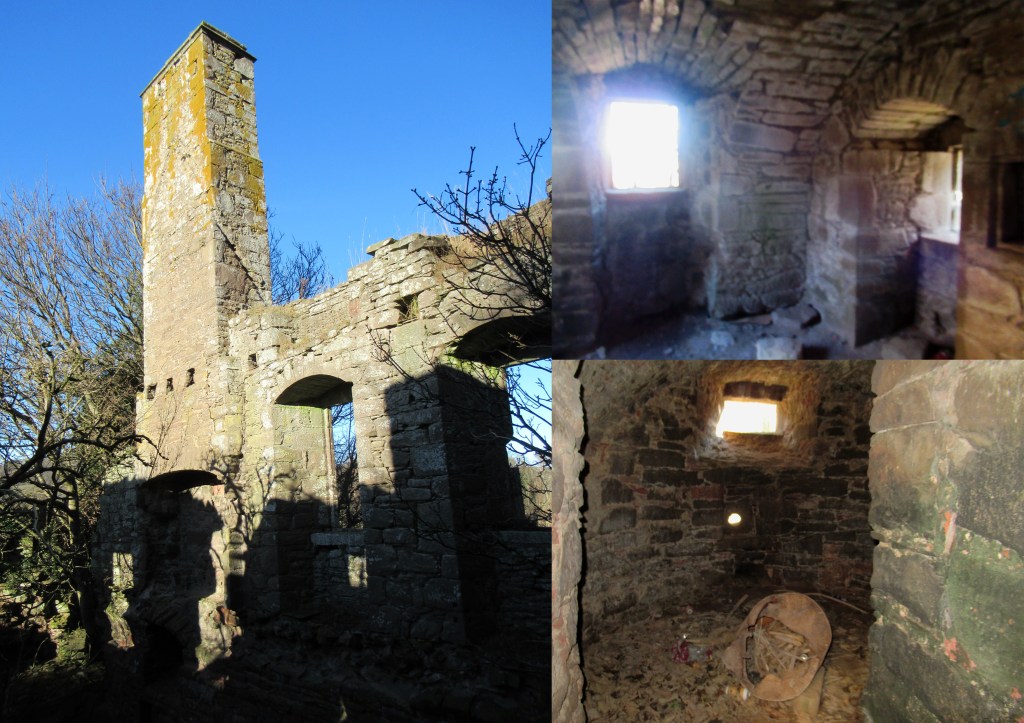
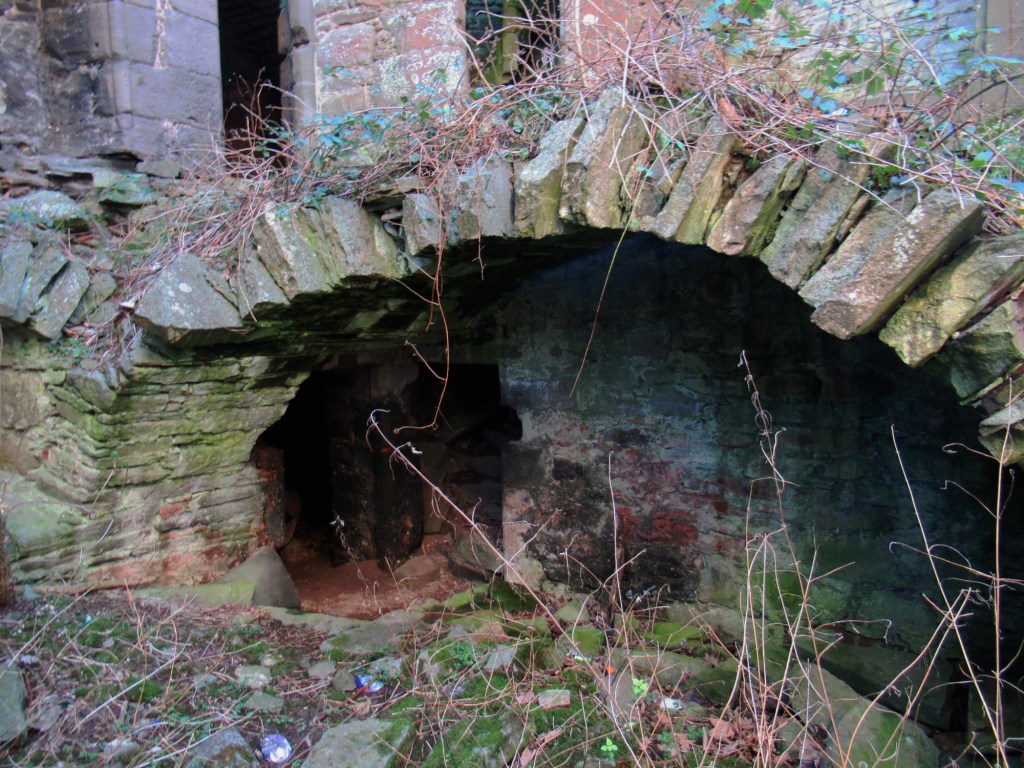
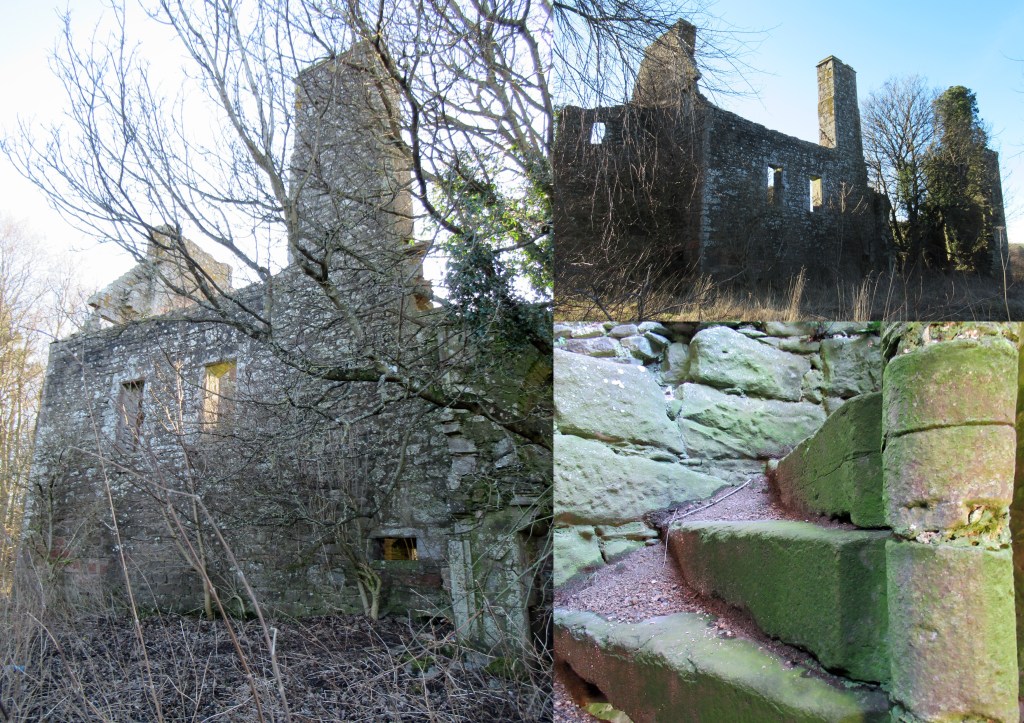
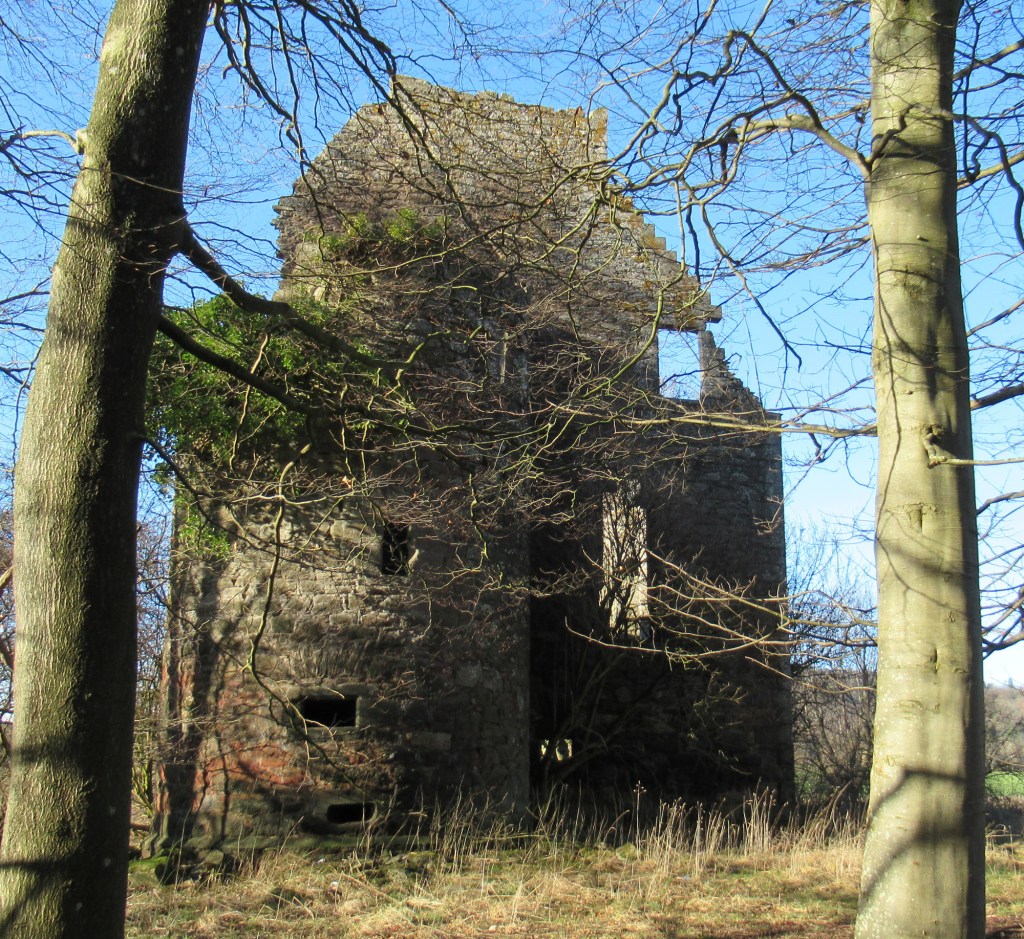
Ahead of me, the historic keep reared up out of the trees, ancient stonework now clad in ivy. Sitting on the northern edge of the woodland, fields beyond stretching north towards Rossie Priory, the castle ruin beckoned and entry is easy, a path through the undergrowth leading to the main door. Inside, the stone shell, the only chambers that still exist are within the round tower on the south-western corner of the building. Rough stone steps at the top of a slope of earth lead to these and below is an arch, all that survives of the vaulted ceiling of the basement.
Most of the interior has collapsed, windows of various shapes and sizes and fireplaces dotting the internal stonework. There are a couple of chambers within the tower and the remains of a spiral staircase that now ascends briefly before terminating in mid air.
When it was built, the main rectangular body of the castle was flanked by the circular tower on the south-west corner and a square tower on the north-east corner, where the main front door was. The ground floor, or basement, with its vaulted ceiling, housed the kitchen, two store rooms, a corridor and a lobby within the main door. Above this was the main hall and private rooms and, above this, on the third floor, bedrooms. Access to each floor was by spiral staircases built into the thick stonework adjacent to each tower.
The castle is believed to have been built for the Moncurs of Dundee who, renowned as armourers in the 16th century, could trace their lineage back to 13th century knight Michael de Muncur. The castle appears on Timothy Pont’s map of the Carse of Gowrie, dated c1583-1614, suggesting it was built in the latter part of the 16th century. Although fortified and designed to be defended, more emphasis appears to have been placed on it being a comfortable, well equipped family home and there is no suggestion it ever came under attack.
Whether or not the Moncurs were responsible for the castle, any occupation appears only brief for in the 17th century the lands passed to the Kinnairds, whether through sale or marriage, and they lived at the castle for a time. However, in 1691 the building caught fire. It was gutted by the flames and was never rebuilt. The Kinnaird family moved to nearby Drimmie House and later Rossie Priory, leaving Moncur Castle, which stands in the policies of the latter, to the encroaching woodland.
The Moncur name survives beyond the castle, although most notably in Dundee. However, across the A90 from the ruin, Moncur Farm continues in business and is where potatoes used in the production of Mackies Crisps are processed.
Whatever part the Moncur family might have played in the founding of the castle, by the late 18th century, they were impoverished farmers living and working in Inchture. In 1793, to better their existence, the family moved to Dundee where eldest son Alexander served an apprenticeship as a weaver. His parents both dead by 1814, he took responsibility for his four siblings, working hard to buy a house and provide for both them and his new wife.
He managed to save and, in 1824, when his employer, linen manufacturer James Hay, retired, Moncur started out on his own, building up a profitable weaving works in the city’s Hawkhill. He was a member of Dundee Town Council for 12 years from 1843 to 1855 and held office as a magistrate. His son, also Alexander, took over the business when he retired and served as Dundee’s Provost in the 1880s.
Moncur’s life was a genuine story of rags to riches and a lasting legacy of his success survives in the form of a trust fund that continues to support local community projects.
If you have enjoyed this post, and others on the site, you might like to buy me a coffee which helps supports the site and funds new content…


