
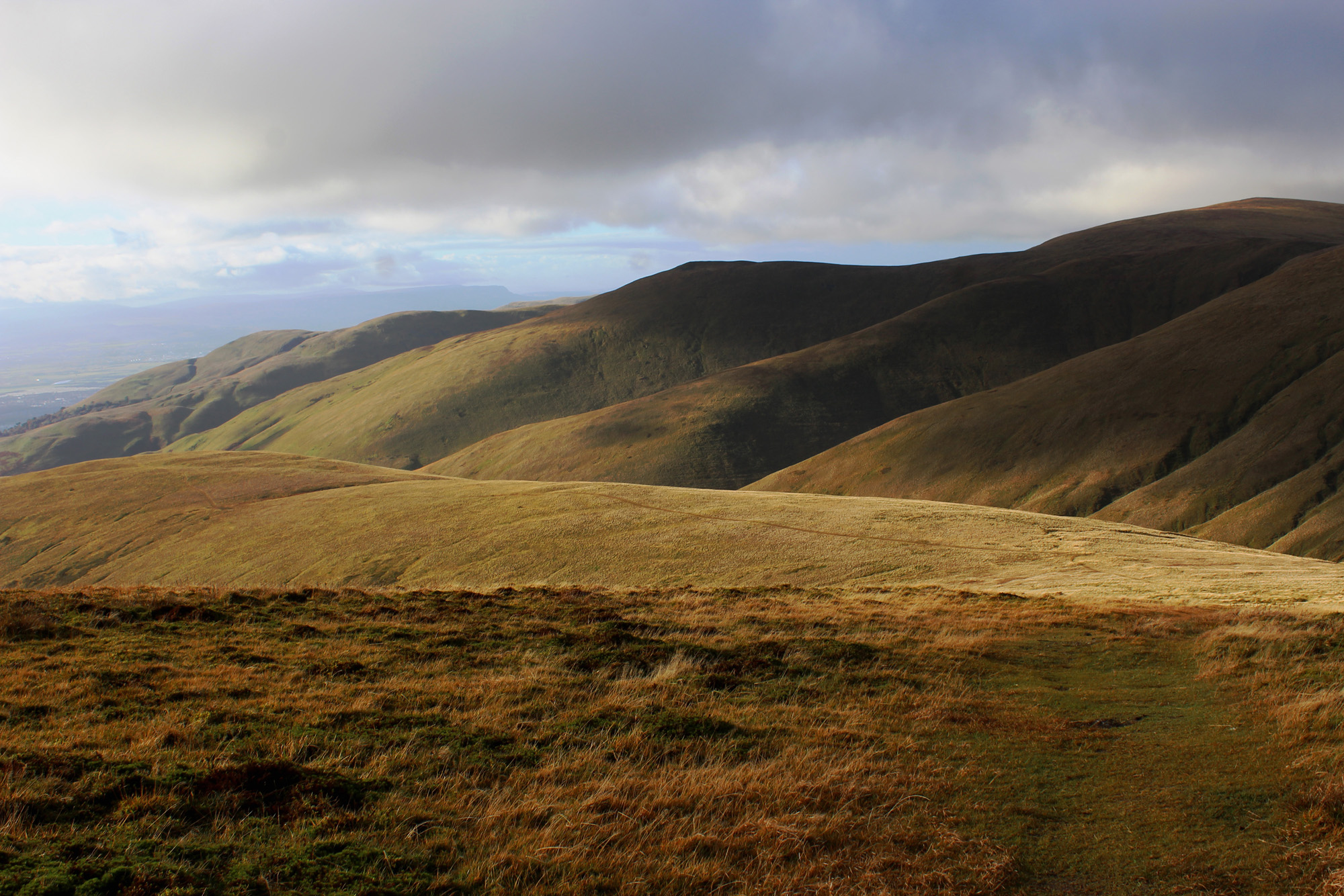
Memorials are not uncommon in the mountains and glens of Scotland. Some honour individuals who have died in the great outdoors, or had a great love of the countryside, while others commemorate tragic accidents, most notably air crashes.
A cairn just below the summit of King’s Seat Hill, in the Ochils, falls into the latter category and marks the spot where a trio of Spitfires crashed in atrocious weather conditions during the dark days of the second world war. Two of the pilots died instantly while the third miraculously survived and managed to drag his broken, frost-bitten body off the frozen hillside.
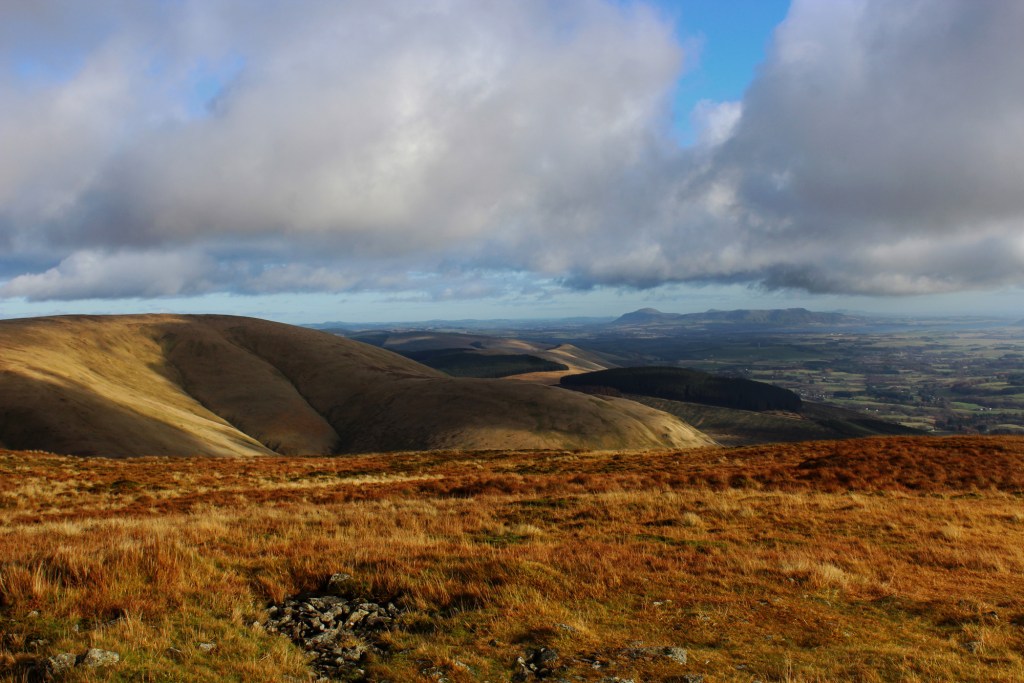
Rising above the 15th century stronghold of Castle Campbell, King’s Seat Hill is one of the high points of the Ochil Hills, a range of peaks that stretches from Stirling, in the west, to the Firth of Tay, in the east.
My route to the memorial and then on to the summit began in Dollar Glen, a car park in a former quarry cut into Gloom Hill part way up the road to the castle offering access to the gorge and all its glories. From an information board, a path weaves down through the trees to Dollar Burn where I branched right, a delightful trail interspersed with wooden walkways and steps climbing past sprightly falls of water to Castle Campbell.
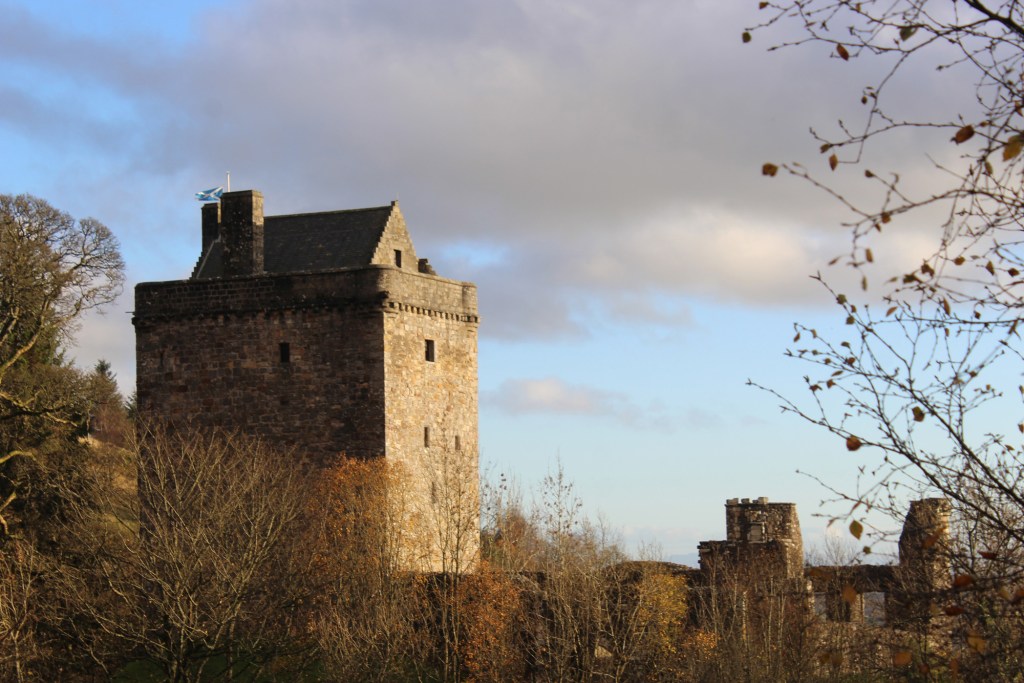
Dating from the early 1400s and originally called Castle Glume, the imposing tower house was the Lowland seat of the Campbell clan for nearly two centuries.
The onward route rises from the castle entrance, curving north into a narrow defile carved out by Burn of Sorrow before emerging on to open hillside above a footbridge spanning the stream. The grassy path soon splits, one arm ascending over Bank Hill, the other, slightly less strenuous, passing to the right of this low top beyond which the two converge and run west to a gate and stile.
Here the way swings right, climbing through a rocky cleft and up the south-east shoulder of King’s Seat Hill to the memorial which sits at the top of the steepest section of the slope.
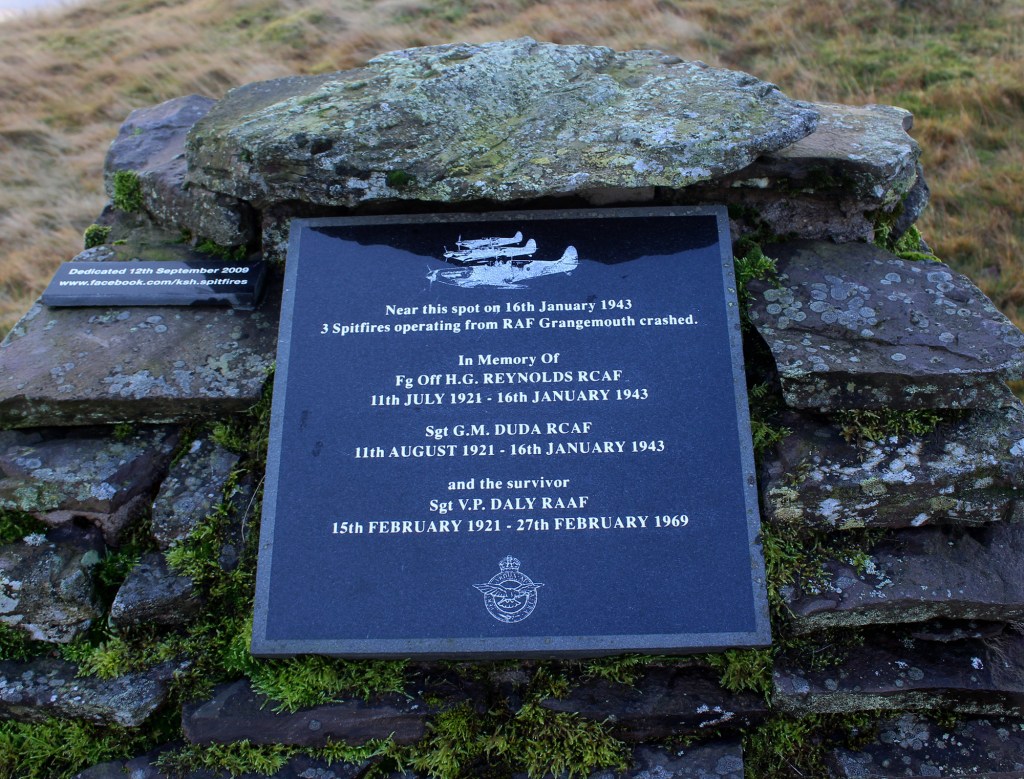
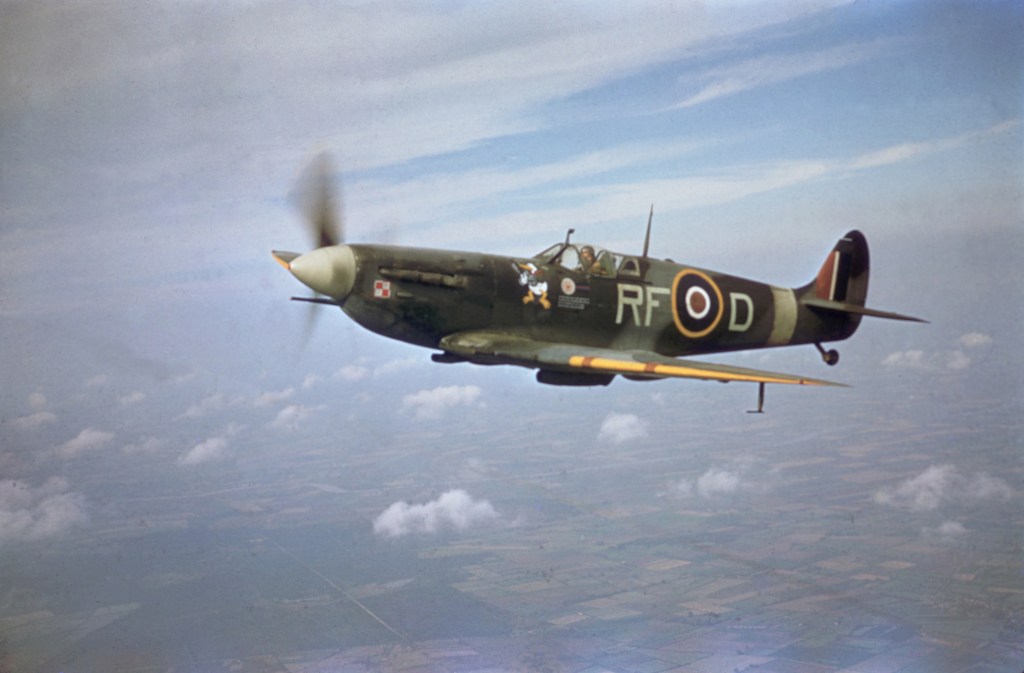
Erected by a local group of historians known as the King’s Seat Hillbillies, it is a tribute to Canadian airmen Flying Officer Hugh Reynolds and Sergeant Gordon Duda, who both died in the accident, and Sergeant Vincent Daly, from Australia, who, lived to recount the misadventure. Led by Reynolds, the three pilots – all just 21 years of age – were flying a training sortie from RAF Grangemouth on January 16, 1943, in Mark 1 Spitfires.
Late in the morning they took off 10 minutes apart on the formation flying exercise. With visibility poor and weather conditions bad, they were advised by the tower not to stray far from the airfield. However, for reasons unknown they found themselves cruising towards the Ochils at around 2000 feet where they entered a band of thick mist cloaking the peaks. Shortly after noon, just 20 minutes or so after take off, they all crashed into the southern face of King’s Seat Hill.
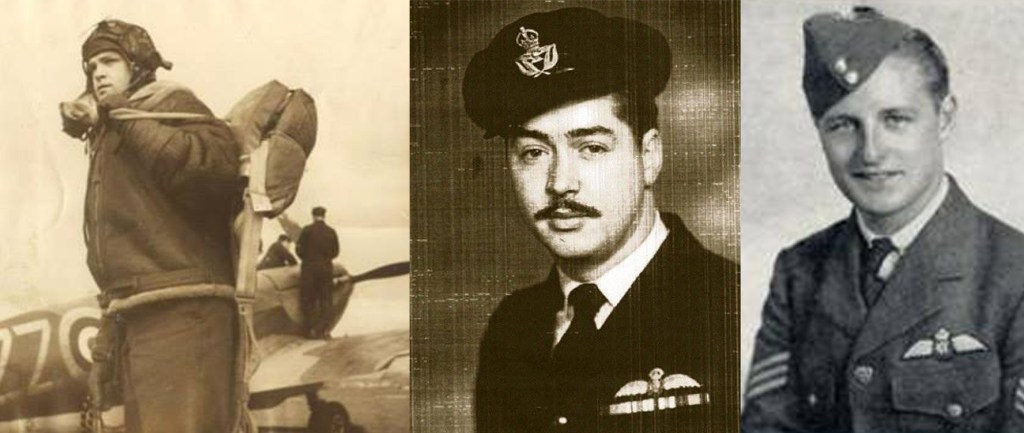
Reynolds and Duda died in the impact. Daly, however, spotted the fast approaching hillside with just enough time to lift the nose of his Spitfire up, softening the inescapable blow. His quick thinking saved his life but, stranded on the wintery high ground, safety was still some way off. He told a subsequent inquiry that he managed to climb out of his plane and crawled over to Duda’s aircraft where he found the young pilot dead. He also saw Reynold’s aircraft which he said was ablaze, but he was unable to reach it.
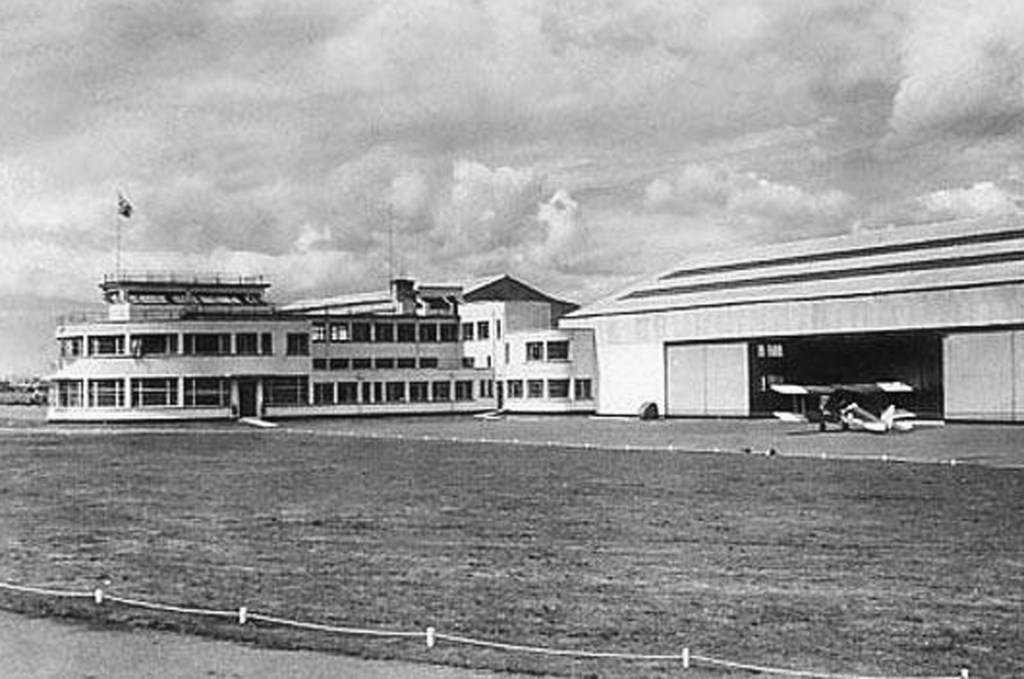
RAF Grangemouth’s last radio contact with Reynolds was at noon. The tower attempted to contact the pilot again at 12.20pm but drew no response. Ground control continued to transmit for the next two hours to no avail and sent messages to other airfields, among them Balado Bridge, near Kinross, and Tealing, in Angus.
In the meantime, unsure whether rescuers would find him, undoubtedly cold and enshrouded in thick fog, Daly splinted his broken leg against his good one, and began to crawl down the mountain. He spent 48 hours on the hill, finding shelter in the bracken, before he was found by a shepherd. Daly, who was now also suffering from pneumonia and frostbite to his nose and fingers, was stretchered off and taken to the military hospital at Larbert.
Rescuers did not reach the crash scene until the afternoon of January 18 where they found the bodies of Reynolds and Duda still in what remained of their cockpits. All three Spitfires were ‘completely wrecked and disintegrated’, according to one witness, with debris littered over a large expanse of hillside. Recovery of the bodies revealed that Reynolds had died from multiple injuries and severe burns while Duda sustained multiple injuries and a fractured skull.
The inquiry determined that Reynolds, who had already been up in the air once that fateful day, had lost his bearings while flying in cloud and had led his section into the side of the hill. His Group Commander W.H Dunn concluded that the accident was the result of a ‘serious error of judgement’ on the part of Reynolds.
For the hillwalker who reaches the cairn, the gradient eases here, a stone shelter on the top of King’s Seat Hill a peaceful spot to pause and reflect upon this wartime catastrophe before continuing over the exposed plateau to a small cairn marking the actual summit. Thereafter, descend south-west, along a broad, grassy ridge, the path finally dipping through Mill Glen to Tillicoultry. As an alternative, you could reverse this route, ascending from Tillicoultry and descending to Dollar. The towns are linked by the Devon Way, which follows a former railway and provides a handy link.
While the wreckage of the Spitfires was recovered from the hillside in the aftermath of the crash, pieces of the planes have surfaced over the years and many of these, along with archive material, photos and reports, now reside at Dollar Museum, an independent museum devoted to the heritage and history of the Clackmannanshire town.
If you have enjoyed this post, and others on the site, you might like to buy me a coffee which helps support the site…


