
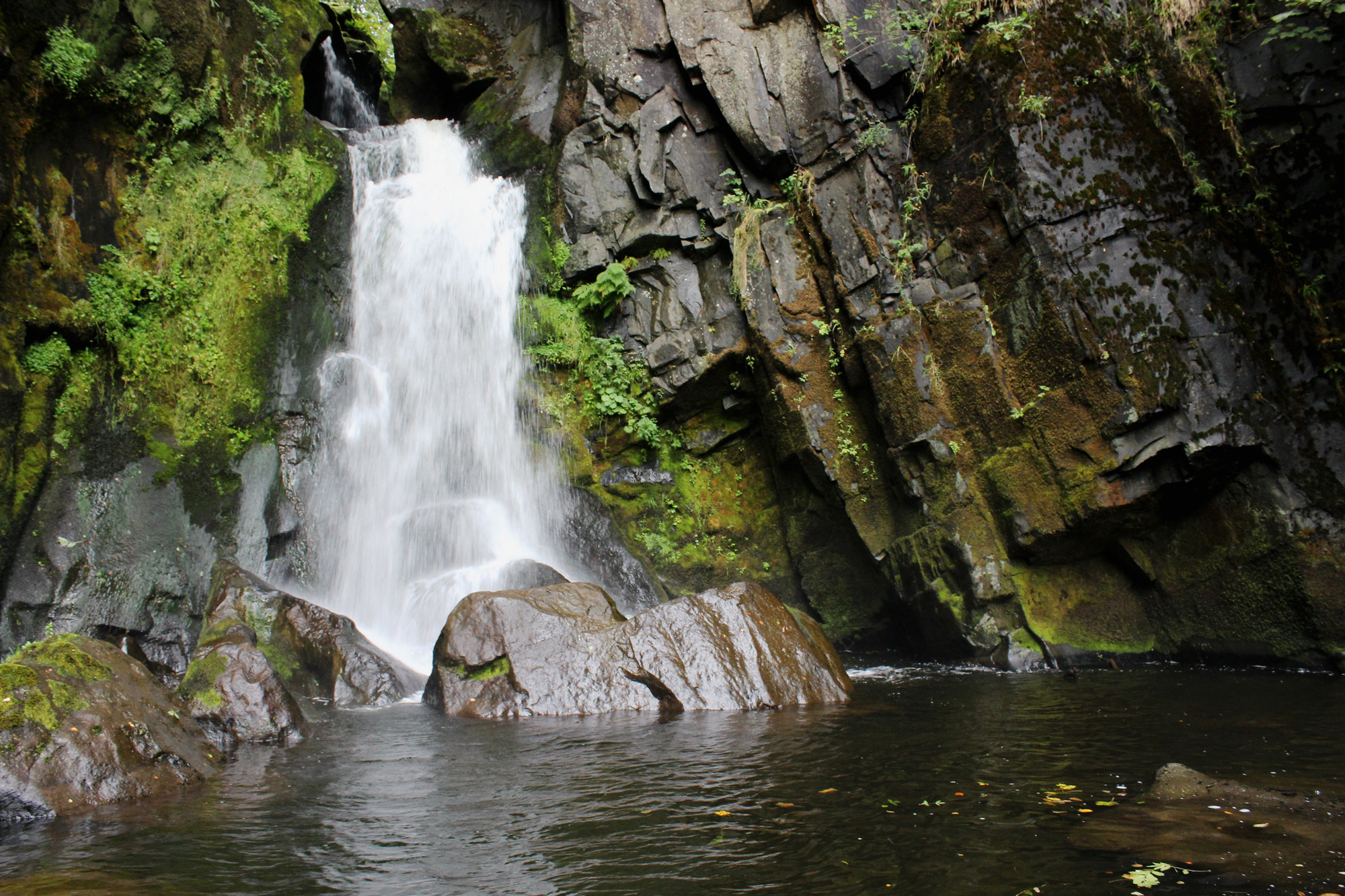
Cauldron Linn waterfall is a lost treasure on the River Devon, in Clackmannanshire. Regarded by Victorian tourists as a great natural curiosity and one of the most sublime objects in Scotland, it is now scarcely visited and at risk of being completely forgotten.
The poet Robert Burns visited in 1787 and the falls featured in Victorian and Edwardian tourist guides, like the well-read The Scottish Tourist, and Itinerary – A Guide to the Scenery and Antiquities of Scotland and the Western Isles, published in 1838.
‘The most complete view of this magnificent scene, and of the deep and finely-wooded dell, is from the bottom of the great fall, where it has the appearance of a prodigious fountain gushing from the solid rock,’ the guide stated. ‘It is beheld to most advantage between one and two o’clock in the afternoon, when the sun shines directly in front of it. A vapour constantly ascends from the pool; in sunshine this vapour exhibits all the colours of the rainbow, which, by the constant agitation of the air, disperse, and again appear in the most beautiful combinations.’
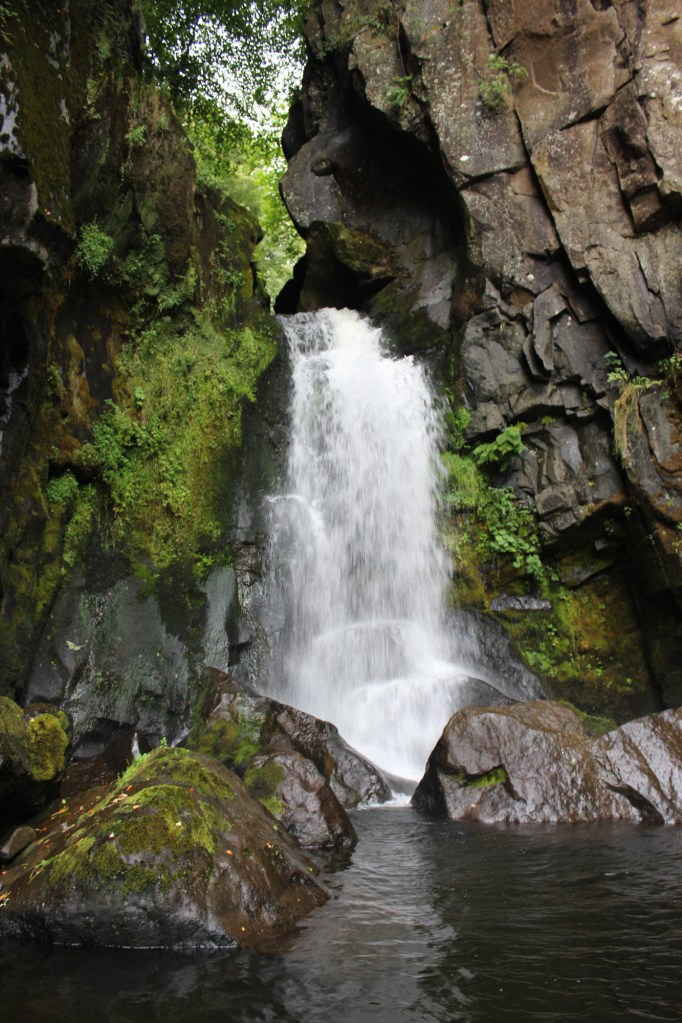
Located around a mile downstream from the more popular and accessible falls of Rumbling Bridge and just above the point where the Gairney Burn meets the River Devon, access is not as easy as it perhaps once was.
There is evidence on the ground to indicate a network of paths leading to the base of the cascade but this has largely fallen out of use and is now heavily overgrown while an old bridge spanning the River Devon below is slowly collapsing. That is not to say it is not impossible to reach and, if you visit, chances are you will have the waterfall, its bubbling cauldron and wooded dell all to yourself. This is not, however, an outing for beginners and demands great care and a sense of adventure.
From the village of Powmill, where there is on-street parking, follow the A977 west, passing Gartwhinzean Feus, on the left. Once clear of the houses, branch right by a cluster of cottages on the right, following a track to the farm at Netherton. Pass to the right of the farm buildings, crossing the line of a former railway and passing below an electricity pylon line. Progress straight ahead over rough grazing land to the edge of woodland and enter the trees to join a rather vague old trail that zig-zags down the wooded bank, towards the river. It leads to a metal lattice framed bridge spanning the river. This is no longer particulalrly accessible or safe to cross so descend the bank below to the river.
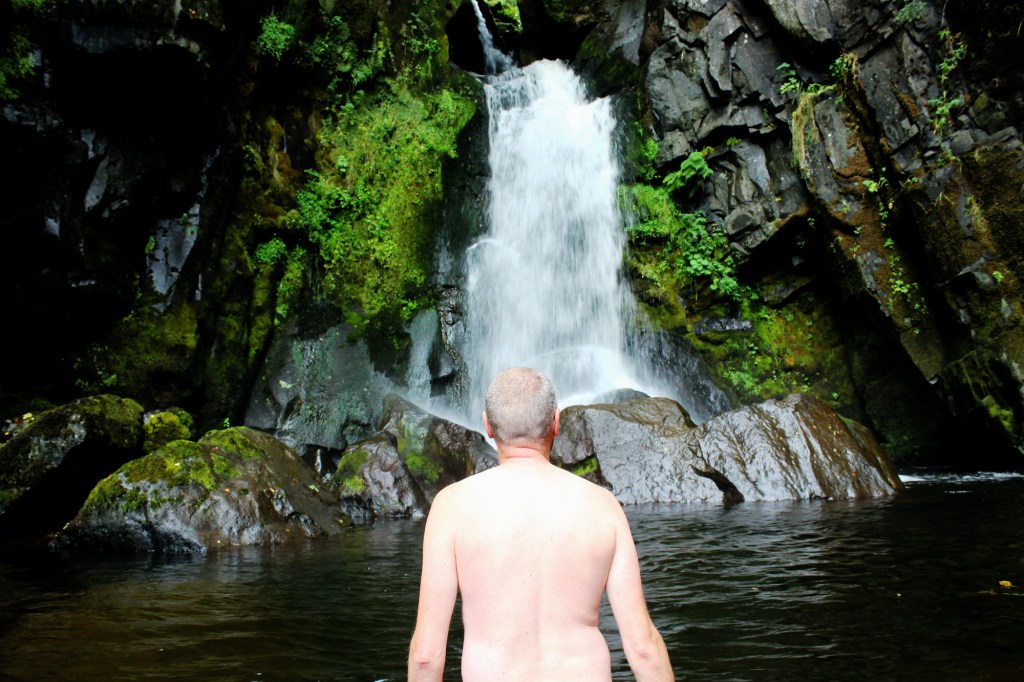
Using boulders as stepping-stones, cross the river, which is relatively shallow and slow flowing here. Bear right and head upstream on the riverbank, which flattens off, the thundering sound of Cauldron Linn drawing you to it. Falling in two halves, the frothing lower portion of white-water
tumbles over gleaming rocks into a broad, dark pool, flanked by towering bluffs of rock clad in moss and ferns and a chaotic jumble of moss-encrusted stone. The final scramble from the bank up to the pool is over jumbled and slippery rock and requires great care and there is a fair amount of slick rock below the surface of the water too.
It is, however, an epic spot and, with the early afternoon sunshine breaking through the trees, a magical place for a secluded wild swim.

Extract from Walks & Wild Swims in Scotland by James Carron, available in paperback and ebook from Amazon. If you have enjoyed this post, and others on the site, you might like to buy me a coffee which helps support the site…


