
The West Highland Line is one of the world’s most scenic railway journeys. Yet few passengers may be aware that since the 1930s road vehicles have regularly travelled its tracks too.
Back then operator the London North Eastern Railway Company (LNER) was looking at ways to reduce the cost of maintaining the line, which snakes through the West Highlands from Glasgow to Fort William and on to Mallaig. Up until that point surfacemen who checked daily for obstructions and repaired the track where necessary were posted to remote cottages along the length of the route. Each was responsible for a section of the track. The LNER was, however, keen to replace them with mobile road-based teams which could be deployed as and where necessary.
The southern half of the line was relatively easy to reach as it ran parallel with or close to main roads. Between Bridge of Orchy and Tulloch, however, the track was much less accessible, crossing more remote terrain where roads were few and far between.
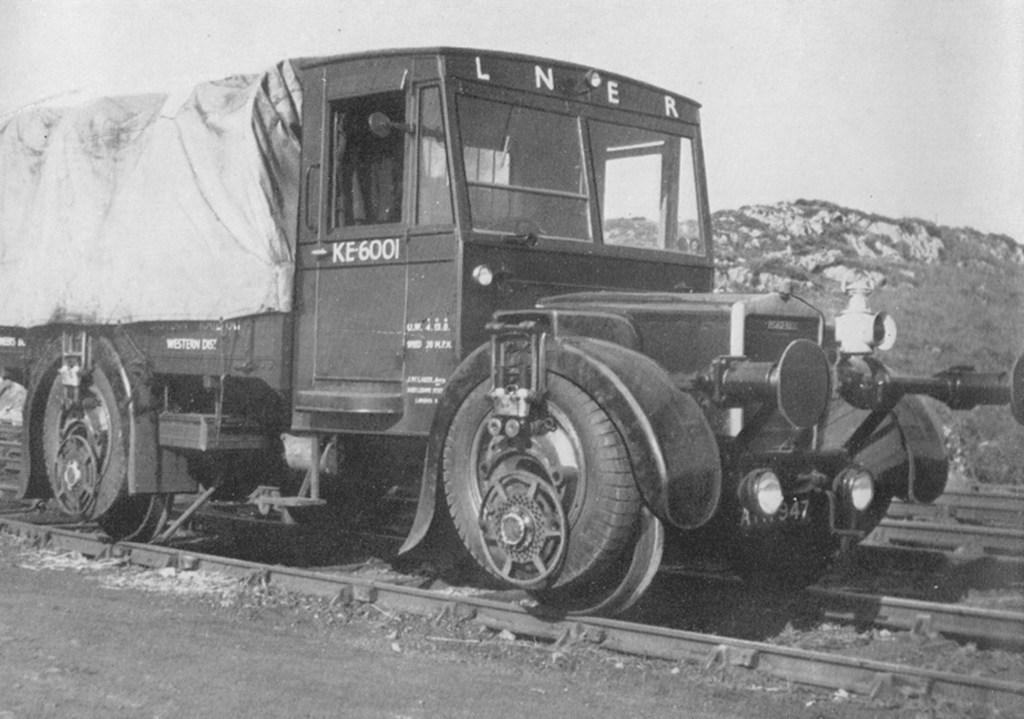
The company commissioned Karrier Ltd, of Huddersfield, to build them a solution to this problem. Established in 1908, the company produced light commercial vehicles and buses and had diversified into manufacturing vehicles that could run on both road and rail. Their road-railer single deck hybrid bus, designed to serve communities that lay just off the railway map, was trialled by the London Midland and Scottish Railway (LMS) in 1931. Cranking flanged wheels down behind each of the four road-going tyres, it took just five minutes to move from road to rail, or vice versa, and the bus, which seated 26 passengers, could travel at up to 50mph on either.
Introduced early in 1932, it operated on the Stratford-upon-Avon and Midland Junction Railway line, between Blisworth and the Stratford-upon-Avon goods yard. The weight of the vehicle and its rough ride did not find favour with the LMS directors or the travelling public and the concept never caught on and did not progress beyond a prototype vehicle. However, the LNER saw its potential for their purposes and a goods carrying version with improved chassis, cab and lorry body with fixed sides, detachable tailgate and canvas roof was produced for the company. It could carry up to 20 men and their tools and could haul up to five wagons of ballast, although in practise it never pulled more than three.
Karrier Ltd was very proud of its association with the LNER and highlighted it in their Road Railer brochure of 1936, stating: ‘The vehicle, which travels with equal facility on either road or rail, was the first successful attempt to combine in one vehicle the great safety and cheap operating costs together with the door to door transport advantages of the road vehicle.’
Deployed in 1938, the vehicle operated between Crianlarich and Mallaig until 1946, aiding inspection of the track and the movement of crews to spots where attention was needed. From Crianlarich it travelled by road to Bridge of Orchy then over the rails of Rannoch Moor to Tulloch. There it continued by road to Fort William and Mallaig. In the same way as locomotives have sand boxes, it was fitted with a sanding device to improve track adhesion. Powered by a four-cylinder, 31-48hp engine coupled to a four-speed gearbox, it had a top road speed of 30mph and could do up to 37mph over rails.
Karrier Ltd became part of the Rootes Group, manufacturers of the famous Linwood-built Hillman Imp, but despite road-railer buses being touted as one way to save under-threat branch lines in the 1960s, the technology was never fully adopted.
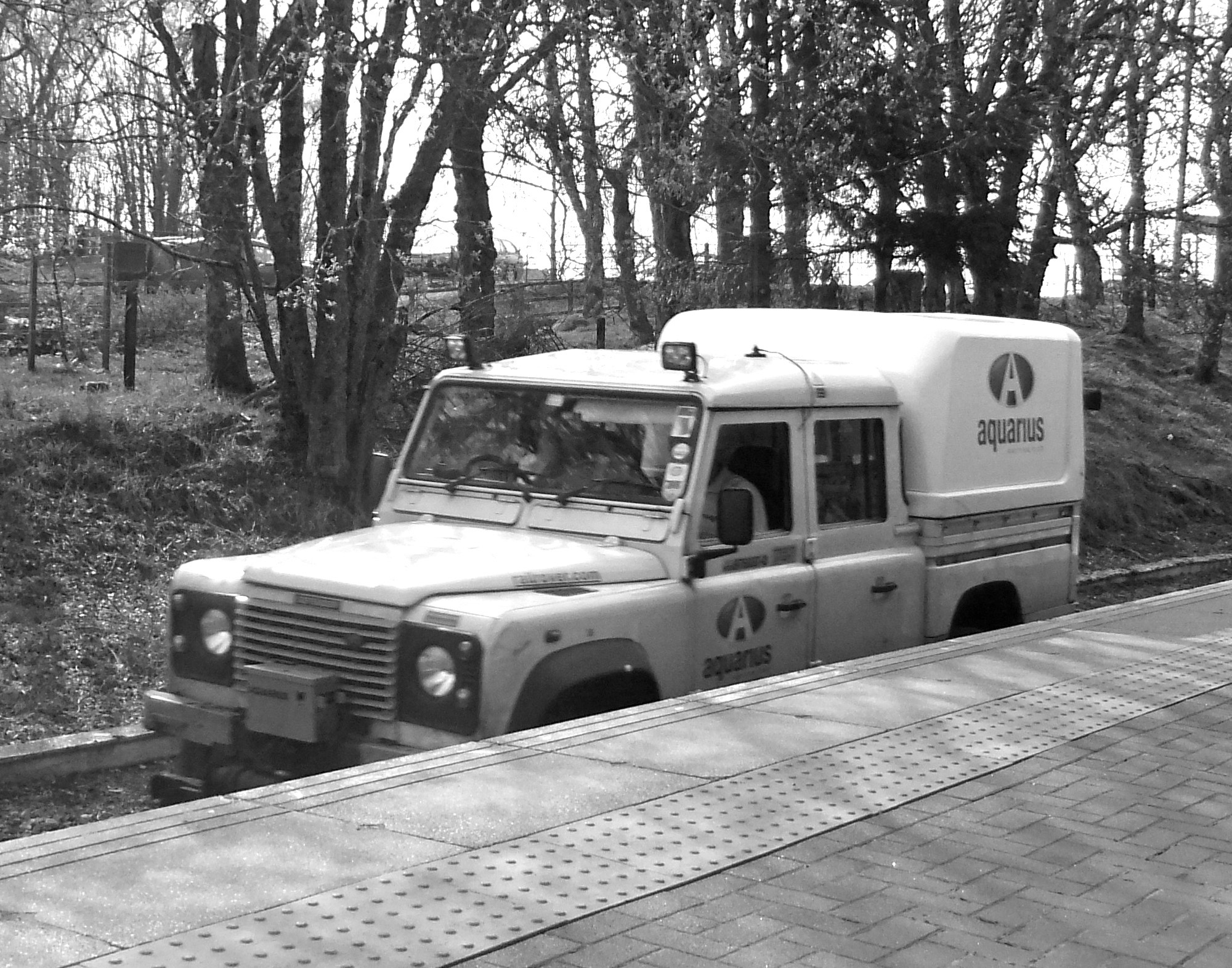
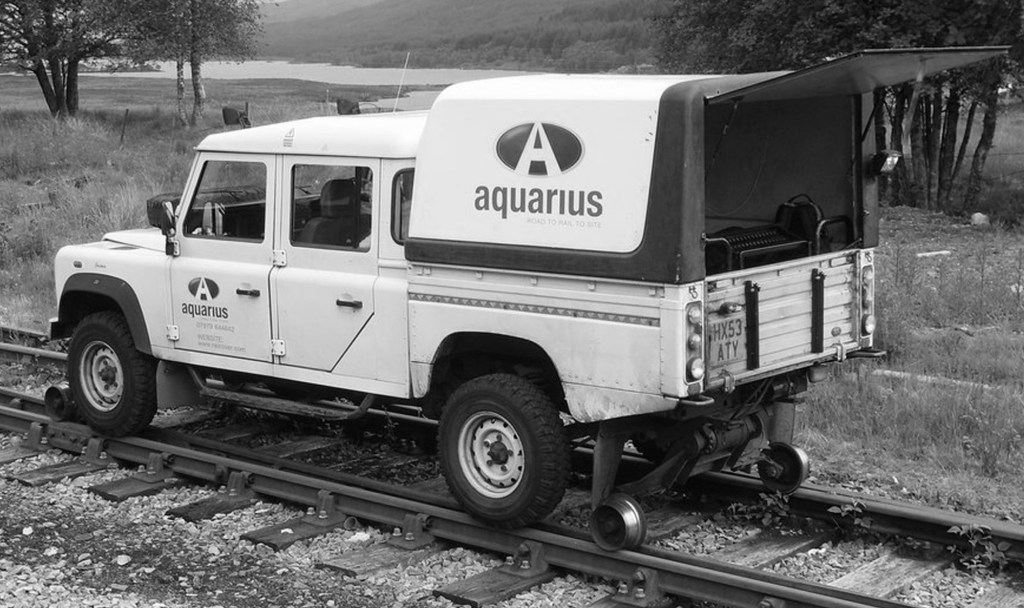
The road to rail concept, however, was not abandoned by the West Highland Railway and, while British Railways did not follow the LNER’s lead on road to rail vehicles, Network Rail Scotland now use Aquarius Rail Road2Rail 4×4 Land Rovers, designed to transfer from road to rail in less than two minutes, for a variety of tasks on the route, including lineside vegetation inspections, dealing with fallen trees or animal incursions, or repairing rails or trackbed.
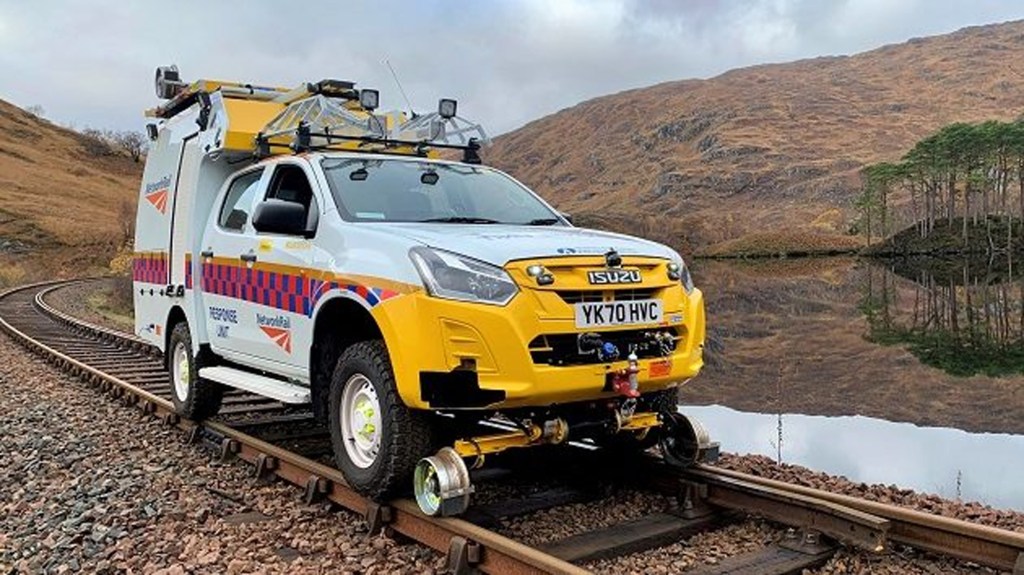
Based on the rugged Land Rover Defender, the vehicles can carry crew and a one tonne payload and can travel on the tracks at up to 20mph, or 15mph in reverse. More recently, with the old Land Rover Defender now out of production, Aquarius Rail has designed, manufactured and delivered their bespoke Rapid Response R2R Isuzu D-Max to the West Highland Line, ensuring that, between the trains, road vehicles continue to travel its tracks.
Extracted from Lighthousemen & Women of the Moor by James Carron
If you have enjoyed this post, and others on the site, you might like to buy me a coffee which helps support the site…


1 Comment