
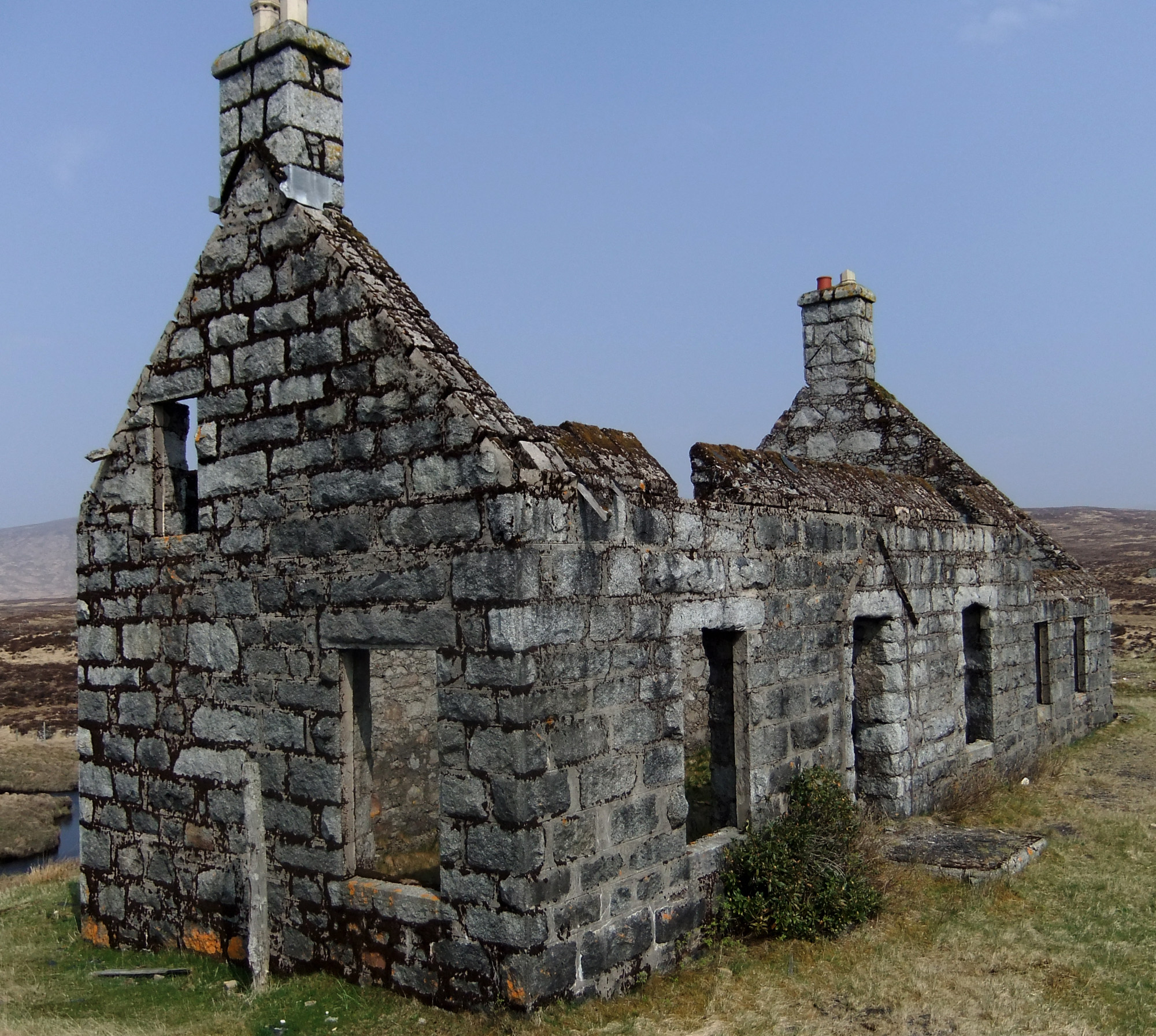
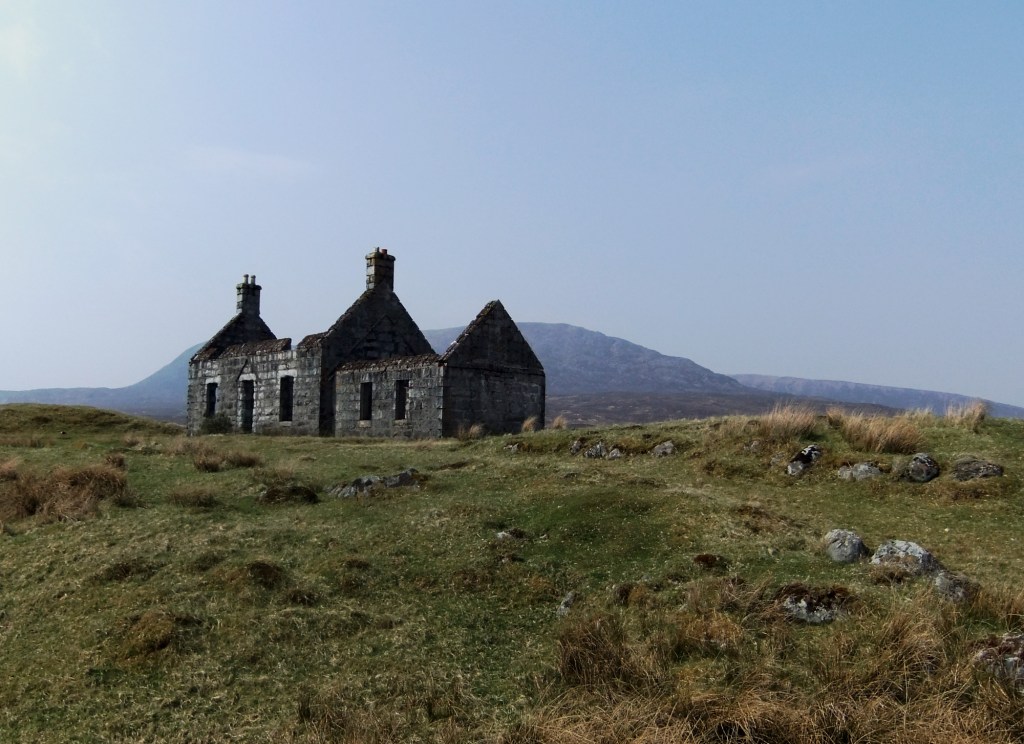
Buildings are few and far between on Rannoch Moor, one of the last remaining areas of true wilderness in Europe. While some remain occupied despite their isolation, others have fallen derelict over the years and now stand as ghostly ruins lost in the moorland landscape. One such remote relic is the former estate lodge at Lubnaclach wherein lies a haunting tale of paranormal activity.
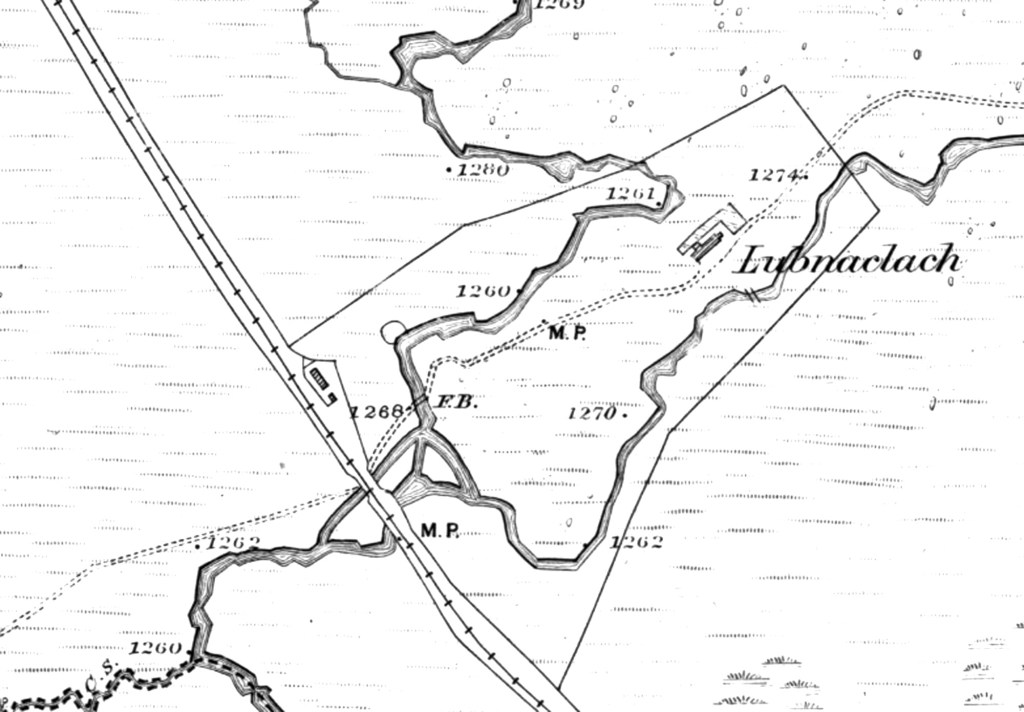
Located close to the railway line running between Rannoch Station and Corrour, Lubnaclach was home to an estate gamekeeper for much of the 20th century. From the 1890s until the 1940s it was also the place where surfacemen employed to maintain the West Highland Railway over the moor were billeted. Adjacent to the substantial three-bedroomed stone lodge, built by Corrour Estate close to the site of an earlier shieling to replace an even remoter lodge located a mile and a half to the south at Caim, two cottages were erected.by the North British Railway Company for their track workers. They replaced wooden huts erected for navvies during construction of the line.
They were known as the ‘Lubnaclach Huts’. Census records reveal that, in 1901, foreman Allan Cameron (29) lived with his wife, two young sons and two lodgers, both surfacemen, in one of them, while the other provided lodgings for four surfacemen, all single men. In 1911, foreman John MacKinnon (22) and his 33-year-old wife Mary lived with three lodgers, Angus Dingwall (25), Duncan Beaton (23) and James Munro (21), while next door 31-year-old John MacLellan and his 27-year-old wife Sarah had two boarders, Angus MacLellan and John Morrison, both 19.
While nine people occupied the railway cottages, gamekeeper Donald Lawrie (28) had only housekeeper Mary McIntyre (55) for company in the larger estate house, although they were frequently visited by other estate staff and shooting parties.
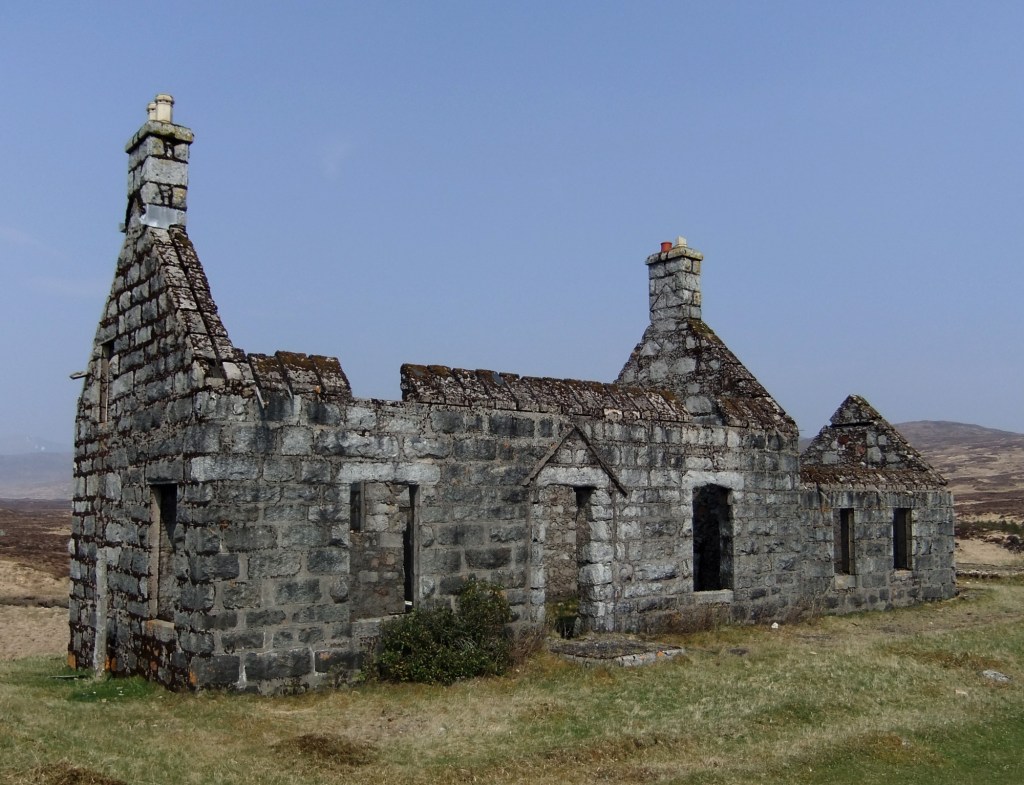
While surfacemen faced physical dangers out on the track, one found his demons closer to home. In October 1935, the London North Eastern Railway Company (LNER) received a curious letter from one of its track workers urgently requesting a transfer. Assigned to rail repairs on Rannoch Moor, Joseph Mullen boarded in one of the railway cottages at Lubnaclach, which he claimed was haunted.
He wrote: ‘Sir. With reference my application of the 15th, I would respectfully point out to you that my grounds for applying for a transfer are that I am unable to stay any longer here as the house that I am in shows signs of it being haunted. The extraordinary moving of furniture at night and other signs leaves room for no doubt. I am unable to sleep right with the strain. This has occurred for a time now and I appeal to you to investigate the matter.’
To their credit, the company did investigate, taking statements from the 22-year-old and others living in the house. Mullen claimed that both he and his roommate, a man from the Isle of Skye, had witnessed the nocturnal disturbances. The two men were initially woken in the night by the sounds of furniture moving and thought at first it had been caused by rats or other animals getting into the room. However, they could find no evidence of this and the noises continued, roughly every other night. On one occasion, the two men got up, lit the room, and watched as a chair moved across the floor, just four feet in front of them.
‘The only person who could have anything to do with it was my mate,’ said Mullen. ‘But he was as badly scared as I was and he too was glad to get away.’
Mullen dismissed suggestions someone may have been pulling the chair along on a string, saying it was more of a hopping motion. As the bizarre behaviour continued, Mullen also stated that on occasion he heard footsteps outside the cottage approaching his window. The LNER, it appears, could find no logical explanation for the reported disturbances but granted Mullen his transfer, to a suburban station in Glasgow.
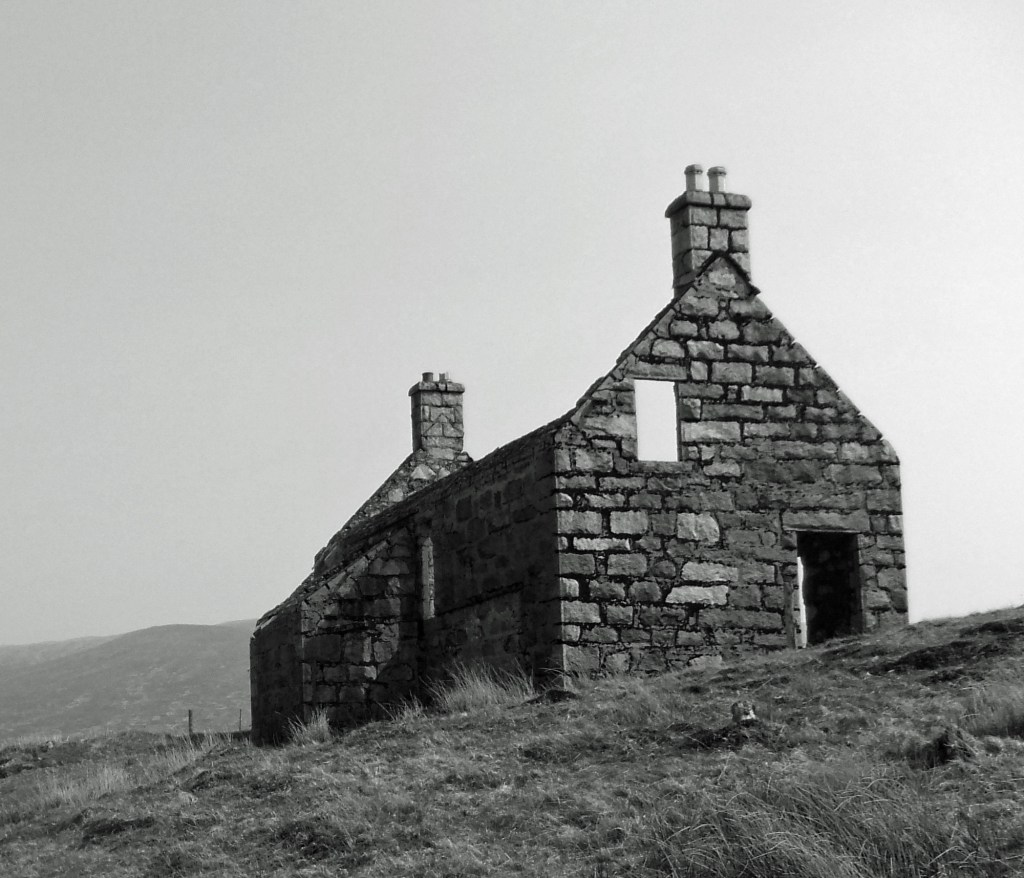
Whether Mullen and his mate were genuinely plagued by paranormal activity, a poltergeist even, or whether they were just the victims of pranks played by their fellow lodgers will never be known. Lubnaclach is a lonely spot on a desolate stretch of moor but it does not have a reputation for ghostly goings on. Perhaps, coming from the town, Mullen was just unable to adjust to the eerie silence of a spot where, at night, the slightest sounds are amplified. Noises within the room may well have been caused by mice or rats while footsteps outside his window may simply have been the patter of deer hooves. The itinerant chair, however, will remain a mystery.
In the late 1930s, to reduce maintenance costs, working practices changed with an increased reliance on motor vehicles to access the track, resulting in fewer men living along the line. The railway cottages at Lubnaclach fell vacant in the 1940s and were demolished. The neighbouring gamekeeper’s cottage remained in use until 1970 when Corrour Estate sold the property with 26 acres of land.
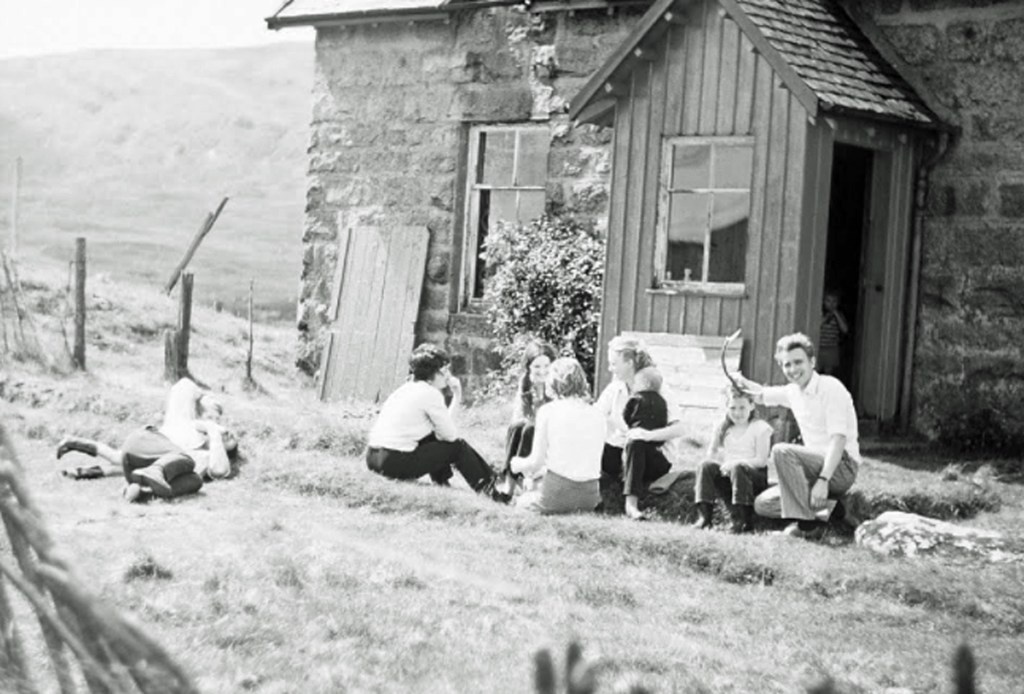
During the 1970s and early 1980s the building was shuttered and only occupied periodically as a holiday home by the families and friends of staff at Glasgow University’s engineering department. In those days it was sometimes possible to get the guard to stop the train on the line and visitors could jump out. Alternatively, if they couldn’t get the train to stop, they could throw their bags out as it went past so they didn’t have to carry them on the two mile walk from Corrour Station back to the house.
The lodge had three bedrooms and a bathroom with bath upstairs and, downstairs, there was a kitchen with cooking range and a living room with an open fire. The adjacent outbuilding was used to store peat, wood and tools, and there was a small wooden porch on the front. None of the cottages at Lubnaclach ever had mains running water or electricity. Heat was always from open coal or peat fires, light was from paraffin and latterly gas lamps and water was taken straight from the burns outside, where trout were frequently caught too.
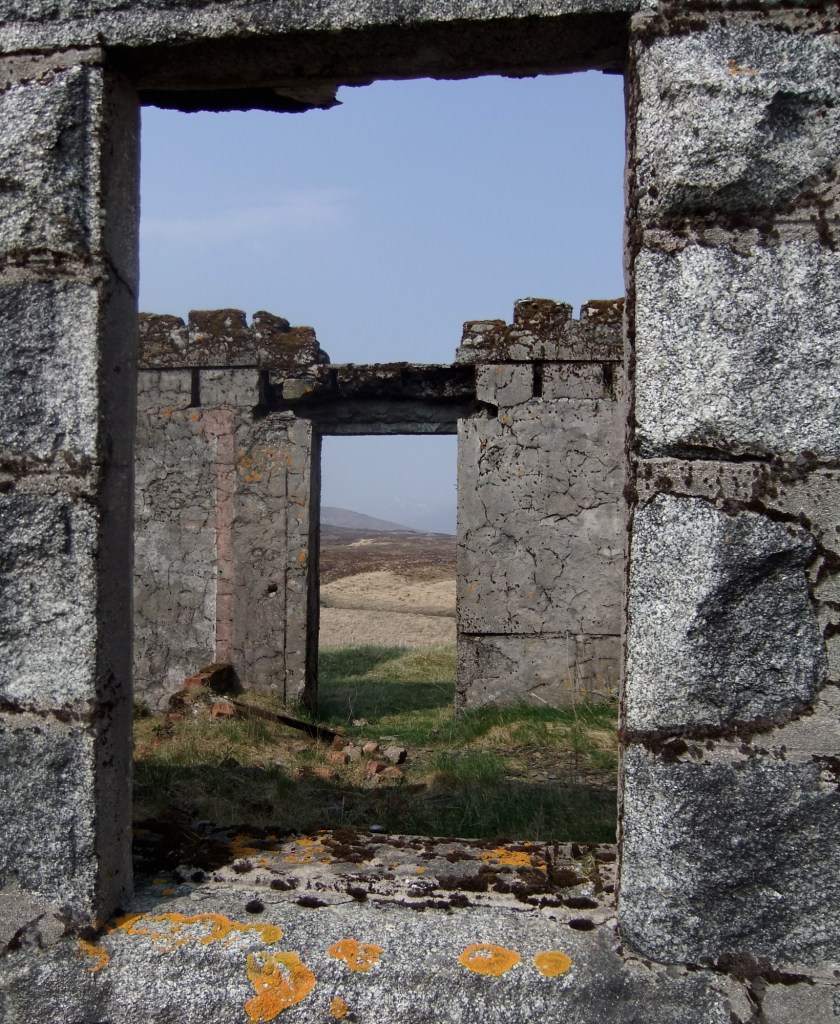
As part of their stay, visitors were expected to carry out any maintenance that was needed and it was during one such stint of work in the summer of 1990 that the building caught fire. Far from the reach of the fire brigade, the house was gutted and, never rebuilt, it now stands as a ghostly ruin.
Lubnaclach can be accessed on foot or mountain bike following the Road to the Isles track from Rannoch Station, to the south, or Corrour Station, to the north.
Extracted from Lighthousemen & Women of the Moor by James Carron
If you have enjoyed this post, and others on the site, you might like to buy me a coffee which helps support the site…


