
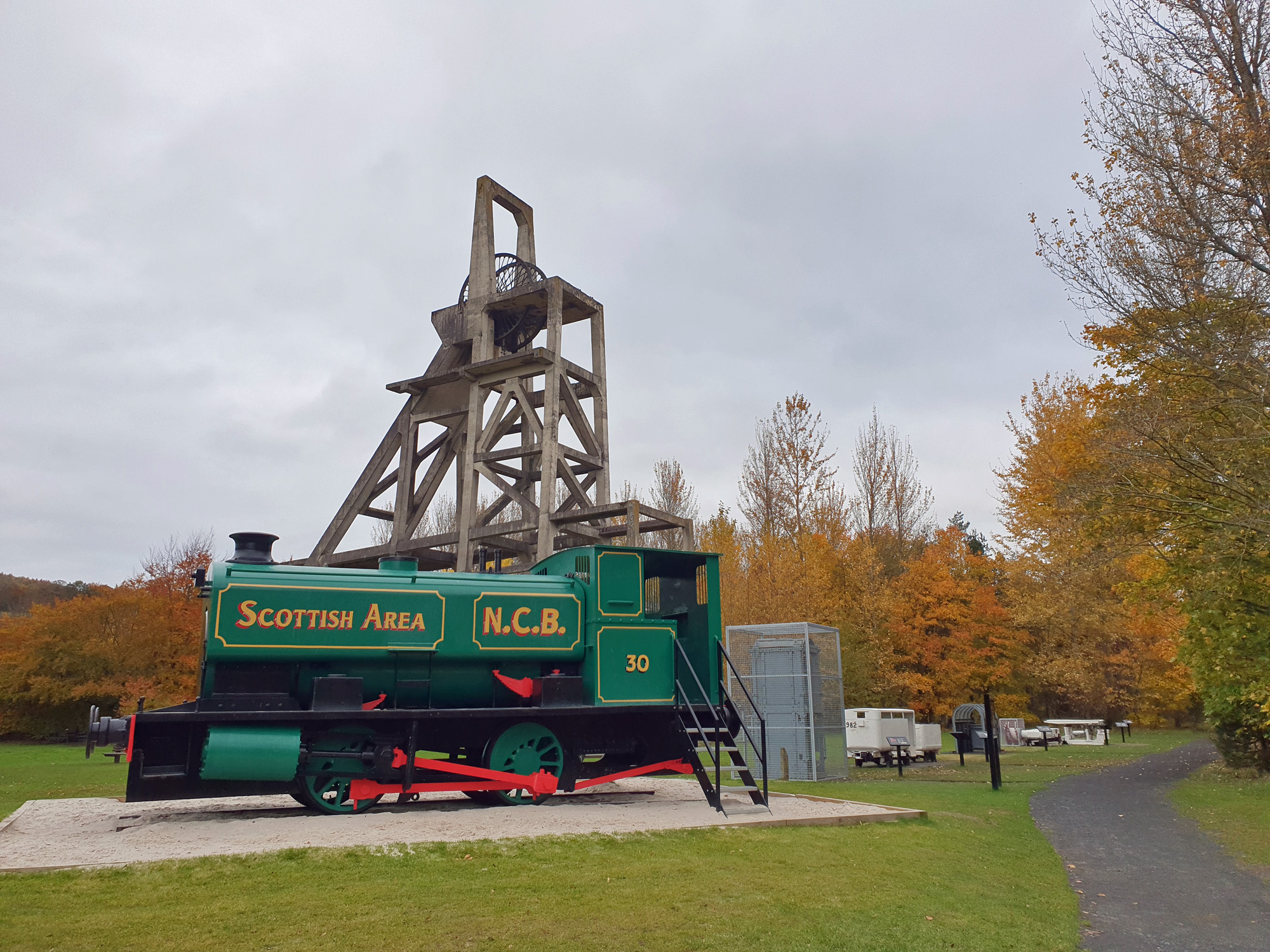
The iconic head frame at Lochore Meadows stands today as a monument to Fife’s rich mining industry. One of the few structures of its kind remaining, the century-old reinforced concrete winding gear once stood above the Kingdom’s deepest coal mine.
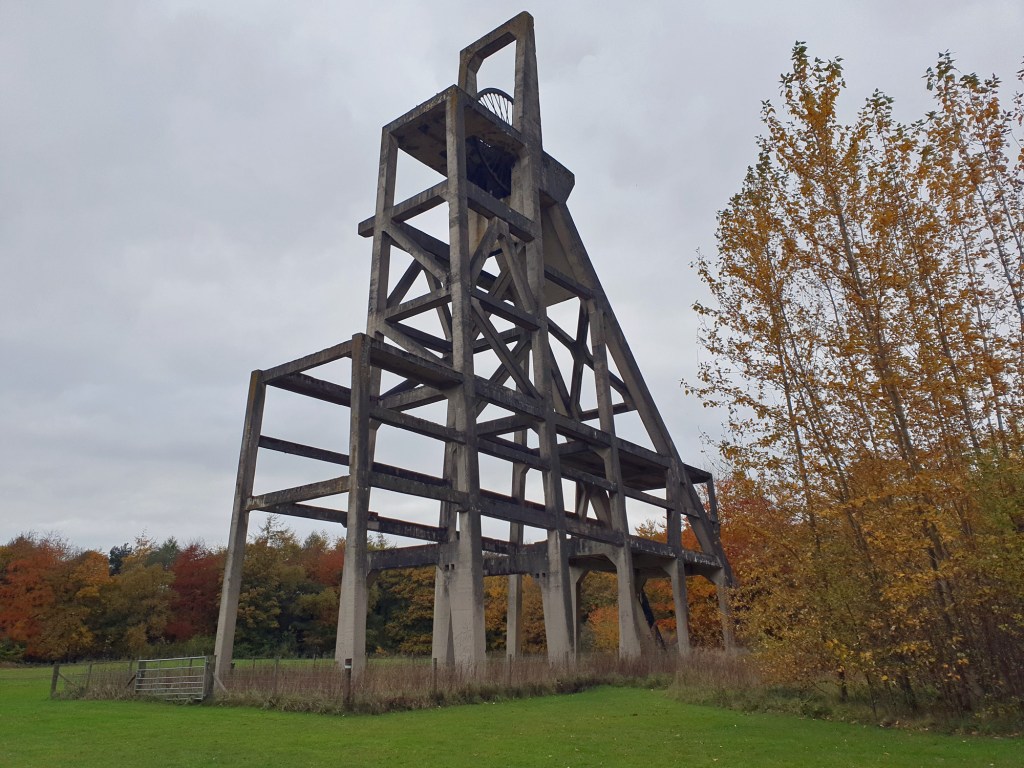
Other than memories and some old photographs, only this pioneering structure remains of Mary Colliery, which worked the basin of the Lochore Coalfield and was one of Fife’s most productive mines during its heyday. The first pit, Mary No 1 shaft (known as Wee Mary), was sunk in 1902 to a depth of just over 2000 feet. The Fife Coal Company added Mary No 2 shaft (Big Mary) in 1923, and it was driven 1709 feet below ground. The 80-foot-high headgear frame was unusual in that it was the first in Scotland to be constructed of reinforced concrete rather than cast iron or timber. The lifting gear was operated by a 1400hp electric winding engine, now gone, rather than the traditional steam-powered engine.
In something of an experiment prompted by the ever-present risk of fires in collieries, concrete was selected for the Mary pit as it was an uncombustible material. The frame was designed and built by the Trussed Concrete Steel Company, a Detroit-based firm with a branch in London, and, once complete in early 1923, it attracted visiting mine engineers from around Britain and further afield.
In the late 1940s and 1950s, Mary Colliery produced around 800 tons of coal a day and employed, at its peak in 1957, 780 workers. A modernisation programme followed nationalisation in 1947, and this introduced larger mine cars and locomotive haulage underground. However, in the early 1960s, production began to fall and, in June 1966, a meeting was held to discuss the fate of the colliery. Thereafter, it was gradually run down by the National Coal Board (NCB), the workforce falling to 220 ahead of closure in September 1966. Many of the miners found work at other collieries in Fife. Mary Colliery had an active life of over 60 years, a decade longer than was originally envisaged.
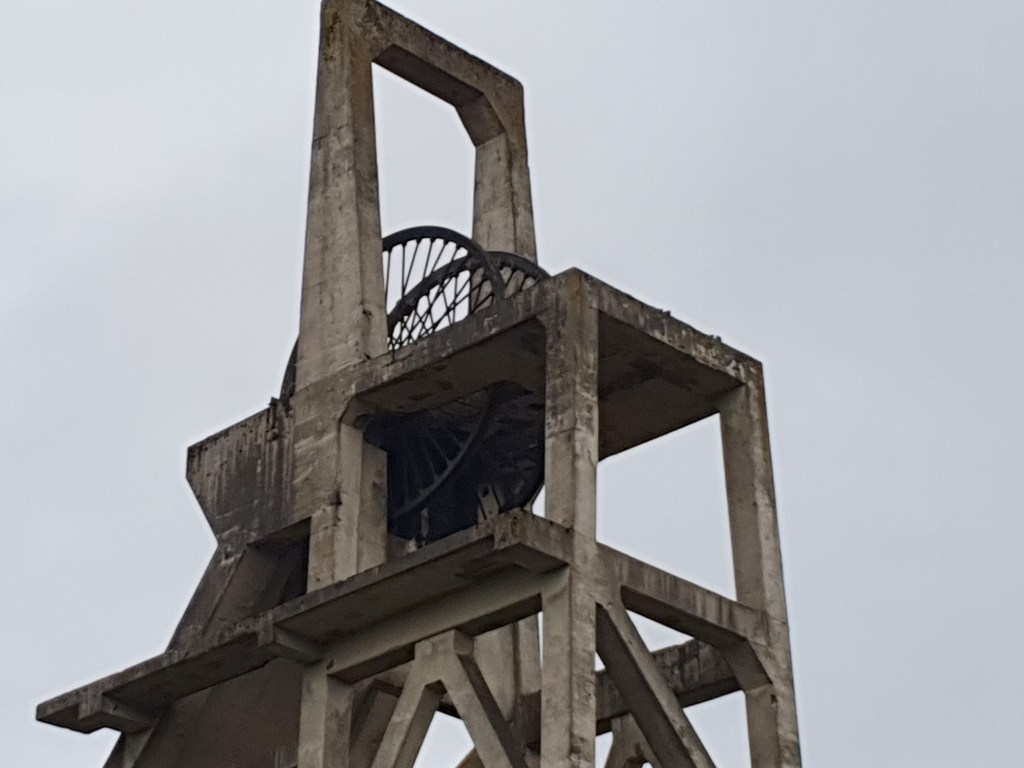
After the pits were shut, the shafts were capped with concrete slabs and an ambitious reinstatement of the site led by Fife County Council began. All surface traces of No 1 pit were erased, and it now lies beneath a golf course. While the surface buildings at Mary No 2 were demolished and the pit bings levelled, the solid concrete head frame was retained, acting as a centrepiece for the newly created Loch Ore Meadows Country Park, and a reminder of the area’s industrious past.
The concrete structure is now a protected scheduled monument, considered of national importance as one of the first reinforced concrete head frames to be built for the winding gear of a British colliery, and also as one of the few visible relics of coal mining in central Fife. Over recent years, some concerns have been expressed over the condition of the structure, which is fenced off in the interests of safety. However, there is a concerted local campaign to ensure it remains standing.
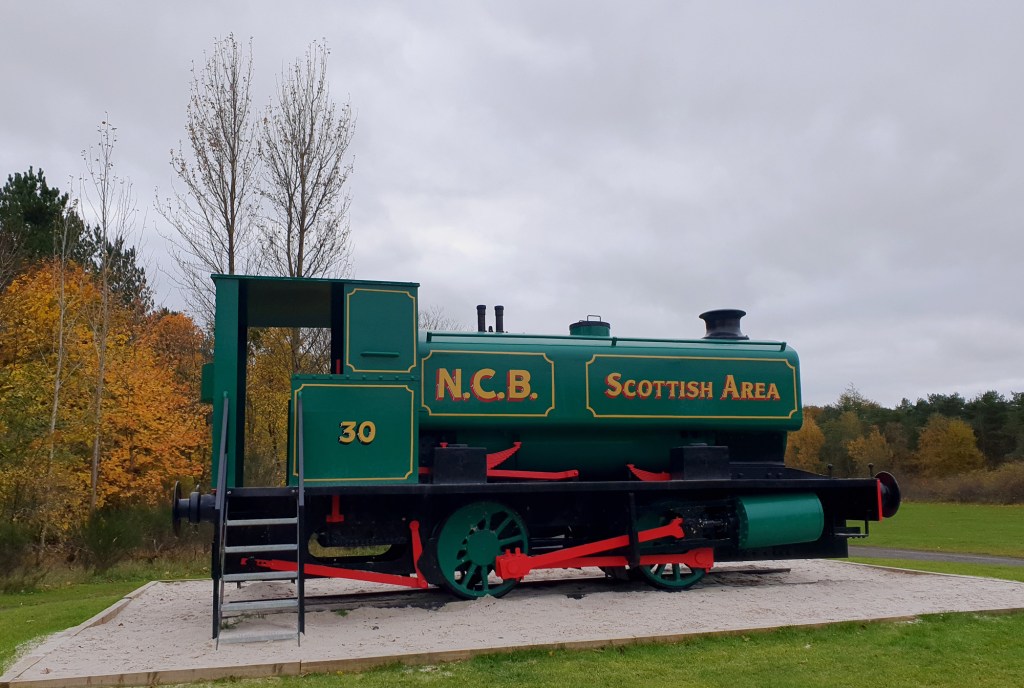
Below the frame, a preserved static railway locomotive, an 0-4-0 saddle tank (works no 2259) built in 1949 by Andrew Barclay Sons & Co. in Kilmarnock, sits on a plinth. Originally operated by the NCB at Frances Colliery in Dysart, Fife (designated as Fife Area NCB No. 30), it hauled wagons of coal on the surface before being withdrawn from service in the 1970s. Typical of the steam engines that worked the collieries of the time, the loco was acquired by Fife Regional Council in the 1980s.
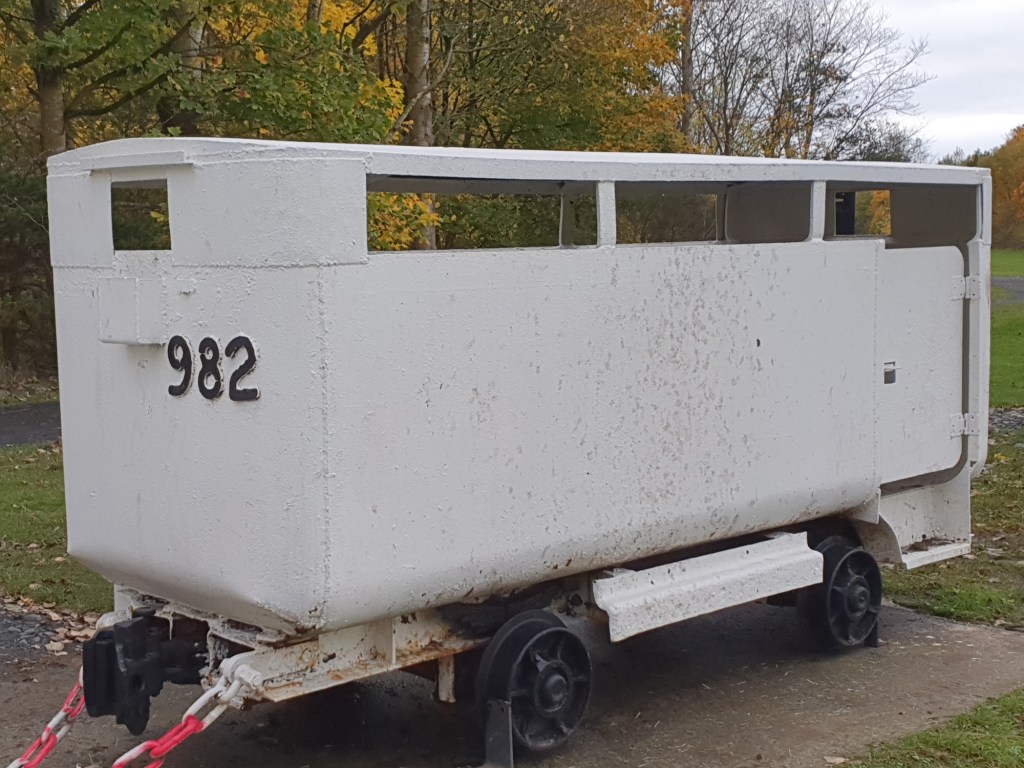
The loco was removed from Lochore in the summer of 1921 to undergo a cosmetic restoration at Smeaton Engineering in Kirkcaldy and returned to the park in December 2025, resplendent in a fresh green, yellow and red livery. The open-air mining heritage display at Lochore was further developed in 2025 with the addition of various items of equipment that would have been used down the mines, loaned by the National Mining Museum Scotland. These include an old pit cage used to transport miners up and down the shaft, a man-riding carriage, a coal hutch and coal-cutting tools, all of which are accompanied by information boards.
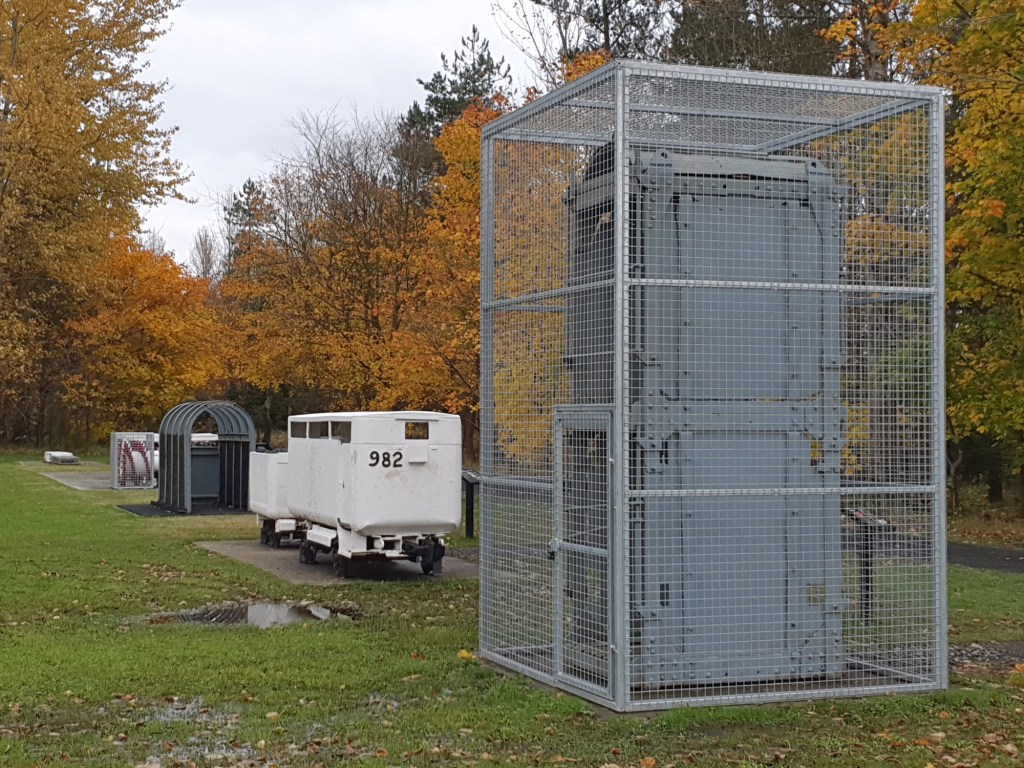
There is also an information board that details the history of the Mary Colliery and lists the many men and women who were either injured or died while working the mines here (78 died). The only other surviving head frame in Fife, a more traditional metal one, is at the site of the former Frances Colliery, Dysart, near Kirkcaldy, which closed in 1988. A similar outdoor display of mining equipment can be found in the Stirling village of Fallin, adjacent to the site of the former Polmaise Colliery.
Lochore Meadows Country Park ,Crosshill, Lochgelly, is open daily throughout the year. There is a visitor centre, cafe, toilets and ample parking a short walk from the pit head frame. There are regular buses from Lochgelly and Cowdenbeath to the park.
For more abandoned places in Fife, check out my book Abandoned Fife, available in paperback and as an ebook from Amazon.
If you have enjoyed this article, you might like to PayPal.me or buy me a coffee, which helps support the site and funds new content.


