
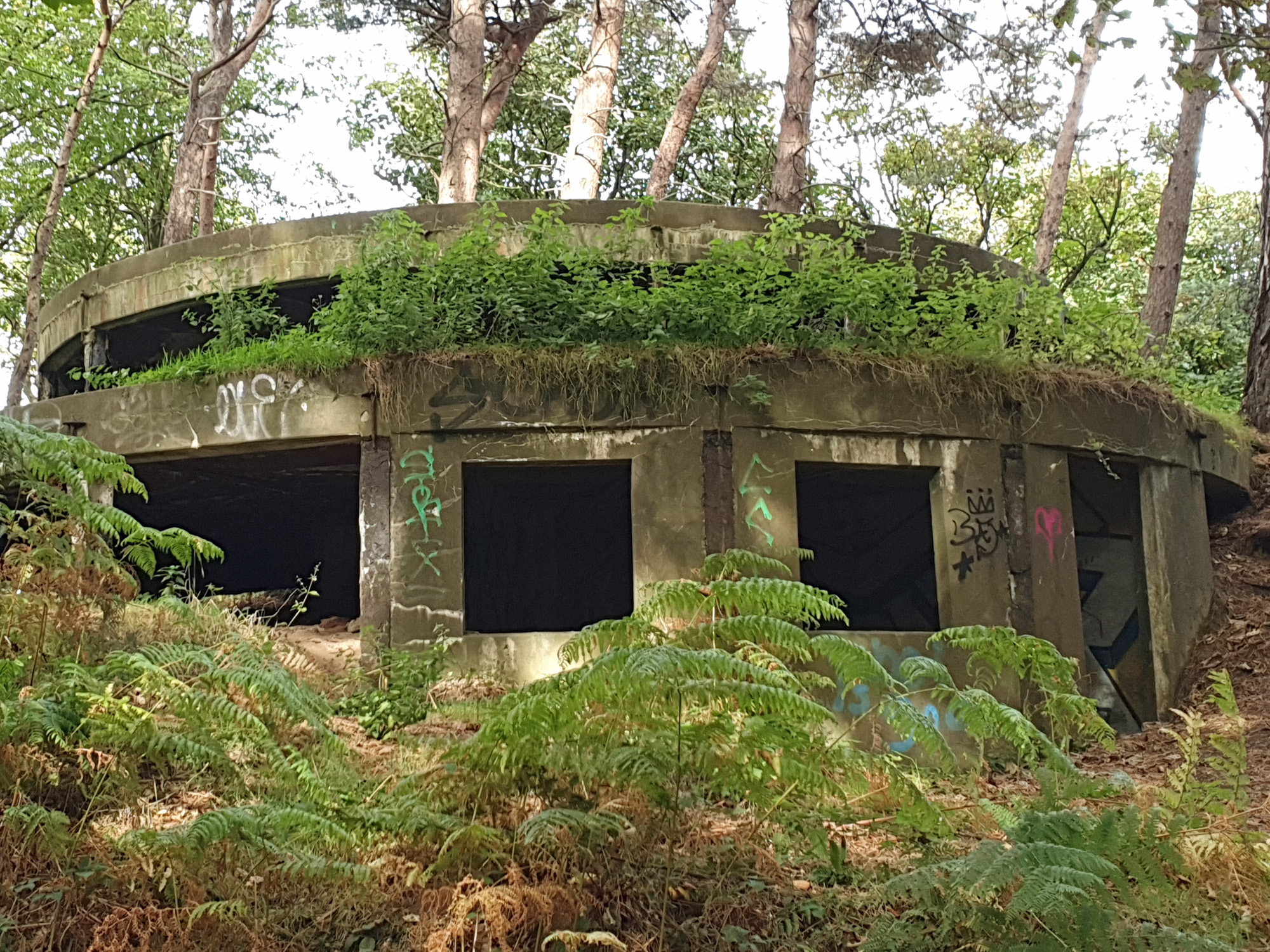
Now over a century old, the coastal artillery battery at Hound Point is a rare and well-preserved survivor of the First World War, hidden in woodland above the southern shoreline of the Firth of Forth. Dating from 1914, this compact military outpost played an integral part in defending British shipping on the estuary from enemy attack, despite its relatively short life.
Plans were drawn up for extensive fortification works in and around the Forth estuary leading up to and during the First World War. The militarisation of the Forth reflected growing concerns over the vulnerability of the east coast of Scotland to invasion, particularly by German forces. Drafting the Forth Defences dated back to the beginning of the 20th century, and plans were given further impetus by the development of Rosyth as a naval base from 1909, and as the principal support and repair base for warships of the Grand Fleet. Over time, the project, which had three defined defensive lines, pushed east along the estuary, creating an impenetrable ‘fortress ‘ designed to block attacks from both sea and air.
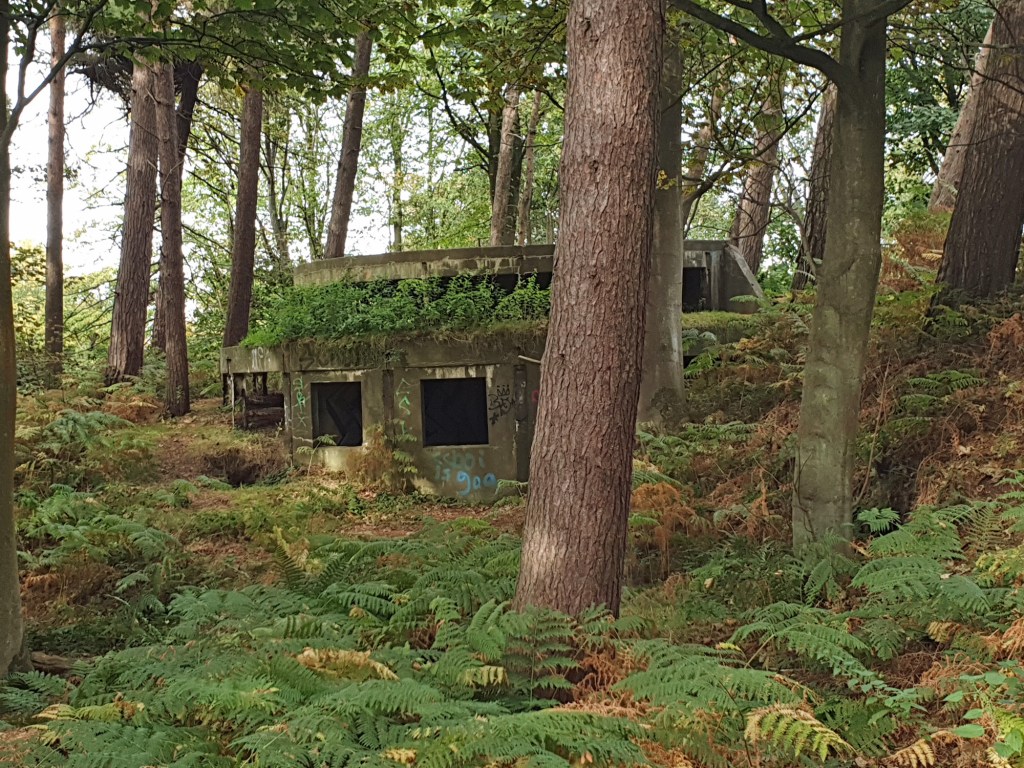
At the start of the First World War, anchorages west of the Forth Rail Bridge were the main priority, but from 1916, attention moved further east. Hound Point formed part of the initial inner defensive line, alongside sites at Carlingnose and Inchgarvie, located closer to the Forth Rail Bridge. The coastal artillery battery at Hound Point was established before the outbreak of the First World War and became operational in December 1914. The two gun emplacements were installed on a 25-metre-high ridge 250 metres south of Hound Point. Behind and slightly below was an associated magazine building.
The battery was surrounded by barbed-wire fences and two rings of six blockhouses each to protect it from land attack, though none remain. The blockhouses were built of wood with wood, corrugated iron or felt roofs, rather than concrete, and were likely taken down when the battery closed so the material could be recycled elsewhere. There was also a wooden pier linking the battery to the estuary at Peatdraught Bay.
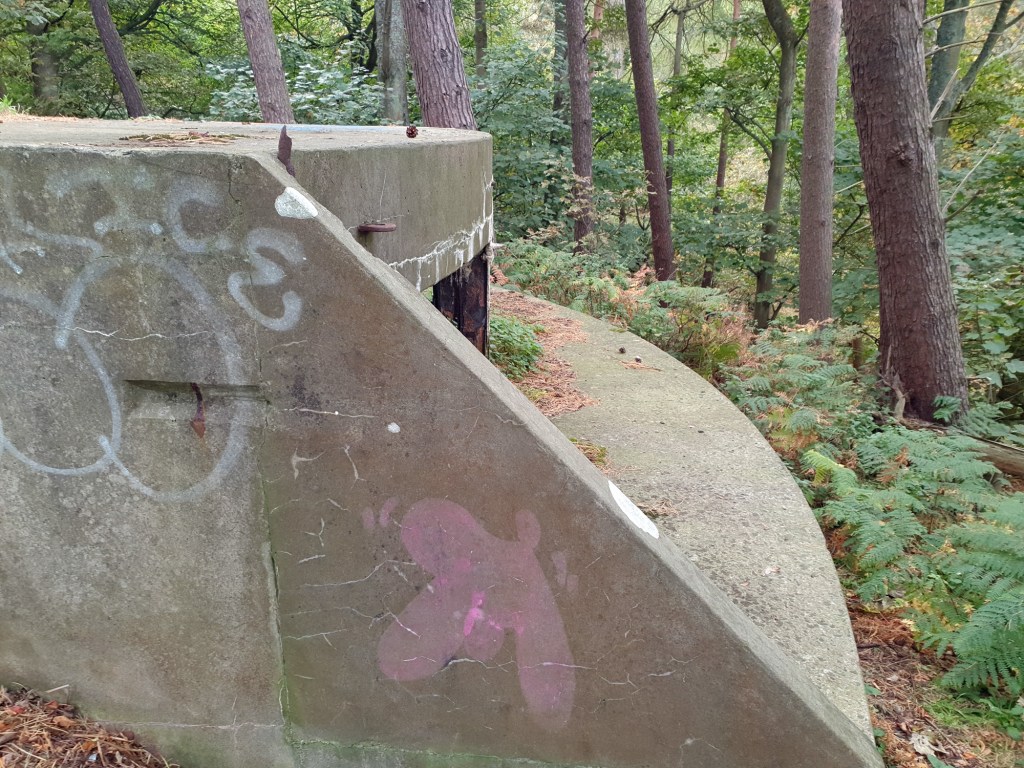
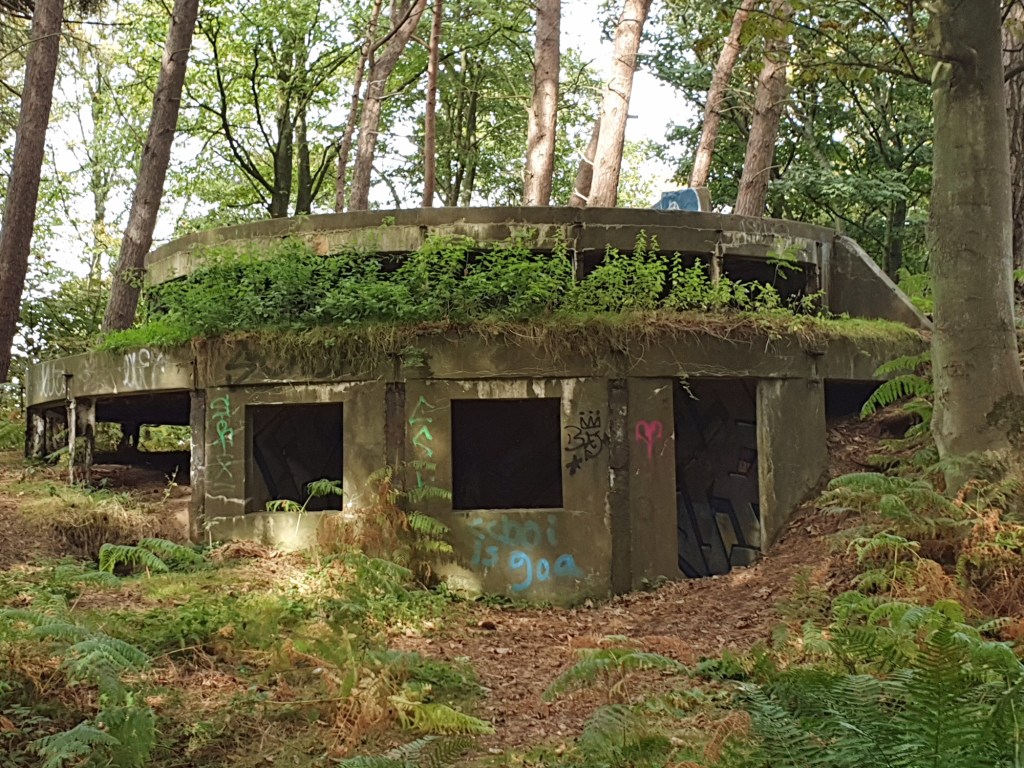
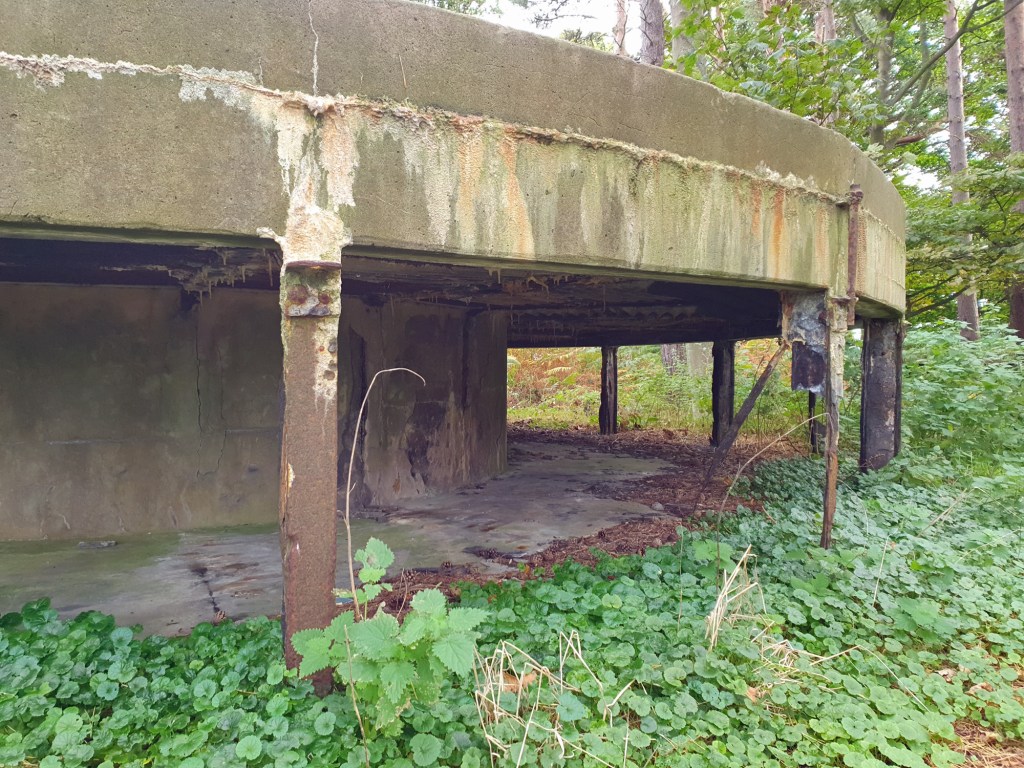
The brick-built magazine building and the brick and concrete gun emplacements are, however, well preserved thanks to their relatively remote location. The gun emplacements are unusual because of their round shape and tiered design, likened by some to a wedding cake. There is a small room with two windows and a door at the base of each gun emplacement, a shelter for the crew. Above this, there is an iron-railed circular platform, an uncommon feature for a building of this type. It housed lockers for ammunition. Atop this, the guns were mounted. Hound Point was initially equipped with a pair of BL 6-inch Mk VII naval guns, designed and manufactured by Vickers. These were removed and sent to Leith in 1916 and replaced with two 12-pounder quick-firing naval guns brought over from Inchcolm Island.
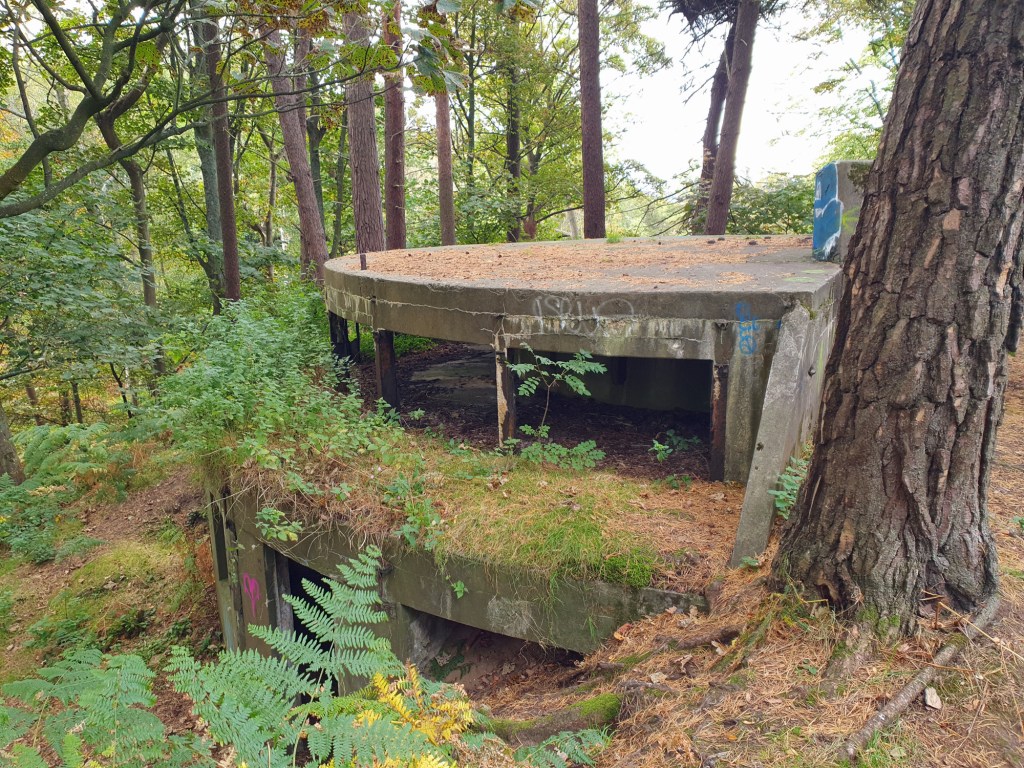
The unusual cylindrical design, which strayed from standard military templates of the time, was likely due to the physical nature and terrain of the ground, combined with the availability of local materials. Between the two guns, an embankment propped up with timber poles and sandbags provided protection for men moving the short distance from one gun to the other.
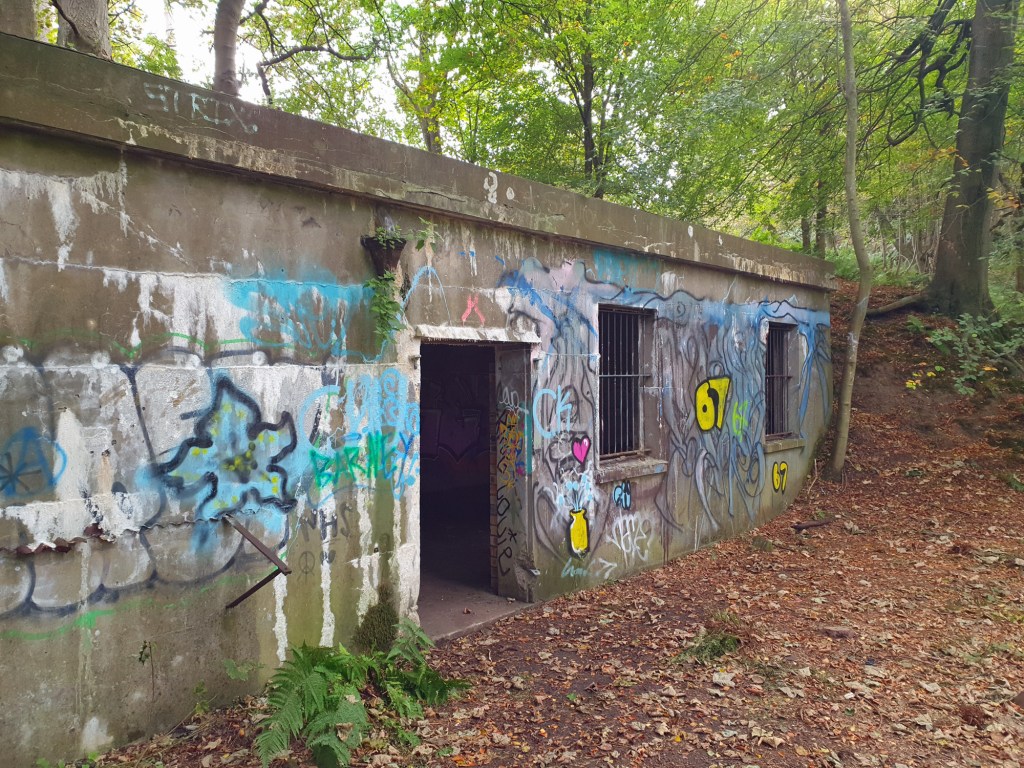
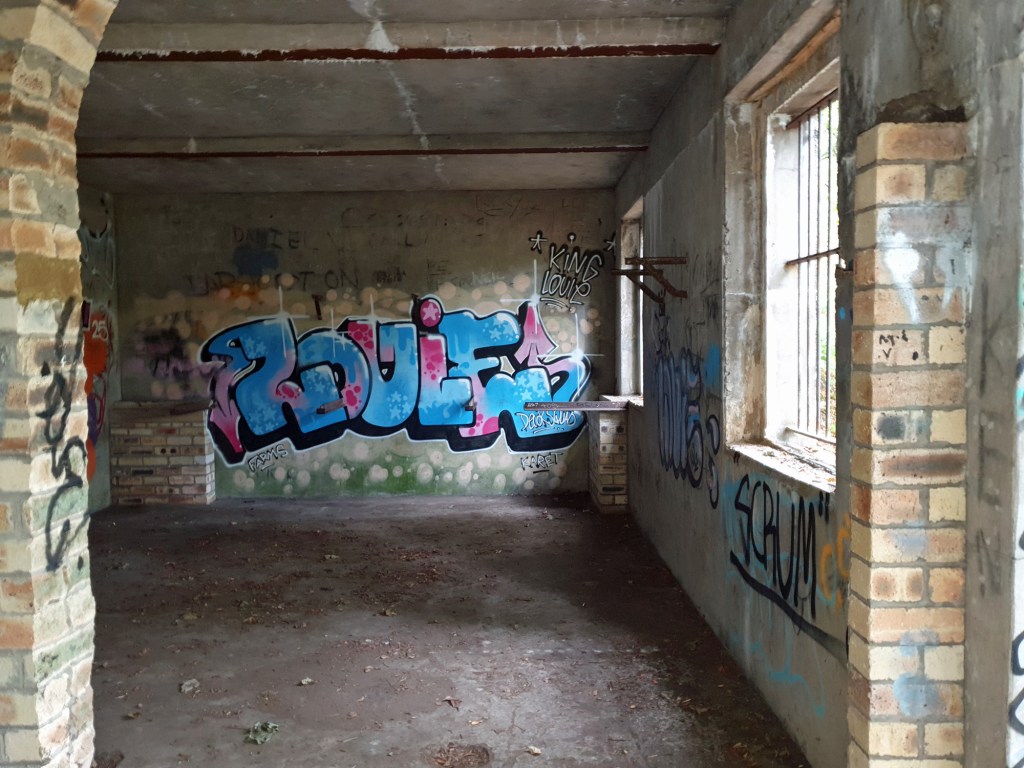
The magazine building consisted of two main rooms – the powder store to the left of the door and the shell store to the right – and the battery likely also included at least one accommodation block and an observation post, although nothing remains of these above ground. Ammunition was manually carried up the hill to the storage lockers below the guns, ready for use. The battery remained in service until July 1919 when all personnel were withdrawn. The guns were removed in 1921, and the site was abandoned. It did not see service during the Second World War and is now a Scheduled Monument.
During the First World War, the battery was generally staffed by three officers, 22 gun crew, eight men in the magazine, a storeman and a lampman. Fishery Cottage, to the east of the battery, served as the officers’ mess.
Although flanked by woodland today, contemporary photographs indicate that during the First World War Hound Point had a relatively clear view, overlooking the Firth of Forth and the entrance of the estuary to the naval base at Rosyth.
Lying within the grounds of Dalmeny Estate, the remains of Hound Point Battery are accessible on foot or bicycle from South Queensferry, a mile or so to the west, via Longcraig Road and the John Muir Way. As the main track approaches Hound Point, look out for a grassy track that branches right, rising to the ruins, which become more obvious to the left as they are neared.
If you have enjoyed this article, you might like to PayPal.me or buy me a coffee, which helps support the site and funds new content.


