
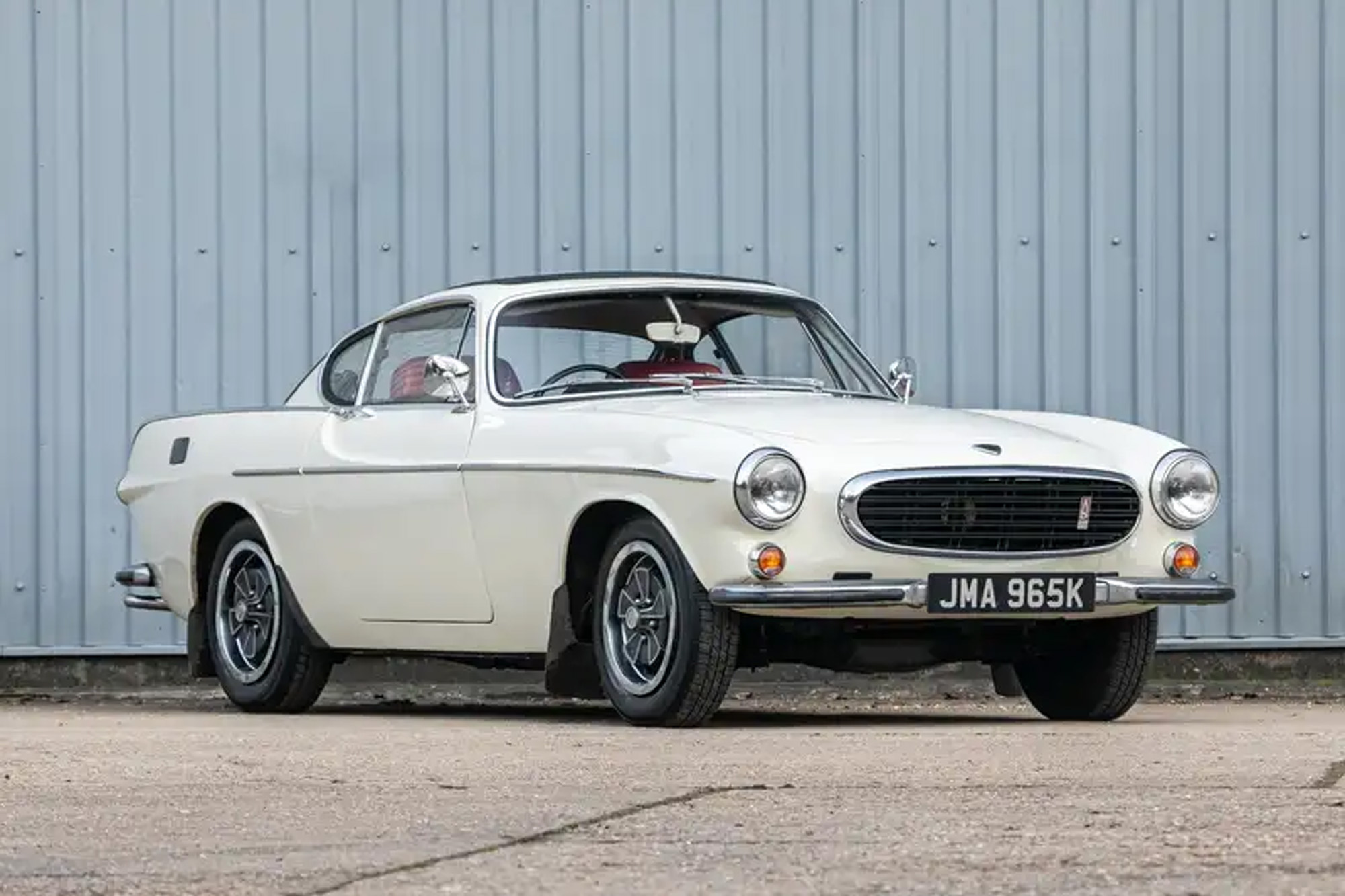
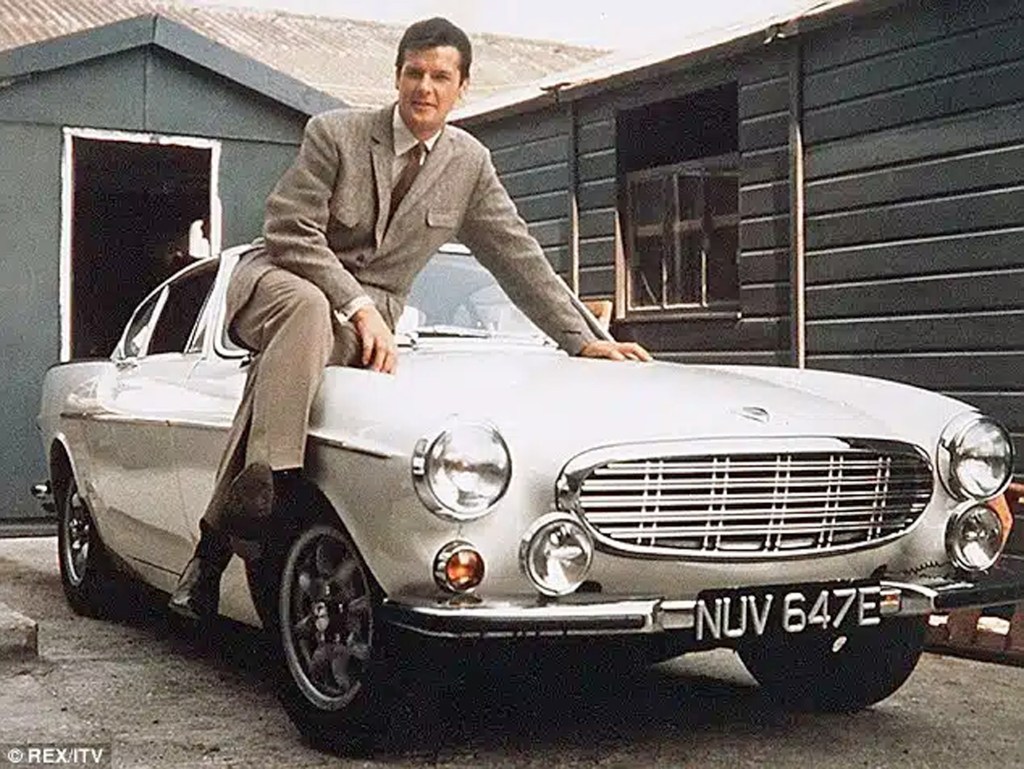
Developed in the late 1950s, the Volvo P1800 was the Swedish car maker’s second attempt to launch a sports touring car into the highly competitive US and European markets. Its earlier effort, the fibreglass-bodied P1900 roadster, had failed miserably, selling just 68 cars. With its sleek Italian styling and front-engine, rear-wheel-drive layout, the P1800 was more successful and became an icon in its own right, thanks to the popular 1960s TV show, The Saint, where it was driven on-screen by actor Roger Moore.
Interestingly, the Swedish car enjoyed a strong Scottish connection, in its early days at least, as the bodywork was stamped out at Linwood, home of the famous Hillman Imp, using steel from Ravenscraig. Lacking capacity in its own factories, Volvo had originally planned to farm out construction of the P1800 to Karmann, in Germany, but they were too busy working for Volkswagen. Volvo turned instead to Jensen Motors in the UK. The company had recently expanded its capacity but it was under-utilised. They agreed to assemble and finish 10,000 cars at their West Bromwich factory. Jensen imported the 1778cc B18 engine and gearbox from Sweden, brought back axles from America, and shipped the electrical systems in from Germany. The cars themselves were assembled by hand by Jensen’s skilled craftsmen.
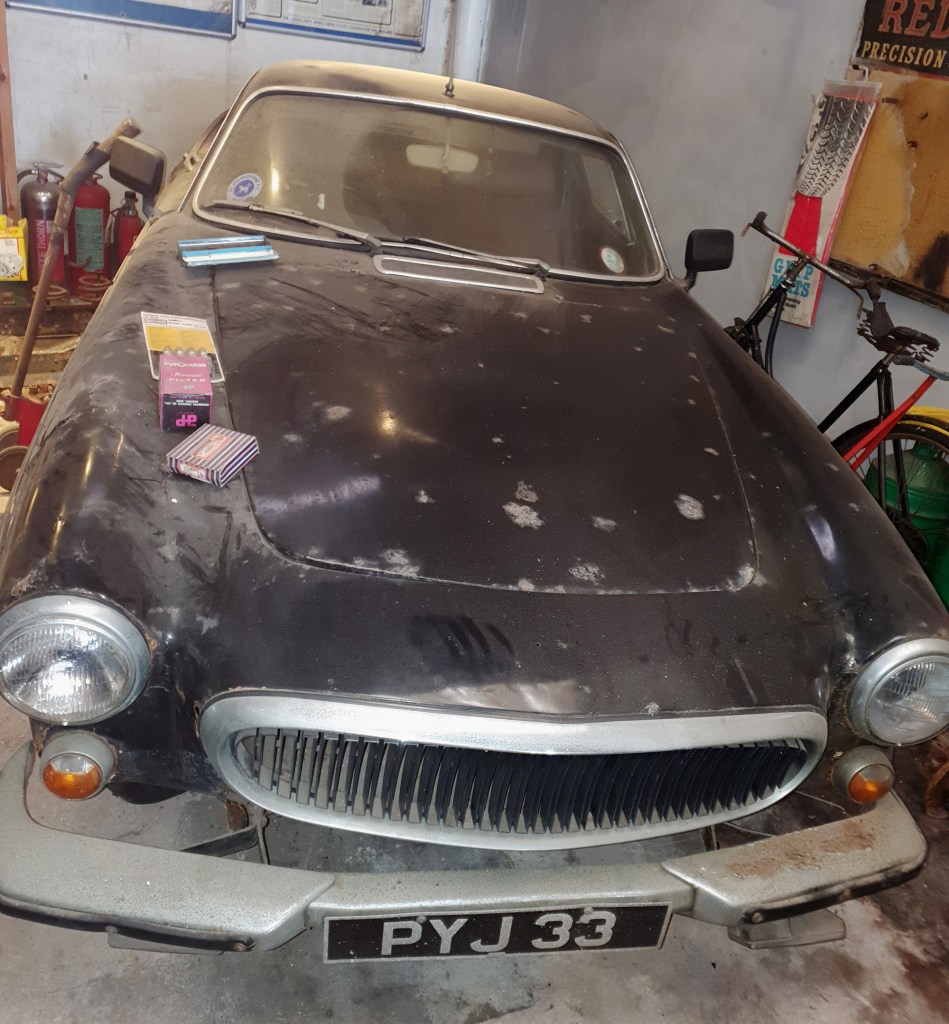
Pressed Steel in Linwood, near Glasgow, would supply the bodyshells; the firm initially produced railway carriages and Diesel Multiple Units before shifting to body panels and assemblies for commercial vehicles and cars. In 1960 it began work on the P1800 unibody shells, produced in white, oiled, at £109 each, shipping them by rail from Linwood to Birmingham, from where they were transferred by road to Jensen’s factory. Pressed Steel geared up to produce 100 shells a week from January 1961 but early quality issues, which had to be rectified by Jensen, saw the numbers fluctuate.
The first Volvo P1800 left the Jensen factory in September 1960 and, over the next three years, Jensen built 6000 cars. However, quality issues, particularly with early cars, and problems with logistics, ended the contract early and, in April 1963, assembly transferred to Volvo’s Lundby plant in Gothenberg, Sweden, and the car was renamed the 1800S. Linwood, which had significantly upped its game on the quality front after a poor start, continued to manufacture the bodyshell until the end of 1969 when the work transferred to Volvo’s Olofström factory in Sweden. Production of the car continued until April 1973, by which time 47,492 units had been made.
This final tally included the 1966 model owned by Irv Gordon, which claimed the Guinness World Record in 1998 for the highest mileage driven by an original, non-commercial owner after covering 1.69 million miles. The car hit two million miles in 2002, and 3.2 million in 2018, when Gordon died.
Following the end of the Volvo contract in 1969, Pressed Steel in Linwood, which was bought by Rootes Chrysler two years earlier, continued to manufacture bodyshells and panels for the Hillman Imp, built in the adjacent Rootes Linwood car plant, until 1976, and the Hillman Avenger. In later years, it stamped bodyshells for the Chrysler/Talbot Sunbeam, the last car built at Linwood under Peugeot ownership. Both the Pressed Steel factory and Linwood car plant closed in 1981.
If you have enjoyed this article, you might like to PayPal.me or buy me a coffee, which helps support the site and funds new content.
You might like Cars Made in Scotland by James Carron, available as a paperback or ebook from Amazon.


