
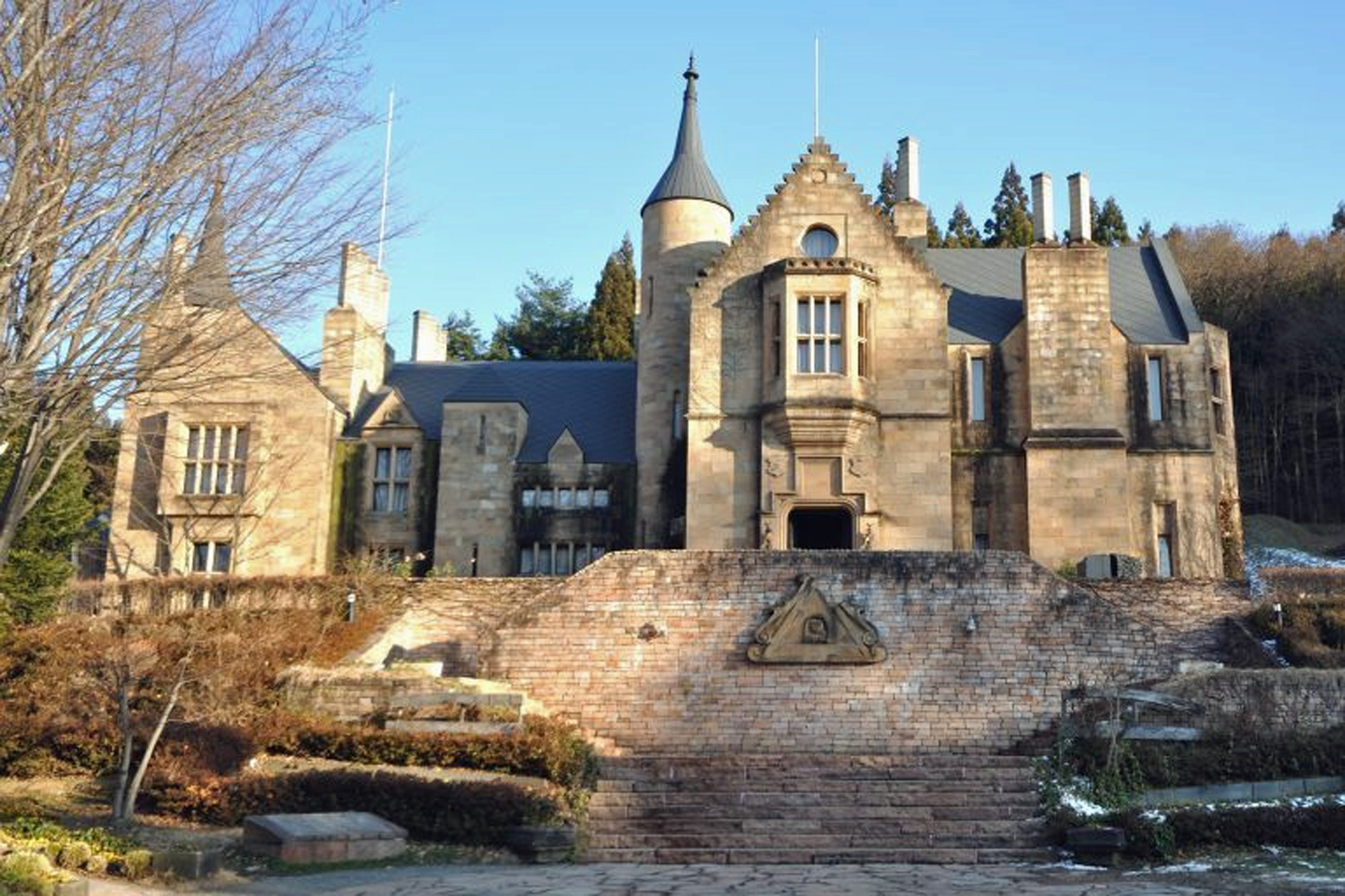
This is the unique story of an historic Scottish mansion that was uprooted from its foundations and moved 9000 miles across the world. Milton Lockhart House was built in Lanarkshire in 1829, but now stands in a theme park near Tokyo in Japan.
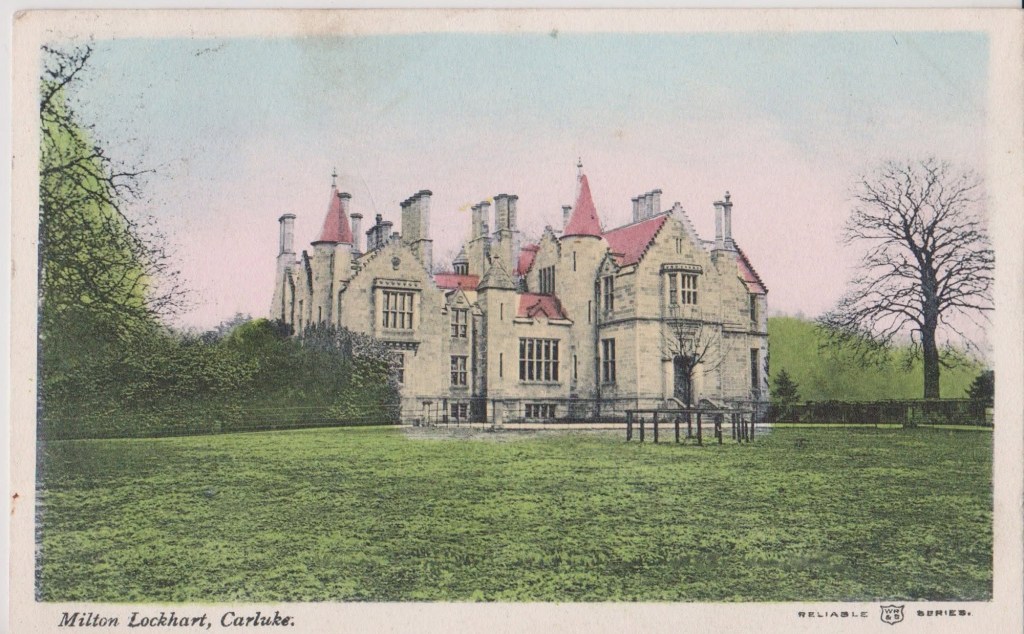
Located by the River Clyde near the town of Carluke, Milton Lockhart was designed by architect William Burn in the Scottish baronial style for local MP William Lockhart, who had made his fortune with the East India Company. The foundation stone was laid by the famous author Sir Walter Scott, who was related to Lockhart and helped select the site for the house. Scott described the location as ‘the prettiest place in Scotland’.
Milton Lockhart was just one of several grand mansions and castles built in the Clyde Valley for wealthy industrialists and landowners at around this time. Replacing an earlier medieval house, it occupied Meander Parkland in a wide bend in the river and enjoyed fine views across the valley. The two-storey house, completed in 1836, was decorated with turrets and towers, bay windows, crow-stepped gables, and lofty chimneys.
Lockhart also commissioned an access bridge complete with an arched gateway and turrets, again designed by William Burn, which stands to this day.
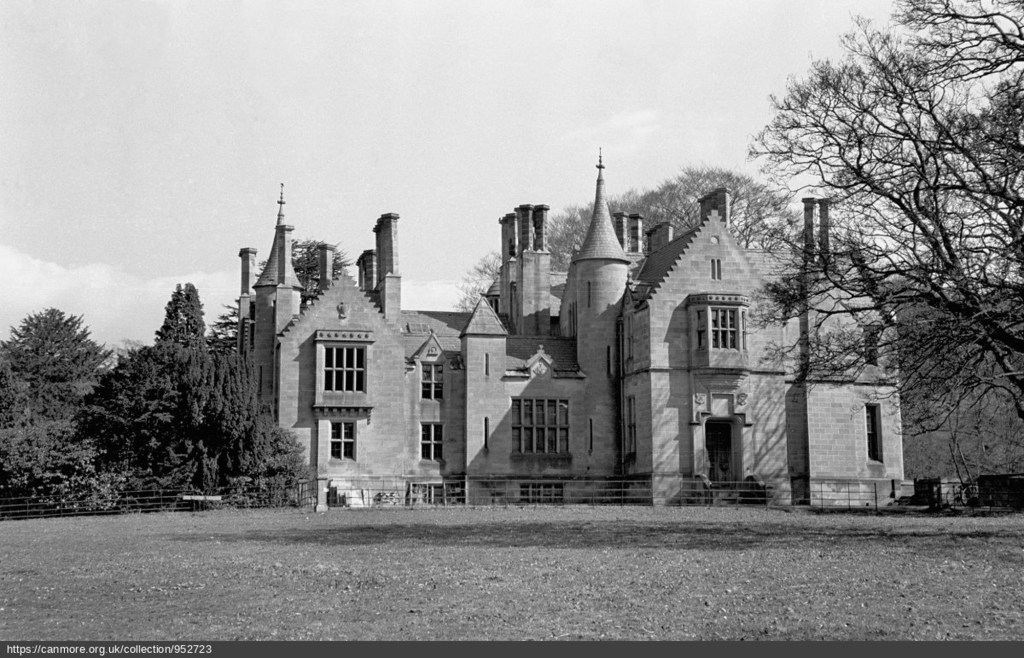
Lockhart died in 1856 at the age of 70 and was succeeded by his half-brother, Lawrence Lockhart. The estate then passed to his son, Major General David Blair Lockhart, in 1876, and over subsequent years, it remained in the family. However, the house was clearly becoming too large and expensive to maintain. By the Second World War, its condition was deteriorating. In 1946, the house was advertised to let, furnished. Five years later, the estate was sold, and the decline of Milton Lockhart continued, although its grounds and gardens, including many fine specimen trees, were growing in reputation. The house had fallen into a state of ruin by the 1980s. Abandoned, the windows were gone, and the roof had collapsed.
Then, in 1987, Japanese actor and director Masahiko Tsugawa, on a visit to Scotland, was driving through Lanarkshire when he spotted the old house and was immediately intrigued. He decided that he had to own it, just not in Scotland. He drew up plans to move it back to Japan and, after some negotiations, bought it and set about the herculean task of transporting a complete mansion across the world.
Over the next two years, Milton Lockhart was carefully dismantled, numbered stone by stone, and packed into 30 shipping containers. It then made the long journey by land and sea to Japan, travelling over the Trans-Siberian Railway, to its final destination, Marble Village outside Takayamamura, 100 miles north-west of Tokyo, where it was rebuilt. The work was completed in 1993, and the house, renamed Lockheart Castle, became the first European castle to be restored in Japan. The cost of the project was put at around $800,000.
Initially intended as a Santa Claus theme park, housing Tsugawa’s personal Santa collection, the site morphed into a medieval European town with a church, shops, and restaurants. It attracts millions of tourists a year.
Back in Scotland, a gardener’s cottage that stood in the shadow of the absent big house was extended to create the main residence on the estate. In 2008, a new mansion, called Lockhart Castle, was erected on the site. Milton Lockhart was one of a dozen or so great mansions to disappear from the Clyde Valley, but unlike others, which have either fallen into ruin or been demolished, it found a new lease of life.
The success of Milton Lockhart’s move to Japan prompted a flurry of speculation and expectation in the later years of the 20th century that other abandoned Scottish mansions could be saved similarly, and various potential candidates were put forward. In the end, however, there were no takers.
If you have enjoyed this article, you might like to PayPal.me or buy me a coffee, which helps support the site and funds new content.


