
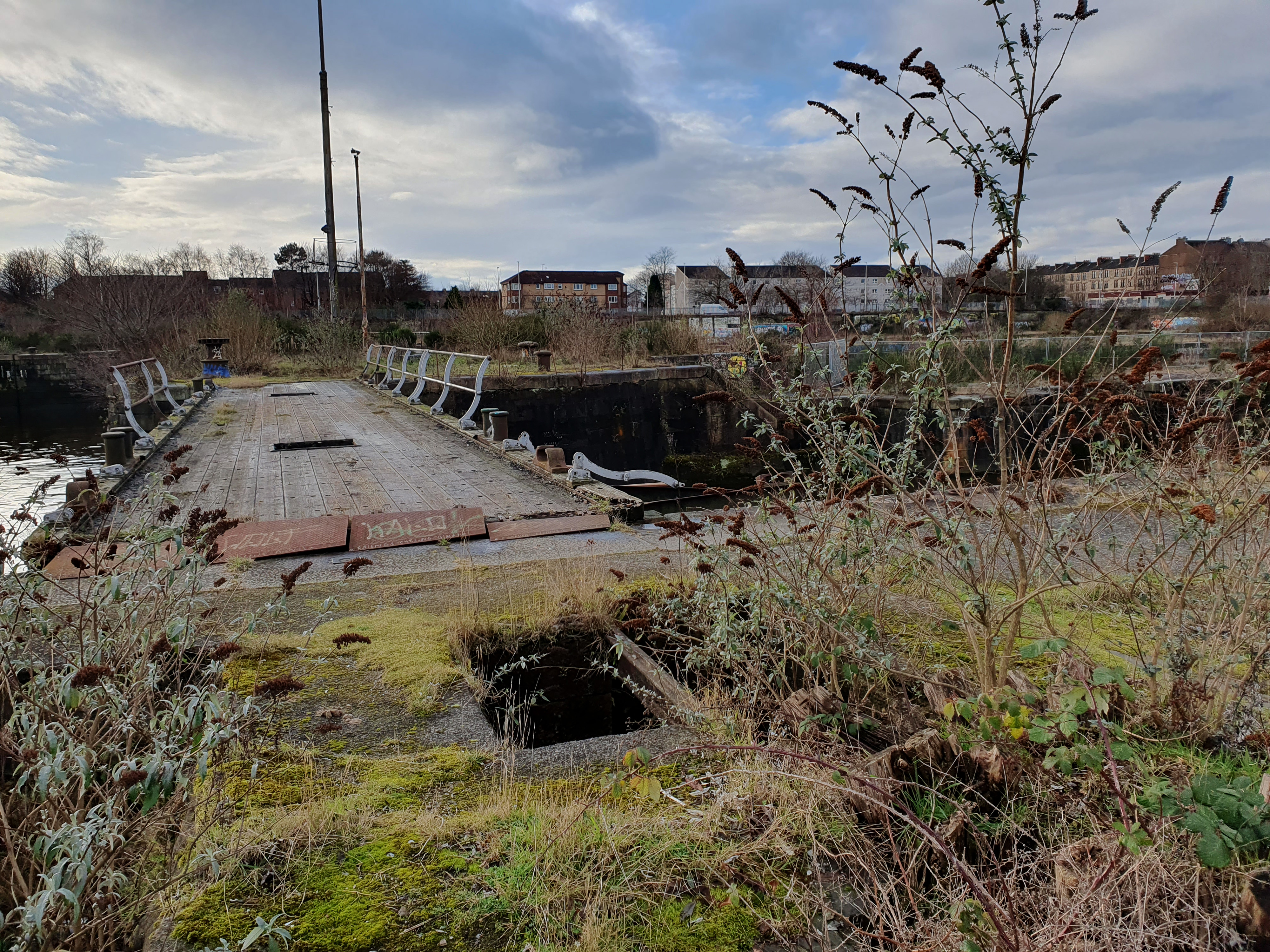
Plans to restore and re-open a long-abandoned maritime facility on the River Clyde in Glasgow have been given the go-ahead by the city council. Govan Drydock Ltd has been granted permission to restore the historic Number 1 Dry Dock at the Govan Graving Docks as part of a wider regeneration of the 22-acre site which has lain abandoned and largely disused for almost four decades. The company intends to undertake the restoration of Queen Mary, a 1933 turbine steamer, in the dock. The vessel is currently moored on Plantation Quay, adjacent to Glasgow Science Centre and opposite the Govan docks.
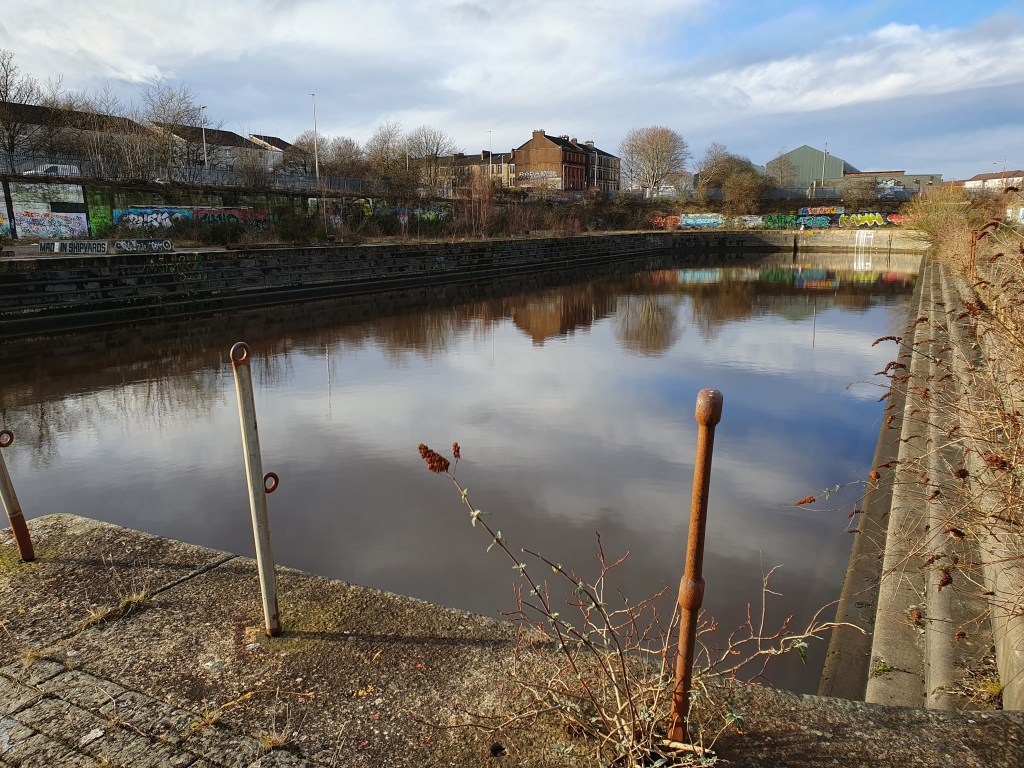
Number 1 Dry Dock – a Category A listed structure – is one of three adjacent dry docks at Govan and it is the nearest to the river. It measures 168 metres long by 22 metres wide and is 6.9 metres deep at high tide. It was built between 1869 and 1875 and, when it opened, it was the deepest dry dock in Britain. The second and third dry docks opened in 1886 and 1898 respectively. They were built for the Clyde Navigation Trust and, in their day, could accommodate the largest ships in service.
Govan and its yards prospering during the Victorian boom in shipbuilding on the Clyde and, after The Depression, enjoying prosperity once again both during and after the Second World War. In the 1960s, larger docks designed to cater for the new generation of liners, bulk carriers and supertankers, opened down-river, but the Govan docks remained busy, repairing ships. It was primarily used for the maintenance and winter refit of the Clyde steamers, including the paddle steamer Waverley. The site passed through various owners. However, its machinery was becoming increasingly antiquated and, with work drying up and fewer steamers operating, it finally closed in 1988.
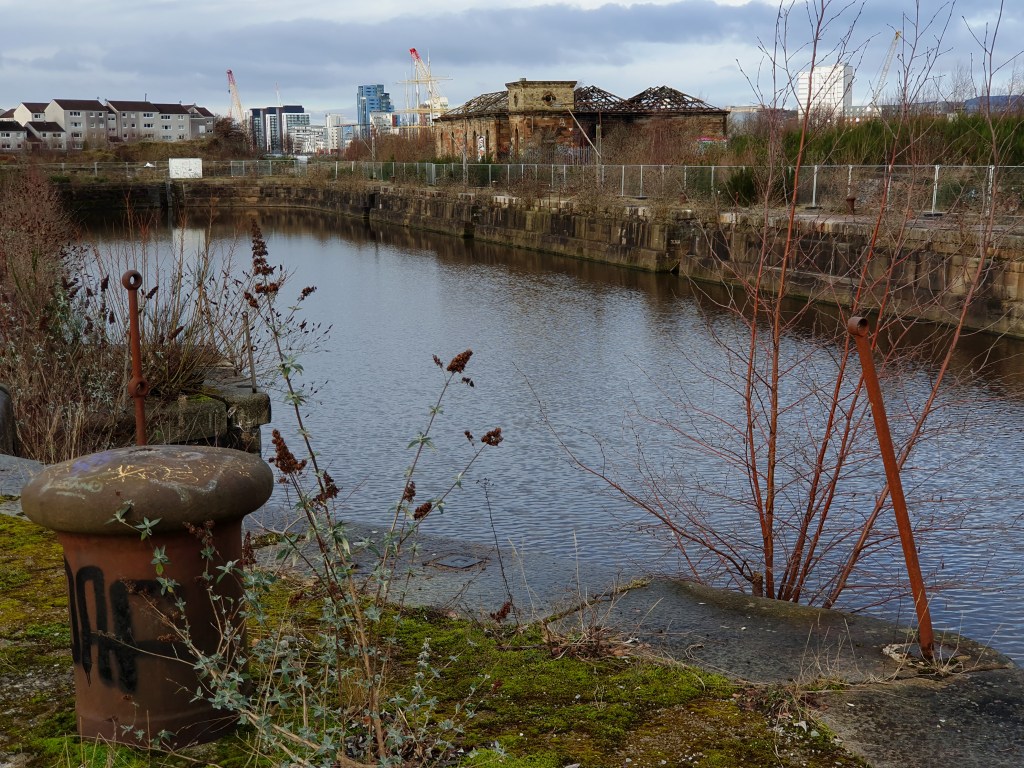
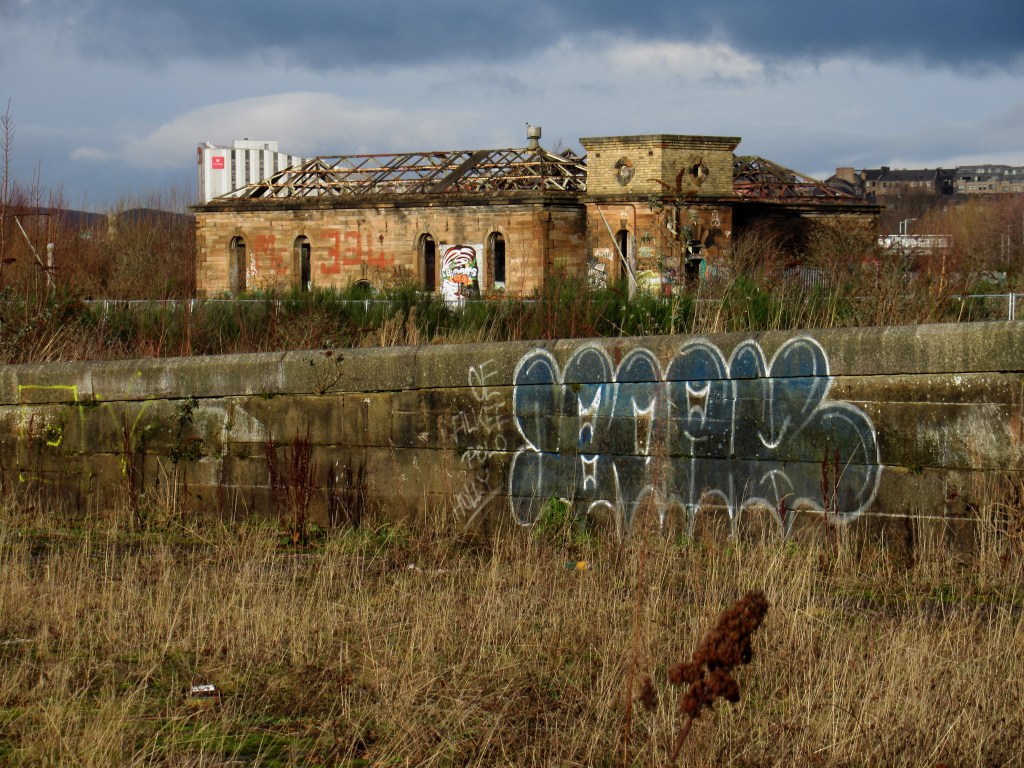
While other docks on the Clyde were filled in and the land redeveloped, Govan Graving Docks remained intact and largely undisturbed, an abandoned post-industrial wasteland deemed ‘internationally important’ but without any clear purpose in the modern world. The great granite docks, flanked by heavily overgrown cobbled piers, retain their original gates, while the former pumphouse, sitting adjacent to Number 1 Dry Dock, is now a gaunt ruin daubed heavily in graffiti. Photographs of the site in its later years of operation can be found at Canmore. The site is also on the Buildings at Risk Register. It is an eerily quiet yet fascinating place to explore, littered with remnants of its working life which survive amid the undergrowth. Interestingly, some scenes for the Sam Mendes’ First World War film 1917 were shot here in June 2019.
Following various failed attempts to rejuvenate the land, Govan Graving Docks is now in the process of being redeveloped by New City Vision (NCV), which is working closely with a range of partners, to creating a new ‘economically robust’ neighbourhood which will contribute to the local and city-wide economy.
Plans have been lodged with the city council for new homes on various parts of the site. Number 3 Dry Dock – the largest of the trio capable of berthing multiple steamers back in the day – is currently being viewed as a potential mooring site for houseboats while Number 2 Dry Dock may one day become home to a static heritage vessel. Number 1 Dry Dock, once restored, will accommodate Queen Mary during her restoration while the neighbouring pumphouse could be restored as a visitor attraction/heritage centre.
Launched in 1933 at the William Denny shipyard, Dumbarton, for Williamson-Buchanan Steamers, Queen Mary was a Clyde steamer, carrying thousands of passengers during the summer months to Arran and the Kyles of Bute. She was renamed Queen Mary II to allow the Cunard line to use the name Queen Mary. In 1936 Williamson-Buchanan Steamers was acquired by the London, Midland and Scottish Railway Company (LMS) and, during the Second World War, she ran a mail and passenger service to the Scottish islands. After the war, the vessel was refitted and painted in LMS colours and returned to normal passenger service, operating out of Gourock from 1969.
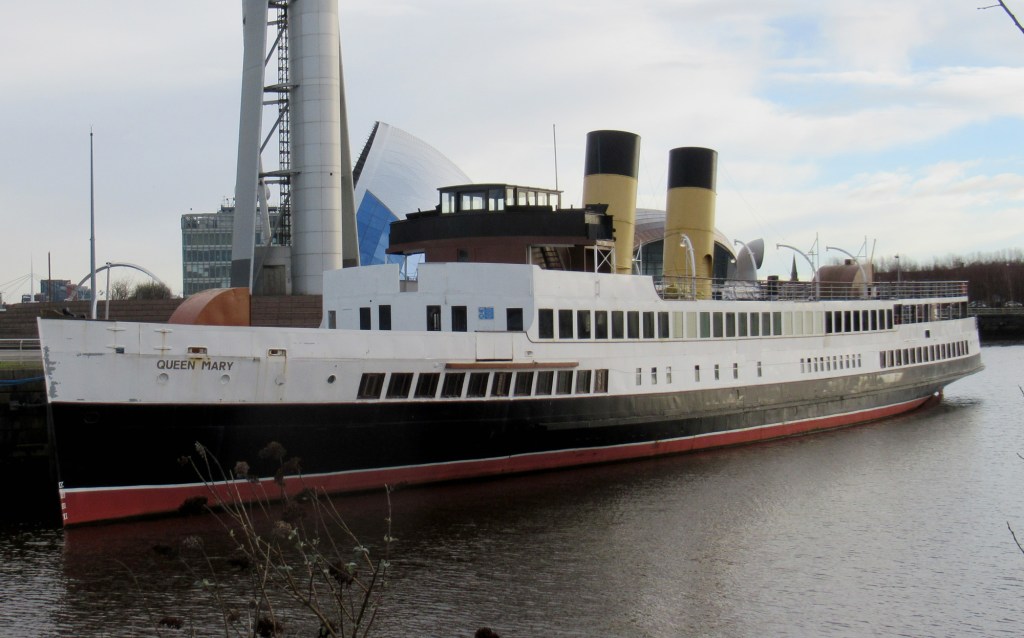
After nationalisation of the railways, the vessel was operated by the Caledonian Steam Packet Company and, from 1973, she sailed under the flag of Caledonian MacBrayne. Three years later her original name, Queen Mary, was restored after Cunard’s RMS Queen Mary was retired from service. TS Queen Mary retired in September 1977 and passed through various hands, ending up in London where she served for a time as a floating pub. More changes of ownership followed and, after a period of uncertainty, she was eventually restored to a seaworthy condition and towed back to Glasgow. Her restoration should see her return to passenger cruising in the future.
If you have enjoyed this post, and others on the site, you might like to buy me a coffee which helps support the site and funds new content.


i love your blog its amazing . please think about visiting mine
Wow, what fantastic news! I can’t believe the Govan dock is going to be re-opened. This is such a positive step forward for the community and a great opportunity for new possibilities. I can’t wait to see the docks bustling with life once again!
I will follow and give a like! My Blog is about dentistry Check it here http://www.dental-one.fr
LikeLike