
The Fife village of West Wemyss has enjoyed something of a renaissance in recent years with the restoration of the local harbour, the renovation of historic buildings and the creation of new coastal defences. Investment by the estate and others has reversed decades of decline in a community that once boasted thriving coal mining and salt industries and a busy port. By the 1970s, however, much of the harbour had been filled in, the school and miners’ institute had closed and many local buildings lay derelict.
The former inner quay now serves as a car park and it was from here that I set off on a route up the coast to East Wemyss and the famous Wemyss Caves. After a brief potter around the harbour, where fishing and pleasure craft take the place of the old coal barges, I wandered along the waterfront, passing beautifully restored houses and the resplendent Tolbooth tower.
Jonathan’s Cave
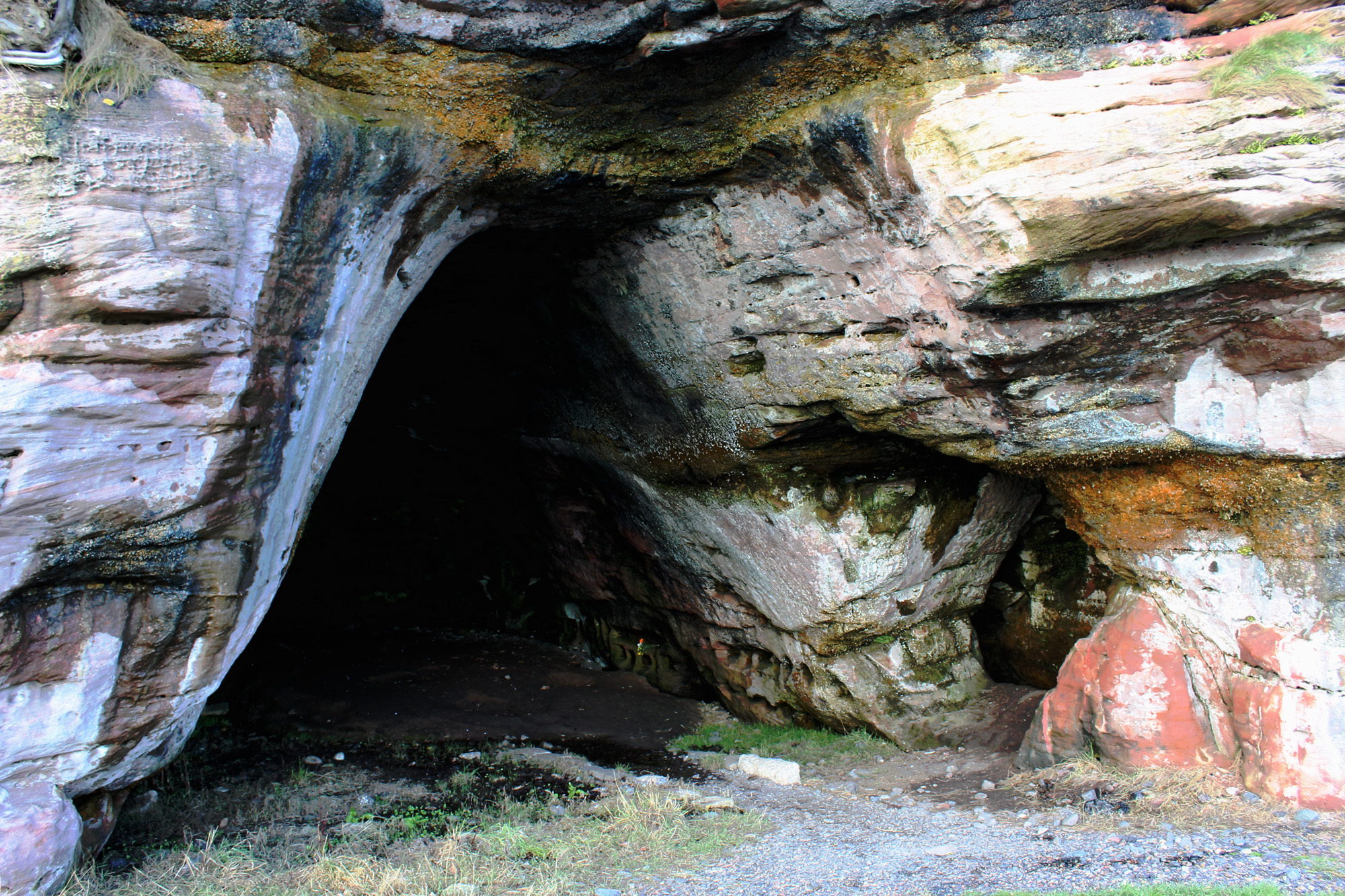
A tempting detour can be made to the community-run Walk Inn pub and café while the path itself continues ahead to St Adrian’s Church and graveyard. Leaving West Wemyss here, the Fife Coastal Path led me by ivy-clad sandstone cliffs below Wemyss Castle and, in private woodland beyond, some interesting wee caves cut into the rock.
I knew, however, that more impressive caverns awaited and I pressed on to East Wemyss where, at the far end of parkland, beyond a memorial to the community’s most famous son, musician Sir Jimmy Shand, a cluster of information boards offers a history of the Wemyss Caves.
Hewn from the soft sandstone by the sea over 5000 years ago, the chambers are famous for their high concentration of Pictish carvings. Around 80 were recorded when the area was first surveyed in the 1860s. Of the 11 original caves, only six now remain and efforts are on-going to preserve and protect them from both natural deterioration and vandalism.
Court Cave
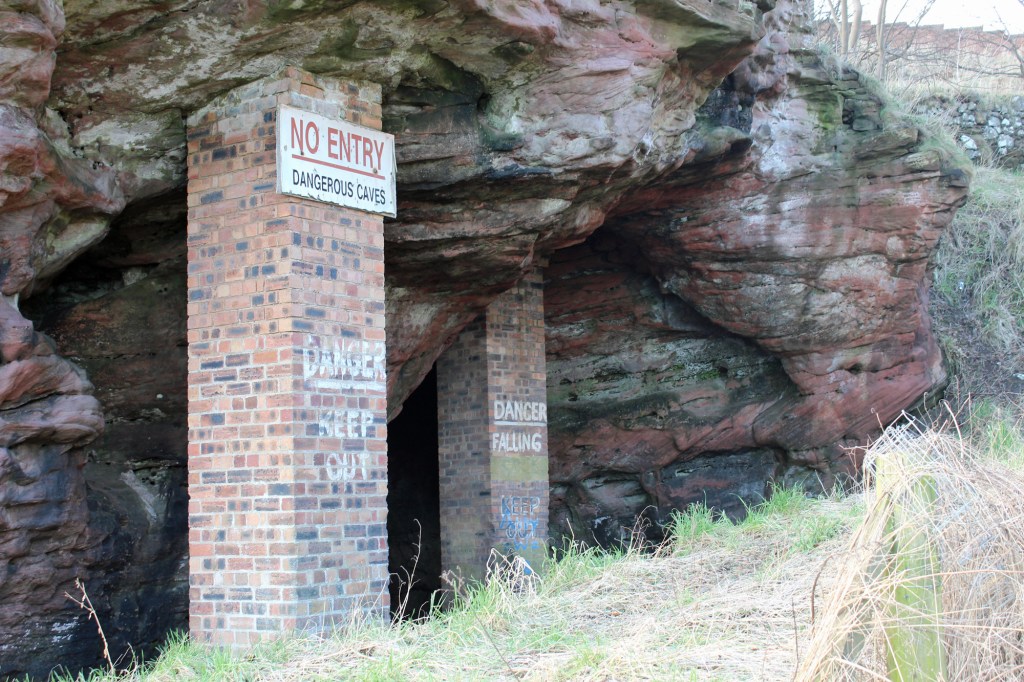
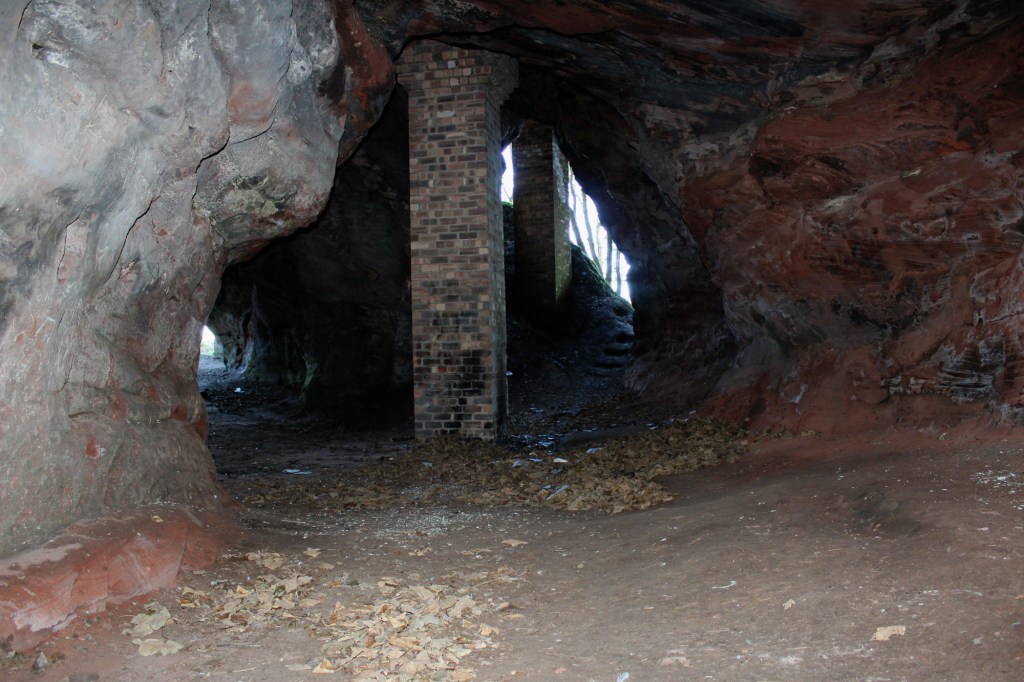
A bricked-up tunnel entrance by the last house in the village precedes the first grotto, Court Cave, so called because the landowner is said to have held court here in the Middle Ages. Sturdy pillars installed by a mining company in the 1930s support the lip above the main entrance. I ventured in, exploring the tunnel before climbing earth steps to the main chamber. It is a sizeable hollow stretching back to a collapsed tunnel and I found the clearest carvings on the north wall.
Inside Court Cave
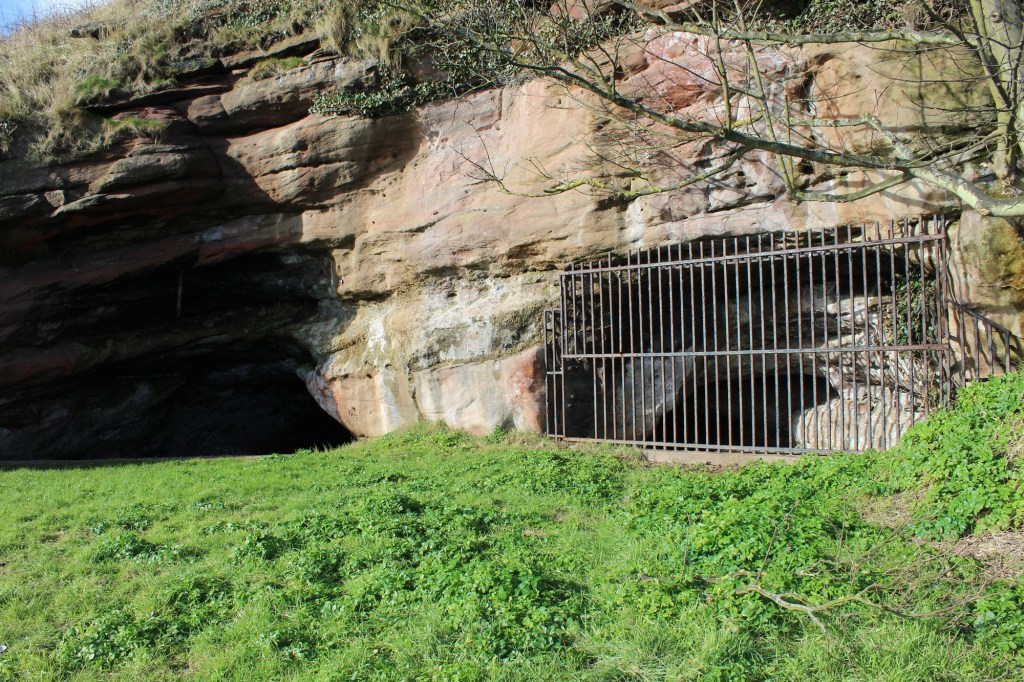
A little further along the coast, the rear wall of Dovecot Cave has a mosaic of square holes, originally boxes carved into the stone where pigeons nested. Branching off the main path, I detoured round the shoreline, scrambling along a broken pipeline, to the Well Caves, which lie below the ruins of Macduff’s Castle, and then Jonathan’s Cave, named after a nail-maker who resided here with his family in the 18th century.
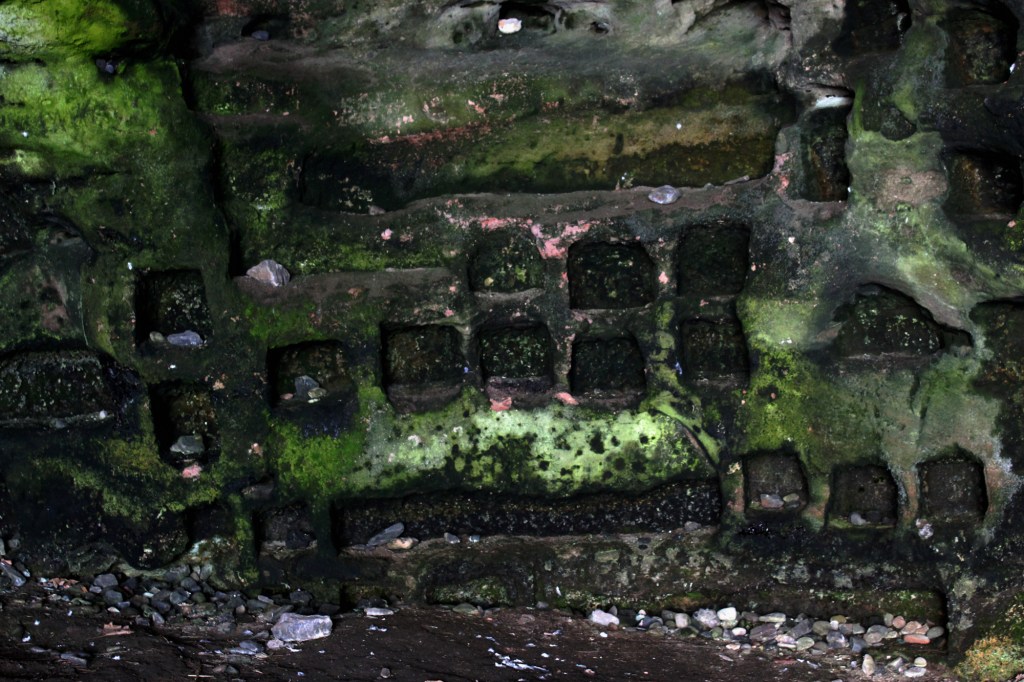
Pigeon nesting boxes in Dovecot Cave
The 1860s survey recorded more Pictish artwork in this cave than any of the others but I found it difficult to pick too much out given the level of more recent chiselling. Despite their historical significance, and the efforts of a band of dedicated volunteers campaigning to save them, the caves are at constant risk from both the destructive power of the sea and, sadly, vandalism.
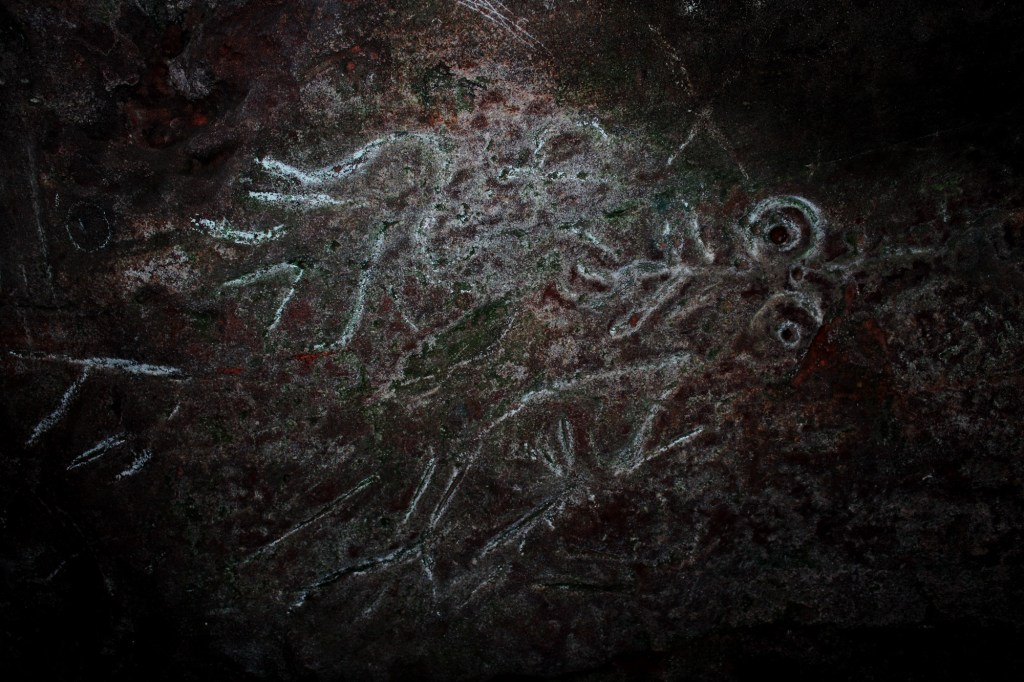
Pictish carving in Court Cave
Pop into the Wemyss Caves visitor centre, museum and cafe, located in The Haugh, East Wemyss. It is open on Sundays between 1:30pm and 4pm from April to September and offers guided tours of the caves.
For more abandoned places in Fife, check out the book Abandoned Fife by James Carron, available in paperback from Amazon.
If you have enjoyed this post, and others on the site, you might like to buy me a coffee which helps support the site and funds new content…


