
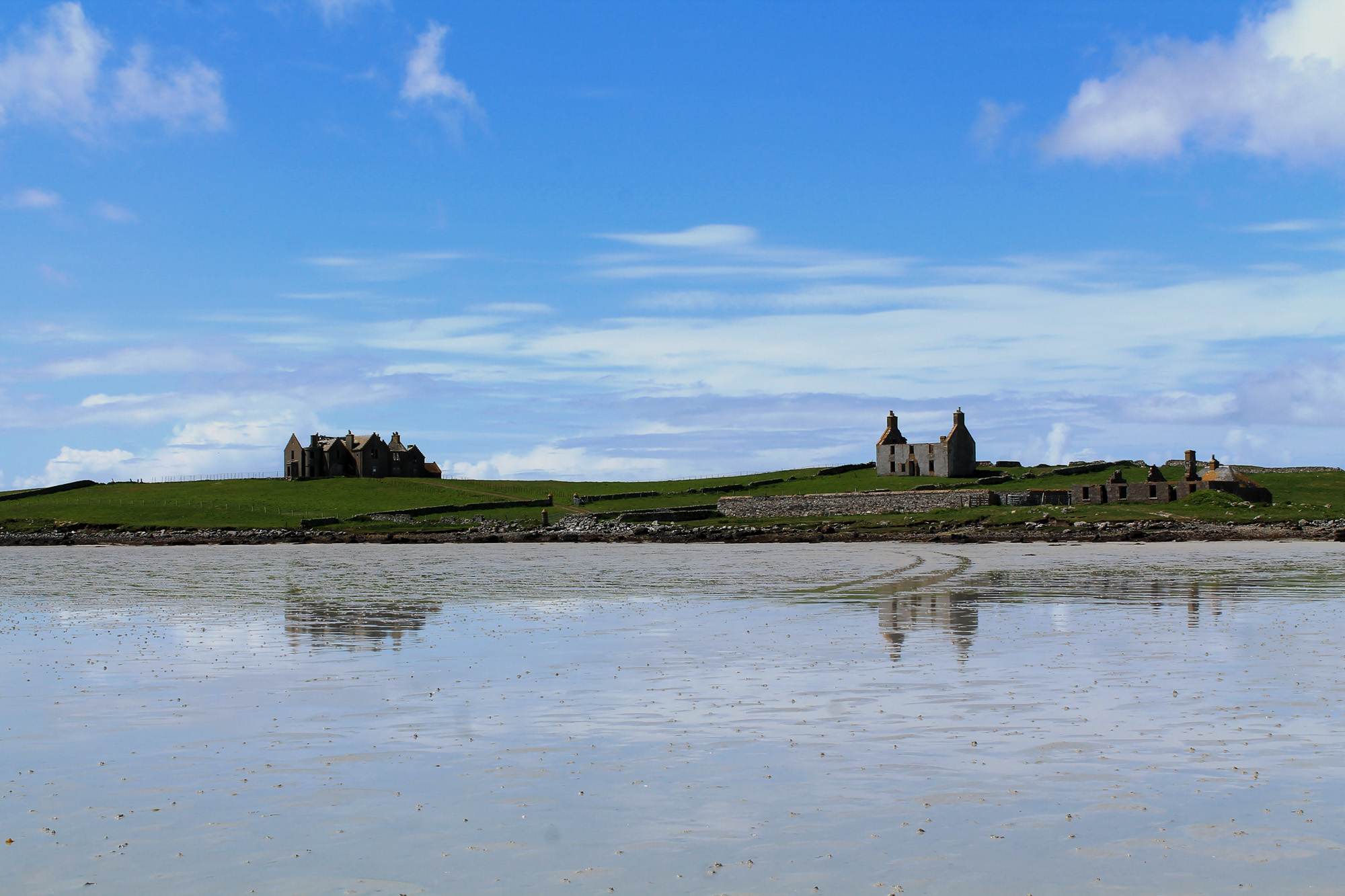
The tiny tidal island of Vallay lies just off the coast of North Uist, in the Outer Hebrides. Abandoned by its last residents in the mid-1940s (they left behind a ghostly grand house, farmstead and cottages), the island has no ferry connection with its neighbour. You can, however, reach it, on foot, but only after checking the tides.
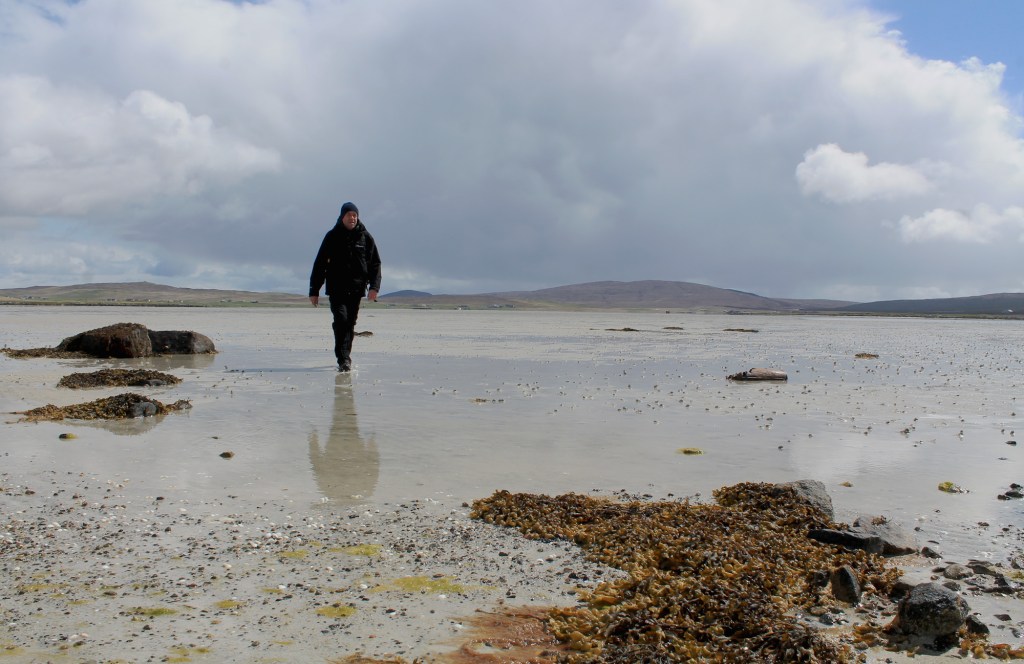
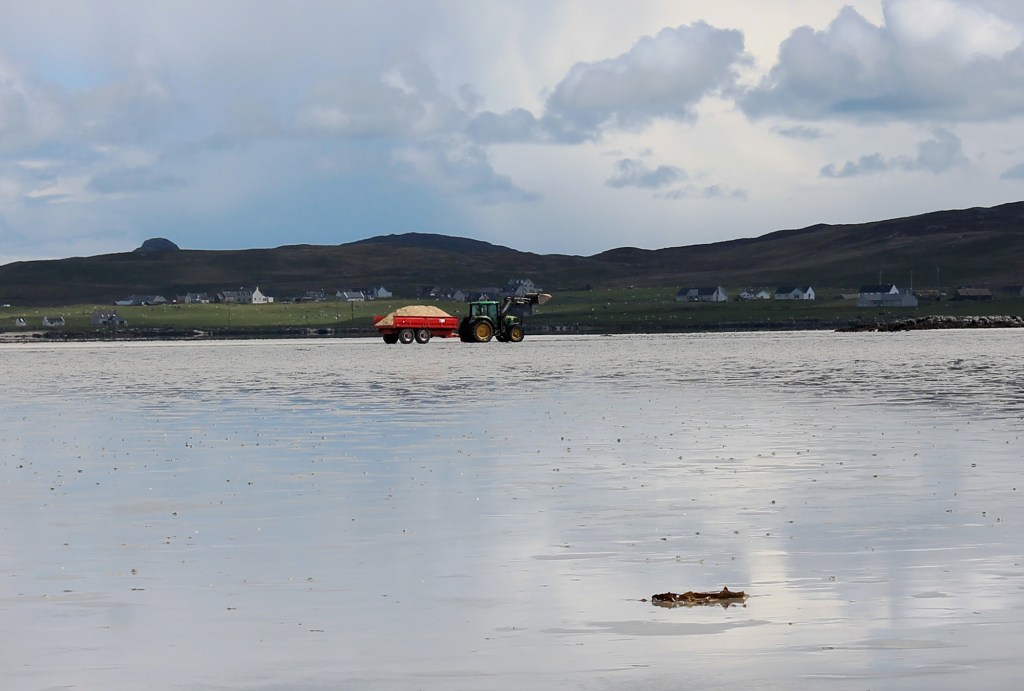
From Cladach Bhalaig, on the A865 just west of the North Uist crofting townships of Middlequarter and Sollas, a track heads north from the beach out across the vast expanse of sandy flats exposed when the sea recedes at low tide. Referred to on the Ordnance Survey map as a ‘ford’ and known as the strand, it is a route regularly travelled by the tractors of crofters who graze cattle on the fertile wee isle and one that can be trekked by those keen to explore. But only embark upon this hike when the tide is well out, or at least receding.
There is a small amount of roadside parking at Cladach Bhalaig, where a track descends from the road to the beach. From here the route cuts a reasonably distinct straight line north out to the tiny islet of Torogaigh where it curves left to pass a smaller chunk of land known as Stangram. From here, take a straight line across the hard sand, aiming for the large derelict mansion on Vallay, and, to its right, a ruined farmstead. The crossing is a 2.5km walk and waterproof boots, or wellingtons, are recommended as, even when the tide is out, there remains a fair amount of surface water to contend with.
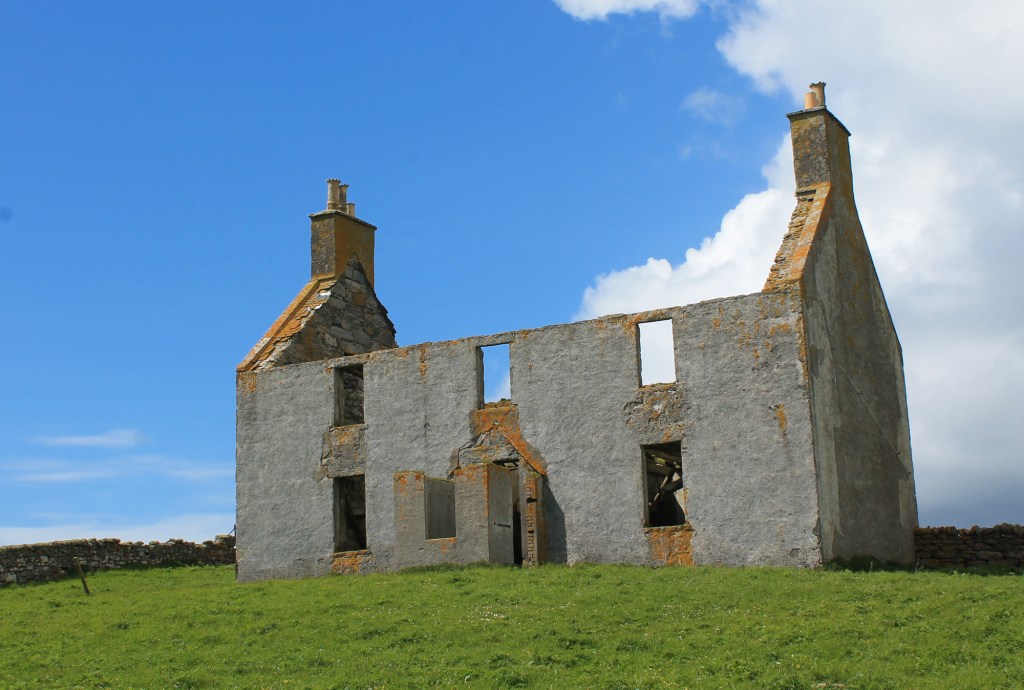
The route of the ‘ford’ meets the shoreline of Vallay just below the remains of an enclosure, walled fields and the gaunt ruins of a couple of single-storey cottages. Further up the slope are the ruins of a late 18th century farmhouse and, behind it, Old Vallay House, home to a tacksman who was second only to the island’s laird.
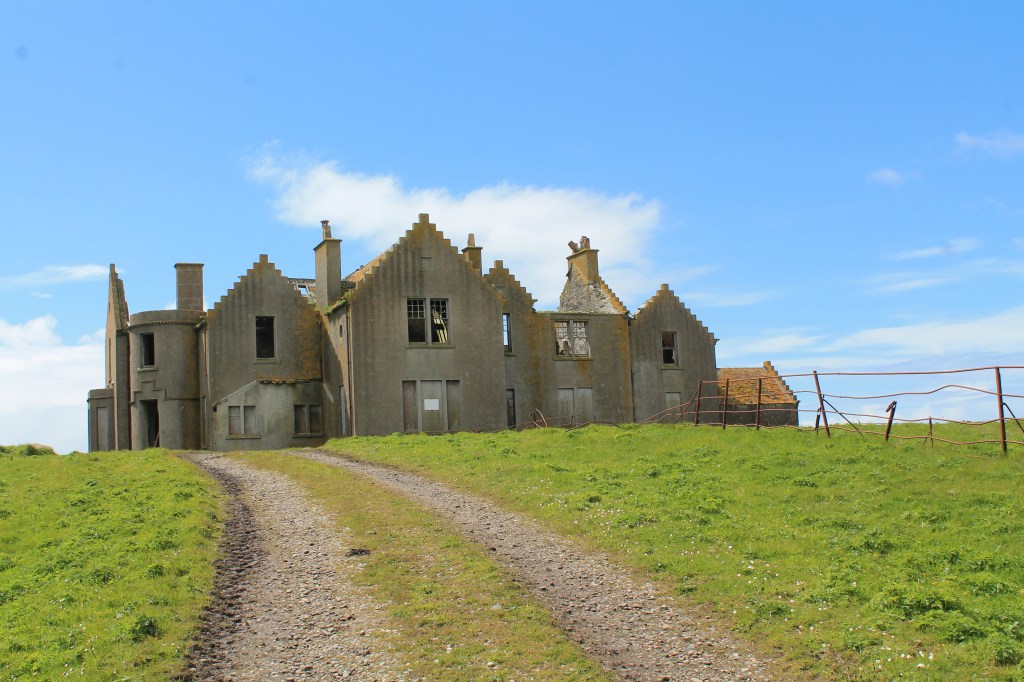
A track rises left across the fields to Taigh Mòr, the island’s ‘big house’, a once striking two-storey white-washed Edwardian baronial mansion complete with crow-stepped gables that now looks decidedly sorry for itself. The windows – 365 panes of glass, one for every day of the year – and doors have gone (the ground floor ones are boarded up) and much of the roof has collapsed.
Inside there is little joy for the urban explorer with fallen timber blocking routes through the house and pigeons emerging at just about every turn. Some of the colourful tiled fireplaces and internal fixtures do, however, survive. Thanks to its remote location, the property has escaped the worst excesses of vandalism and the grafitti ‘artist’, although it has been on the Buildings at Risk Register since 1990.
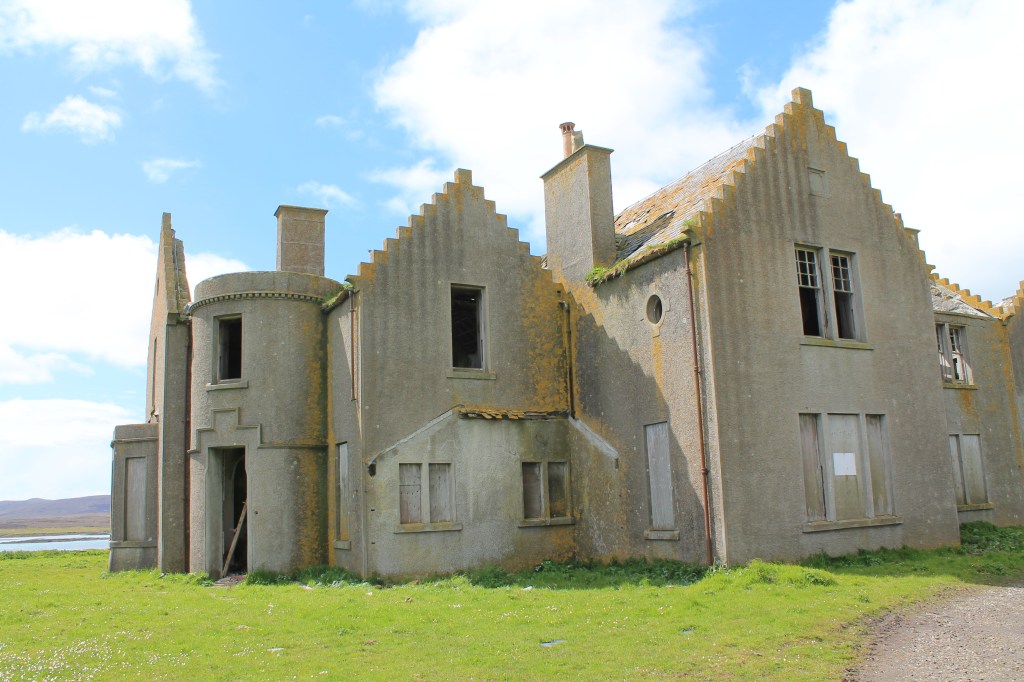
Taigh Mor – or Vallay House – was built in 1902 for the island’s then owner, author, photographer, archaeologist and naturalist Erskine Beveridge, who made his money in the linen trade, successfully running an expanding works in Dunfermline, Fife. In its day it was one of the largest houses in the Western Isles with 25 rooms. Water was piped across the channel from North Uist and it had pretty much every conceiveable mod-con of the era, including central heating, along with some very nice tiled fireplaces.
Beveridge, who travelled widely in pursuit of his interests, first visited Vallay in 1897 and bought the island in 1901. He spent his summers here and, after his death in 1920, the island was inherited by his son George. Tragically he died in 1944 in a boating accident while crossing the strand between North Uist and Vallay and, with the ‘Big House’ left empty, the last of the islanders soon left.
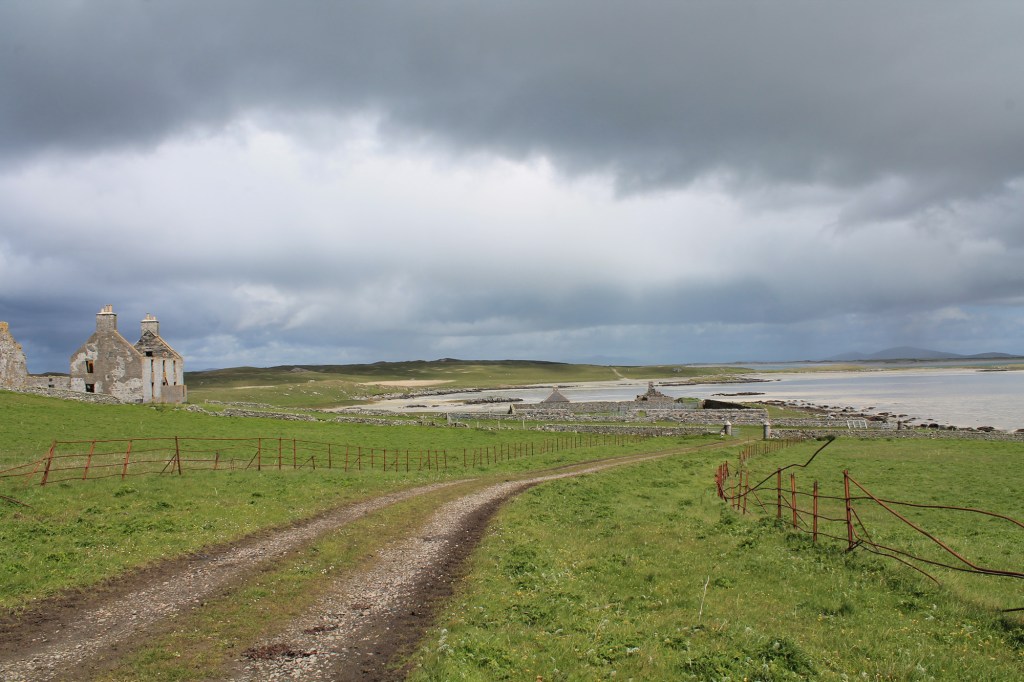
To the north of the derelict buildings, Vallay has some beautiful secluded beaches lurking below grassy headlands, fertile grazing ground, a ruined chapel, vast expanses of machair and numerous wildlife and bird spotting opportunities. It is an RSPB reserve.
Latterly the island was owned by Balelone Farm, of Tigharry, North Uist, but was put up for sale in 1998. In 2018 it was being grazed by cattle belonging to North Uist farmers Angus and Michelle MacDonald who planned to retire there.
More recently, in 2021, Vallay appeared on Amazon Prime’s The Grand Tour Season 4, Episode 3 Lochdown when Jeremy Clarkson, Richard Hammond and James May constructed a temporary bridge over a narrower section of the channel separating it from North Uist and drove three 1970s American cars on to the island.
If you have enjoyed this post, and others on the site, you might like to buy me a coffee which helps support the site and funds new content…

 Secret Scotland