
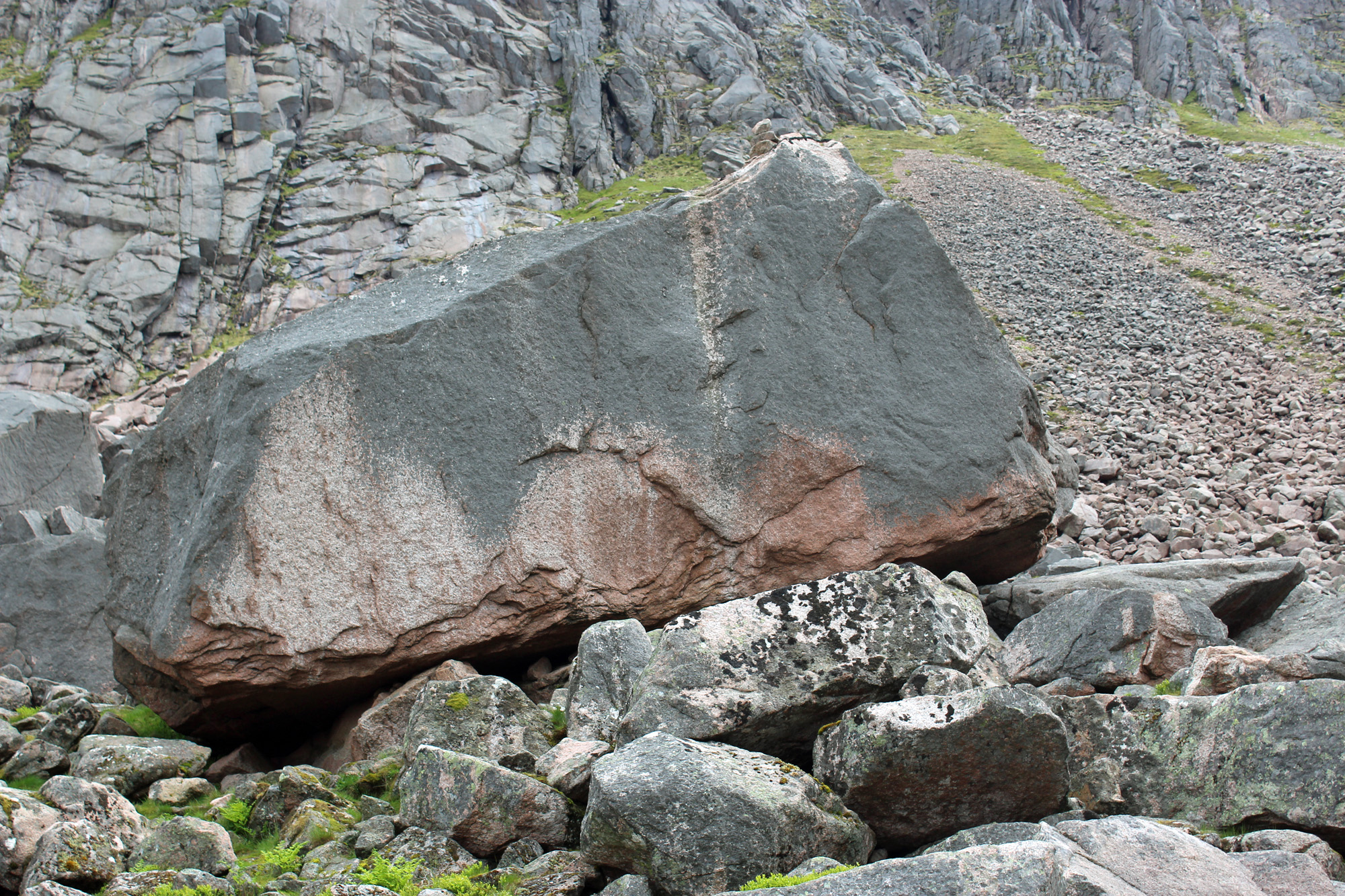
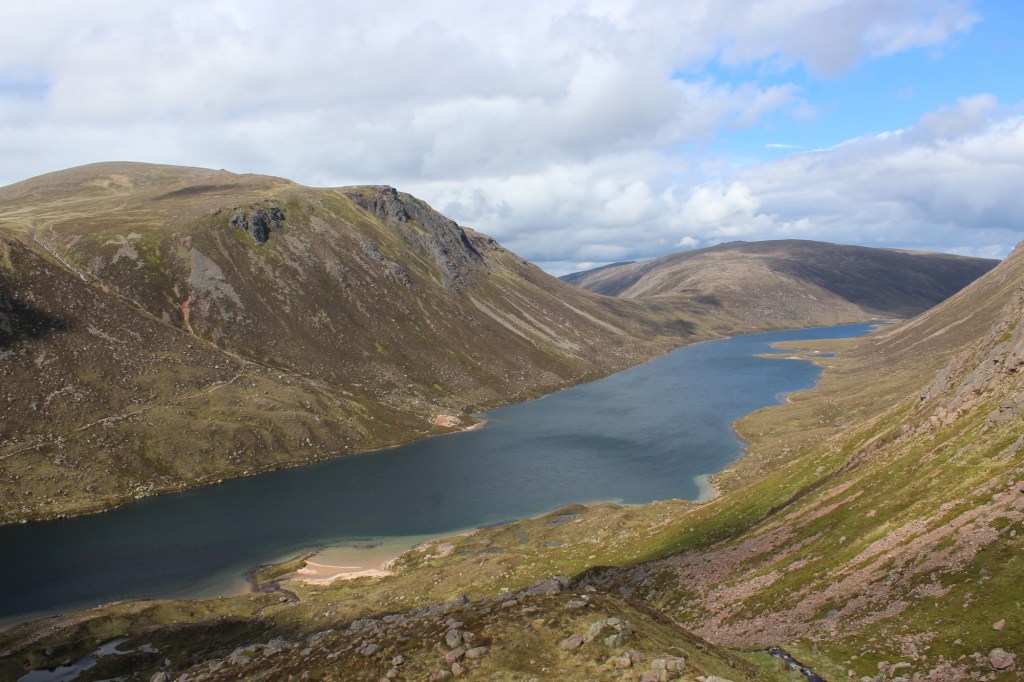
The Shelter Stone, known in Gaelic as Clach Dhion, is sometimes referred to as a bothy but it is more accurately described as a howff, a shelter in the gap between boulders. And, in the case of the Shelter Stone (NJ 001015), the main flat-sided boulder is a big one, visible in clear conditions jutting out of the rock-strewn slope above the western end of Loch Avon. There is a small cairn perched on its apex for the avoidance of any doubt.
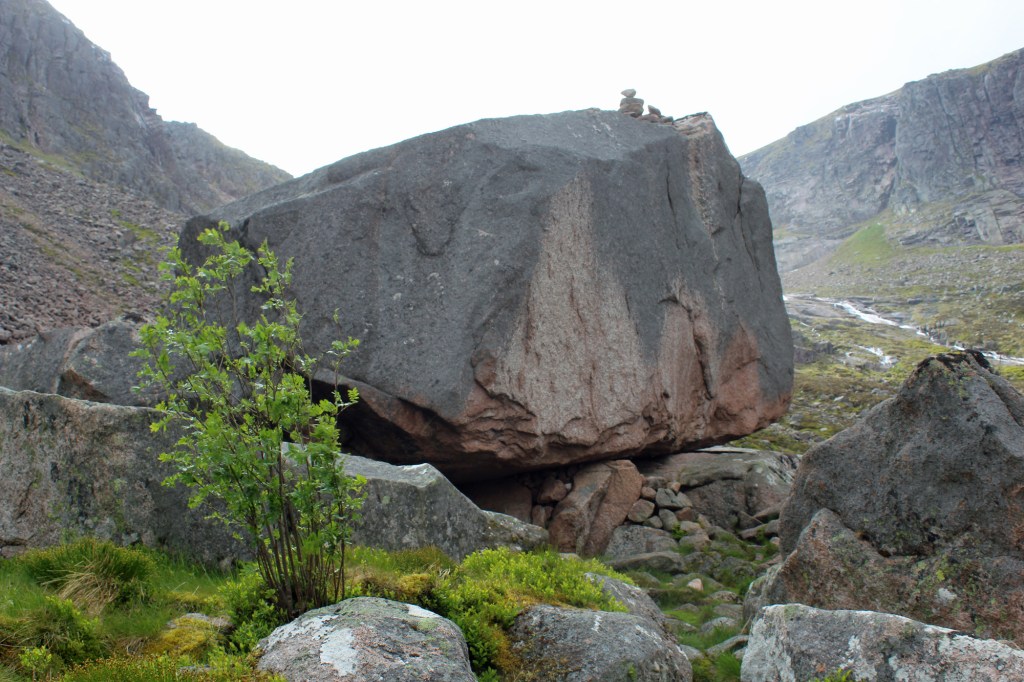
The refuge was formed when this large boulder (estimates of its weight range up to 1700 tons), one of many to have tumbled down from the northern cliffs, crags and gullies of Carn Etchachan above over millennia, landed atop others, pinning them down and creating a snug space below.
When the Shelter Stone was first discovered is not known. However, according to the Statistical Account of 1794, it offered refuge to ‘freebooters’ at that time and was certainly frequented by walkers and climbers in 1887 as a group of friends from Aberdeen gathered there on June 24 of that year to establish the Cairngorm Club, one of Scotland’s oldest mountaineering clubs. In August 1924, James Duncan and a group from the club visited the howff and left the first visitors’ book in an attempt to record who passed through the glen and stopped off at the stone. He returned over
subsequent years and, gratifyingly, found the pages filling up with over 100 people a year visiting, most during the summer months.
‘It is refreshing to think so many people should surmount the difficulties which beset the wanderer in these parts, for the Shelter Stone is by no means easy of access,’ he wrote. ‘Certainly, one cannot envisage charabanc parties being brought to it, if the idea of turning the Cairngorms into a National Park ever bears fruit!’
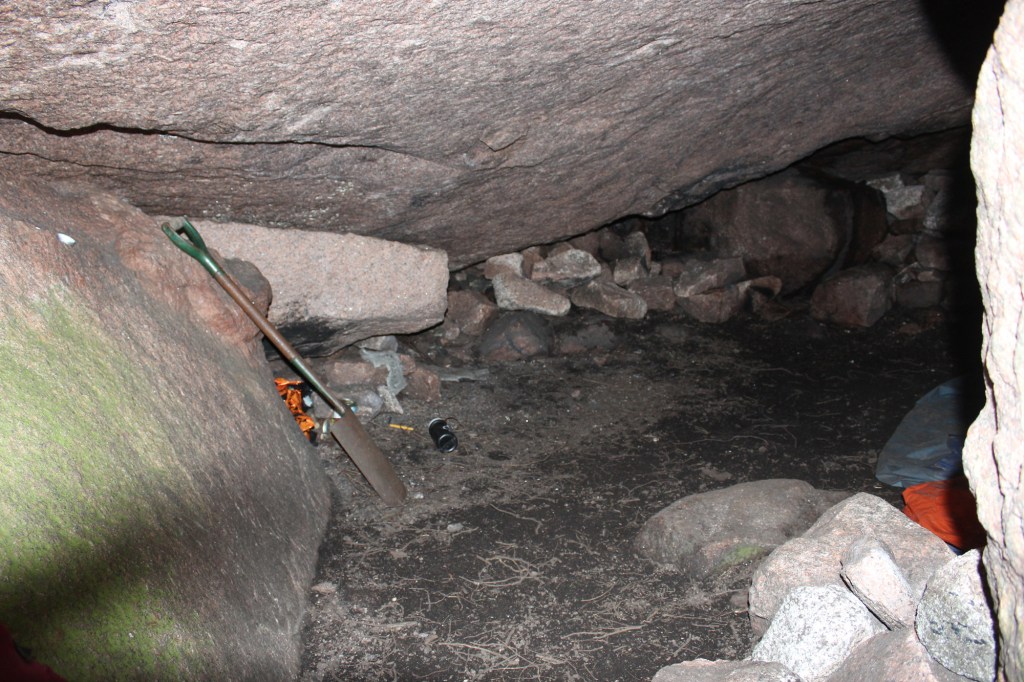
While Duncan clearly foresaw the future, he would be heartened to learn that, despite the creation of a national park, no tourist coaches have yet made it to the Shelter Stone. His logbook confirmed what he already knew from first-hand experience – the Shelter Stone is not a comfortable place to spend a night and he quotes just one rather philosophical visitor to highlight some of the challenges those who kip here face: ‘Arrived 11pm. Had a drink. Sweltering heat, though snow on hills. Knocked a hole in the roof with my head! Went to sleep. Wakened 2am with blanket round my neck. Lit primus. Overcome by fumes. Extinguished stove. Burned fingers in doing so and jumped up and bumped my head on roof. Try to sort primus. Eureka! Water boiling! Tea has a funny taste. Sandwiches have a paraffin flavour. All in the game, I suppose.’
Despite the trials and tribulations of sleeping under the boulder, Lossiemouth-born Labour Prime Minister Ramsay MacDonald spent the night of August 19, 1926, at the Shelter Stone and both he and various members of his family visited over the years.
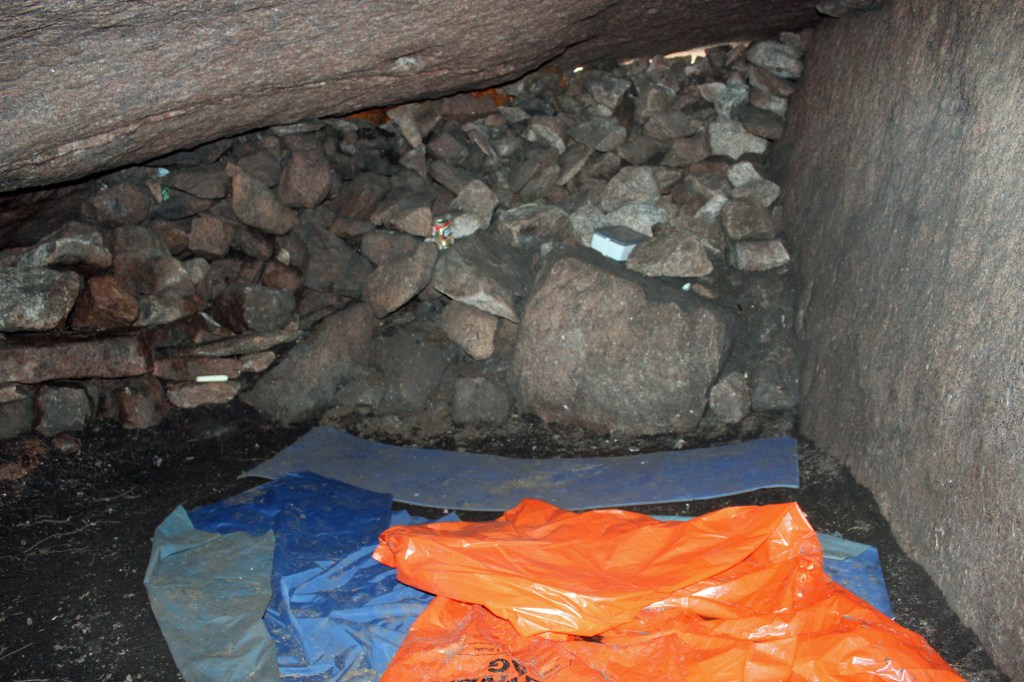
While there are reports dating from the 18th century of‘eighteen armed men’ holing up in the Shelter Stone, the 12 square metres of useable floor space is perhaps better placed to accommodate half a dozen in relative comfort, although there are contemporary reports of around a dozen squeezing in. In the 1950s there was a plaque attached to the rock above the entrance which read: ‘Shelter Stone Guest House – Prop. Larry Gru’.
Access to the chamber is via an obvious enough path weaving up through the boulder field to the entrance, a slim gap built up either side with stone. There is no door. Inside, stone has been built up around the walls over the years to plug many of the gaps while the solid stone roof above tapers down from one side to the other, meaning you will spend much of your time here lying down, sitting, crouching or hunched over. The floor is rough earth and there are no facilities, although the sandy beaches at the western end of Loch Avon are delightful on a warm
summer evening. Water can be taken from the burn flowing into Loch Avon while
surrounding boulders offer good cover for toilet trips (although remember to dig a hole and bury all the evidence).
While the Shelter Stone may be considered the original and best howff here, there are numerous imitators in the surrounding area, both natural rock shelters and built-up bivis.
The Shelter Stone lies 4km west of Fords of Avon Refuge via a path running along the northern shore of Loch Avon or 3km north-west of the MBA bothy at Hutchison Memorial Hut via Loch Etchachan.
Extracted from Bothies, Huts & Howffs in the Hills – Cairngorms National Park available in ebook and paperback from Amazon.


