
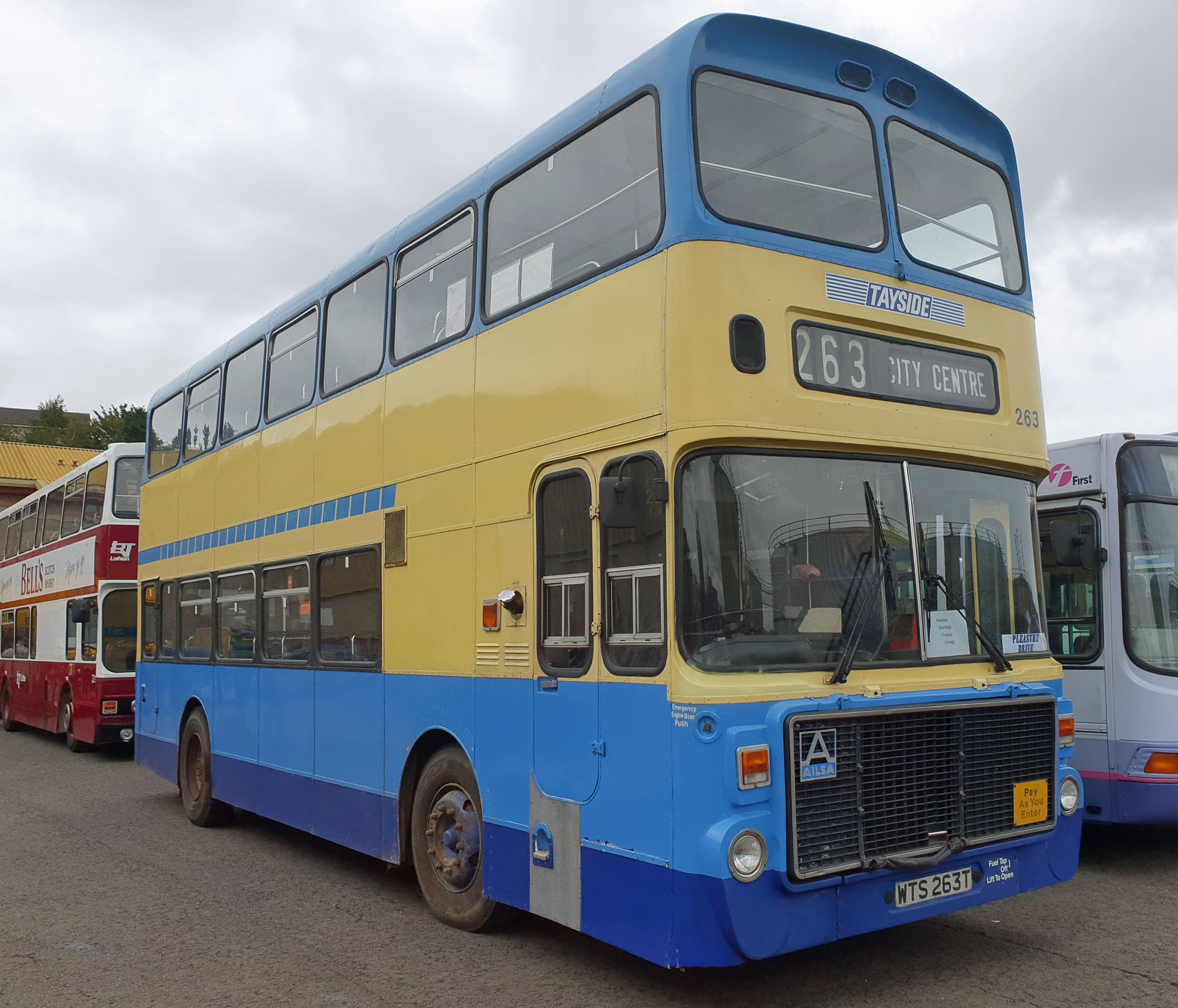
We’ve covered some of the cars built in Scotland. This time, the focus is on a Scottish-built bus – the Volvo Ailsa B55 – and its chassis manufacturing plant in Irvine, North Ayrshire.
The Volvo Ailsa B55 was a front-engined double-decker designed to make inroads into the British bus market, dominated at the time by British Leyland. Volvo began its assault on the British commercial market in 1972, taking a 75% stake in Barrhead-based truck importer Ailsa Trucks Ltd, a firm founded in 1967 to import Volvo commercial vehicles. In 1975, a new manufacturing plant was established on former Ministry of Defence land on the outskirts of Irvine, and Volvo set up Ailsa Bus Ltd (later Volvo Bus UK) to market Volvo buses to British operators.
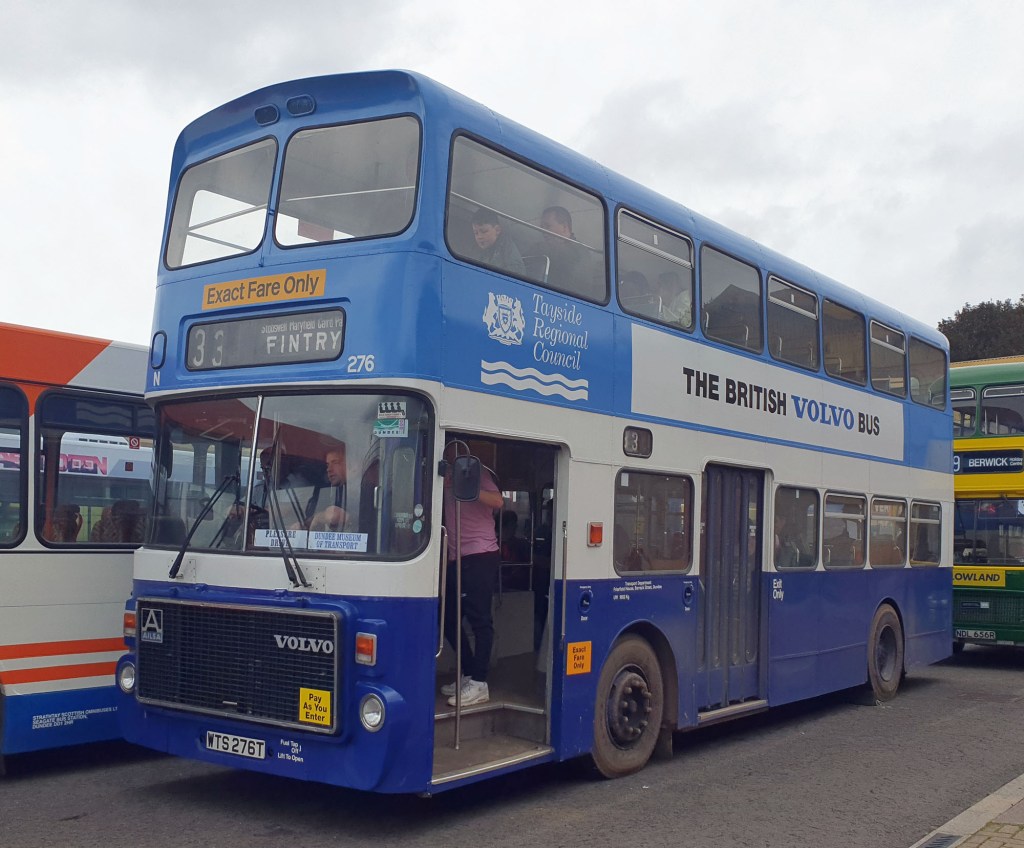
The Ailsa B55, Volvo’s first double-decker produced in the UK, debuted at the 1973 Scottish Motor Show. The Volvo chassis built in Irvine was bodied by Walter Alexander Coachbuilders of Falkirk. The new bus could be operated by one person – the driver – and did not need a conductor to collect fares.
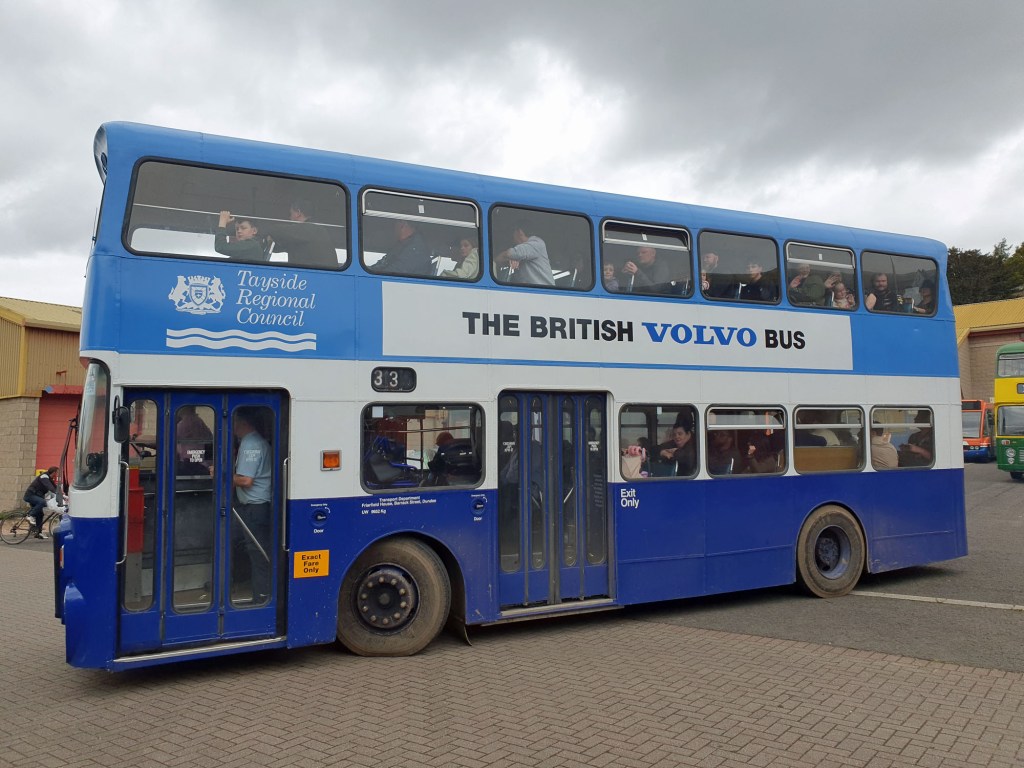
The driver sat above the Volvo TD70 engine, a compact turbocharged 6.7 litre unit linked to a five-speed semi-automatic gearbox. Passengers entered by the front door, positioned ahead of the front wheel, paid the exact fare and took their tickets. At the end of their journey, they exited via a second door positioned behind the front wheel, an option adopted by many operators to improve the flow of passengers.
The Ailsa B55 was widely adopted by Scottish bus operators. All but two of the constituent divisions of the Scottish Bus Group added them to their fleets, with Fife Scottish and Eastern Scottish leading the charge. Between 1975 and 1984, the Scottish Bus Group companies took a total of 192 Ailsa B55s. Strathclyde Partnership for Transport, covering the Strathclyde region, also adopted the Ailsa, while Tayside Regional Council operated the largest single fleet, buying 161 B55s for its public bus services in Dundee. Successor Tayside Buses kept the Ailsa in active service until 2000. The B55 also attracted operators in England and Wales and was exported to Indonesia and Hong Kong.
It was popular with drivers thanks to its spirited and reliable performance and dependable power steering. During the winter months, heat from the engine mounted below them was welcomed by drivers, but in the summer, in earlier models at least, the cab was often a hot and stuffy workplace, prompting complaints and, in some cases, driver strikes. The Ailsa was also known for its distinctive high-pitched turbo whistle and noisy engine. At times drivers had to shut the engine off at bus stops just to hear boarding passengers.
Deregulation of local bus services in 1986, combined with recession, resulted in a significant drop in demand for new vehicles as many operators opted to run older buses for longer to stay competitive. Incurring heavy losses, Volvo closed plants, but the Irvine factory survived, with a slimmed-down workforce and extended shutdowns. It continued to manufacture the rear-engined Volvo Olympian chassis, introduced in March 1993, and the B6 single-decker midibus chassis, alongside trucks. However, as production shifted to Sweden, Belgium and Poland, the axe fell in early 1999. The factory officially closed in June 2000, costing 500 jobs. In its 25 years of operation, Irvine produced around 50,000 trucks and 8,000 buses.
The plant was demolished and the 77-acre site was redeveloped as Tournament Park, a mix of business, commercial, and distribution units.
The Ailsa B55 remained in production until 1985 when it was effectively replaced by the Volvo B10M Citybus, a mid-engined city bus and coach chassis launched in 1978. The B55 slowly disappeared from British roads, although some examples live on, preserved by dedicated enthusiasts.
If you have enjoyed this article, you might like to PayPal.me or buy me a coffee, which helps support the site and funds new content.
You might like Cars Made in Scotland by James Carron, available as a paperback or ebook from Amazon.


