
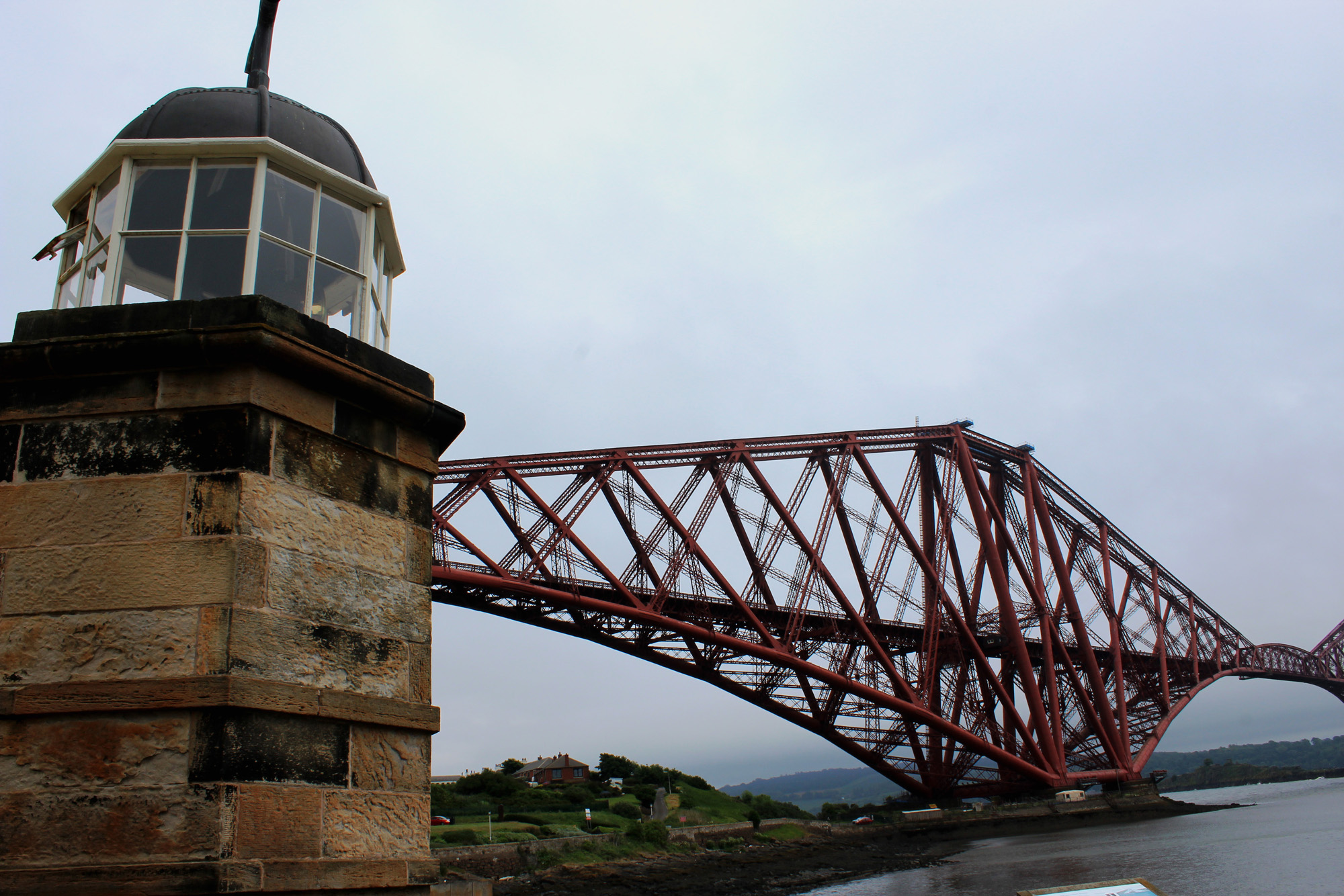
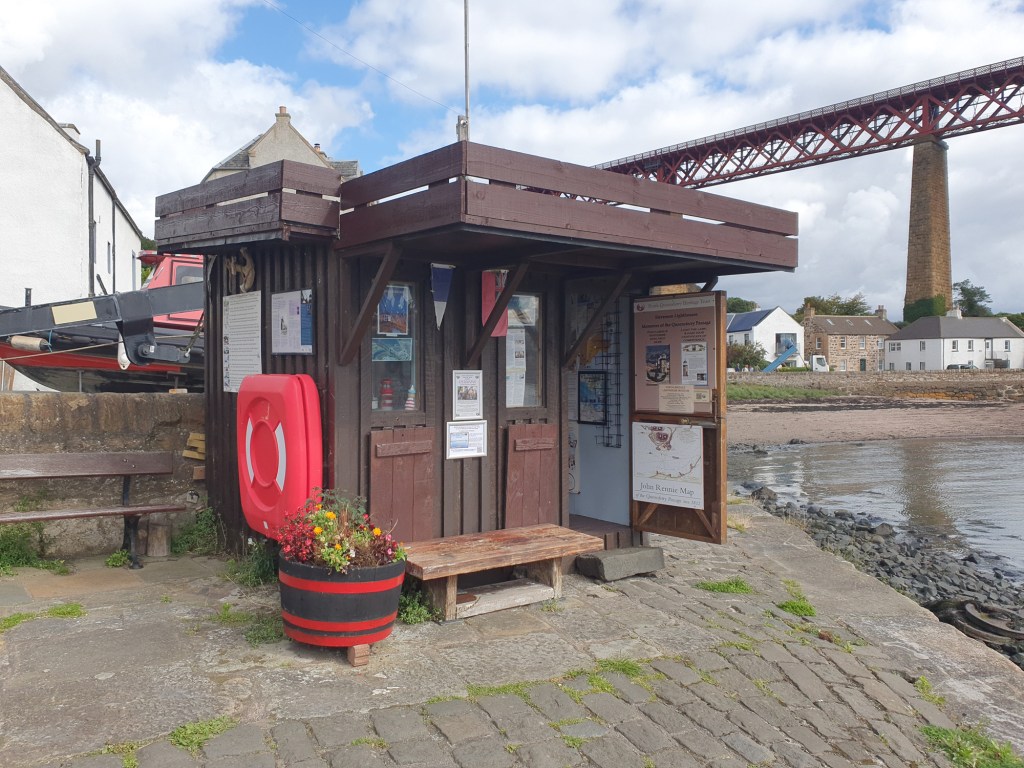
The tiny lighthouse on the pier at North Queensferry lays claim to being the world’s smallest working light tower. Built in 1817 by Robert Stevenson, it enjoys a unique view of its much larger and more famous neighbour, the Forth Railway Bridge. Next to it is the equally small Lighthouse Museum.
Constructed at the head of John Rennie’s Town Pier, the North Queensferry Light Tower guided ferries safely across the Firth of Forth in the days before bridges spanned the river. Known as the Queensferry Passage (after Queen Margaret of Scotland), the ferry service dated back to the 11th century when pilgrims travelling to St Andrews crossed here, landing at rudimentary piers on either side of the river. However, as demand grew – the ferry was used to convey people, goods, livestock and the mail – it soon became Scotland’s busiest ferry route, and these proved inadequate. In the early 19th century, new piers were constructed at North and South Queensferry. In 1817 Robert Stevenson was commissioned to provide lighting on the passage.
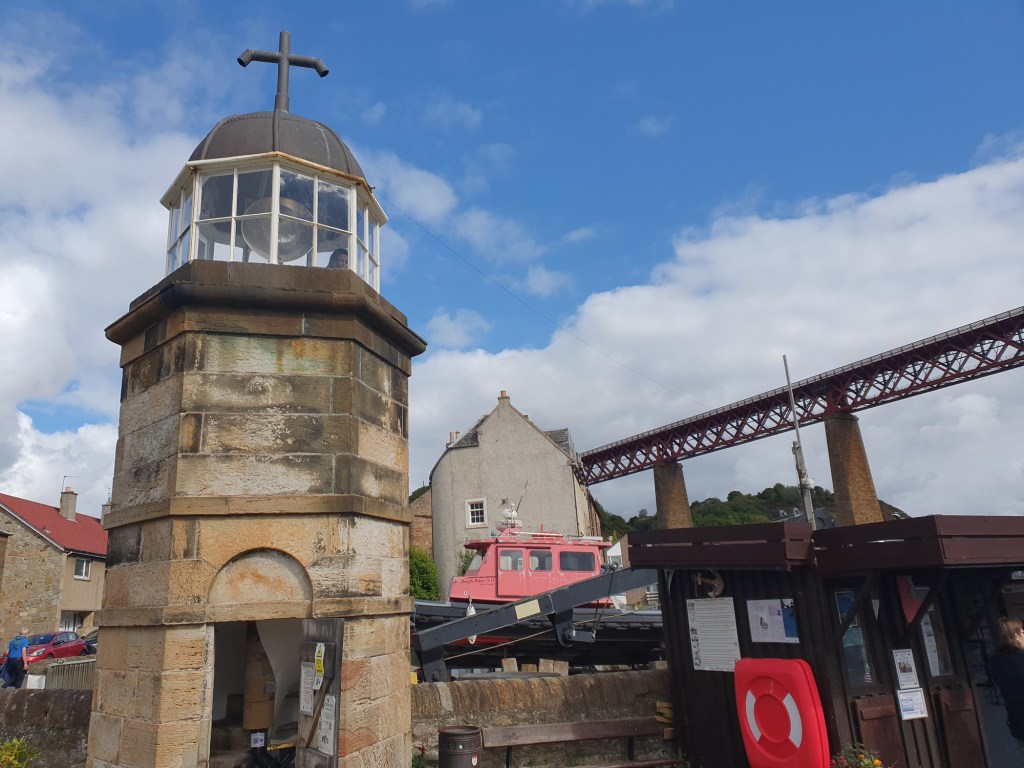
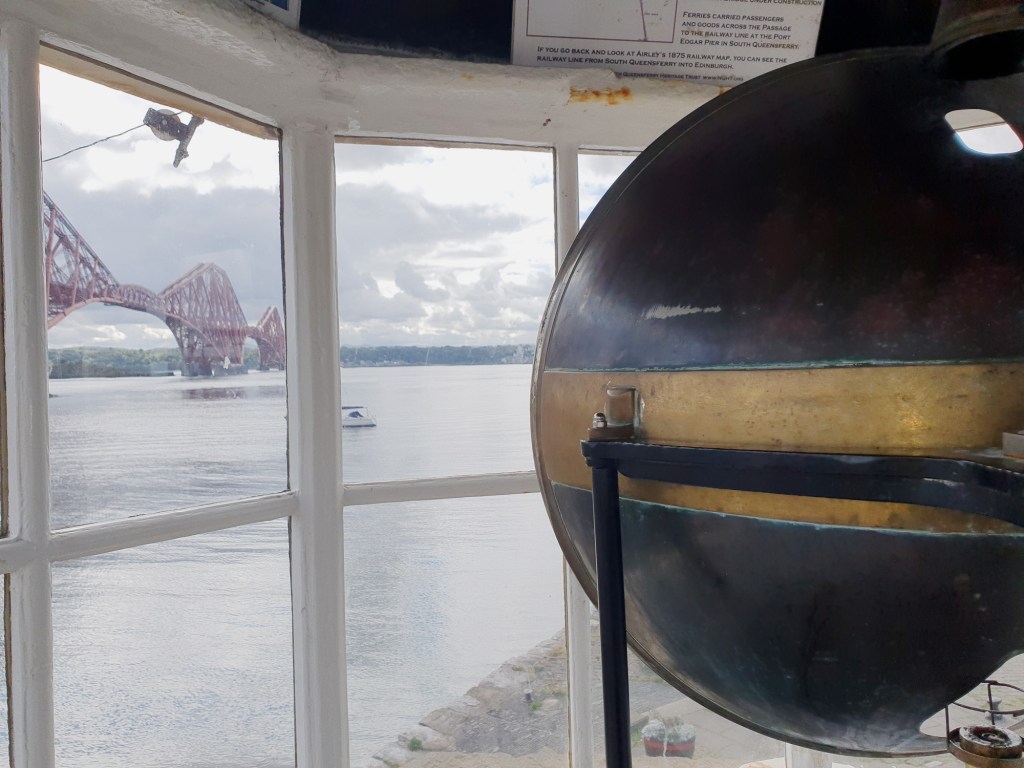
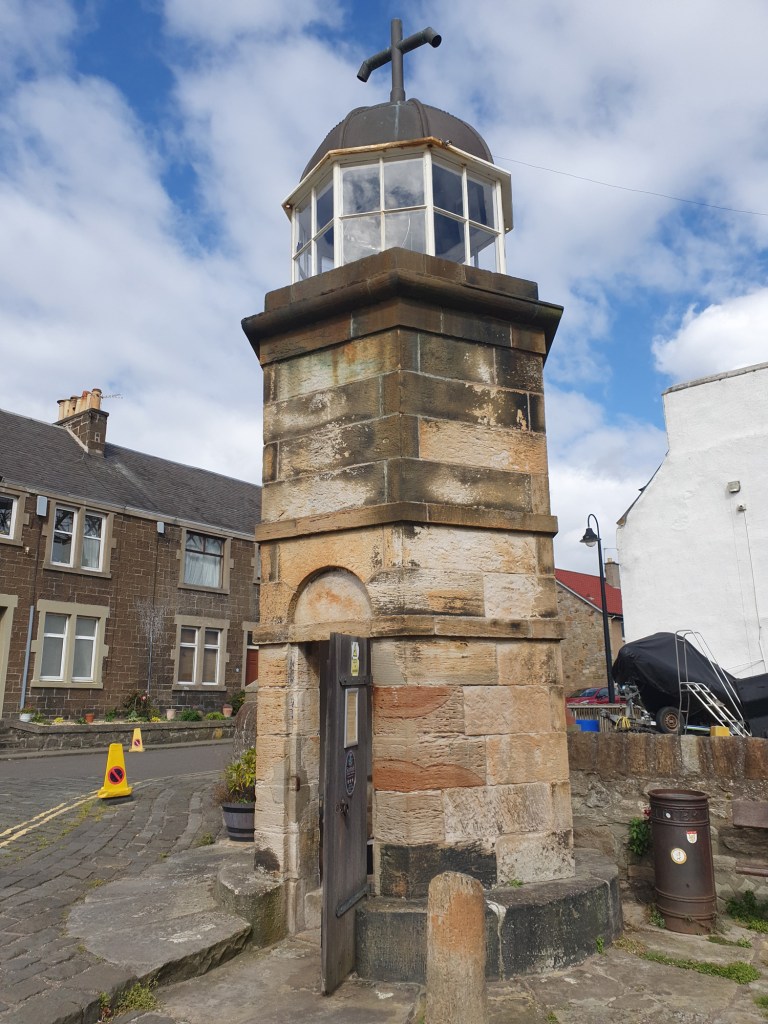
He built the lantern tower, a hexagonal structure made of local sandstone topped off with an octagonal lightroom with eight cast-iron windows and a domed copper roof. The light sits five metres above the pier and the Argand lamp, which produced 2000 to 3000 candlepower and operated in conjunction with a fixed parabolic reflector, could be seen at a distance of five nautical miles. Inside the tower, which is 6.5 metres tall overall, a spiral staircase of 24 steps curved round a central stove flue which served the oil lamp. A keeper kept the lamp burning and, in the early decades, it was fuelled by whale oil. Paraffin was later used, then gas. A sister tower operated at Hawes Pier, on the south side of the river.
The launching of another ferry service downriver and the completion and opening of the Forth Rail Bridge in 1890 resulted in a drop in passenger numbers on the Queensferry route, although there remained demand from hauliers and motorists, and the Queensferry Passage continued to thrive for decades thereafter. In 1934, two new car ferries – Robert the Bruce and Queen Margaret – were launched, and these were followed in 1949 by Mary Queen of Scots and, in 1956, Sir William Wallace. The ferry service remained in operation until September 4, 1964, the final departure coinciding with the opening of the Forth Road Bridge.
The North Queensferry Light Tower fell into disuse at this time but, retaining its original lighting apparatus, it was awarded Category A listed building status in 1979. It was restored to full working order by members of the North Queensferry Heritage Trust and, in 2010, was officially re-opened by Her Royal Highness The Princess Royal. It is open to the public daily from 10am to 5pm, and visitors can climb the 24 steps inside to reach the restored lamp, which is now powered by vegetable oil.
The neighbouring Forth Bridges Lighthouse Museum, possibly the smallest museum in Scotland, contains a collection of information and photographs relating to the lighthouse, the Queensferry piers, and the Forth Railway Bridge.
For abandoned places in Fife, check out my book Abandoned Fife, available in paperback and as an ebook from Amazon.
If you have enjoyed this article, you might like to PayPal.me or buy me a coffee, which helps support the site and funds new content.

 Secret Scotland