
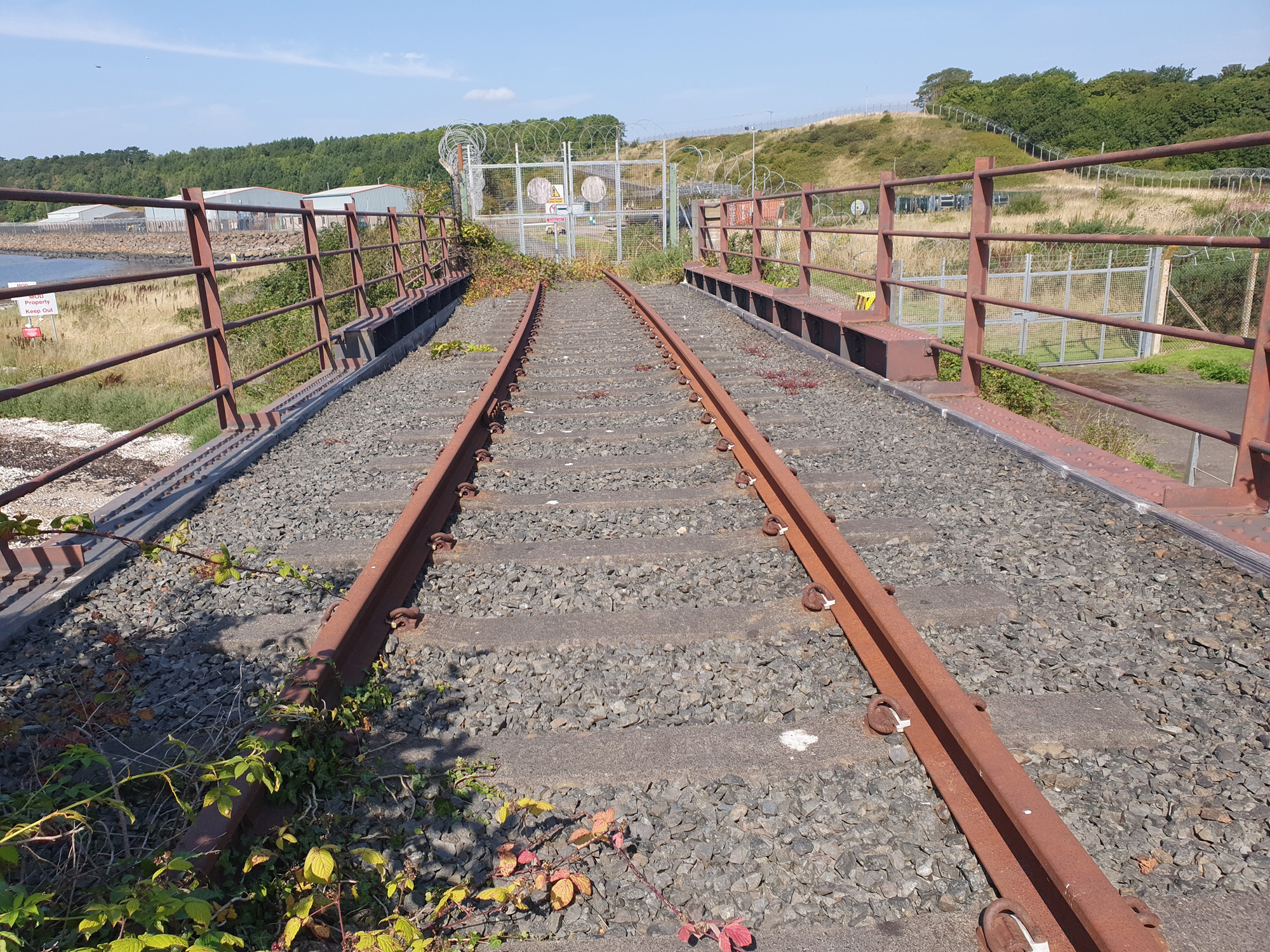
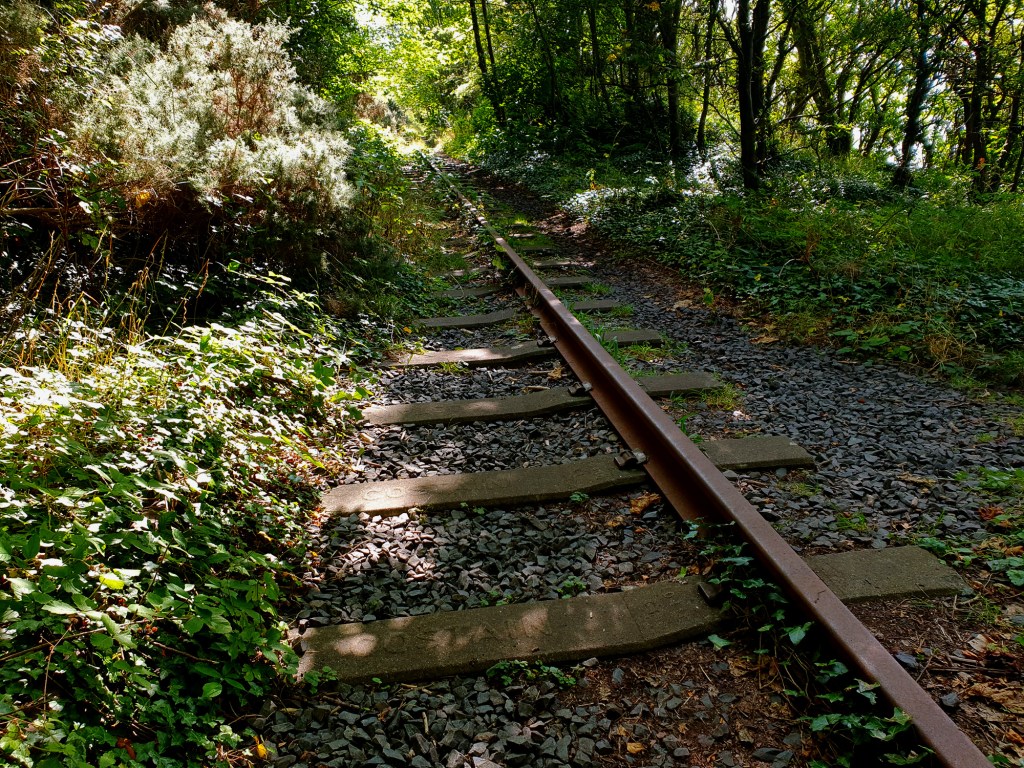
The ghostly tracks of an old railway built to serve a naval armaments and supply depot remain in place on the Fife coast. Although largely hidden by vegetation, rails and sleepers periodically emerge from the undergrowth on this short walk west from Charlestown.
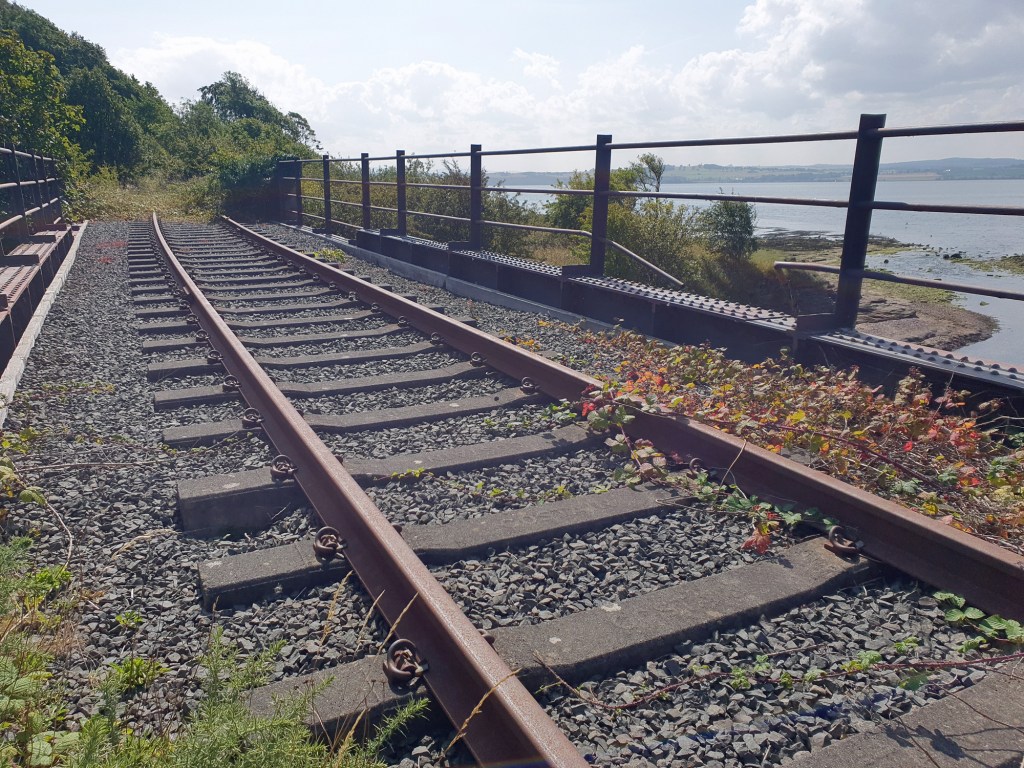
A section of track running along above the River Forth west of the village escaped demolition after the last trains ran in the early 1990s. They originally formed part of the Crombie Branch, a spur of the Charlestown Branch which linked the village’s extensive industries with Dunfermline. While primarily serving Charlestown Harbour and lime works, where there were numerous sidings, there was also a spur to Charlestown Foundry (ironworks) and sidings serving a saltworks. The branch ended at a terminus where there was a passenger station. There was also a halt at Braeside, close to Braeside Junction where the Crombie Branch Railway broke west to the military armaments depot opened during the First World War.
The development of railways in the area dates back to the early 18th century when the landowner, the Earl of Elgin, commissioned a small network of relatively short 4ft 3in gauge waggonways to transport coal down from inland pits to Charlestown. Wagons were horse-drawn and stationary engines were used on the inclines. Over the years, the network was gradually expanded to serve other mines and, in October 1849, the main line of what was known as the Elgin Railway was converted to standard gauge. Three years later, steam engines were introduced to haul the mineral trains. At the same time, a passenger service to Dunfermline was introduced, linking the town with steamers on the River Forth, and Charlestown became an important ferry port for onward travel to Edinburgh.
In July 1862, the Elgin Railway was absorbed by the North British Railway (NBR) and, among various upgrades and improvements, the old rope incline down to the harbour was replaced by a new curved stretch of locomotive-worked track. The branch was known for its sharp curves and steep gradients.
One of the last major developments on the Charlestown Branch was the construction of the branch west to Crombie in 1916, which included the opening of a station named Crombie Halt in March 1916. It was provided solely for munitions workers at the Royal Ordnance Depot, which was built to service warships at nearby Rosyth. In December 1915, work began on laying a branch railway from Braeside Junction, below Crombie Halt, to the new military base. The halt, which included a footbridge over the line, was opened to the general public in 1921 when it was renamed Braeside Halt. It was the last station to be opened by the NBR before it was absorbed by the London and North Eastern Railway (LNER) in 1921.
Passenger services to Charlestown and Braeside Halt ended just five years later in 1926 and, following the Second World War, local coal reserves were severely depleted, and pits were closing, leading to the loss of the railways built to serve them. The Charlestown Branch closed to freight in February 1964, although the line to the ordnance depot at Crombie remained in use, leased to the Admiralty, until 1993 when it was mothballed. Trains ran to Crombie from Dunfermline Townhill yard, and the branch enjoyed busy spells of operation during the Falklands War in 1982 and Gulf War in 1991. In its final decades of operation, freight trains were typically hauled by Class 25, Class 20, Class 26, and Class 37 locomotives. Within the depot, wagons and vans were marshalled by a Ruston & Hornsby 0-4-0 diesel shunter.
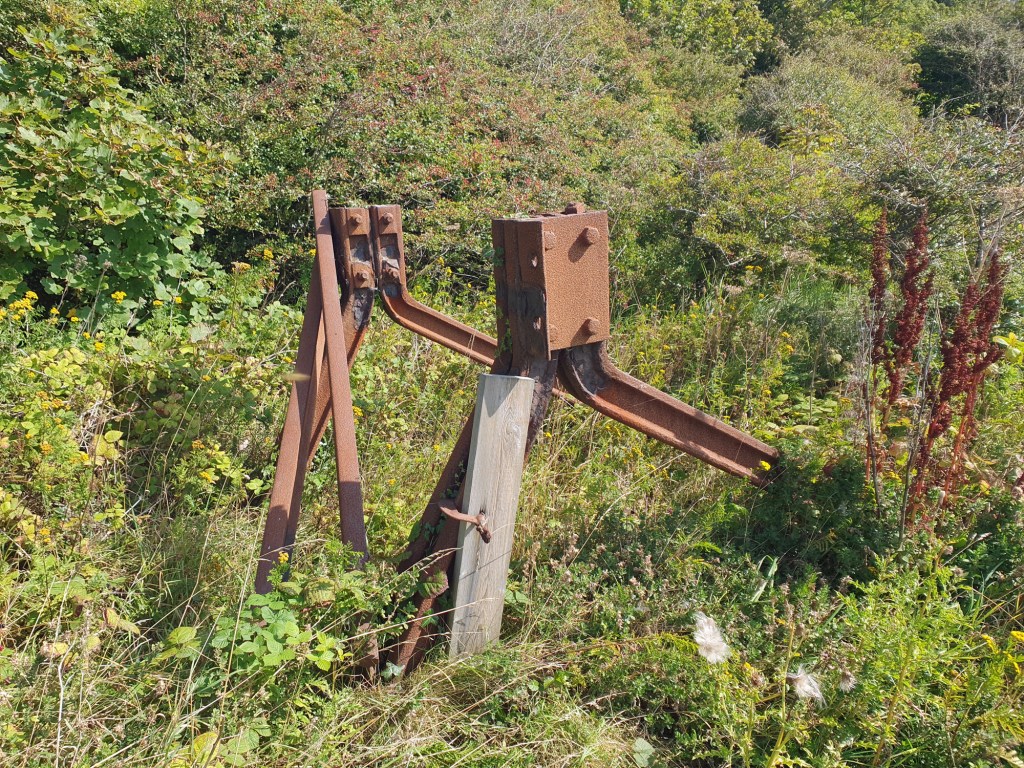
With the Charlestown Branch shut, a set of buffers was placed on the line at the western edge of the village and trains to Crombie would travel down through Braeside Halt to these before reversing along the branch to the depot. The tracks beyond, serving Charlestown harbour and kilns, were lifted and later replaced by new houses.
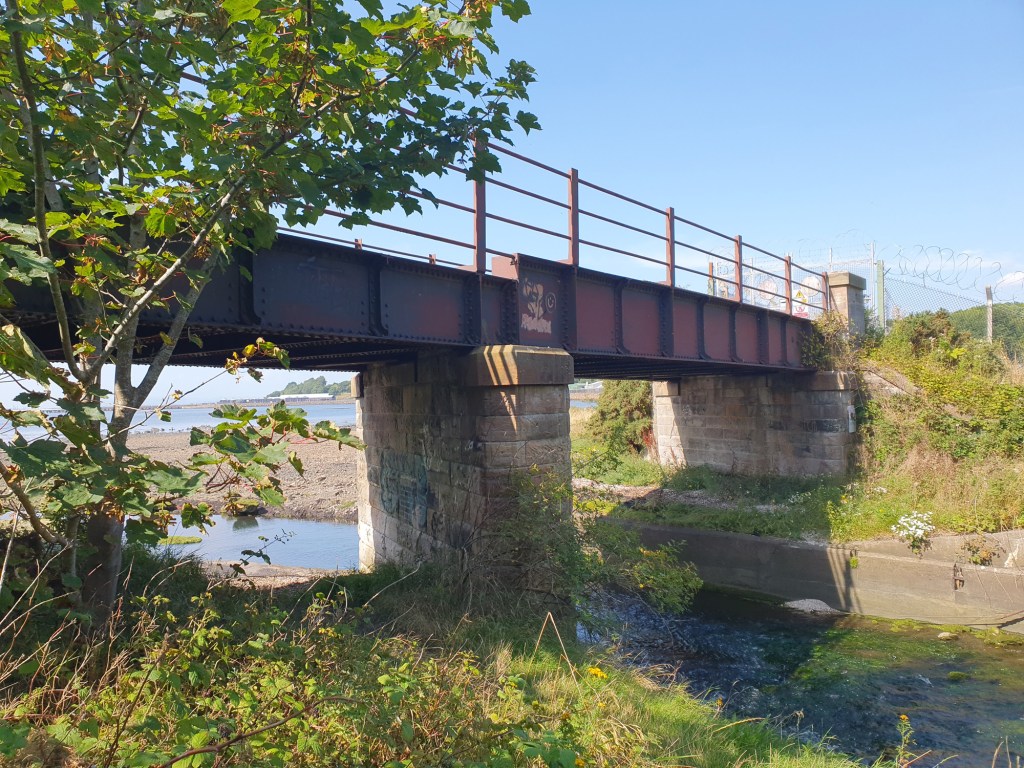
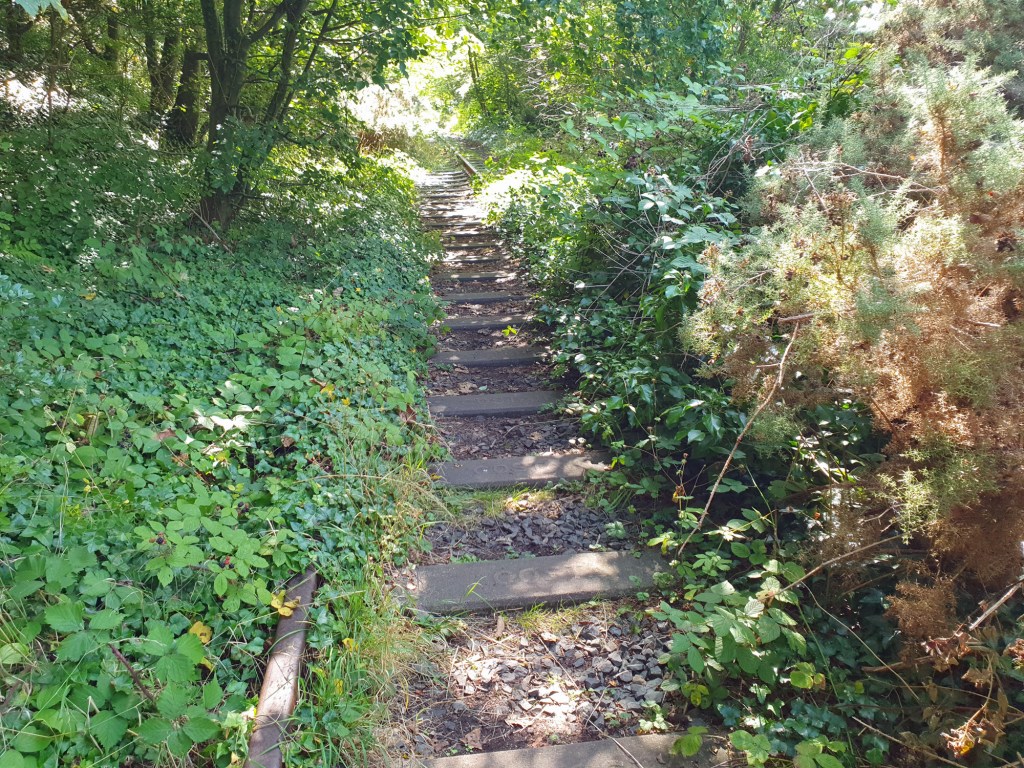
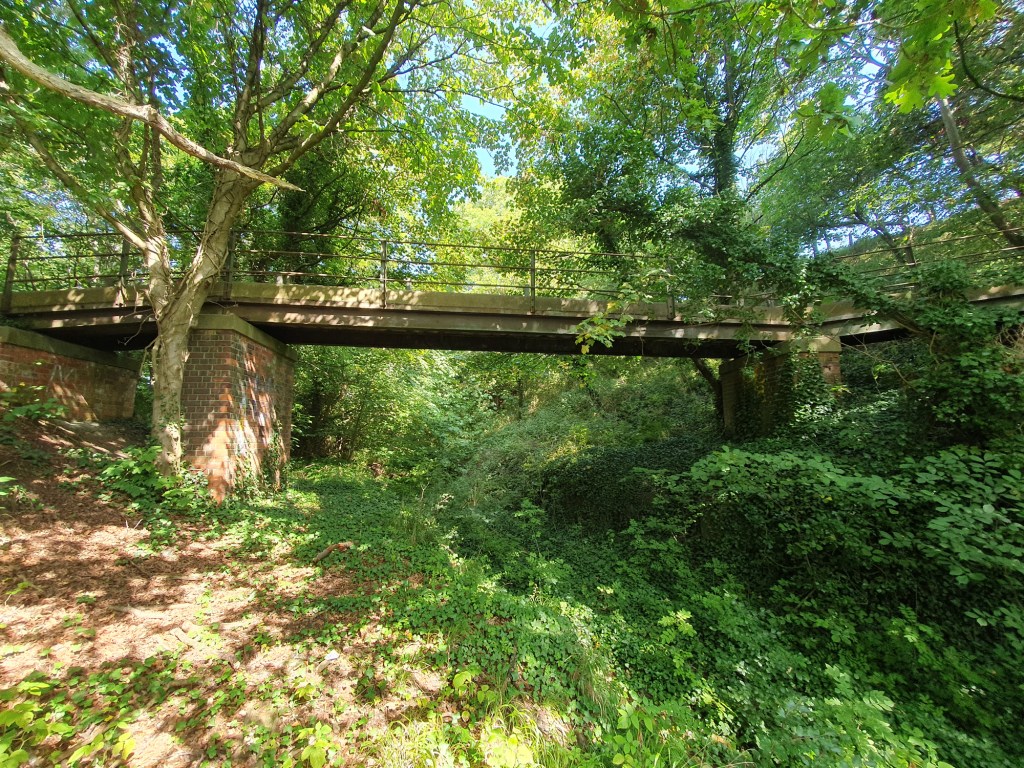
The surviving stretch of track runs from the buffers west to the gates of what is now Defence Munitions Crombie, part of the UK’s Defence Storage and Distribution Agency. While largely covered in ivy, brambles and other thick undergrowth, the rails and concrete Costain sleepers are most obvious as the line passes below Braeside Halt, where the footbridge remains, and nears the base. It is clear of vegetation as it crosses an iron bridge spanning Lyne Burn immediately prior to the Crombie gates beyond which the track has been lifted and there is no public access. From the buffers to the gates there is an accessible path skirting above the shoreline of Ironmill Bay, which begins at the western end of West Harbour Road.
For more abandoned places in Fife, check out my book Abandoned Fife, available in paperback and as an ebook from Amazon.
If you have enjoyed this article, you might like to PayPal.me or buy me a coffee, which helps support the site and funds new content.


