
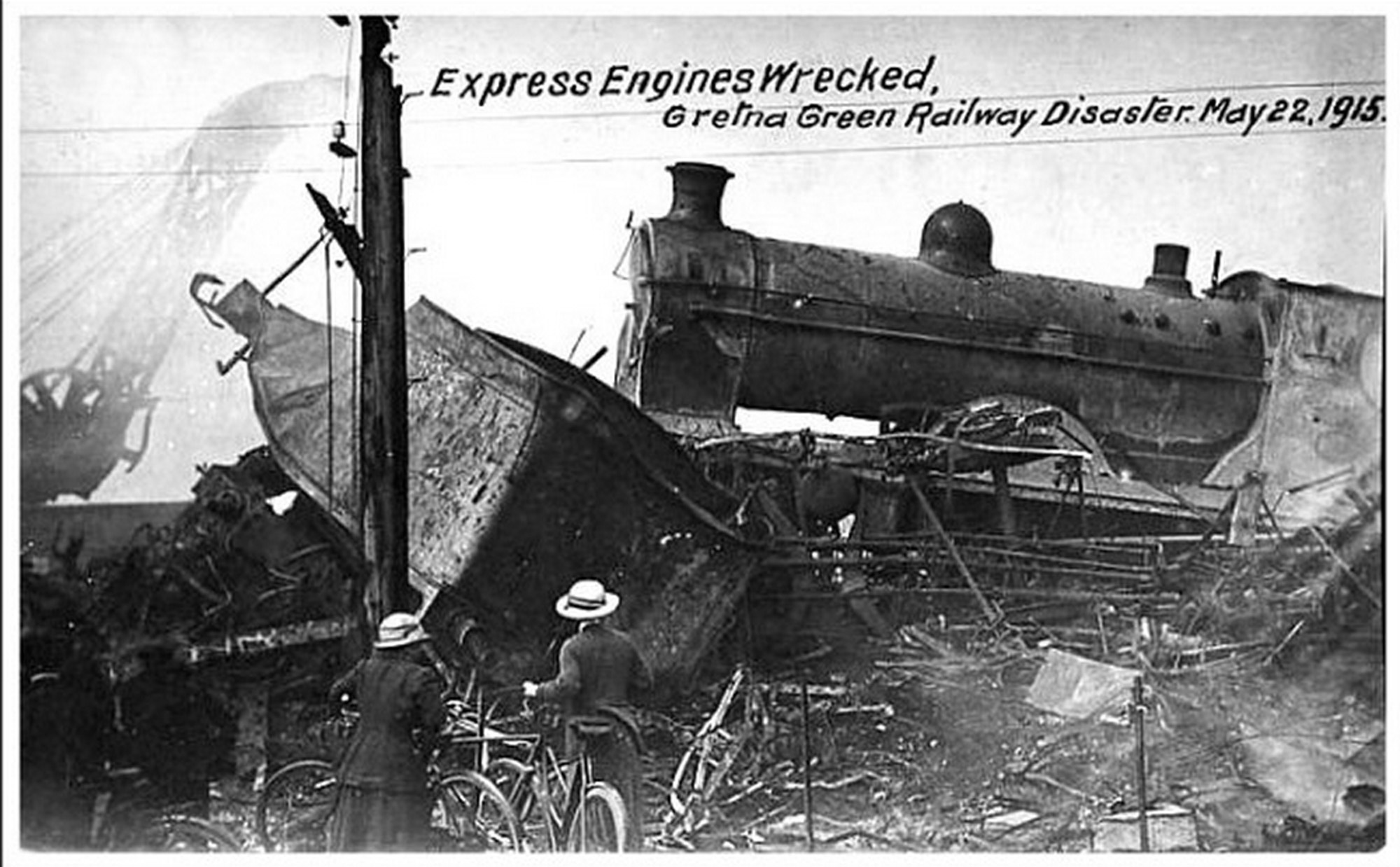
An ‘utter wastage of the stuff of heroism’ was how the Daily Record described Britain’s worst railway disaster. Hundreds of soldiers died and hundreds more were injured in the multiple train crash that happened during the early morning of Saturday, May 22, 1915, in a quiet rural corner of south-west Scotland. Civilian passengers added to the death toll, the youngest an 18-month-old baby.
The official accepted death toll was 227, including 215 soldiers, nine other passengers and three members of railway staff. Over 200 were injured.
In the immediate aftermath of what became known as the Gretna Rail Disaster, the authorities, under the guise of the Defence of the Realm Act, did their best to restrict Press access to the crash site. The Caledonian Railway Company, the operator at the centre of the tragedy, later bought and destroyed the negatives of photographs taken during the rescue effort and even blocked attempts to erect a monument at the site in a bid to erase the event from its history.
As a result of these tactics, the story of the disaster quickly faded from the public consciousness and, despite retaining its title of Britain’s worst railway disaster, it remains one of the least understood.
‘The horrors which are the common-place of war and the ever-encompassing dangers of peaceful times were both brought home to the nation, and particularly to the people of this district, by the appalling disaster of Saturday morning.’ So wrote the correspondent of the Dumfries & Galloway Standard, the local newspaper, as he and his editor embarked upon the herculean task of covering in print the unfolding tragedy, the biggest story on their patch.
‘The neighbourhood of Gretna Green presented the appearance of a stricken field, over which the fire fiend held revel. A gallant body of citizen soldiers were well-nigh wiped out.’
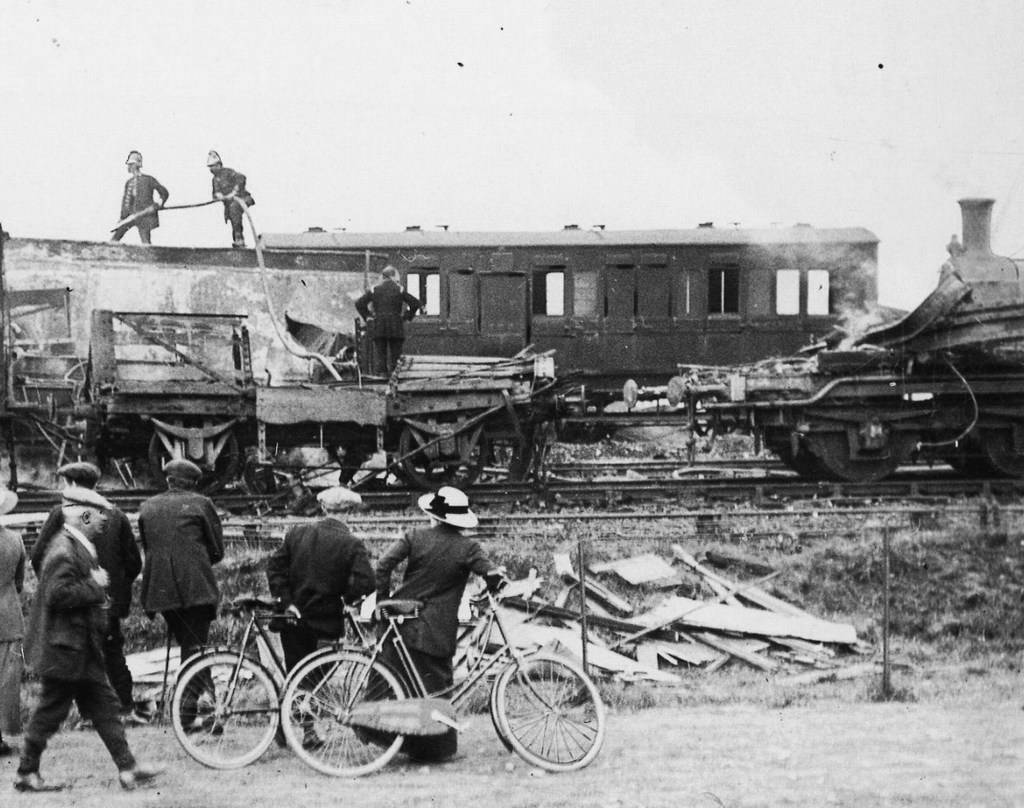
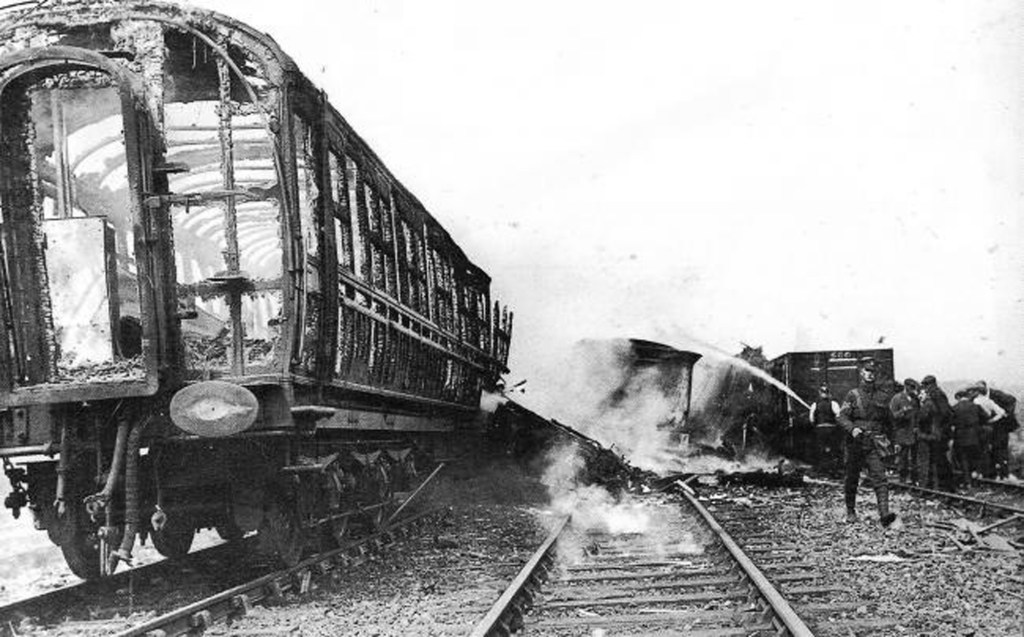
The soldiers, volunteers of the 1st/7th (Leith) Battalion, The Royal Scots, were travelling south from Larbert to Liverpool – their ultimate destination the battlefields of Gallipoli – when their train crashed head-on into a local train parked on the mainline in front of the signal box at Quintinshill. Less than a minute later, a northbound express, running late, ploughed into the wreckage and a blazing inferno ensued. A goods train and coal train parked either side of the mainline were caught up in the catastrophe, bringing the total number of trains involved to five.
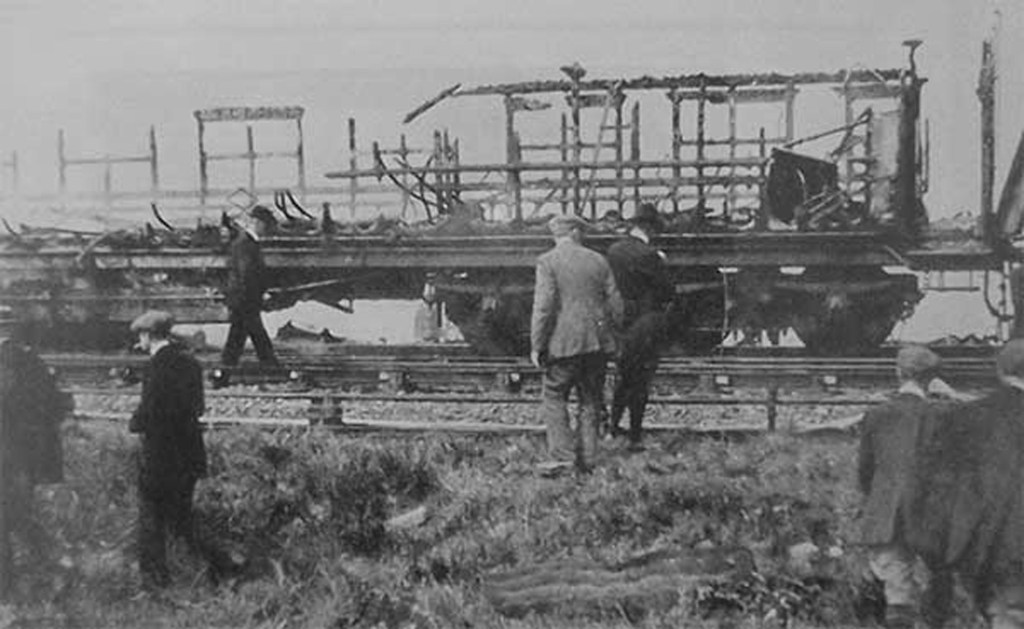
The Times noted: ‘There will be no remains to identify some of the soldiers. The debris of the trains has been their funeral pyre.’
At a time when the government was keen to keep bad news from its citizens for fear of lowering morale amid times of war, the Dumfries & Galloway Standard scribes and other journalists served their readers well, often battling officialdom and the threat of censorship to compile a vivid and brutally honest account of the accident and its aftermath, the long hours spent rescuing the injured from the burning wreckage and digging the dead out of the ashes.
They described in graphic detail the horrors faced by those caught up in the crash and the courageous efforts of the many doctors, nurses, firemen, police officers and ordinary men and women who rushed to the aid of the victims, working alongside the servicemen fighting to help their comrades and often putting their own safety to one side to save as many souls as they could. It is recorded that some of the soldiers, trapped in the wreckage and badly injured, either took their own lives or asked to be shot.
Reporting the tragedy was a difficult and dangerous job, particularly in the immediate aftermath of the crash, when the police did their best to stop reporters accessing the site, speaking to victims or railway company employees, or even getting close enough to view the accident from a safe distance. The Press was hindered by the Defence of the Realm Act of 1914 which stated: ‘No person shall by word of mouth or in writing spread reports likely to cause disaffection or alarm among any of His Majesty’s forces or among the civilian population.’ It ensured – initially at least – that the authorities briefly managed to block access to the crash site.
In an early dispatch, the Daily Record’s correspondent questioned: ‘Why was the truth so long delayed?’
‘Information regarding the actual collision was difficult to obtain on the scene,’ he wrote. ‘Both railway officials and police appeared to regard it as most important that as little information as possible should reach the public through the Press.
‘The employment of the police was to all appearances confined to preventing Pressmen in the legitimate pursuit of their profession from approaching even within seeing distance of the scene. Beyond this they appeared to have no other employment.
‘While soldiers and civilians were doing their utmost on behalf of the injured and dead, the policemen stood at the gates of fields adjoining the railway or stared vacantly into space in some sheltered corner.
‘Any civil questions put courteously were answered with impertinence and evidently the importance of being a member of the constabulary weighed on their imagination.
‘Much information, however, was to be gleaned from country folk who had seen the catastrophe before the officials, railway and police, arrived.’
The Scotsman too highlighted the early release of what it described as ‘falsified’ information in Glasgow.
Attempts to curtail the flow of information and perhaps draw a veil of secrecy over this wartime disaster on home soil did not last long. With scores of seriously injured men arriving in Carlisle by mid-morning and survivors and many of the walking wounded streaming into Glasgow stations at lunchtime, it was just too big an event to keep a lid on.
The first reports that something was seriously amiss on the busy west coast mainline appeared in the Saturday afternoon Press, papers like the Edinburgh Evening News providing a flavour of the tragedy thanks to agency correspondents in Glasgow and Carlisle. ‘Hundreds Killed and Injured,’ it proclaimed.
The Sunday papers took up where they left off, but it was amid Monday’s considerable column inches that the full horror of the crash was brought home to the nation – already struggling to come to terms with daily despatches from the frontline – with numerous eye-witness accounts and stories of bravery from the blood-stained fields flanking the tracks at Quintinshill.
Journalists managed to ascertain early on that the disaster involved a local train, a troop train and an express, and that hundreds of soldiers had been caught up in it. Early rumours that the trains had been bombed by a German Zeppelin or that the tracks were sabotaged were quickly dispelled. At the heart of the sorry tale, the persistent scribes would find 32-year-old signalman James Tinsley who, on the morning of the disaster, slept in and arrived over half an hour late for his work.
Both the government, which had assumed responsibility for the railways under the newly established Railway Executive Committee, and the Caledonian Railway Company escaped criticism or censure, as subsequent inquiries, narrow in focus as they were and apparently intent on blaming signalman Tinsley and his colleague George Meakin for the disaster, did not probe very deeply, suggesting the authorities had little or no appetite for a more revealing public investigation. As a result, many issues directly related to the accident were never raised or discussed in public, leaving historians to speculate on the contributory factors and causes.
Anyone who has studied the crash and read the various accounts and literature published over the years will recognise the same photographs popping up time and time again. Many of the photographs captured at the scene can be attributed to an unnamed but enterprising photographer who, spotting the demand from Georgian sightseers, quickly reproduced images he had taken of the disaster and sold them as a ‘Local View’ series of postcards. The Caledonian Railway Company reputedly took a particularly dim view of this and reportedly bought the negative plates and promptly destroyed them. However, enough copies had been printed and distributed to ensure a photographic record of the disaster remains to this day, albeit a rather limited one.
The Caledonian Railway Company’s opposition to the erection of a memorial close to the site of the crash held sway until September 26, 2010, when a plaque was unveiled on the parapet of Blacksike Bridge, just down the line from the site of Quintinshill Signal Box and the crash site. It was erected by Springfield & Gretna Green Community Council in memory of the Royal Scots. Other memorials subsequently followed.
Ultimately it was left to the Press – both local and national – to try and make sense of the tragedy for the people of the country, among them the great many mourning the loss of a loved one. However, once the various inquiries and criminal trial passed, very little was written about Britain’s worst railway disaster, until more recently when there has been a new-found interest in the events of May 22, 1915, and its aftermath.
Extracted from Tinsley, The Signalman who Simply Forgot by James Carron (Amenta Publishing), available in paperback and ebook format from Amazon.


