
As a teenager, author Mary Shelley spent two extended summers in Dundee, ostensibly recuperating from illness, but also avoiding the glare of her stepmother. Best known for her Gothic horror Frankenstein, Shelley credits her stays in the city with being a time in her life of rare freedom where, unheeded, she could ‘convene with the creatures of her fancy’.
She wrote: ‘It was beneath the trees of the grounds belonging to our house, or on the bleak sides of the woodless mountains near, that my true compositions of the airy flights of my imagination, were born and fostered.’ And many take this to mean that it was while she was here, living on the outskirts of the busy industrial city, a centre of shipbuilding and whaling, her most famous novel took its frightening form.
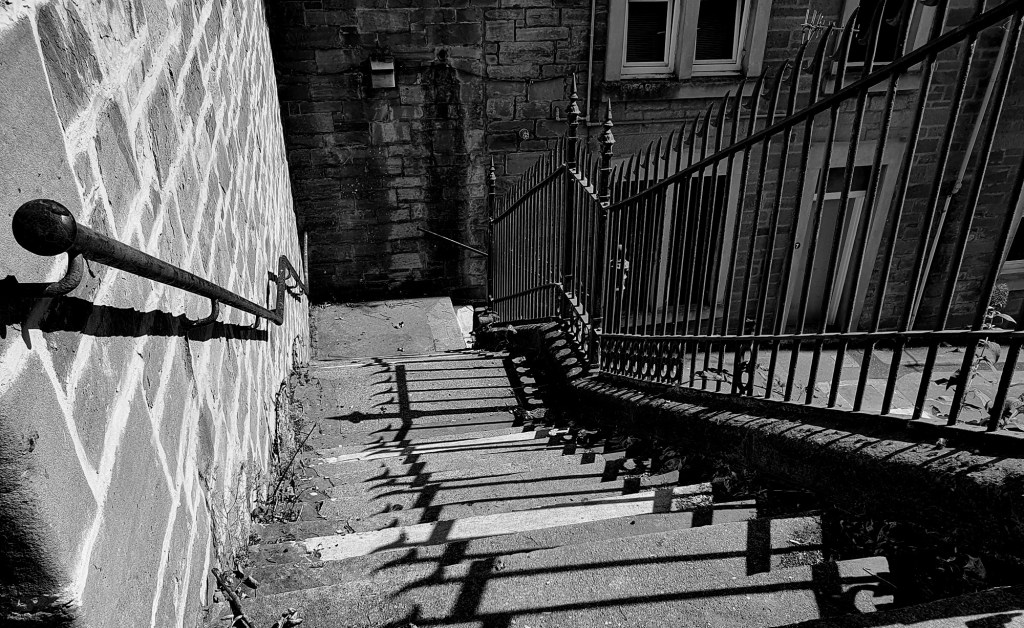
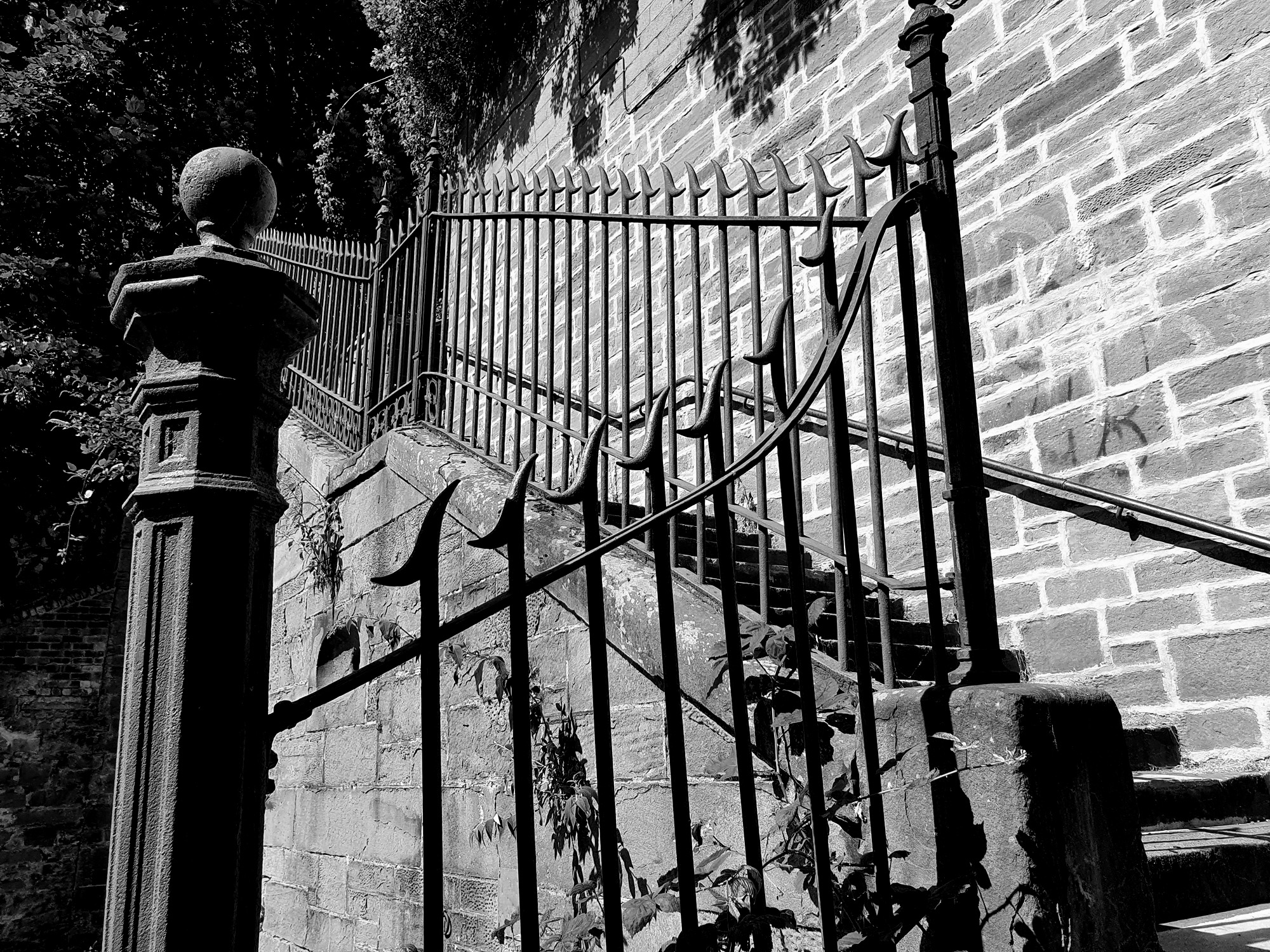
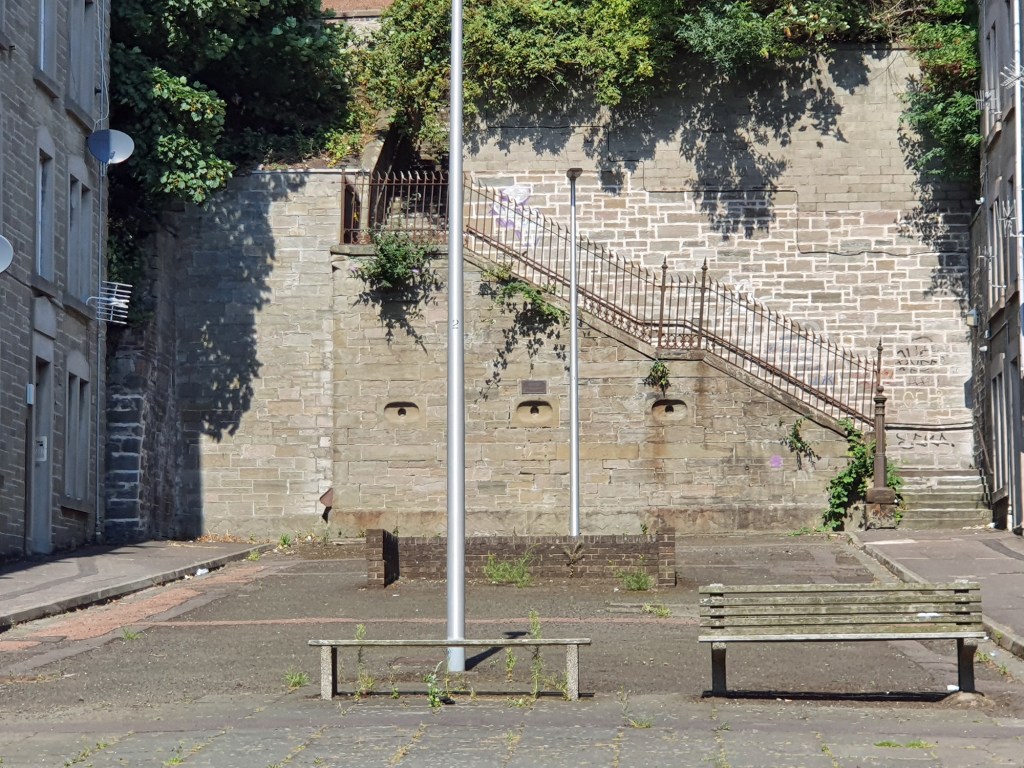
Today a plaque marks the spot where the house where she stayed was located and a rather creepy flight of old stone steps above it has, in her honour, become known as the ‘Frankenstein Steps‘.
The young Mary Shelley – then Mary Godwin – stayed at the home of sailcloth merchant William Thomas Baxter and his family. Descended from a Tealing dynasty of weavers established by John Baxter, William Thomas Baxter was a cousin of William Baxter, the father of Sir David Baxter, who later established Baxter Brothers, a highly successful and profitable firm of linen and jute spinners and manufacturers in the city. Baxter, a businessman in his own right, was also a friend and associate of the novelist’s father, William Goodwin, a political philosopher, who he had met on trips to London.
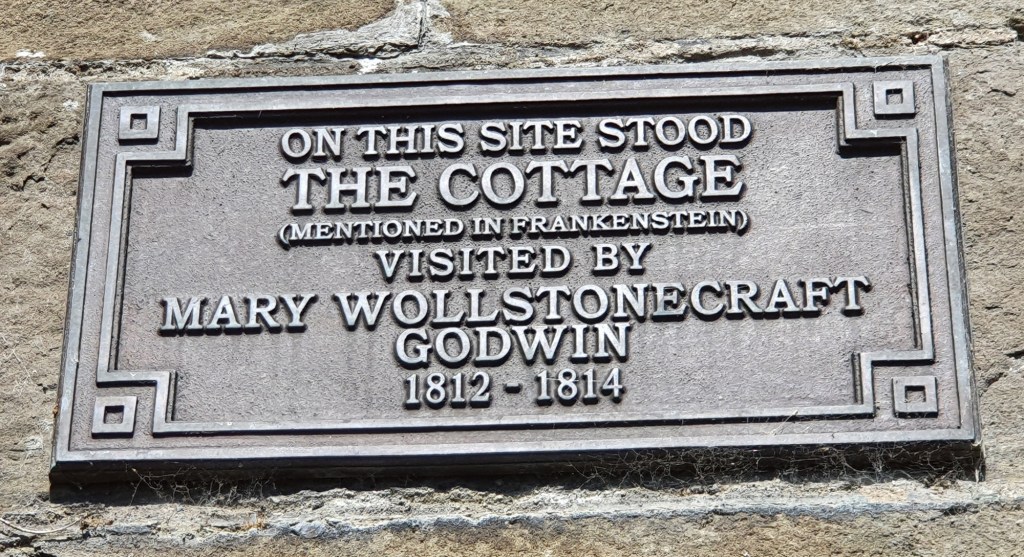
At the age of 14, Mary was shipped north aboard the vessel Osnaburgh and she arrived at the Baxter home in June 1812 where she stayed until November 1812. She returned the following year, in June 1813, and remained as their guest, this time until March 1814. During her visits, Godwin developed a close friendship with two of Baxter’s daughters, one of the eldest, Christy – who was around the same age as Goodwin and who returned to London with her after the first visit – and the youngest, Isabella.
The Baxters lived at The Cottage, which was a far grander home than the humble name suggests. It was a mansion built around 1790 for the Countess of Strathmore to replace Castle Lyon (now Castle Huntly), Longforgan, in the Carse of Gowrie. Surrounded by extensive gardens and woodlands, The Cottage was located on Broughty Ferry Road, to the east of the city centre, and its grounds stretched all the way up the slope to Arbroath Road above.
The estate was a place of space and wonderment for Mary who spent much of her time exploring. It was a place where her imagination was free to roam and, just along the road was the haunting little cemetery at Roodyards, where victims of plague and pestilence were buried. There were trips into the city too, and further afield to Perthshire and Fife, where she was particularly captivated by the ruins of Lindores Abbey.
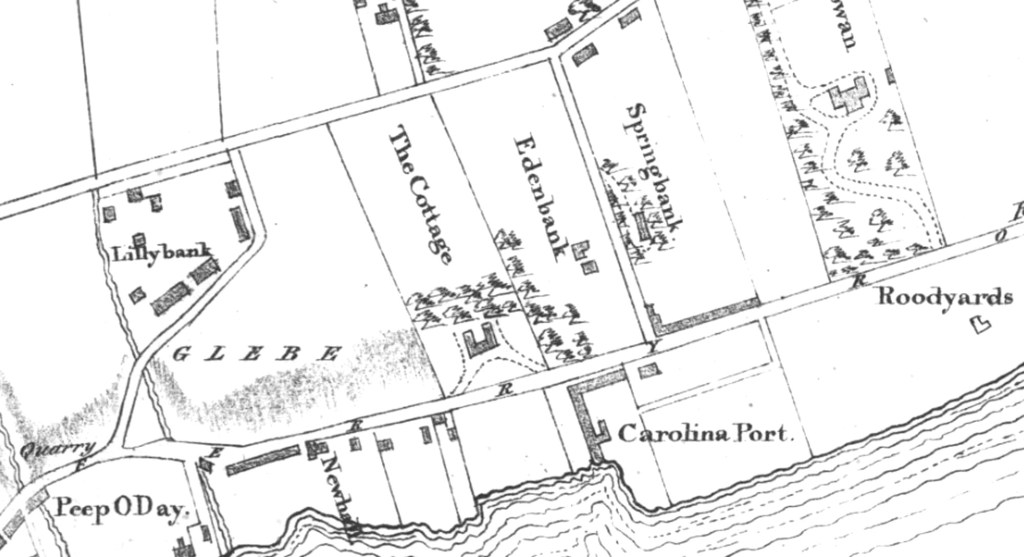
Overlooking the River Tay and its then sandy undeveloped shoreline, Broughty Ferry Road was in the early 19th century, a quiet, leafy street lined with grand villas where many of the city’s leading businessmen lived – The Cottage and neighbouring Edenbank, Springbank, Ellengowan (another Baxter home), Tayfield and Mayfield among them.
Twice-married William Thomas Baxter, who had eight children in all, does not appear to have followed in the Baxter family’s jute and linen fortunes, which were made much later. For while he was prosperous enough in the early years of the 19th century, it is said that he was made bankrupt in 1828 and, with his second wife Mary Anne, later farmed Balgonie West Gate, at Markinch, in Fife. When he died in 1842, he was unemployed. But, by then, he had contributed all he could to the literary works of Mary Goodwin.
Over time, the great houses of Broughty Ferry Road, like Baxter, faded too. They lost their river views to the development of ship-building yards, mills and slaughterhouses and, one by one, they would be pulled down to make space for new housing as Dundee’s working population gradually expanded and its wealthy elite moved out to estates in the countryside. The Cottage was one of the first to go. It stood until the 1890s when it was demolished to make way for the tenements of Baffin Street.
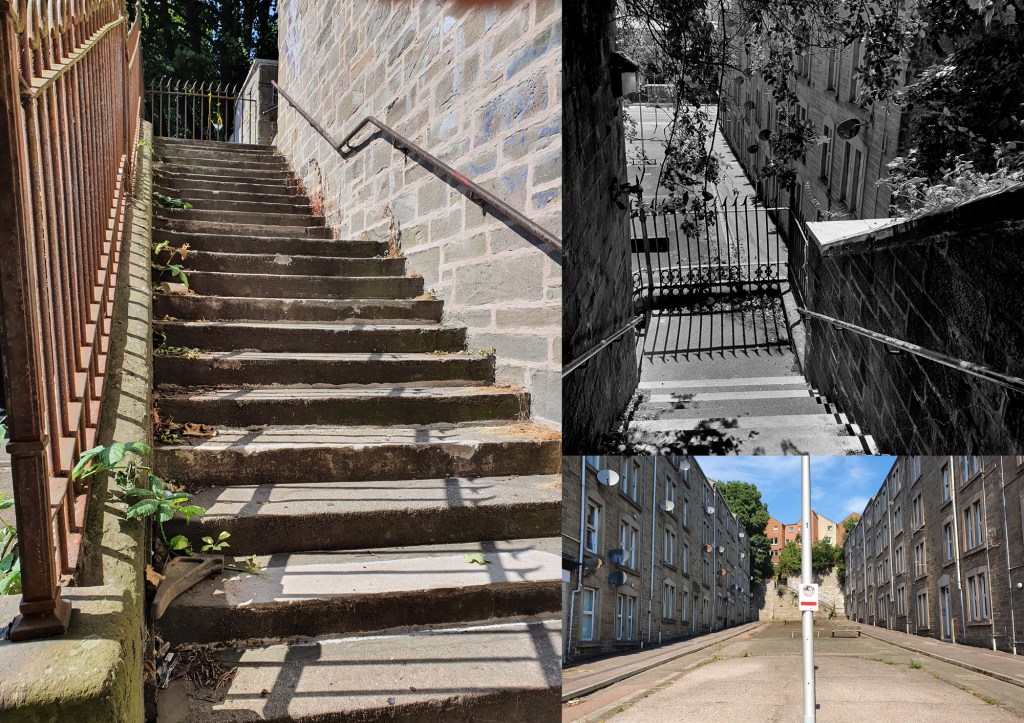
By 1890, old maps show the once tranquil parklands of The Cottage, where the young Mary Goodwin had enjoyed freedoms she had not known at home in London, had been absorbed into the encroaching urban sprawl moving steadily east. Tenements in the upper section of Baffin Street and adjoining Watson Street now occupied the northern half of the grounds, and, by 1895, the house was an abandoned ruin. A city plan of 1900 show that, the mansion demolished, the tenements blocks of South Baffin Street now filled the southern portion of the old estate.
Baffin Street was – and still is – a road of two halves, the upper and lower sections split in two by a steep escarpment. A high retaining wall and steps were constructed between and these are still in use. While the original tenements on the upper and lower parts of Baffin Street are still occupied, there are blocks of more recent housing in between, on Watson Street, where the upper section of the steps pass through a pend. It is a world away from the peaceful wooded policies of the grand country mansion. Other than old maps and memories, and, of course, the plaque, The Cottage and its role in inspiring one of the world’s great novelists, has been completely lost to the passage of time.
After returning to London from her second trip to Dundee, Mary promptly eloped to France with her lover, the poet Percy Shelley, who she later married. While it is widely noted that she began writing Frankenstein when she was 18, some sources suggest she may have actually started work on the story much earlier, during her time in Dundee. The first edition was published anonymously in London on January 1, 1818, when she was 20, and her name first appeared on the second edition, released in Paris in 1821.
If you have enjoyed this post, and others on the site, you might like to buy me a coffee which helps support the site and funds new content…
You might also enjoy my new book, Abandoned Dundee, a fully illustrated guide to some of the more interesting and prominent abandoned and derelict buildings and sites in Dundee, available in paperback or as an ebook from Amazon.


