
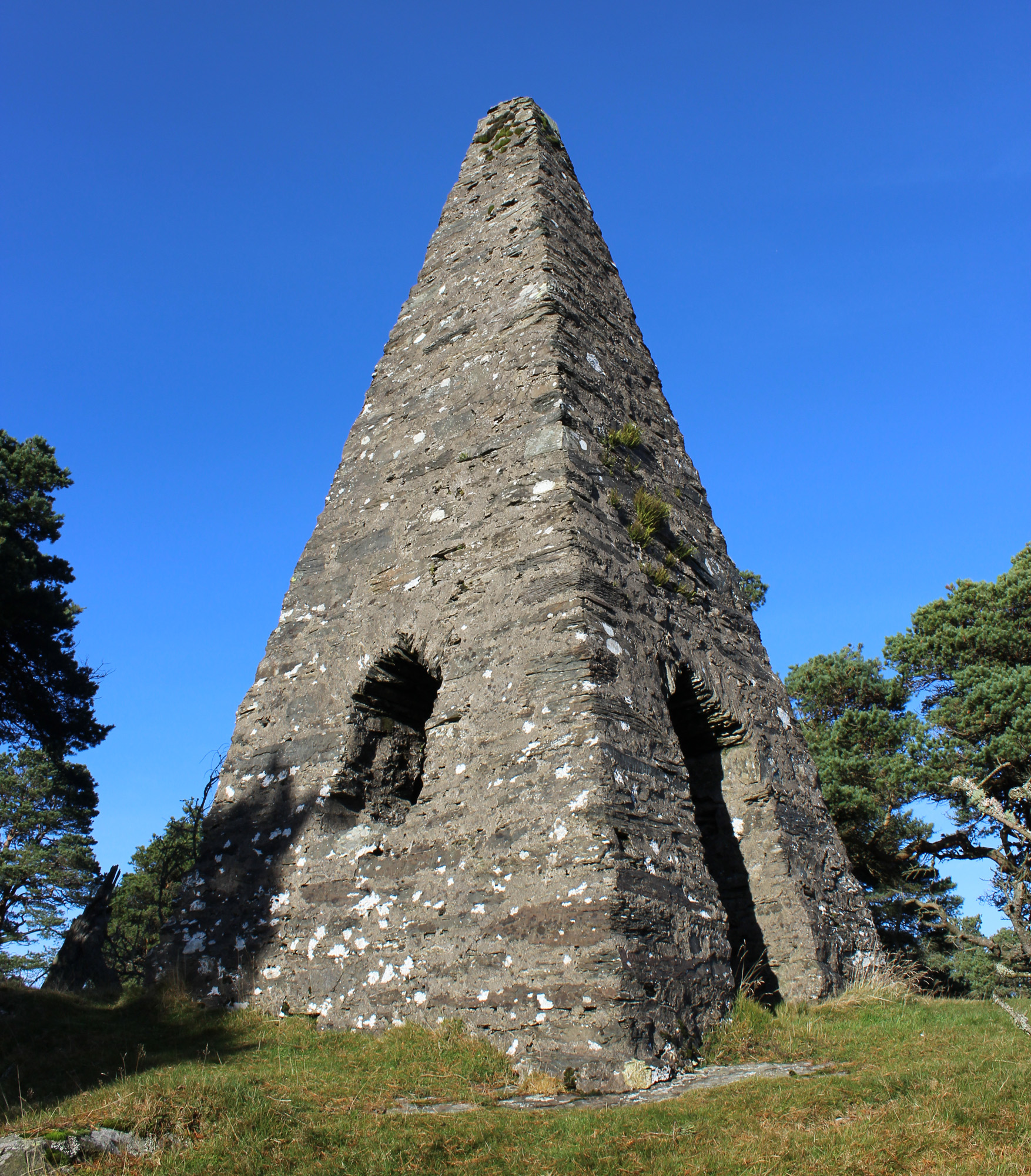
Rural Perthshire is one of the few places you will find a pyramid in Scotland. Perched atop Carn Tuile, near Bankfoot, the folly dates from the late 18th century.
A short, if quite strenuous in parts, walk rises from Little Glenshee to the obelisk, hidden away amongst larch and pine trees. It is a pleasant outing with fine views and the pyramid affords some shelter from the elements.
From a small car park (Grid ref: NN 988340) by a ford at the western end of the Glen Shee road, near the steading at Little Glenshee, a wooden footbridge spans the stream and, once over, a path leads through bracken to re-join the road, a gate and ladder stile opposite marking the start of the track to Carn Tuile and its outlier, Craig Gibbon.
Roughly paved with blue slate, the track rises past the source of this scavenged road-building material (which features at regular intervals along the way), quarries that produced high quality roofing tiles during the 19th century.
Passing below spoil heaps haemorrhaging from the hillside, the way climbs more steeply, up the south-east flank of Creag na Criche. It is a hearty pull and, rounding an outlying knoll, the gradient finally eases, the way crossing heather moor to another gate and stile.
Cross the sturdy ladder and an undemanding trek north follows. Look out to the right for Sack Stone, an ancient monolith sitting in a coire below the track. Measuring almost three metres in height, it is an easy spot.
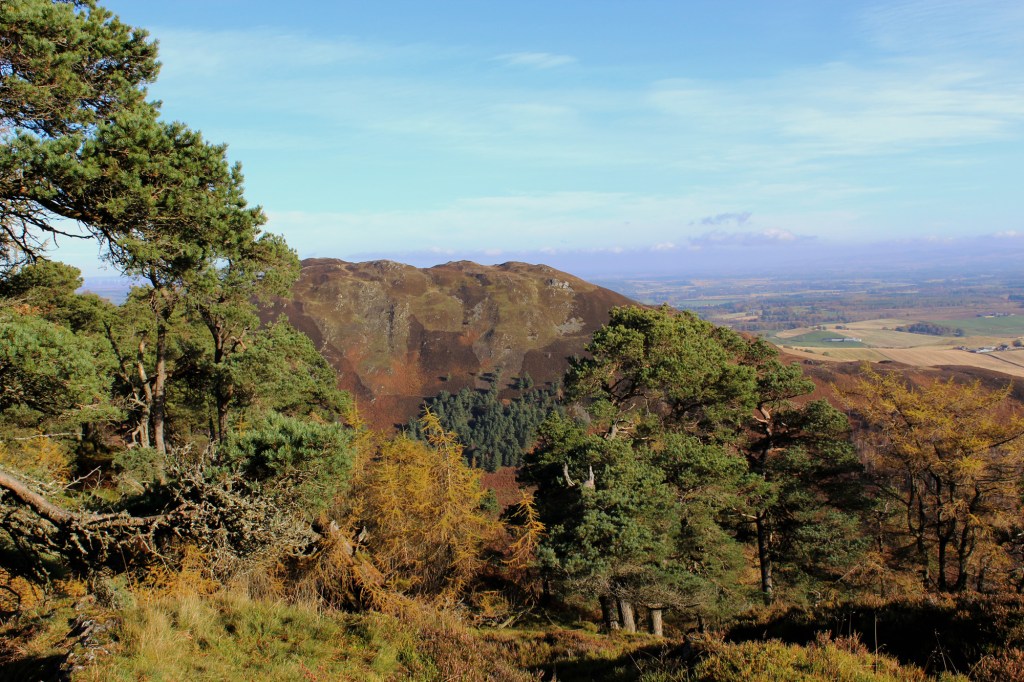
It is not the only prominent stone on the route. A little further on, there is an optional detour up to a pillar and circle of rock – possibly an old sheep pen – atop Moine Folaich, where a view across the valley to Carn Tuile awaits.
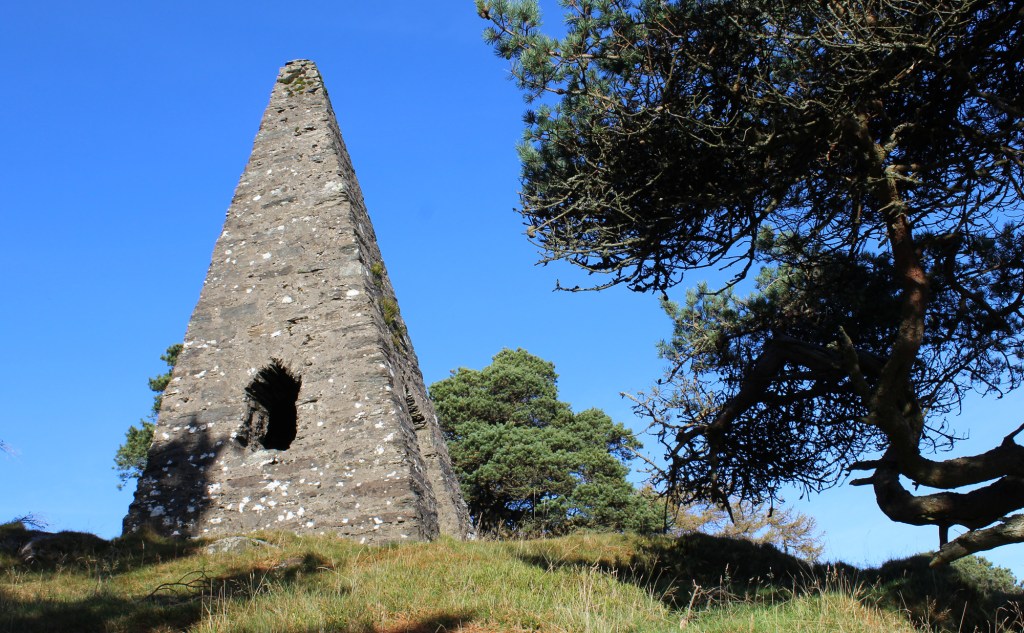
The peak is only a couple of kilometres away as the crow flies and, once it rounds the top of the vale, the track is reasonably direct, branching east from a junction by a small pool from where it rises to a prominent cairn. Continue north-east over the summit of Carn Tuile and the track, now a little rougher round the edges, swings right, dipping towards the wooded mound and the pyramid.
Concealed amongst larch and pine, it is not the tallest of structures – 25 feet high – but it is solidly built and the sheltered but small chamber within boasts an exceptional outlook over the surrounding countryside.
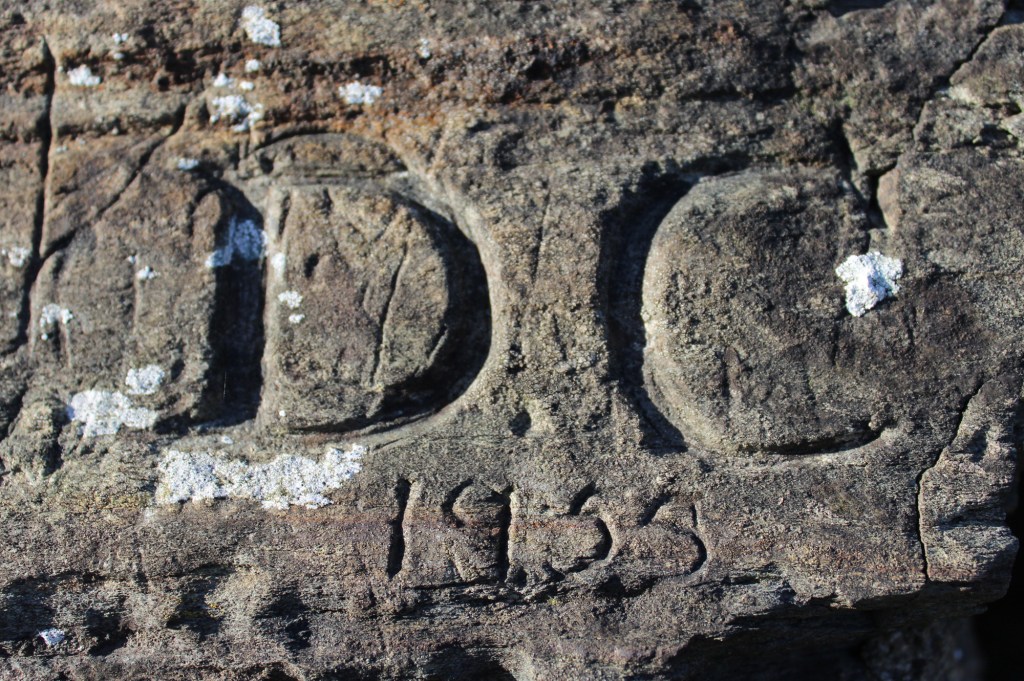
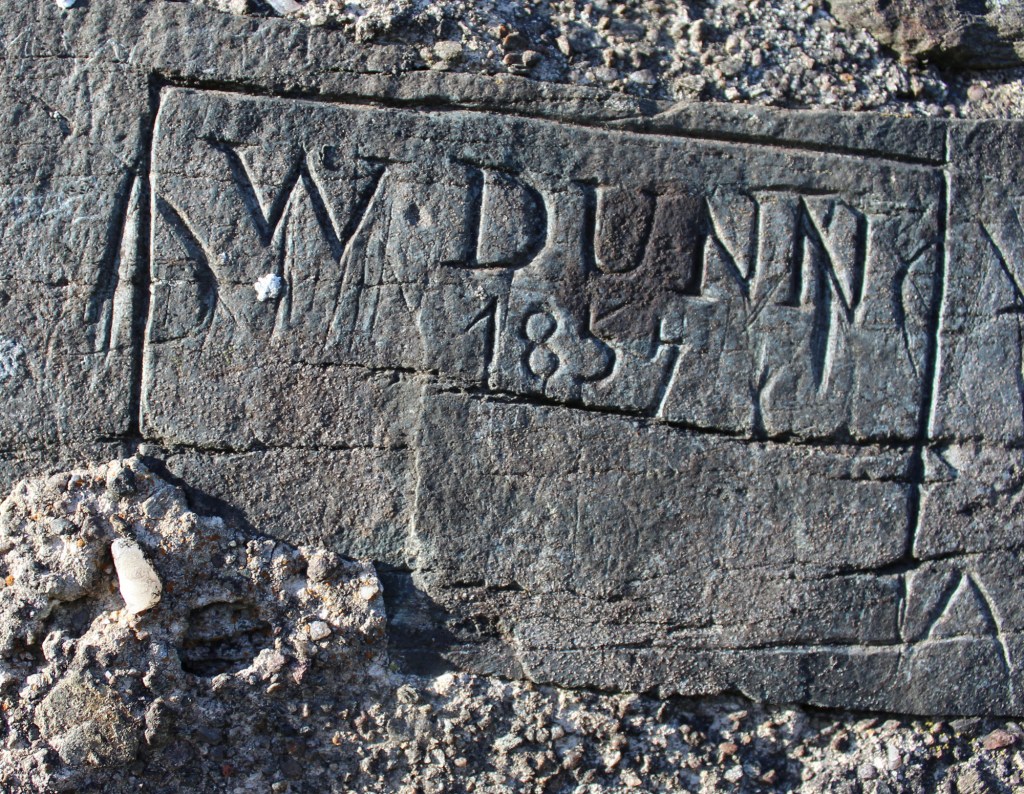
Erected sometime in the later half of the 18th century by landowner Colonel William Mercer (he died in 1790), of Aldie and Meikleour, as a means of identifying the hill from his stately home some 12 miles away at Meikleour House, it was originally painted white, rendering it even more prominent. It is sometimes referred to as the Mercer Obelisk and, inside, there is some fascinating early graffiti, names etched into the pyramidal stonework dating from the mid-1800s and 1900s.
The Ordnance Survey Name Book of 1912 records: ‘At the summit of Carn Tuile is a wooded craig which is called by this name. There is an obelisk standing on it said to have been erected to enable the laird to distinguish his own property from his residence which was at considerable distance. The property of Lady Keith of Meikleour.’ She was the grand-daughter of Colonel Mercer. There is also mention of the obelisk in the New Statistical Account of Scotland, published in 1838.
Elsewhere, another Scottish pyramid can be found on the Balmoral Estate, near Crathie, in Royal Deeside. It was erected by Queen Victoria as a memorial to her husband Prince Albert who died in August 1862. There’s an excellent low-level woodland walk linking the pyramid with other memorial cairns on the estate.
Another, the Star Pyramid, is to be found in the Old Town Cemetery at the Church Of The Holy Rood, St John Street, Stirling. It was built in 1863 by William Drummond as memorial to all those who suffered martyrdom in Scotland in the cause of civil and religious liberty.
If you have enjoyed this post, and others on the site, you might like to buy me a coffee which helps support the site and funds new content…


