
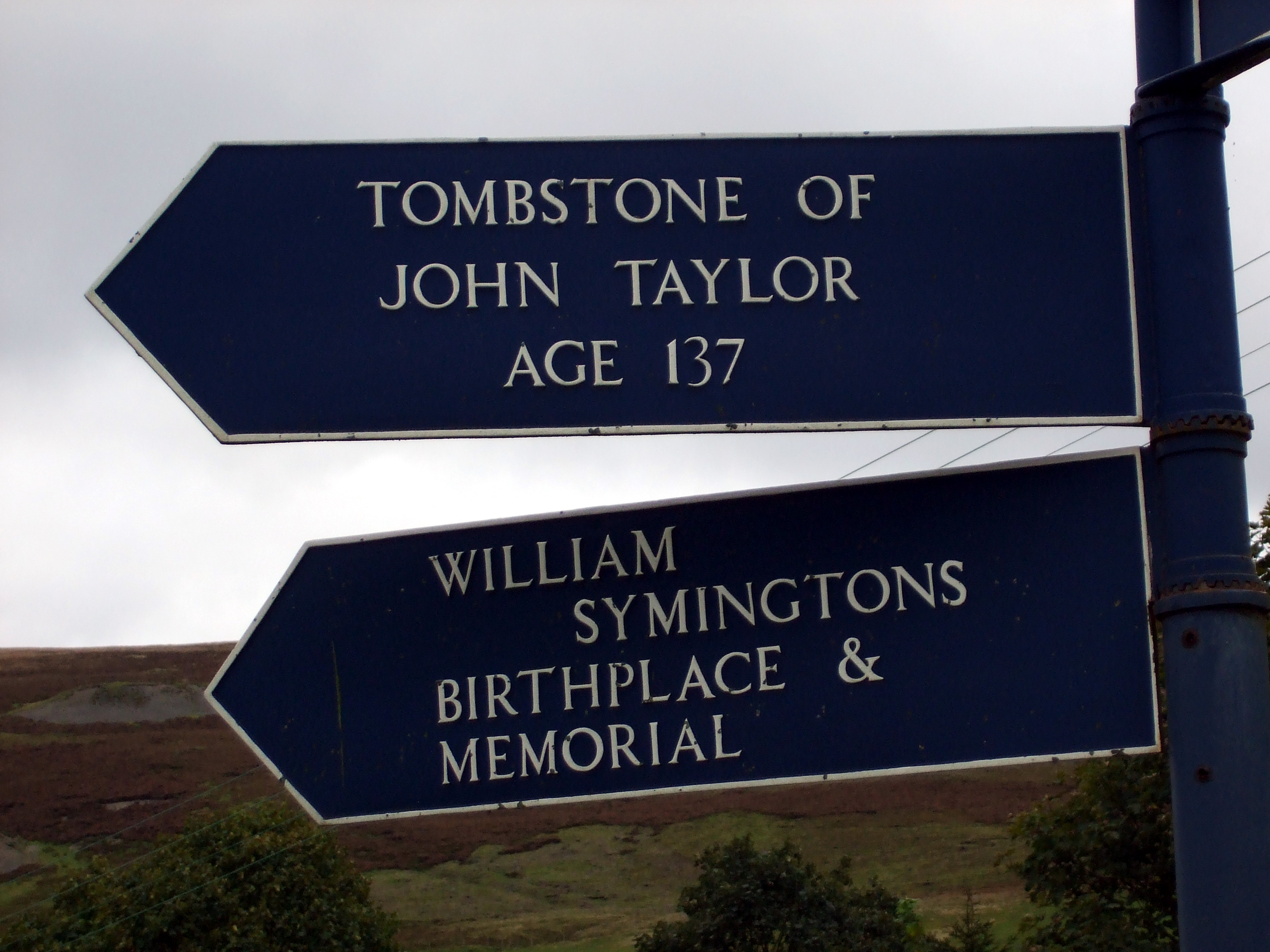
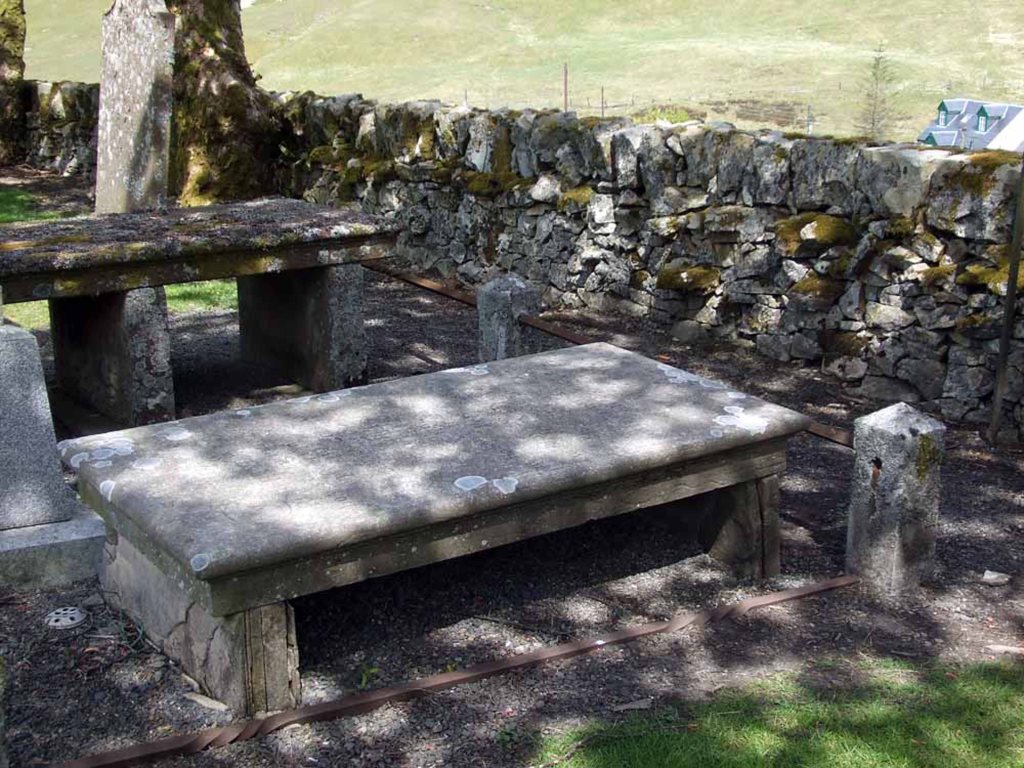
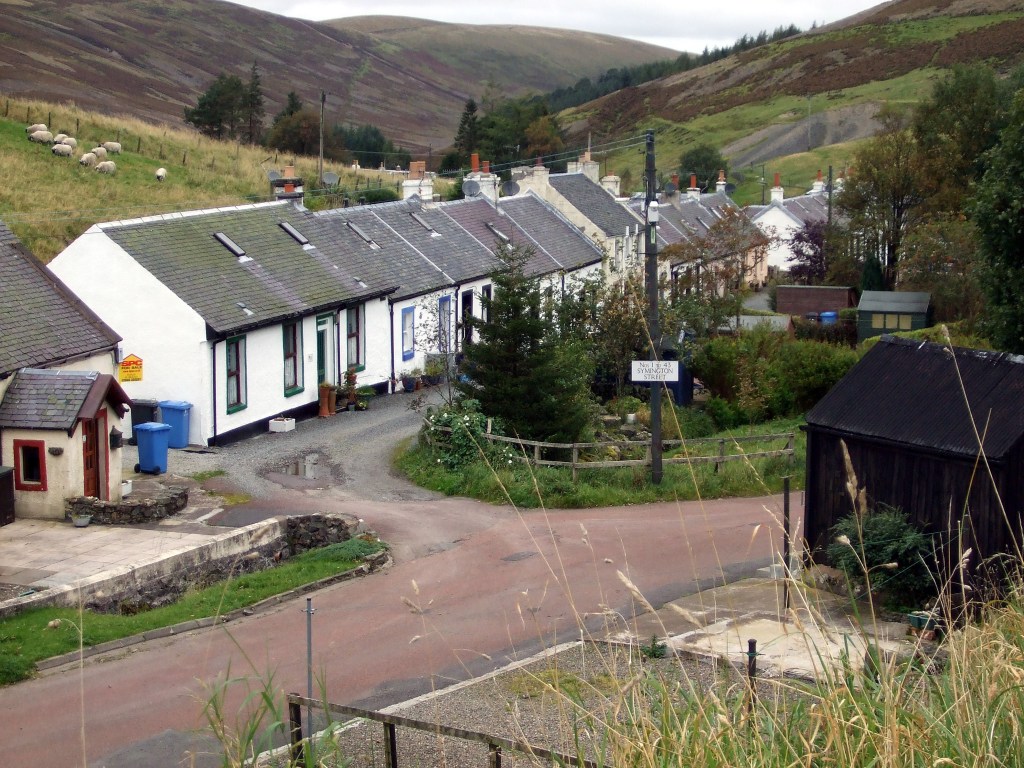
Perched above the tiny Scottish village of Leadhills is a cemetery. At first glance it is a perfectly ordinary rural graveyard, similar to scores of others scattered across the countryside. Alongside more recent burials, there are ancient headstones; some still stand proud while others have fallen victim to the passage of time, epitaphs on toppled, weather-beaten stones now barely legible. Tucked away in a far corner, under the shade of leafy trees, there is one particularly noteworthy tombstone. It marks the final resting place of John Taylor, a man who, if the inscription on his grave is to be believed, died at the ‘remarkable age of 137’.
This is an incredible claim of longevity, particularly in light of the fact that the greatest verified age ever achieved by a human being was 122 years and 164 days. This accolade belongs to the late Jeanne Calment, who was born in France in 1875 and died in 1997. Taylor’s 137 years would eclipse that by a full 15 years, if it were possible to authenticate his age. And therein lies the problem – he lived in an era where births and deaths were not recorded and, other than the tombstone inscription, nothing was set in stone. His claim relies heavily on anecdotal evidence and, despite apparently living for so long, very little has been written about the man.
One early account of his life, published in 1864 as an appendix to George Vere Irving’s The Upper Ward of Lanarkshire Described and Delineated, records that Taylor was born at Garry Gill, in the parish of Alston in Cumberland. His father, Bernard Taylor, was a miner who died when John was just four years old, leaving his mother Agnes to raise John, his brother and two sisters alone. No date is given for Taylor’s birth and, as civil registration was not introduced until 1837, no official paperwork exists. According to Irving’s article, young John Taylor followed in his late father’s footsteps and entered the mining industry. At the age of nine he was employed above ground, dressing lead ore.
At the time, boys had to be at least 15 years of age before they could go below ground and this fact, accompanied by a natural phenomenon, played a key role in calculating Taylor’s age. On March 29, 1652, there was a great solar eclipse, known as Mirk Monday. In the article, Taylor claimed he was, at the time of the eclipse, at the bottom of a shaft, and ‘was desired by the man at the top to call those below to come out because a great cloud had darkened the sun’.
If Taylor was 15 at the time, as he himself said, this indicates he was born in 1637. Irving adds: ‘This event, which he has always told with the same circumstances, is the only era from which to reckon his age.’ Taylor continued to work in mines at Alston until he was 26. He moved to lead mines at Black Hall, Durham, where he worked for eight or nine years before being sent to the Scottish island of Islay to survey prospects there. Taylor returned briefly to Durham before heading back to Islay where he was employed as a mine overseer.
Thereafter, he worked in various mines around Britain before, in 1707, taking a job at the Scottish Mint in Edinburgh. However, he spent only a short time there, returning to Islay where he married in 1709. His itinerant lifestyle continued, with labouring jobs in Glasgow and a stint in the mineral mines at Strontian, Argyll.
Taylor and his family moved to Leadhills in 1733 and he worked in lead mines there until 1752, when he retired, aged 115. In 1767 he was described as having a ‘very antiquated look, but although the hair on his eyebrows and beard are perfectly white, that on his head is no more grey than of most men at 50. He lies much abed in the cold weather, but in warm days he walks out with a stick, and is not greatly bowed down.’
Taylor’s hard work funded a comfortable lifestyle for his family (he fathered nine children). By all accounts, he ate well and enjoyed a drink. In 1793, Robert Heron published an account entitled Observations made in a Journey through the Western Counties of Scotland and in this he made reference to Taylor. ‘The labours of miners are certainly more noxious to the health than many other species of employment,’ Heron wrote. ‘Yet, here died, two or three years ago, an old miner, at an age considerably above a hundred. His name was John Taylor. His organs and faculties continued in vigour nearly to the last. What was farther remarkable was that he had never been eminent for the temperate abstinence which is favourable to longevity. A dram and a draught of good ale he had been accustomed to take freely through all his life, and believed them necessary to the support of his health and spirits.’
During his long life, Taylor rarely succumbed to illness. Aside from a bout of scurvy brought on by a lack of fresh provisions at the Strontian mines and occasional fevers, he appears to have been a picture of health. This may have been down to good food and a love of the great outdoors. He was a keen fisherman and spent much of his time walking in the hills. In his latter years, Taylor grew frail, but was still able to undertake, with the aid of a stick, the mile-long walk from his home to the public house in Leadhills.
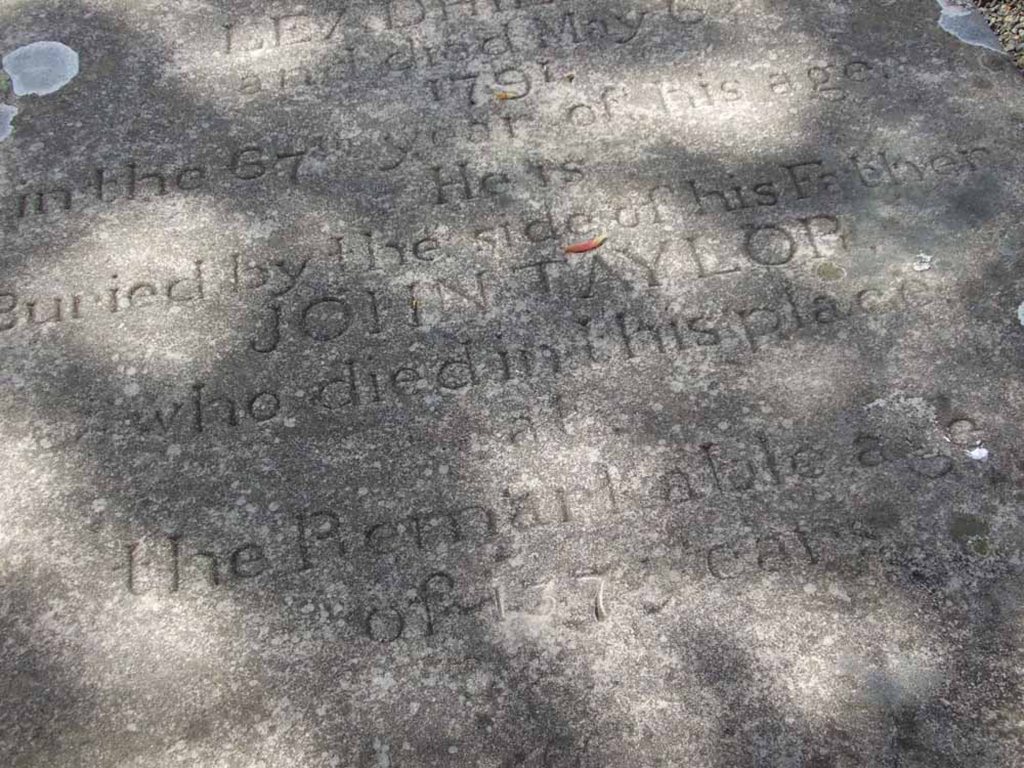
The date of John Taylor’s death is equally as uncertain as that of his birth. The tombstone, which he shares with his son Robert, does not record either, stating only ‘John Taylor, who died in this place at the remarkable age of 137 years’. There is mention of Taylor in a report entitled General History: Population and Longevity which was published in Magna Britannia in 1816. Authors Daniel and Samuel Lysons suggest he passed away in 1772.
They wrote: ‘Upon applying to the Rev. Alexander Johnson, minister of Moffat, he informed us, that John Taylor’s residence was in the parish of Crawford; that as no regular register of burials was kept in that parish, the exact date of his death could not be ascertained, but that according to the best information that he could procure, it happened some time in the year 1772.’ If that were the case, Taylor would have been 135.
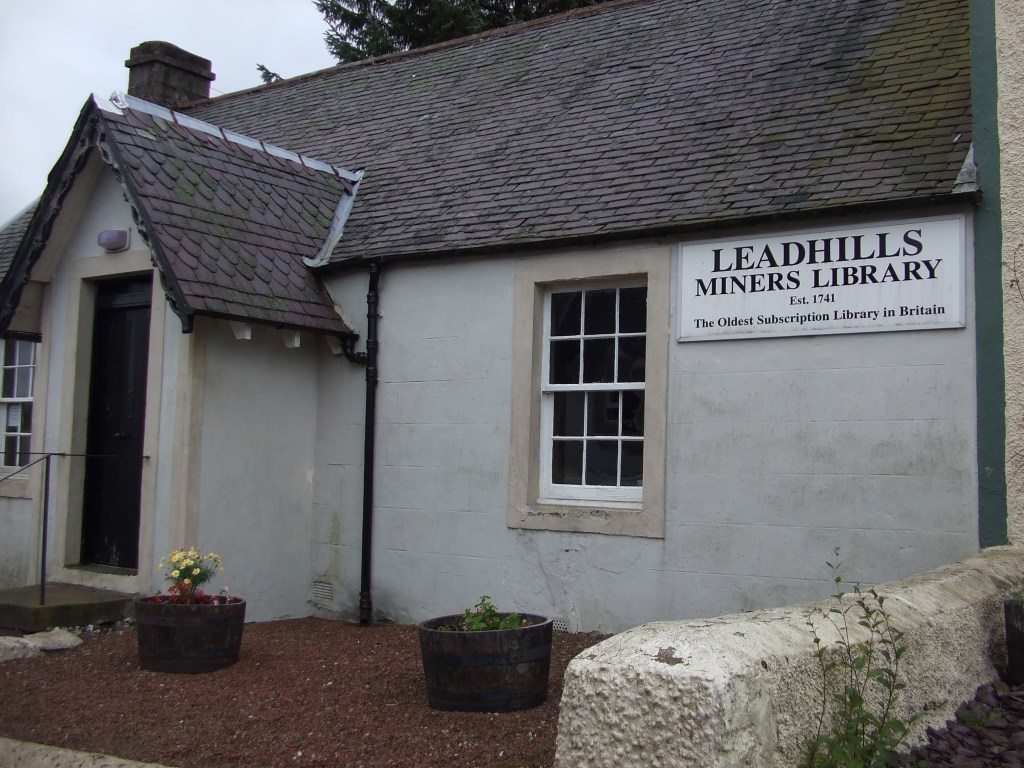
The Leadhills Reading Society, an organisation that records and promotes local history, believes he died two years earlier, in 1770, at the age of 133. This is supported by an account of Taylor, published in Chambers’s Edinburgh Journal in 1832. It states: ‘He was a thin spare man, about 5 ft 8 inches high, black-haired, ruddy faced and long visage. His breakfast was usually oatmeal porridge, dinner meat and broth, and his chief drink malt liquor. At length having been sometime cradled in a second childhood with hardly any remains of either bodily or mental facilities, this veteran expired in the month of May 1770.’ Both contradict the headstone but highlight how difficult it is ascertain for sure how old John Taylor really was. The online Find a Grave service record his date of birth as 1633 and date of death as May 6, 1770, putting him as 137.
With no formal records there is nothing to prove – or disprove – that he lived to be 137, although documented research tends to favour he was between 130 and 135, still a ripe old age.
If you have enjoyed this article, you might like to buy me a coffee and help support this site…

 Secret Scotland